
How to find a ‘career with a purpose’: This Atlanta executive charted a path.

Bergan Burnett was about six years into her job at an accounting firm when she decided to make a transition.
“I just always had a passion for either being a civil servant or … using my tools to benefit either nonprofits or government organizations,” Burnett said. “I decided to kind of pursue a career with a purpose.”
She was drawn to the idea of working where she knew the work would benefit the community.
“I always saw myself in a role for nonprofits,” she said. “And honestly, too, if you’re going to kind of pivot from governmental accounting, I just knew I needed to find that lane, and that my lane was going to be a nonprofit. … (It) was a natural progression for me.”
So she found a recruiter specializing in nonprofits through contacts from her alma mater, Georgia State University.
“That was an intentional career move for me,” she said. “I felt like it was just more purpose driven in that way for me to work in nonprofit.”
So when a job as controller at the Marcus Jewish Community Center of Atlanta came up, “It was one that I immediately jumped on.”
After several years, she moved to a role as vice president of finance at the Atlanta Humane Society. Then, a couple of years later, her husband saw a job listing for the role of chief financial officer at the High Museum of Art.
She and her family, who live in East Atlanta Village, were members of the High, visiting the museum for the art and family programming. Her husband told her: “I think you would be great at this.”
Now a year-and-a-half into the role, Burnett sees her core mission at the High as financial stewardship and looking ahead to economic conditions and uncertainties three, four or five years ahead. Her aim is to look at how to position the High to ride the wave — whether it’s a surplus or a downturn.
She also notes that “we are competing with a lot of other local attractions here in Atlanta.” So the museum is always looking at “how people are engaging with the art, and making sure that they see themselves in the art here.”

“I didn’t grow up personally in and around the art space, but I knew that that was something for me that I deeply wanted my children to be a part of and experience,” Burnett said. “So now to know that I’m actually here, it’s (an) extremely surreal moment for me.”
Burnett, 39, sat down with AJC Her+Story to share how she fell in love with accounting, why she thinks there aren’t more female CFOs and how the skills she has gained as a mom are transferable to the workplace.
Edited for length and clarity.
Q: Tell me about your morning routine.
A: My morning routine is get the kids out the door. That is first and foremost. I have two young boys (ages 4 and 6), very active. Just getting them in the car, I have already won the day.
I think having children is such a creative outlet for me, because if you can negotiate a 4-year-old to put on socks, you can win any part of the day at that point.
Motherhood allows me to be very creative, and I kind of bring that creativity and that innovation and that spirit to my work.
At this point in my life, I have other obligations. I have to leave by a certain time. So I have to be really, really efficient.
Q: How did you get started in accounting?
A: I got my degree in accounting from Georgia State University. … I graduated in 2009 so it was just right at a time when it was like, you need to make sure you have a job.
I had a really great accounting professor. She looked across the class and she said, half of you won’t make it out of my class, and the other half won’t make it out without a B.
I took the challenge and ended up kind of falling in love with accounting.
Accounting has order, it has rules. For every debit, there is a corresponding credit, and the things must balance. And so that kind of gave me just a lot of comfort and certainty.
I pride myself on being a rules-based, principle-based person, and so that just kind of aligned very well with me.
And I don’t want to nerd out here for accounting folks, but there’s no greater feeling than reconciling something. It’s like actually solving a riddle.
Q: How do you approach mentorship?
A: Whenever I’m approached with the opportunity to mentor someone, I really want to understand: How can I be of service to you? What areas are you looking to grow in, or what areas of my career story or my path can be of service to you?
If you are looking for mentors, don’t be afraid to reach out. It is an honor that someone would even consider you to be a mentor.
But it is a two-way street. You kind of have to take ownership of who you want to cultivate in your circle for your mentors. And then as a mentor, you need to just be able to make yourself available for that person and set aside time to meet and discuss.
Q: What’s your favorite restaurant for a business lunch?
A: It’s wonderful place called Fishmonger (which is in Poncey-Highland, and closed its Pullman Yards location last year).
(And) I would probably say Elise at the Woodruff Arts Center (a new fine-dining restaurant from chef-owner Craig Richards of Lyla).
Q: Do you have an Atlanta parking secret?
A: If people don’t know, you can download the ParkMobile app, and it can at least tell you where parking areas are around you, and you can pay for parking, and it will always remind you when your parking meter’s run up.
Q: There are not that many women CFOs, or top executives in finance or operational roles. Why do you think that is?
A: Let’s just take applying for a job, for instance, as a woman. If you look at the job qualifications, you’re going to want to make sure that you hit every single mark. Sometimes, you may feel like you’re unprepared or unqualified for a position that you very well may be overqualified for.
Saying to yourself, “Hey, you know what, I’m going to apply for it anyway.” It takes an act of courage and faith and kind of betting on yourself to do that, and I don’t feel like women have that innately baked in.
It’s encouraging yourself to still go out and apply for it. The worst thing that can happen is no.
Then … having the connections and understanding the who’s who and the players, and then still going after the opportunity with everything else stacked against you. I think those are just kind of key areas where you’ll still find the majority of C-suite executives are going to kind of be male led and male run.
This is one of the things here that’s very special about the High Museum of Art, is that my predecessors were female (including former CFO Rhonda Matheison). There’s that long-standing history there.
AJC Her+Story is a new series in The Atlanta Journal-Constitution highlighting women founders, creators, executives and professionals. It is about building a community. Know someone the AJC should feature in AJC Her+Story? Email us at herstory@ajc.com with your suggestions. Check out all of our AJC Her+Story coverage at ajc.com/herstory.
About the Author
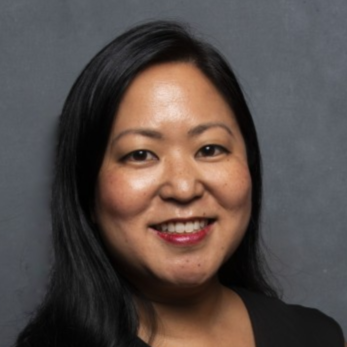
As business team lead, Kelly Yamanouchi edits and writes business stories. She graduated from Harvard and has a master's degree from Northwestern.


