From the archives: An easy make-ahead Thanksgiving dessert (that isn’t pie)
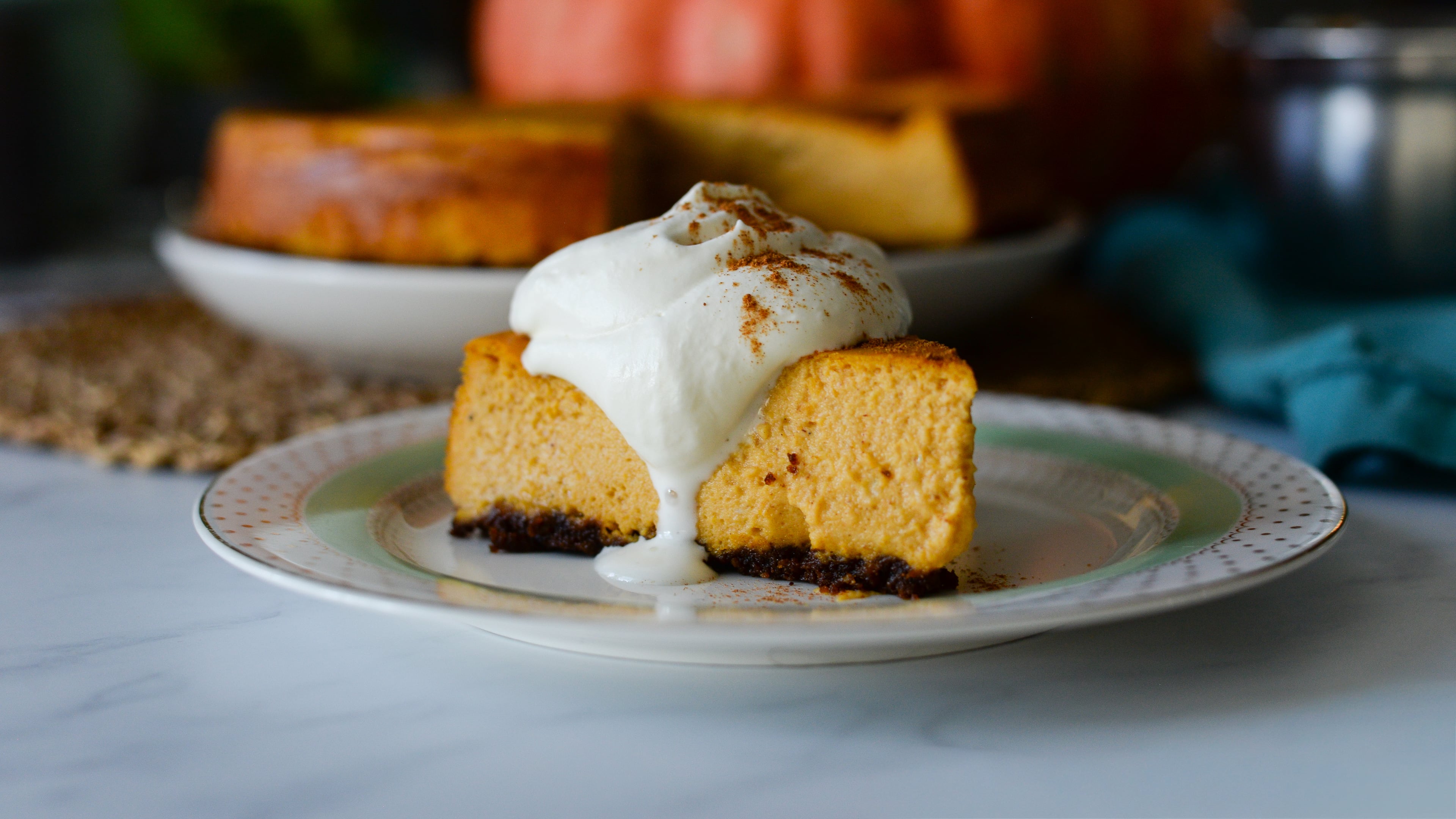
When compared to pumpkin pie, cheesecake is richer, denser and more calorie-laden. But even with the cream cheese and heavy cream swirled into the batter, the uber-creaminess in combination with a larger cake-to-crust ratio makes it feel lighter. These are the rationalizations I make to myself as I put at least two desserts on our Thanksgiving table each year, one of which is pumpkin cheesecake.
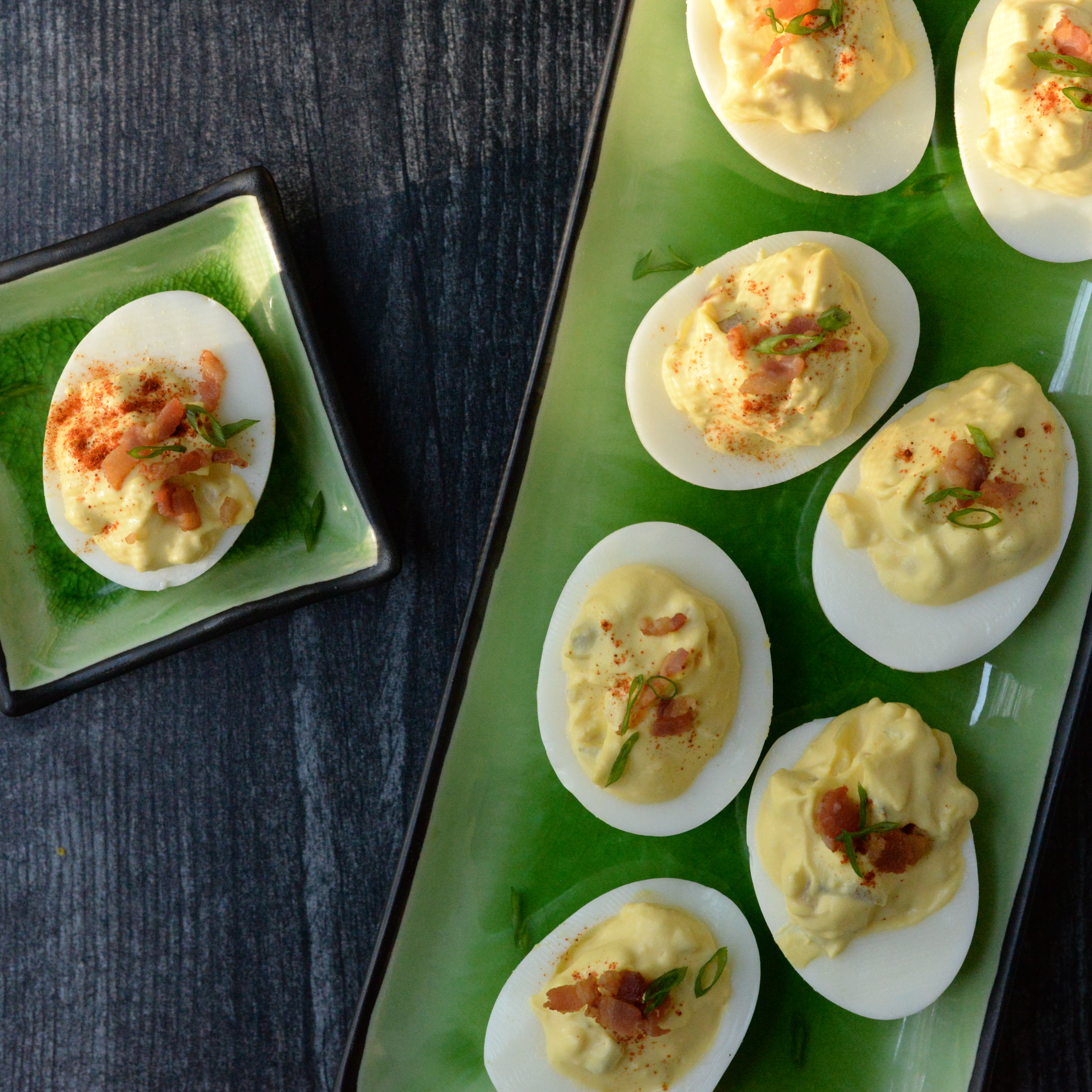
This recipe was published in The Atlanta Journal in 2000, and was an adaptation of the original recipe published in the November 1997 issue of “Food & Wine.” And while it is more recent than our 102-year-old deviled egg recipe, it’s just as much of a classic.
Why you should use canned pumpkin puree over fresh
When juggling a number of dishes for one of the biggest meals this year, stick with canned pumpkin for ease. If you have some time and want to make your own puree, check out how in this article for pumpkin bread.
While canned pumpkin pie filling might seem like a logical choice, it has added sugars and spices that are not needed in this recipe.
How to keep your cheesecake from sticking to the pan
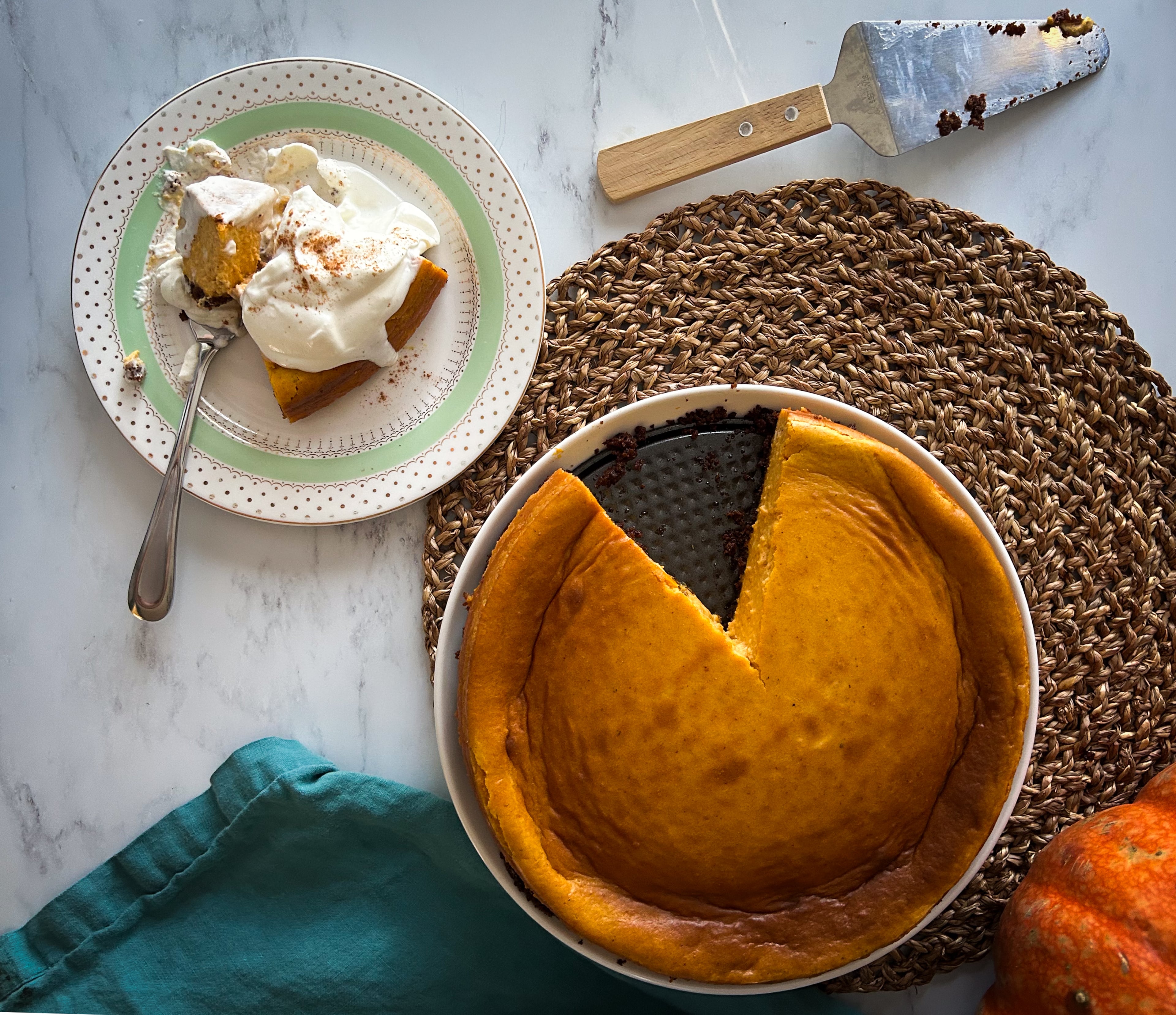
Greasing the springform pan with butter before adding the crust and batter ensures the cake will release from the sides easily after it cools down. And since springforms are notorious for leaking, place a sheet pan under the springform when baking the crust to prevent any melted butter from dripping down and smoking or starting a fire.
Once your cheesecake crust is filled with the creamy filling, a water bath is also essential to prevent it from drying out, which leads to cracking. But just as springforms can leak, they can also let water in. The instructions for how to make a water bath, or bain-marie, are detailed in the recipe below.
Your baked cheesecake has to gradually cool to further prevent the top from cracking. Once it finishes baking, turn off the oven, open the oven door a crack and let your cheesecake rest for one hour before taking it out.

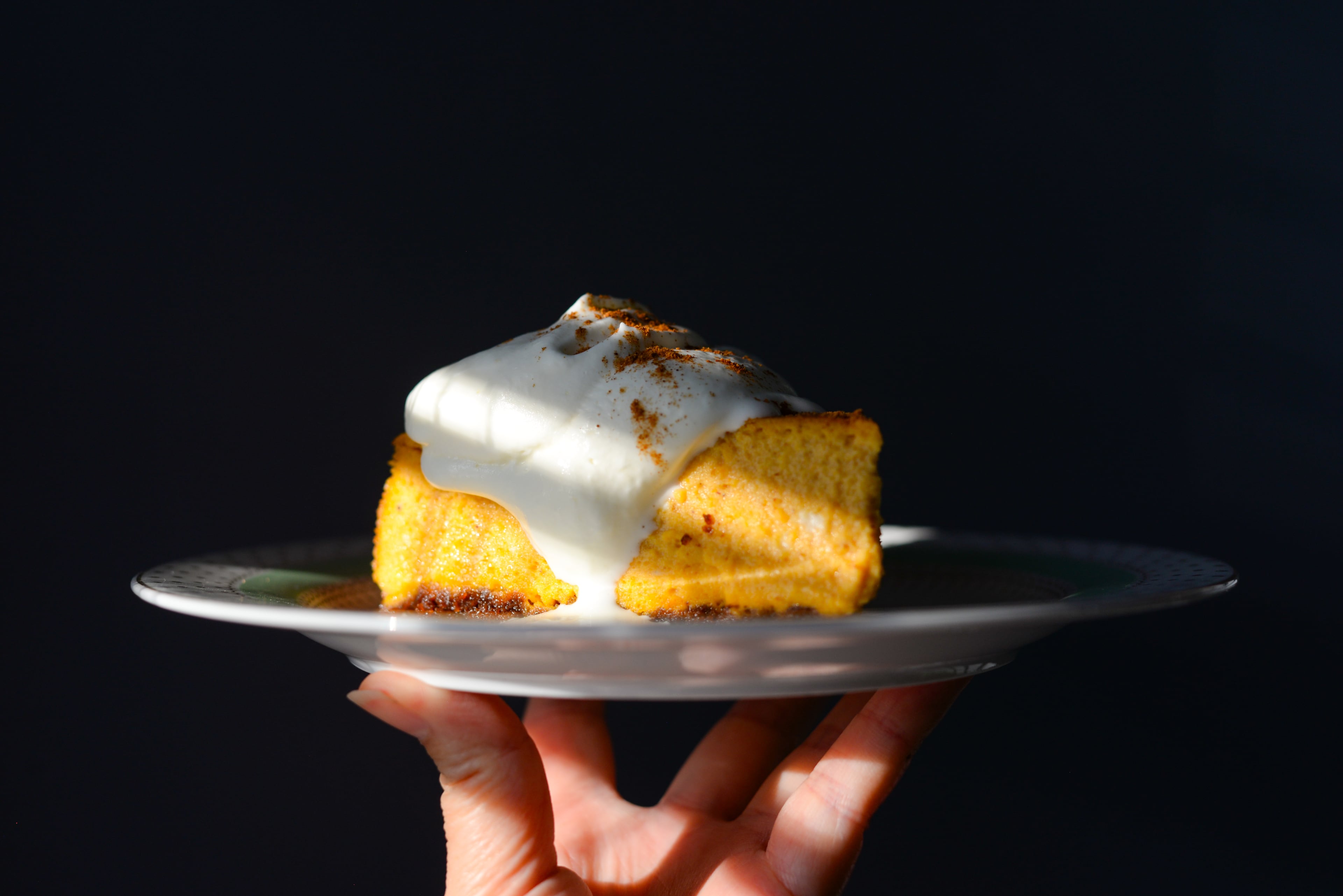
Play with different flavors for pumpkin cheesecake crust
Feel free to use Nilla Wafers instead of gingersnap cookies to get a more neutral vanilla flavor. You can also use Oreos for a chocolatey crust, or Biscoff cookies for a caramel flavor.
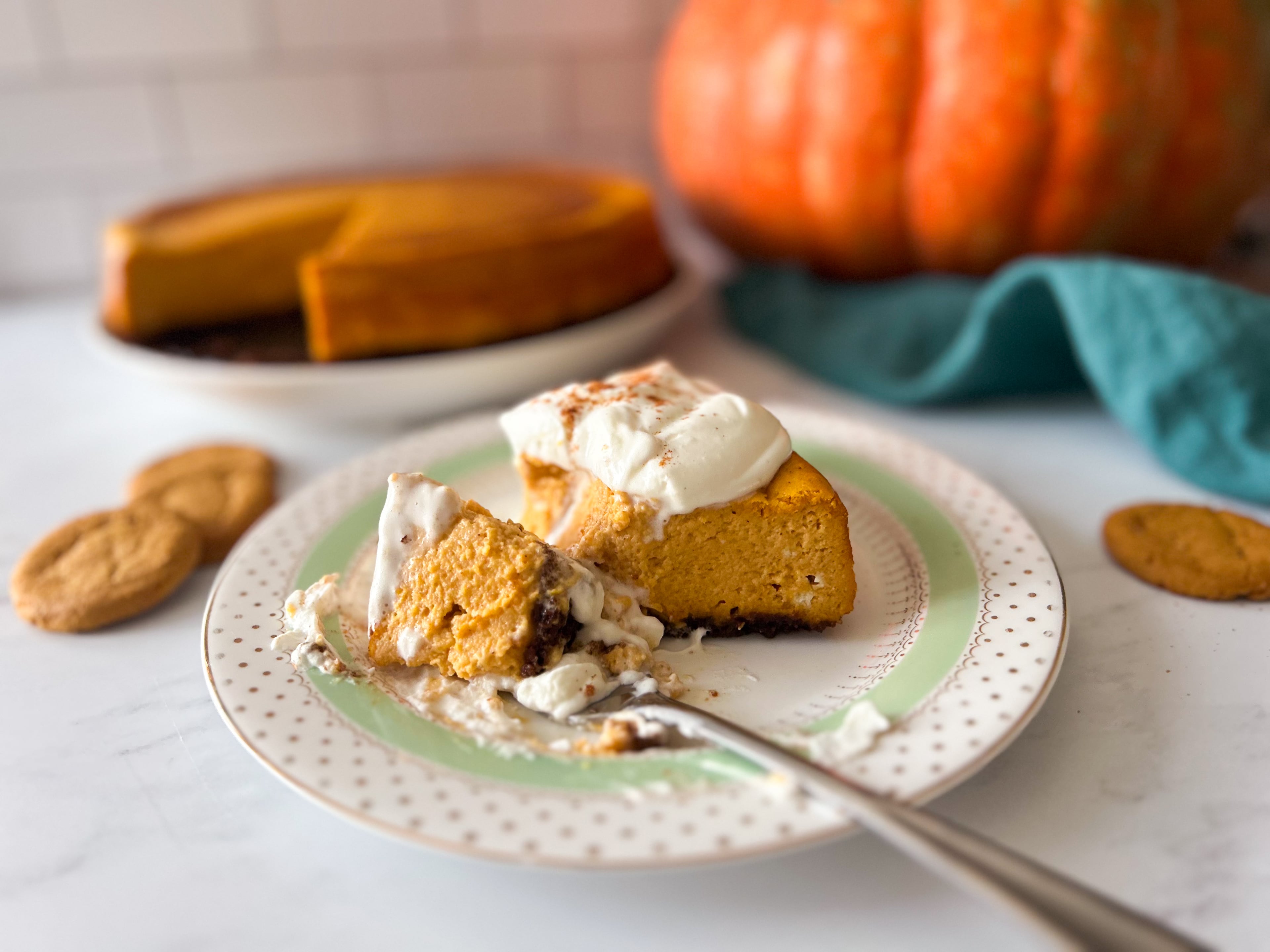
Pumpkin Cheesecake
Makes 10 to 12 servings
Preparation time: 15 to 20 minutes
Cooking time: 55 to 65 minutes
Cooling time: 60 minutes
Equipment:
- Large roasting pan
- 9-inch springform pan
- Sheet pan
- Hand-held mixer
- Mixing bowls
- Rolling pin
Ingredients:
- 1½ cups crushed gingersnaps (about 30)
- 5 tablespoons butter, melted, plus more for greasing pan
- 3 (8-ounce) packages cream cheese, room temperature
- ¾ cup granulated sugar
- ½ cup packed light brown sugar
- 3 eggs
- 1 (15-ounce) can pumpkin puree
- ¼ cup heavy cream
- 1 teaspoon vanilla
- 1 teaspoon ground cinnamon
- 1 teaspoon ginger powder
- ½ teaspoon ground nutmeg
- Whipped cream for topping (optional)
- Pumpkin spice for dusting (optional)
Instructions:
- Heat the oven to 350 degrees with racks placed in the bottom and center of the oven. Place the gingersnaps in a large zip-close bag and crush with a rolling pin until fine. Pour crushed cookies into a small bowl, and combine with butter until moistened.
- Grease the bottom and sides of a 9-inch springform pan with butter, then press the crumbs evenly into the bottom and about an inch up the sides. Place on a sheet pan and bake for 8 minutes. Set aside to cool while preparing the filling.
- Using an electric mixer, beat the cream cheese until smooth, scraping down the sides periodically. Beat in the granulated sugar and brown sugar until well combined. Add the eggs, one at a time, continuing to scrape down the sides. Add the pumpkin, cream, vanilla, cinnamon, ginger and nutmeg. Beat on low until combined, then pour into the crust in the springform pan.
- Set up a water bath by placing a large roasting pan on the bottom oven rack, and fill it with 2 inches of water. Place the cheesecake on a sheet pan on the center rack, and bake for 55 to 65 minutes, or until the edges are firm but the center trembles slightly. Turn off the heat, open the oven door a crack and continue to let the cheesecake cool in the oven for 1 hour before taking it out.
- Let the cheesecake cool to room temperature on the counter before running a sharp knife around the edge of the pan to release the cheesecake from the sides. Refrigerate the cake for at least 4 hours or up to 4 days before serving.
- Serve it cool or at room temperature, with a dollop of whipped cream and a dusting of pumpkin spice (if using).
Recipe adapted and edited from The Atlanta Journal, Nov. 9, 2000, which was adapted from a recipe in the November 1997 issue of “Food & Wine.”