Georgia Tech has a new president
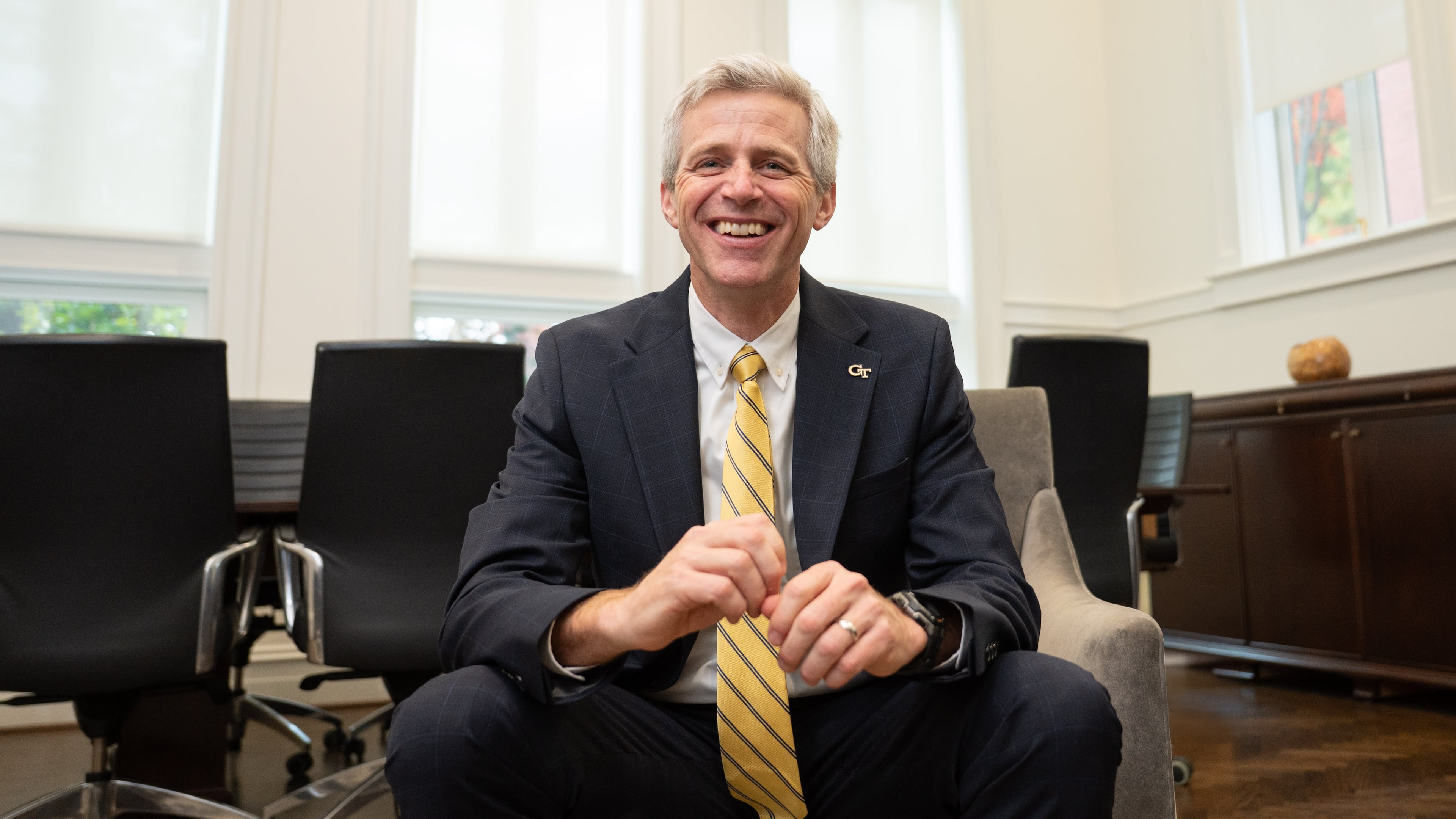
More than 30 years after Timothy Lieuwen first came to Georgia Tech, the Ohio native will lead the Midtown Atlanta school where he earned his master’s and Ph.D. degrees in mechanical engineering.
On Tuesday afternoon, the University System of Georgia’s Board of Regents voted to elevate Lieuwen from interim president to the permanent role, replacing Ángel Cabrera, who was named president & CEO of the Aspen Institute. The board also named John M. Fuchko III as president of the University of North Georgia.
It’s the second time in two years Lieuwen has converted a temporary GT job into a permanent one. He was named Tech’s interim executive vice president for research in 2024 before securing the full-time position months later, directing the school’s roughly $1.4 billion research enterprise.
“Today’s vote makes official what so many across the Georgia Tech community already know: Dr. Lieuwen is ready,” University System of Georgia Chancellor Sonny Perdue said in a statement.
Lieuwen told The Atlanta Journal-Constitution that, as president, he wants to maintain the school’s “incredible momentum.” In addition to being the highest enrolled school in the state, Tech is one of the largest research schools in the country while offering what Lieuwen called “rock bottom tuition prices.” A year’s tuition for first-year, Georgia residents is $10,618, according to the school website. Out-of-state students pay three times that.
Keeping the school affordable will be a high priority, as he said he intends to bring more Georgia students to the school during his tenure, part of his desire to demonstrate Georgia Tech’s value to the entire state.
“I want every single county in Georgia, the residents, to be able to say we’re better off because we got this great institution called Georgia Tech. It’s not this shiny thing sitting over there in Atlanta that’s just helps a bunch of urbanites,” he said. “It is a state asset.”
He argued that part of the value proposition is the school’s research enterprise. Tech ranks No. 2 in federal research funding among all universities in the country, with its work spanning from children’s healthcare to national security, according to the school. It also works with the private sector, boosting industries like aerospace, medical, manufacturing and information technology, Lieuwen added.
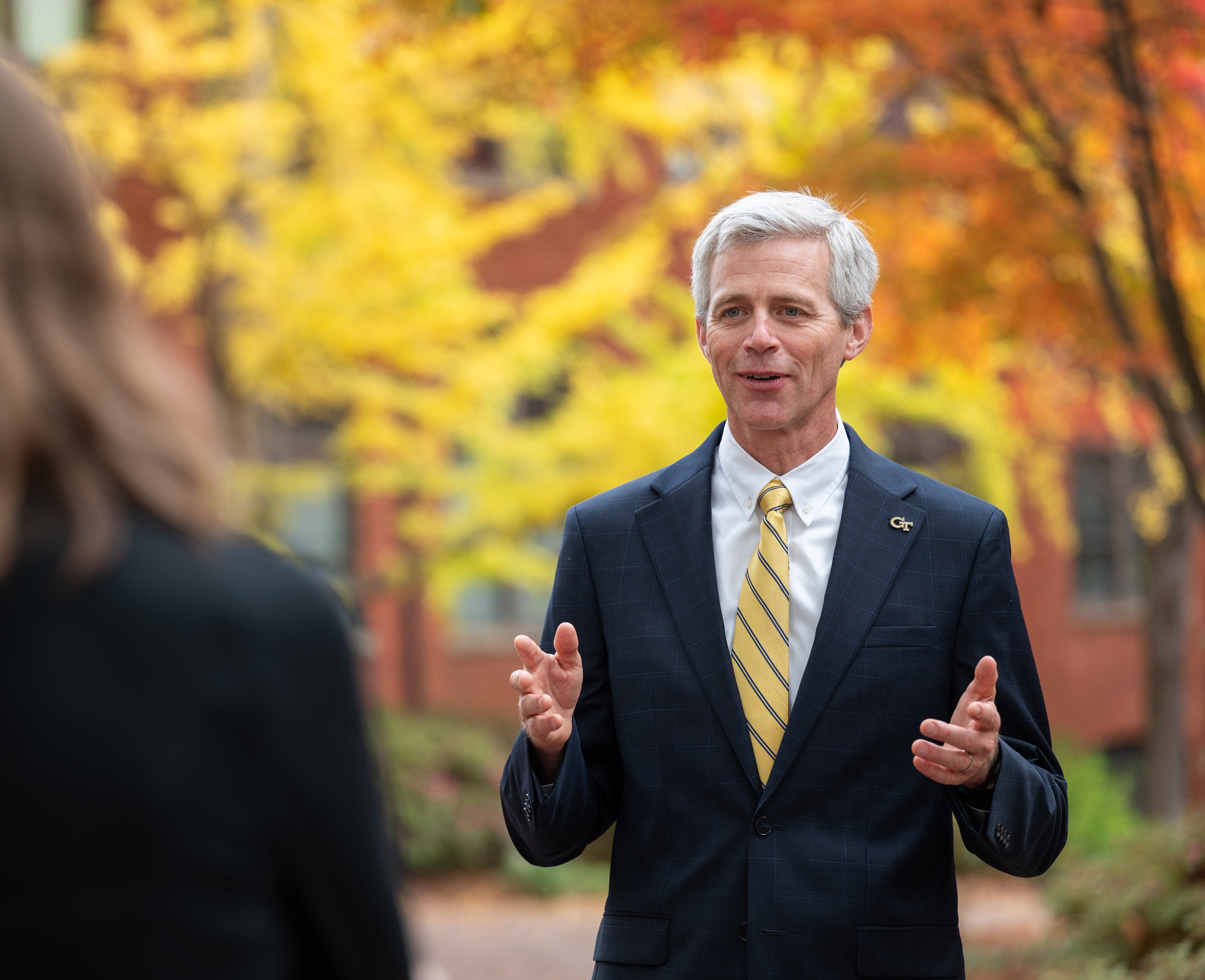
“We have 300 companies today that are working with us because we’re doing stuff that can help their businesses,” he said.
Georgia Tech students and faculty also start businesses of their own. They’ve created 180 startups this year, according to Lieuwen, saying the school has more student startups than any university in the country.
Also top of mind for the new president: artificial intelligence. Under his leadership, the school will take a “responsible” approach to AI, Lieuwen said. That means teaching students how to use it without it replacing the hard work of learning.
“AI is, on one hand, super exciting in terms of what it can do, but also deeply unsettling. It also has enormous opportunities that it creates for our healthcare systems, for manufacturers in Georgia. But there’s also some really scary downsides,” he said, such as disinformation and bioterrorism.
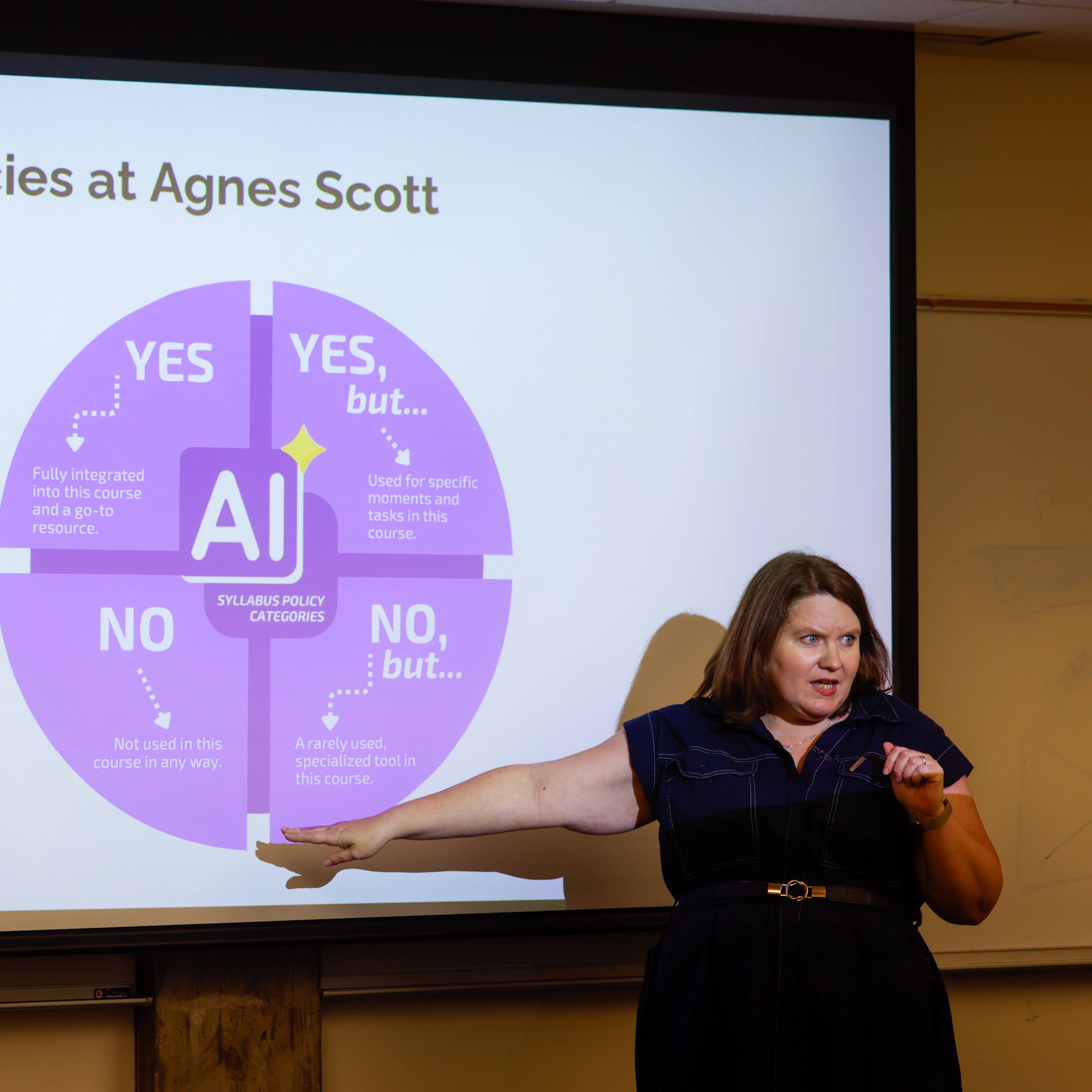
“How do we develop tools for tracking misinformation?” he said. ”How do we develop intrinsically robust encryption things for protecting and safeguarding information, cybersecurity. We have world-leading cybersecurity activities where AI has both big risks, but also big upside."
Lieuwen said he wants more Georgia students to be able to attend Tech, noting that 4,600 more Georgia students attend now than 10 years ago.
“I am committed that we can say yes to more Georgia students every year than we did the year before that,” he said. “We’re here to serve people and get stuff out there and make the world a better place, as opposed to just being an ivory tower where we sit inside of it and enjoy the freshly cut grass.”
Georgia Tech’s “secret sauce” is not just having top-ranked programs, but also “deploy(ing) that excellence toward real problems of the state in which we live … creating very, very valuable degrees, keeping tuition costs low, creating more opportunities for more kids,” said Lieuwen, who was raised on a farm with six siblings and attended college on a Pell Grant. “I think it’s a model that every prominent research university in this country should be looking at.”
Although Lieuwen’s appointment followed a nationwide search, no such process was conducted in the appointment of Fuchko, who previously led Dalton State University. University of North Georgia’s former president, Michael P. Shannon, left the school Oct. 31 to become president of the University of North Florida.
UNG professor Matthew Boedy, who also leads Georgia’s chapter of the American Association of University Professors, posted about the decision on social media.
“The (USG Board of Regents) just announced a new president for my university with no search, on a holiday, three weeks after the other left,” he wrote. “Is this a joke?”
Asked for comment, the USG said its policies do not require the Board of Regents conduct a search. It noted it also did not conduct searches when it recently named the presidents of Georgia Southwestern State and Gordon State universities in June.
Fuchko will take over Jan. 1. Provost Gina Kertulis-Tartar will serve as Dalton’s interim president, the USG said in a news release.