All students have a human right to an education

Hispanic students make up approximately 20% of the enrollment in Georgia’s public schools, nearly a five-percentage-point increase in the last decade. AJC Get Schooled is publishing a series of guest essays this week exploring the educational landscape for Hispanic students in Georgia as part of our Hispanic Heritage Month coverage. Here is the second of these essays.
Freedom University recently opened its doors for its 13th year in Atlanta. Students arrived with their eyes wide with excitement, carrying backpacks filled with new laptops, heavy biology books and planners, and wearing their favorite sneakers. But unlike most universities, its location is strictly confidential, and students don’t pay tuition. Unlike other universities, every student is undocumented.
On the eve of Hispanic Heritage Month, the Trump administration’s Department of Justice filed lawsuits against Arizona, New Mexico, Oregon and Washington for providing in-state tuition to undocumented students, bringing the total to 25 lawsuits. The administration claims that “these policies are unconstitutional and discriminate against U.S. citizens from other states who are forced to pay higher out-of-state tuition.”
To those who lack a basic understanding of the U.S. Constitution, Supreme Court legal precedent and in-state tuition requirements, this may seem like a reasonable claim. However, providing in-state tuition to undocumented students who meet a state’s residency requirements protects them from discrimination and keeps high-achieving students educated in K-12 public schools in-state. Additionally, in-state tuition policies that are inclusive of undocumented students are also in line with long-standing Supreme Court rulings that protect against educational segregation based on immigration status.
In Georgia, for example, undocumented immigrants contribute approximately $955 million annually in state taxes. Georgia has not been subjected to a federal lawsuit on its in-state tuition policy because the state bans undocumented students from qualifying for in-state tuition under Board of Regents policy 4.3.4. Georgia also bans undocumented students from admission to its top public universities under policy 4.1.6, including the University of Georgia, Georgia Tech and Georgia College and State University. Undocumented immigrants help fund the public universities they are barred from attending.
Those who cheer on these policies should remember that these same public universities also banned Black students in 1960. In that era, the rationale for educational segregation was legalized racial discrimination. Today’s rationale is still rooted in racial segregation, but it is cloaked in today’s socially acceptable discrimination based on “criminality.”
Modern “illegal” immigration is a fairly recent invention that took its current shape following the 1965 Immigration and Nationality Act. On the surface, this law appeared to be a victory that ended a decades-long national origins quota system created under the 1924 Johnson-Reed Act that heavily prioritized white Europeans, while capping annual immigration to 100 persons from each country in Africa and Asia. There were no quotas for Latin American countries in order to secure a flow of cheap labor across the U.S./Mexico border.
The 1965 law suddenly criminalized Mexican and Latin American immigrants while the U.S. economy still actively recruited and relied on their labor. This was particularly true in the agricultural industry that had been reliant on the Bracero Program, a World War II labor importation program from 1942-1964 that effectively rented workers from Mexico while denying them labor protections. In the same year that Black Americans were finally winning legislative victories with the Civil Rights Act and Voting Rights Act after centuries of social and political struggle, the U.S. government was already recreating a new social caste of people who could provide cheap labor but legally be denied the right to vote: undocumented workers.
Public consent for this new social caste was achieved by criminalizing immigrants of color and then discriminating against them based on their newly created criminal status. “Illegality” is created by those in power, as we have recently seen with this administration’s termination or nonrenewals of Temporary Protected Status for more than a half-million “legal” immigrants from Haiti and El Salvador, and 12 other countries who now find themselves undocumented.
Since 2014, I have served as the director and human rights professor at Freedom University. As one of the only educators in the world whose students are exclusively undocumented, I have had the privilege of living in a beloved community with undocumented students and their families. All of our students are people of color and reflect the racial diversity of undocumented people nationwide: nearly 80% are Hispanic/Latine, 10% are African/Afro-Caribbean, and 10% are Asian.
Our students, who are ages 17-25, have waited the entirety of their lives for some form of comprehensive immigration reform since being brought to the United States as infants and children. This year marks the 25th year of the continued failure of the federal DREAM Act, which would create a pathway to citizenship for our students and the estimated two million undocumented young people who have grown up in the United States.
In my Human Right to Education course, I teach a section on landmark U.S. Supreme Court cases that ruled on the right to education. While many students have heard about the landmark Brown v. Board of Education (1954) case that ended the “separate but equal” doctrine and declared segregation in public schools unconstitutional, none of my students have ever heard of the Mendez v. Westminster (1947) case.
The federal appeals court ruling in the case struck down the segregation of Mexican American children in California public schools. A young Thurgood Marshall wrote an amicus brief for the NAACP in support of the Mendez family, and eventually used the legal strategy of the Mendez case - which successfully argued that educational segregation violated the Equal Protection clause of the 14th Amendment - as a blueprint for his legal victory in the Brown case seven years later.
Justice Thurgood Marshall was serving on the Supreme Court in 1982 when another landmark education case, Plyler v. Doe, was argued before the court. The case involved a local Texas school district that was attempting to deny the enrollment of undocumented students. In a 5-4 vote, the court ruled that denying undocumented children access to free public K-12 education violated the Equal Protection clause of the Fourteenth Amendment, which states that “no State shall … deny to any person within its jurisdiction the equal protection of the laws.” The court ruled that an undocumented immigrant “is surely a ‘person’ in any ordinary sense of the term” and is thus protected by the Equal Protection clause. In an act that was legally necessary but tragically late, the Supreme Court clarified unequivocally that undocumented immigrants are “persons.”
The court emphasized that the principles outlined in the Brown v. Board of Education ruling also applied to undocumented children, citing that “it is doubtful that any child may reasonably be expected to succeed in life if he is denied the opportunity of an education. Such an opportunity, where the state has undertaken to provide it, is a right which must be made available to all on equal terms.”
Injustices faced by undocumented people — who experience educational segregation and taxation without representation — are part of a long and continuous history in this country that economically relies on certain people’s labor while denying their human rights. A recent Gallup poll found that 81% of Americans support a pathway to citizenship for undocumented people brought to the U.S. as children. It is past time to pass the DREAM Act, and we must fight back against this administration’s cruel attempt to segregate children in our schools and separate children from their parents. As a lifelong educator and U.S. citizen, I recognize that undocumented children are our children. Their parents are our neighbors, and it is our duty to love them too.
Our students at Freedom University have dreams for their future as varied as their stories of migration. Jonathan wants to study physics so he can make advanced prosthetics. Aaron wants to study astronomy to search for conditions supportive of life on other planets. Pamela wants to study political science and attend law school, so she may one day be a Supreme Court justice. Her favorite quote is one by Thurgood Marshall she first read in my class: “Unless our children begin to learn together, there is little hope that our people will ever learn to live together.”
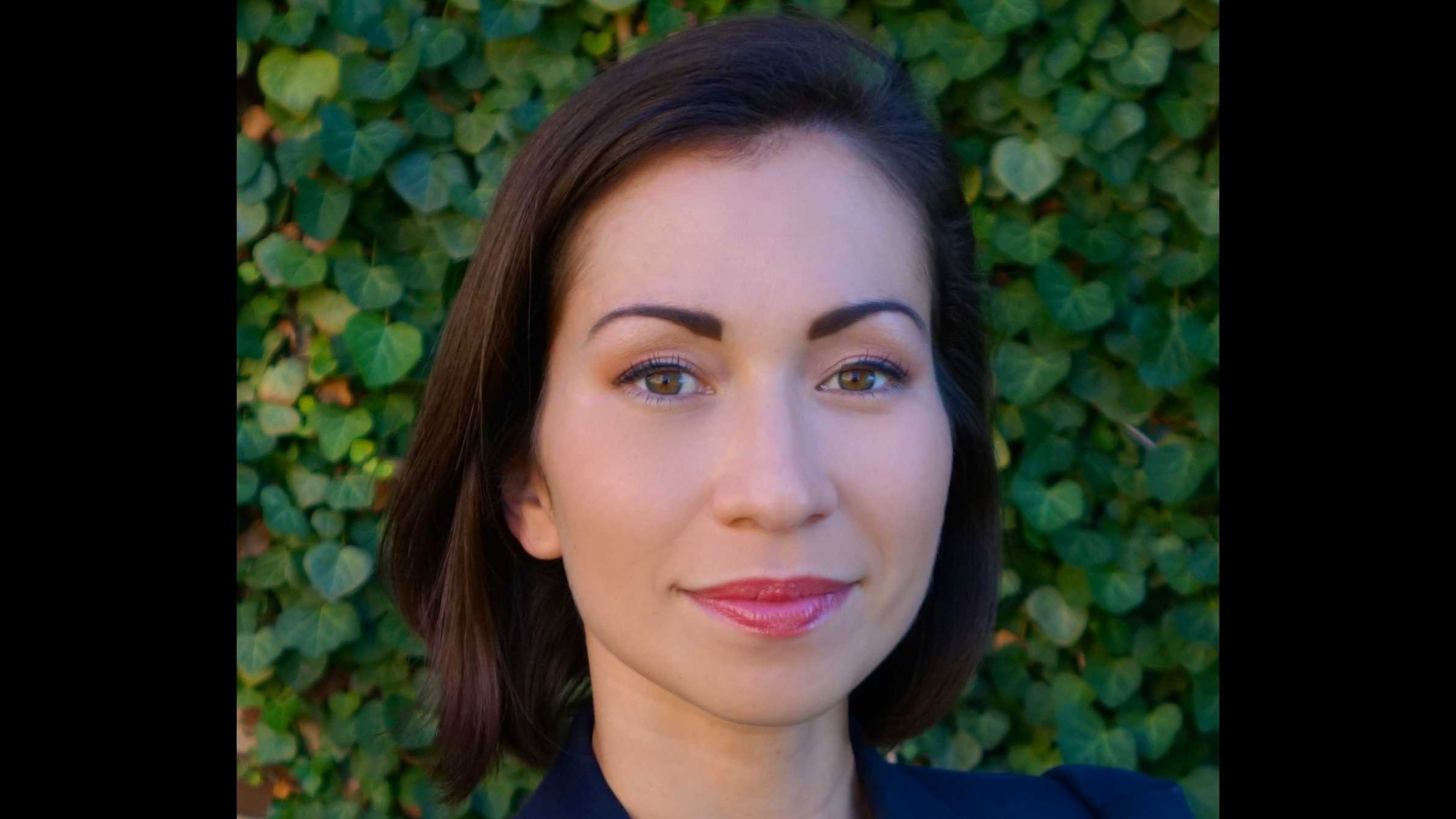
Laura Emiko Soltis is the executive director of Freedom University, an Atlanta-based school that provides tuition-free college preparation classes, college and scholarship application assistance, mental health and legal support and social movement leadership development for undocumented students.
If you have any thoughts about this item, or if you’re interested in writing an op-ed for the AJC’s education page, drop us a note at education@ajc.com.