Remote study program exposes undocumented Georgia students to a new world
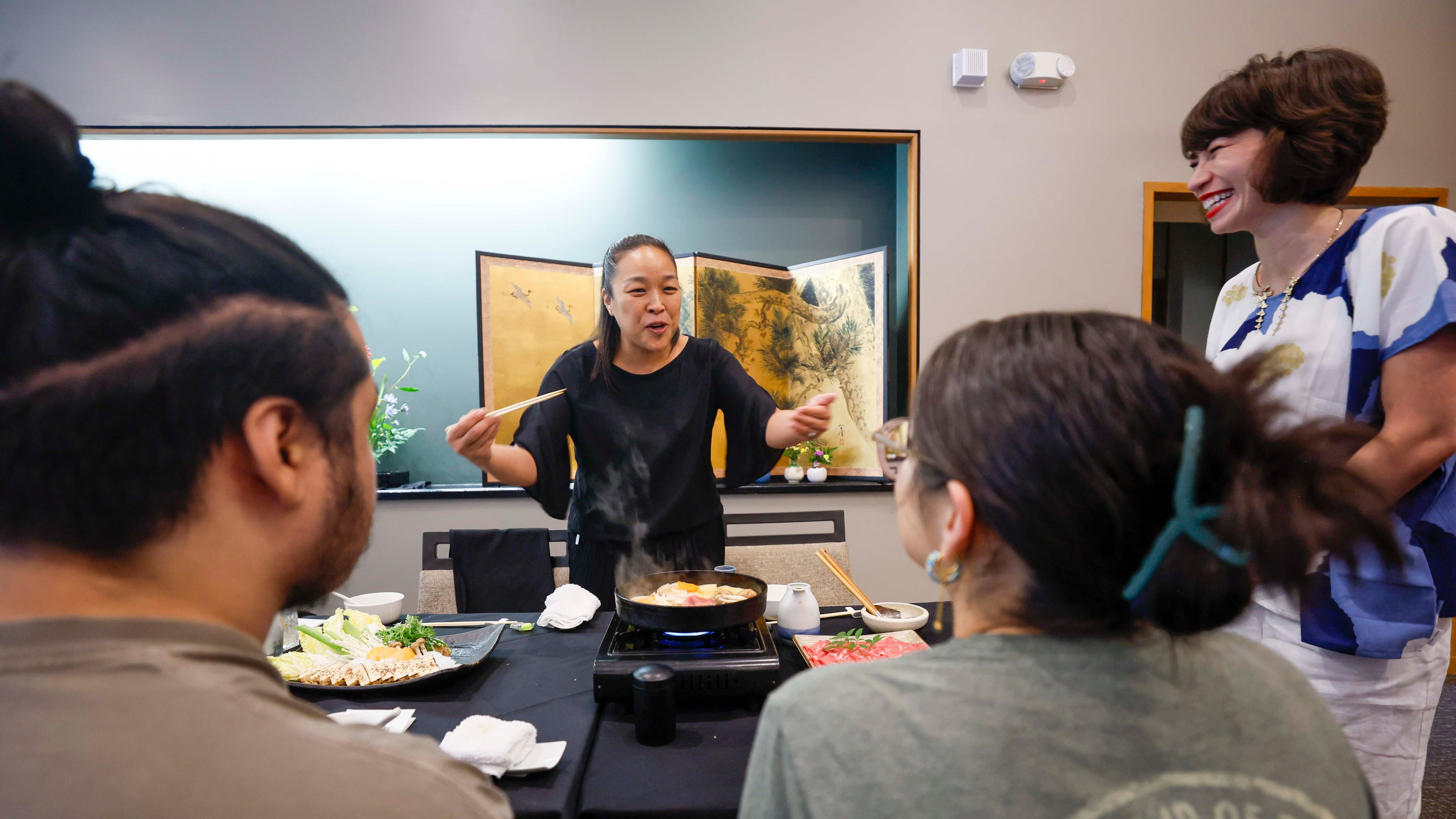
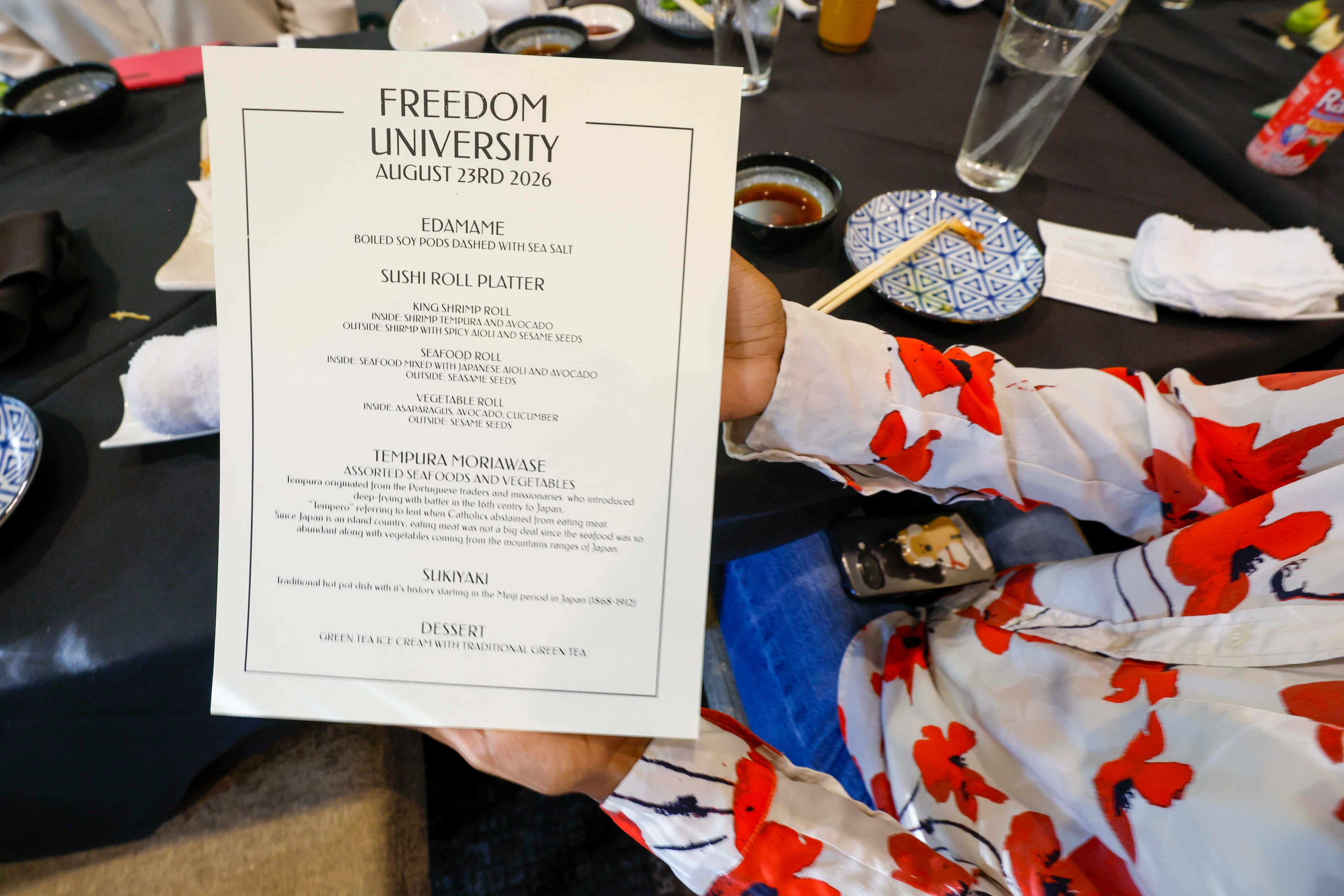
On a recent Sunday evening at Nakato Japanese Restaurant near Buckhead, a group of students and faculty gathered for dinner, celebrating the students’ recent completion of a unique academic achievement.
It’s time for the second-to-last course: sukiyaki, a traditional Japanese hotpot dish. Restaurant owner Sachiyo Nakato Takahara places noodles, cabbage, onion and tofu into the sizzling, fragrant pot while explaining the significance of the meal, an intimate one typically enjoyed by close friends or family. She entrusts a couple of students with adding beef slices and monitoring the ingredients as they rapidly cook.
Within 90 seconds, the hungry students and teachers eagerly dip their chopsticks into the “camaraderie pot,” devouring the food while enjoying good conversation.

Studying abroad is a once-in-a-lifetime opportunity for many students worldwide, allowing them to broaden their worldview, familiarize themselves with a different culture and even learn a new language. However, many U.S. students don’t have access to this privilege. One such population is undocumented students, who risk being barred from reentry if they leave American soil.
Freedom University, a Georgia-based nonprofit for undocumented students, just concluded its sixth annual Japan virtual study abroad program. The monthlong intensive, titled “Japanese Society in the time of Globalization: Culture, Politics and Equity,” gave students a study abroad experience without even having to board a plane.
“It’s just a very enriching program for everyone involved, not just our students, but the Japanese students, the Japanese guest lecturers, our staff. Every year, everyone says this was just such a transformative experience for themselves,” says Freedom U executive director Laura Emiko Soltis, who has been involved with the organization since 2013, initially as a volunteer faculty member.
The program comes amid the Trump administration’s efforts to crack down on undocumented students. In late August, for example, the U.S. Justice Department filed lawsuits against Arizona, New Mexico, Oregon, and Washington for providing in-state tuition to undocumented students, bringing the total to 21 states sued. Georgia is not one of the states under litigation.
Federal officials say the policy discriminates against U.S.-born students who pay higher out-of-state tuition costs.
“This is a simple matter of federal law: colleges cannot provide benefits to illegal aliens that they do not provide to U.S. citizens,” Assistant Attorney General Brett A. Shumate of the Justice Department’s Civil Division said in a written statement after the lawsuit was announced.
Freedom U’s philosophy
In 2010, the Georgia Board of Regents approved a policy banning undocumented students from some public universities that “did not admit all academically qualified applicants” in the past two academic years. The policy impacts a handful of University System of Georgia schools, such as the University of Georgia and Georgia Tech. Another 2010 policy prohibited undocumented students from paying in-state tuition to the state’s public universities, which is lower than other forms of tuition.
Freedom U began a year later in response to the policies. It provides resources such as free college prep courses, scholarship assistance and mental health support for undocumented students, typically serving about 20 to 25 students a semester, in addition to offering summer programming. “Our mission is to educate and empower undocumented students and fulfill their human right to education,” Soltis said.
Soltis points to articles within the United Nations’ 1948 Universal Declaration of Human Rights, which establish freedom of movement and the right to an education, as central tenets of Freedom U’s philosophy.
“People who happen to have been born within the boundaries of what is now the United States have that right respected, and have a passport that allows them to travel wherever they want on vacation. But that is not the case for many countries in the global South, which is where all of our students come,” Soltis said. “Many come here to escape political violence, escape domestic violence, gang violence … and there is a right to asylum that’s recognized in international law that is constantly trampled upon by our government.”
Charles A. Black, the chair of Freedom University’s board of advisers, served as the second chairman of the Atlanta Student Movement in the 1960s, playing an instrumental role in desegregating Atlanta public facilities. He sees many similarities between the treatment Black Americans faced during those times and undocumented students’ experiences today.
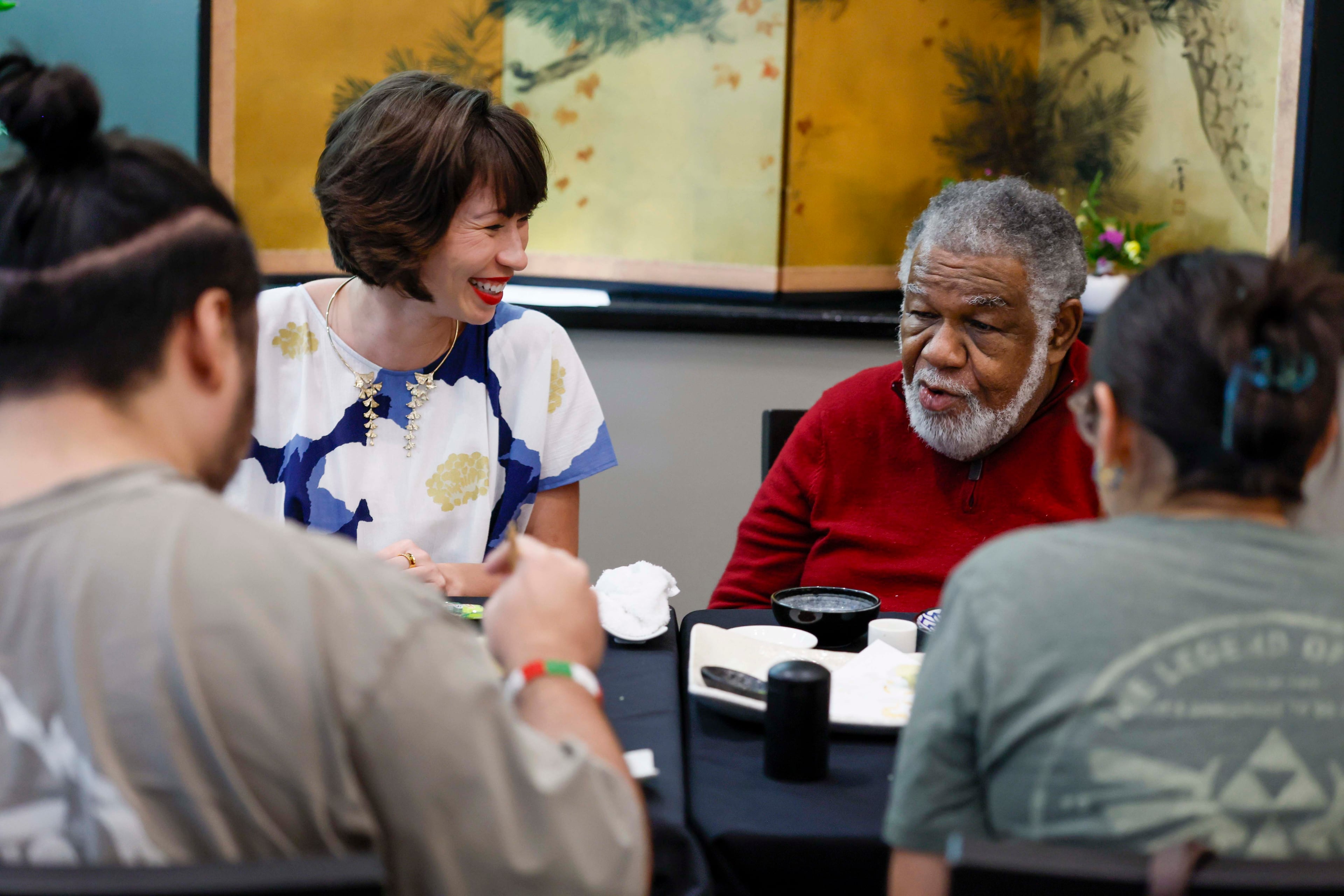
“We’re doing the same thing here with undocumented students. Really bright people, all kinds of talent and skills, and commitment to the cause of this country … and we’re making them go elsewhere for education. And many of them won’t come back. So that’s a brain drain,” Black said.
Connecting across continents
Freedom U’s study-abroad program was the brainchild of Soltis and James “JD” Parker, a visiting research scholar at Kyoto University.
Parker has worked in the study abroad industry for about 10 years. The COVID-19 pandemic forced him and many others to adopt online formats to continue serving students. This also inspired the Japan program.
Cohorts have typically ranged from 15 to 20 students, and they meet for two hours each night, four nights a week, throughout the program’s monthlong duration. Students are attracted to the program for a variety of reasons, from wanting to take advantage of a tuition-free educational opportunity to more specific interests in aspects of Japanese culture, like anime and Japanese dramas.
Students engage with Japanese human rights and refugee support organizations, as well as academics studying subjects like gender and labor, the Buddhist faith and notions of suffering, and migration between Japan and Latin America. In their learning process, Freedom U students said they have drawn parallels between their own lives and the experiences of undocumented students in Japan. Students also get to learn about more lighthearted topics, such as the global craze for matcha and other Japanese exports, as well as Japanese kawaii culture, which emphasizes cuteness through icons like Hello Kitty.
Despite the geographical barrier, the program does all it can to immerse students: students even receive 360-degree virtual interactive tours of Japanese historical sites, such as Himeji Castle.
One program participant, Pamela Medrano, is passionate about political science. “There’s a feeling of undocumented people not being represented in my local government. It’s tough because there’s a large population here where I live, and I just want to push for positive policies to help undocumented people,” she said.
While the program has concluded, Medrano plans on continuing to follow Japanese politics: “I can draw a lot of similarities about what’s happening and connect a lot of events between the U.S. and Japan. It’s just so interesting how different things can be in their society versus ours.”
Migration and belonging are big themes of the program. “Something that just kept coming up throughout the program that they reflected on (was) how home and belonging was created through relationships rather than simply geographic space,” Parker said.
Another significant element of the program is learning Japanese.
“Probably 4 out of 5 (students) are Spanish speakers. They realize that Japanese and Spanish have the same vowels, and their pronunciation is, like, superb,” Soltis said.
“We love seeing their faces light up, and they’re like, ‘Oh, my Japanese pronunciation is really good. This is easy,’ and then they realize that being bilingual already, that they usually have a knack for languages, right? It’s actually just a joy, this kind of confidence they build in their abilities.”
Participants also had meaningful discussions with Japanese students: Japanese students introduced themselves in English, and then Freedom U students introduced themselves in Japanese. The Japanese students even wrote the names of Freedom U students in calligraphy using kanji characters and mailed the papers to them as a gift.
The program welcomed students into a meaningful community while also engaging them intellectually. “We got together, and we gave them a space where they didn’t have to constantly be thinking about the difficulties of life that they’re facing, and we didn’t hyper-focus on that. We gave them opportunities to just be students … and giving them an opportunity to connect with each other as well,” Parker said.