What should we teach students in the age of AI?
Editor’s note: As students in metro Atlanta return to school this week, The Atlanta Journal-Constitution is publishing several guest opinion columns about how artificial intelligence is reshaping education. Here is the latest of these essays.
Artificial intelligence is about to fundamentally reshape the economics of creation. We are entering a world where images, music, advertising, software, media, marketing campaigns and synthetic worlds can be generated instantly and inexpensively. For the first time in modern history, the ability to create content and ideas is becoming nearly infinite.
This collapse of scarcity forces business, education and civic leaders to confront an urgent question: If content and production become abundant, where does economic value go?
I believe the premium increasingly shifts toward what is uniquely human: taste, emotional truth, perspective, discernment, judgment and authentic voice.
In other words, as artificial intelligence commoditizes production, human creativity itself becomes premium infrastructure.

For Georgia — a state rapidly emerging as a premier center for innovation, entrepreneurship, fintech, logistics, higher education, entertainment and advanced infrastructure — the answer to this question may help define our long-term economic future.
After spending more than three decades inside Hollywood writers’ rooms — from the storytelling culture shaped by Grant Tinker and MTM Enterprises to Walt Disney Feature Animation and network television — I’ve learned that the most vital creative moments rarely arrive mechanically.
They emerge from lived experience, vulnerability, instinct, disagreement, emotional risk, humor and human connection.
The best stories and ideas are not assembled like equations; they are discovered through perspective.
That discernment is the essence of true taste.
Taste is not merely trend awareness or aesthetic preference. It is the capacity to recognize emotional truth, understand cultural shifts, identify meaningful ideas and connect deeply with other human beings. In a world flooded with synthetic output, this uniquely human discernment may become one of the defining economic and cultural assets of the next generation.
This shift has implications far beyond Hollywood. AI will transform marketing, education, software design, communications, media, entrepreneurship and business leadership itself. Many technical and production capabilities that once carried a significant premium will become increasingly automated and inexpensive.
But automation does not eliminate the need for human creativity. It elevates it.
When content becomes limitless, curation becomes priceless. When everyone can make something, the economic advantage belongs to those who know what matters.
This is why Georgia faces an extraordinary opportunity.
Over the last decade, our state has built one of the country’s most dynamic growth ecosystems, balancing physical infrastructure with technology investment, production capacity, research institutions and entrepreneurial energy.
But the next phase of growth will require more than capital assets alone.
The regions that thrive in the AI economy will be those that cultivate human creativity, entrepreneurial thinking, original intellectual property and meaningful cultural experiences.
The future belongs not merely to places that host innovation efficiently, but to ecosystems that develop human perspective itself.
That philosophy drives our work at the Trilith Institute.
At the institute, we often talk about setting the stage for the “storymakers” who inspire the world.
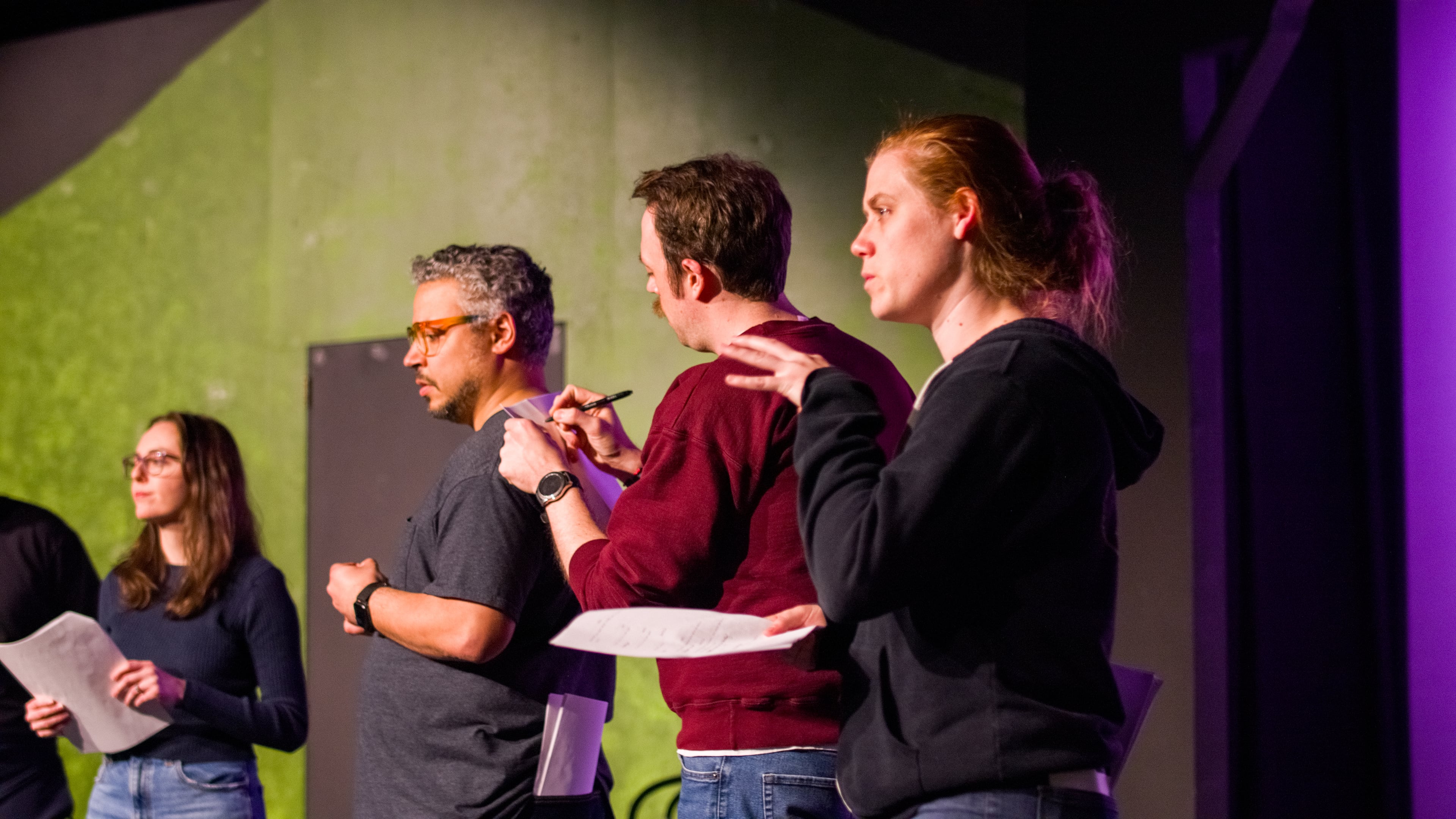
We are exploring a new model where education, live performance, production, entrepreneurship and intellectual property development operate together inside one integrated ecosystem — what I often describe as a “teaching hospital” for storytelling and creative collaboration.
In this model, students do not simply study disciplines in classrooms. They learn by participating directly in productions, development labs, entrepreneurial ventures and collaborative creative environments alongside working professionals.
This matters because the future workforce will require far more than technical proficiency.
Technology evolves rapidly; human perspective takes a lifetime to mature.
The durable human assets — the ones that appreciate in value as AI advances — are collaboration, judgment, adaptability, emotional intelligence, discernment and authentic voice.
These are not ornamental soft skills. They are essential economic infrastructure.
Long before artificial intelligence, story was humanity’s original meaning-making technology — the way we transmitted values, built trust, shared knowledge, inspired communities and understood ourselves.
Story remains one of the primary ways human beings create meaning, identity, trust, empathy and shared culture. In an increasingly synthetic world, those capacities may become more valuable, not less.
AI will undoubtedly transform how we work, create and communicate. But human beings will still look to stories for meaning, connection, inspiration and truth. And in the age of abundance, the ability to create and shape meaningful stories may become one of the most valuable economic and cultural assets of all.
The future belongs to the people — and the places — that cultivate those storymakers.
Jeffrey Stepakoff is president and CEO of Trilith Institute, a nonprofit dedicated to developing the next generation of storytellers. An Atlanta native, his four-decade career has spanned Hollywood, higher education and workforce development, helping shape Georgia’s film and television industry and the creative economy.
If you have any thoughts about this item, please go to our AJC Get Schooled Facebook page. If you’re interested in writing an op-ed for the AJC’s education page, drop us a note at education@ajc.com.