How do Atlanta companies ‘earn the commute’? Here’s an IT firm’s answer.
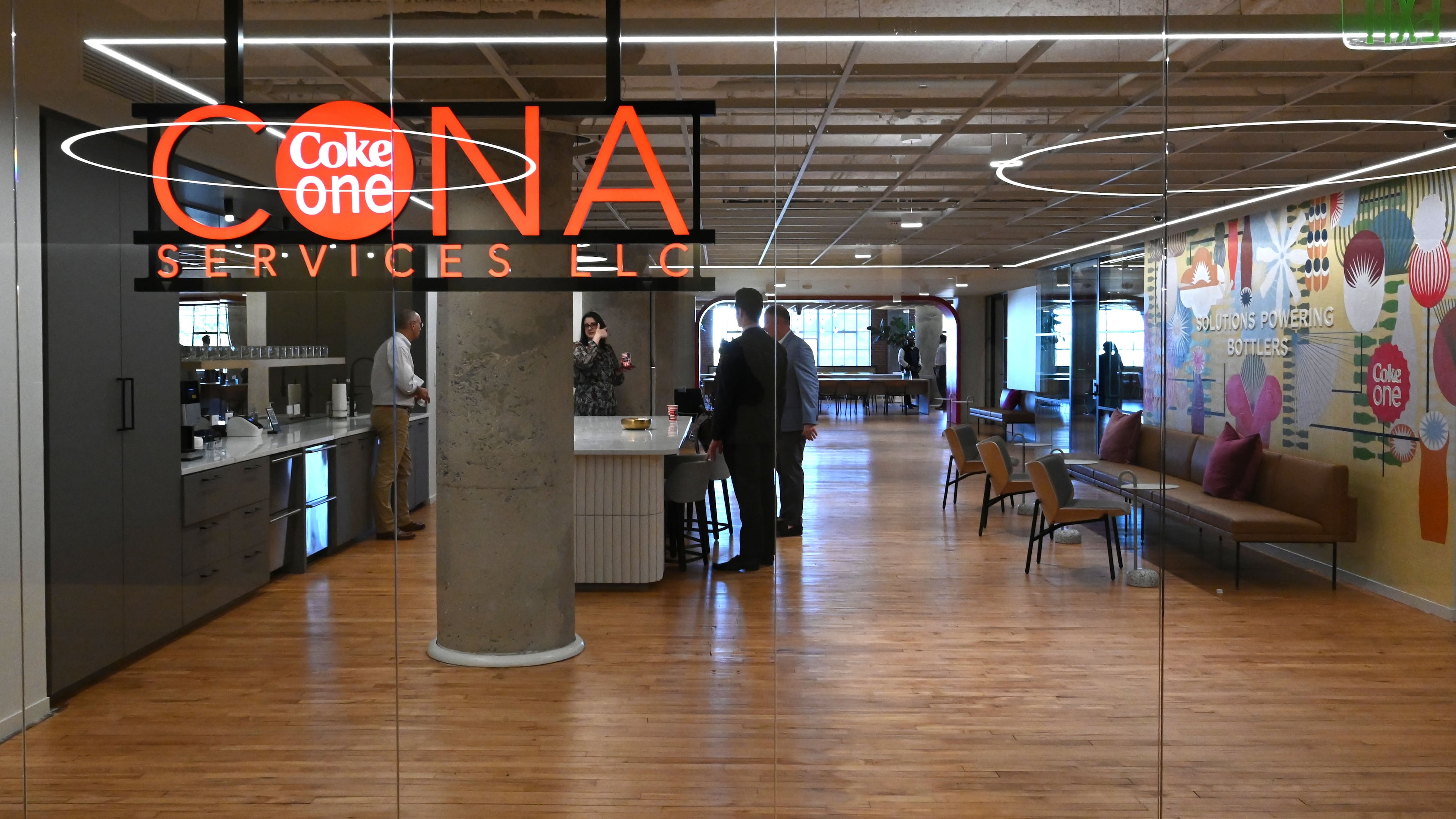

Just like a shaken bottle of soda, pressure was starting to build at Lisa Obiano’s company.
Coke One North America, an information technology firm that supports Coca-Cola bottlers, went fully remote early in the COVID-19 pandemic. The company grew headcount during the time away, so when corporate leadership was ready to return to its Midtown office, it threatened to overflow.
“We were tight on space,” said Obiano, vice president of people and organizational effectiveness at the company, which goes by CONA Services. “It was causing people to question if it was worth coming in if they’re going to be uncomfortable.”
Atlanta area companies big and small have grappled with the return to a physical office and the scope of their real estate needs since the pandemic. The issue impacts not only the workers for respective companies and their commutes, but strikes at the vibrancy of neighborhoods.
Fuller towers are worth more than emptier ones, boosting the tax digest, which pays for schools and other government services, and supporting surrounding businesses. The Atlanta Journal-Constitution interviewed officials at CONA, its office landlord and commercial real estate firms to better understand how companies make these decisions.
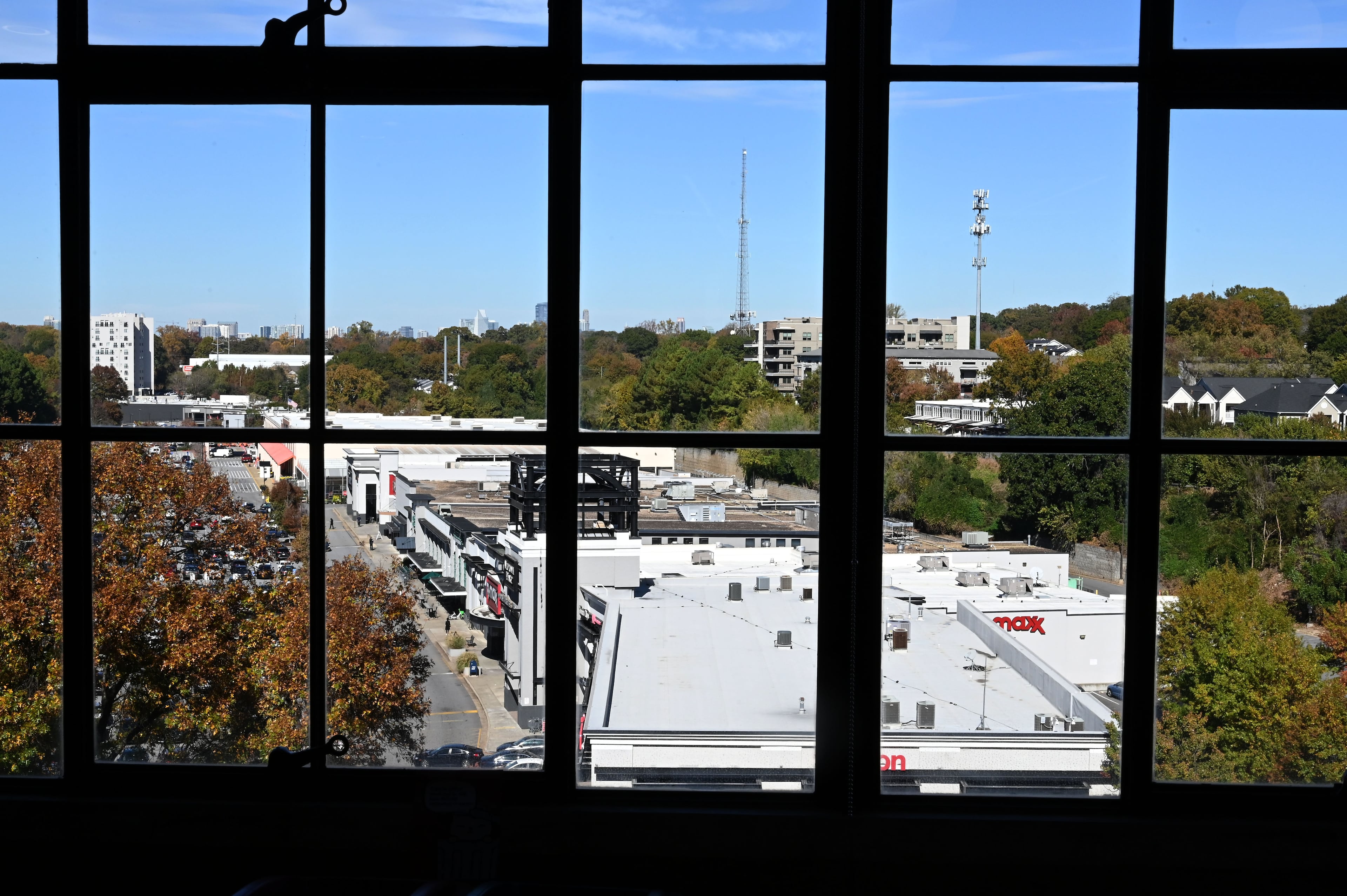
Obiano was tasked with solving the problem for CONA, which resulted in the firm relocating to one of region’s best-known real estate developments: Ponce City Market off the Atlanta Beltline.
CONA moved to the mixed-use building’s sixth floor in October 2025, leasing roughly 49,000 square feet. Both CONA and Jamestown Properties, the developer and operator of Ponce City Market, declined to provide lease terms, but the Eastside Beltline corridor tends to command some of metro Atlanta’s most expensive rents.
Obiano said the strategy is paying off for the company after only its first year. The move coincided with the implementation of a three-day in-office policy, but employee headcount has only increased since the move, she said.
“We set the space up so that we could potentially expand down the road in a couple years if we grew,” Obiano said, adding that the company has about 180 workers based in Atlanta. “And we’re already looking at having to do that a year in.”
Chris White, market leader for office and industrial occupier services at real estate firm Franklin Street, was hired to advise CONA’s search. He said the pandemic fundamentally changed the way many companies think about their office space, with some like CONA seeing it as a valuable recruitment and retention tool.
“If you can’t earn the commute … you’re doing a detriment to your organization versus adding value,” he said. “A lot of our clients are using their workplace as a competitive advantage.”
What prompted CONA’s move?
CONA was founded in 2016 as a joint venture to pool IT resources for several major North American Coca-Cola bottlers. It’s an independent LLC from the Atlanta beverage giant.
CONA’s original corporate home was in a 33,000-square-foot office at the 10 10th Street building near the Midtown MARTA station. It served the company’s needs before the 2020 COVID-19 shutdown, but Obiano said the firm struggled to make the space work after returning, even while experimenting with popular post-pandemic workplace trends.
One example that didn’t work was hoteling, in which employees don’t have dedicated workstations but reserve one every time they commute to the office. She said most employees said they missed having their own desk, which is something White says he hears frequently from clients.
White said chief financial officers “love that (hoteling) experiment because it was a way to condense square footage and costs even more, but I think a lot of CFOs right now are more interested in making sure that people are happy, productive and effective.”
Office leasing slowed to a crawl following the shutdown, leading to a record-setting glut of unwanted space that metro Atlanta is still trying to address. Despite a recent rebound in leasing activity and some space being converted to apartments or demolished, more than 30% of all office square footage in the Atlanta market remains vacant or available to sublease, according to real estate services firm CBRE.

Companies have had to navigate all of that rapid change, which White said has led to a renaissance among the office consulting business. From badge swipes to foot traffic, there’s a lot of new data that can help inform workplace decisions.
“Something that almost killed the office space business is now creating a consulting capability that a lot of us are leaning into heavily,” he said. “We can add a lot more value to our clients by being a true strategist for them.”
Why choose Ponce City Market?
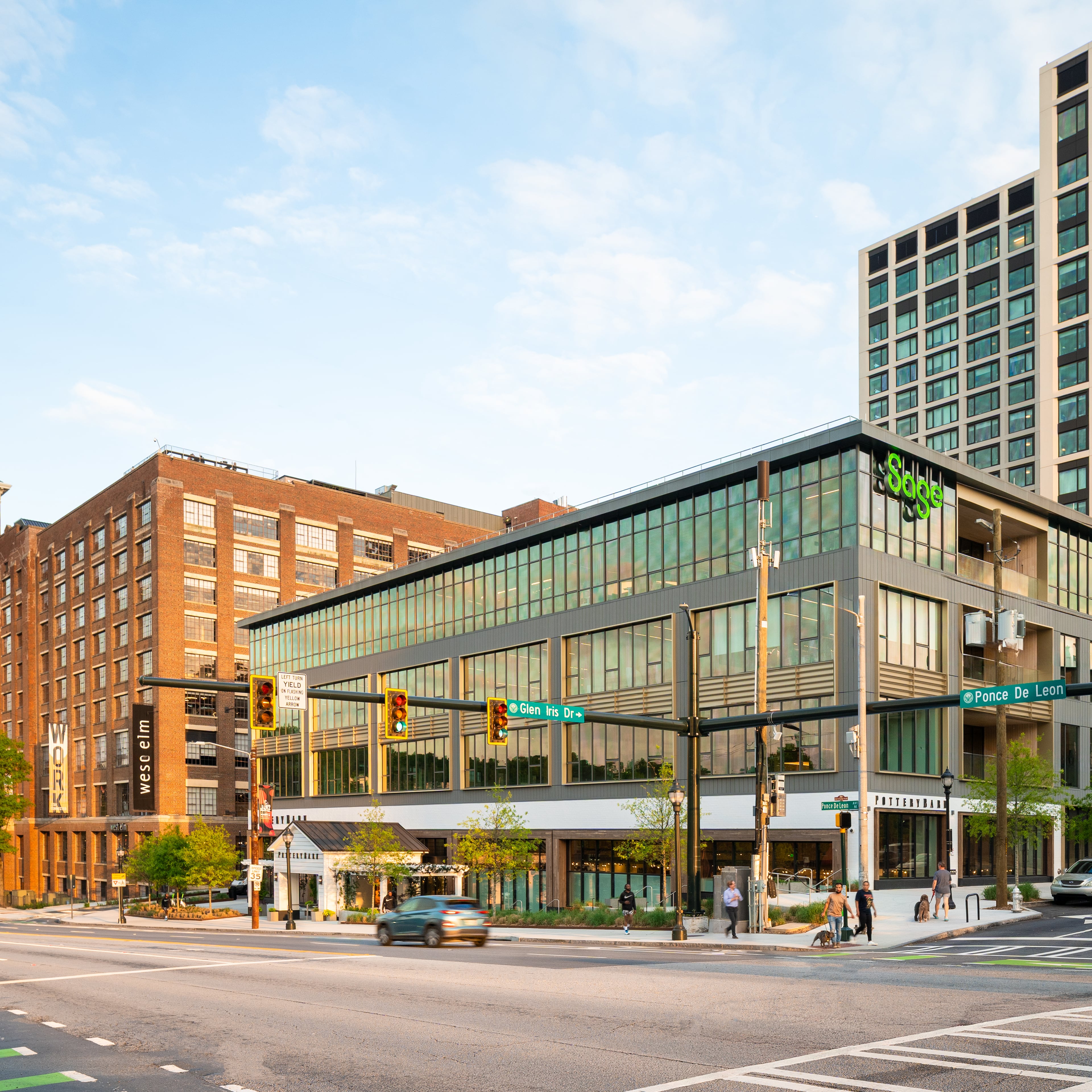
Before it was a Beltline destination, Ponce City Market was a Sears distribution and retail center and later owned by the city and operated as City Hall East.
Jamestown acquired it in 2011. The real estate firm, which is known for New York City’s Chelsea Market, converted the warehouse in similar fashion into Ponce City Market, a mix of office, retail, restaurants and housing.
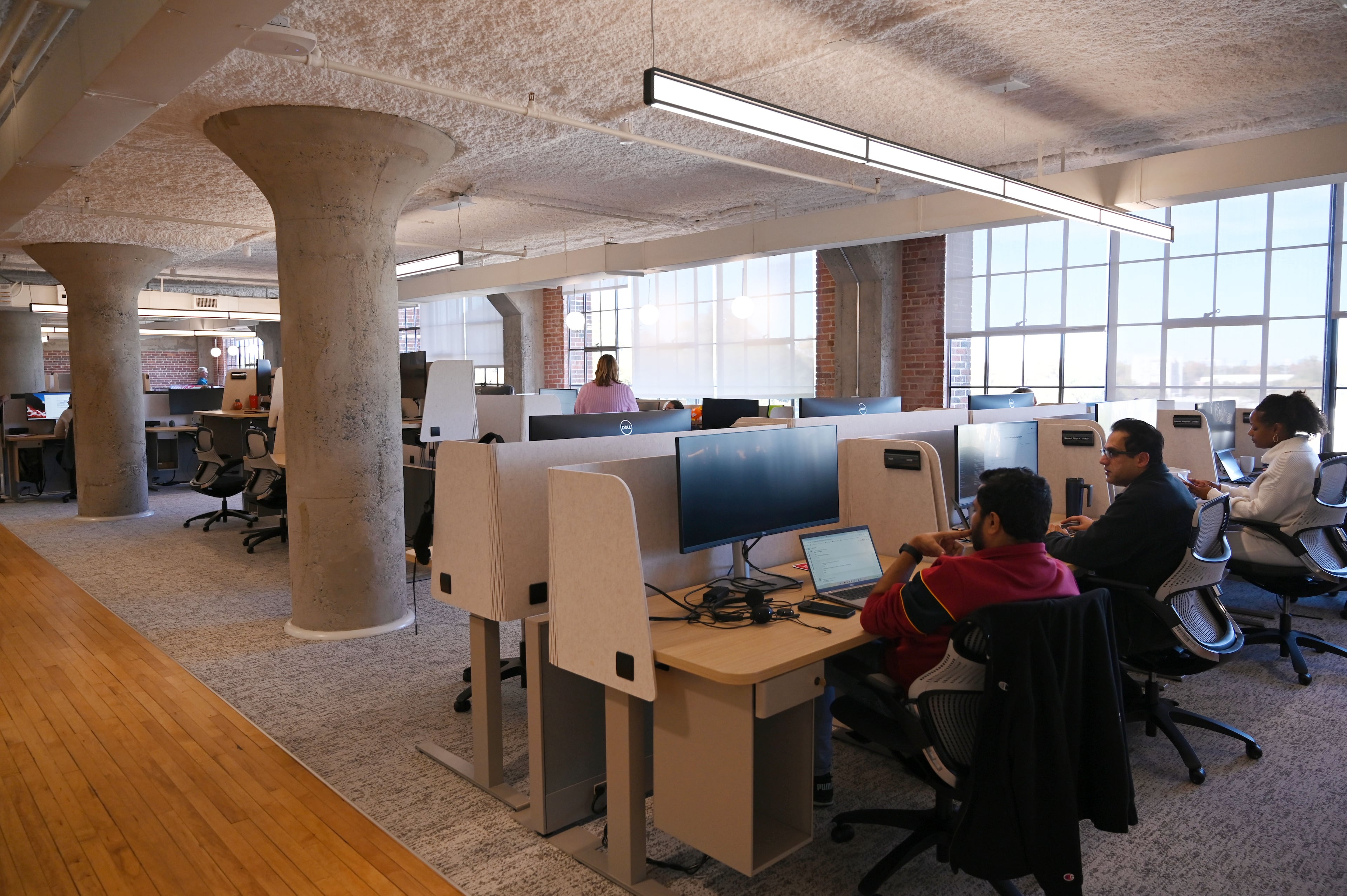
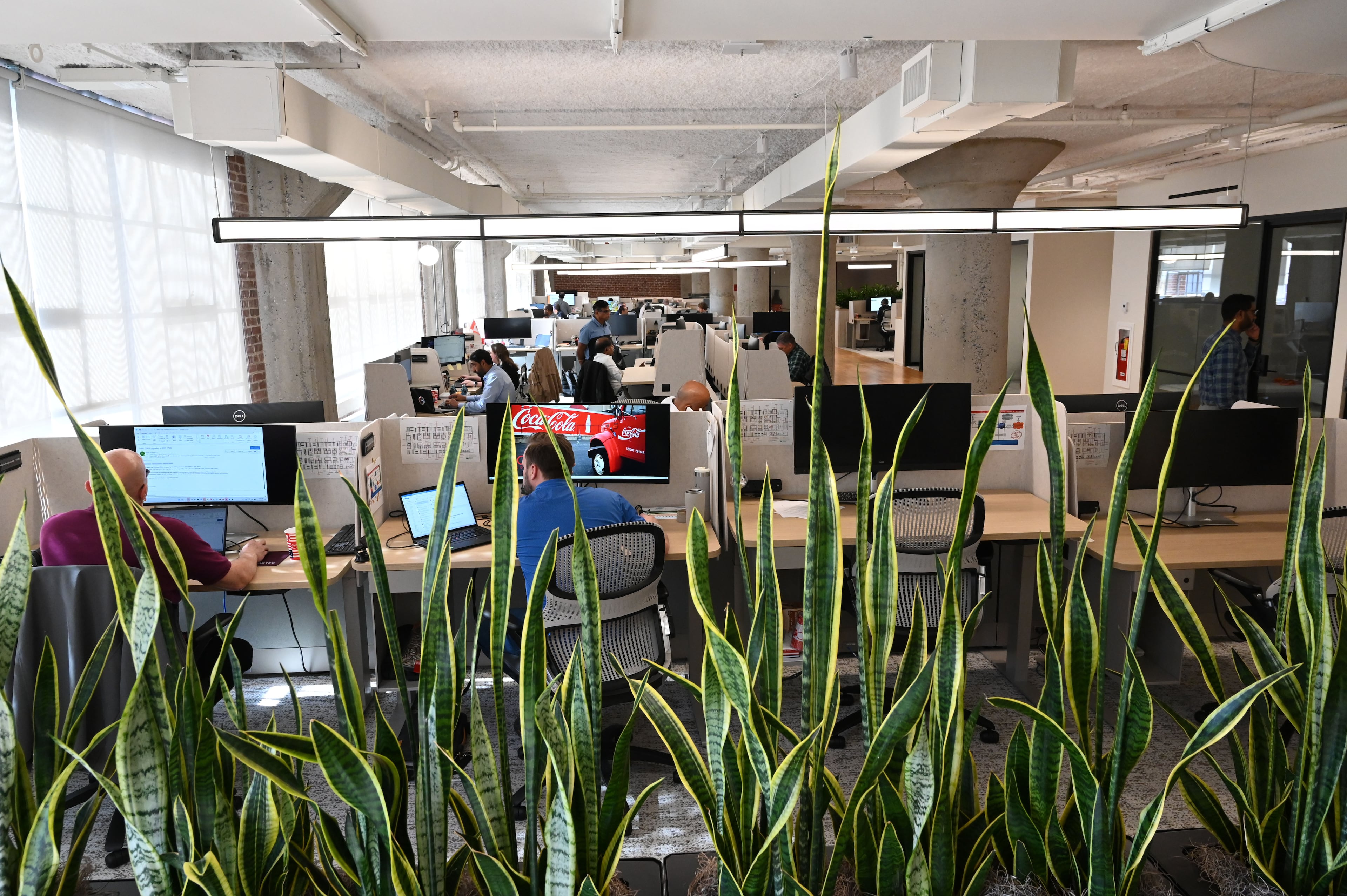
Obiano said the building’s warehouse-sized floors were appealing because CONA could keep its offices to just one floor while guaranteeing each employee a dedicated workstation. She said Jamestown effectively runs its recruitment process like a hospitality firm, which has become more common among office landlords.
“If you’re working with your tenants and understanding what their needs are, it comes across as hospitality,” said Will Morgan, senior vice president and Southeast regional market leader of asset management at Jamestown. “But in reality, we’re just trying to work with them to provide all of those different things (they need).”
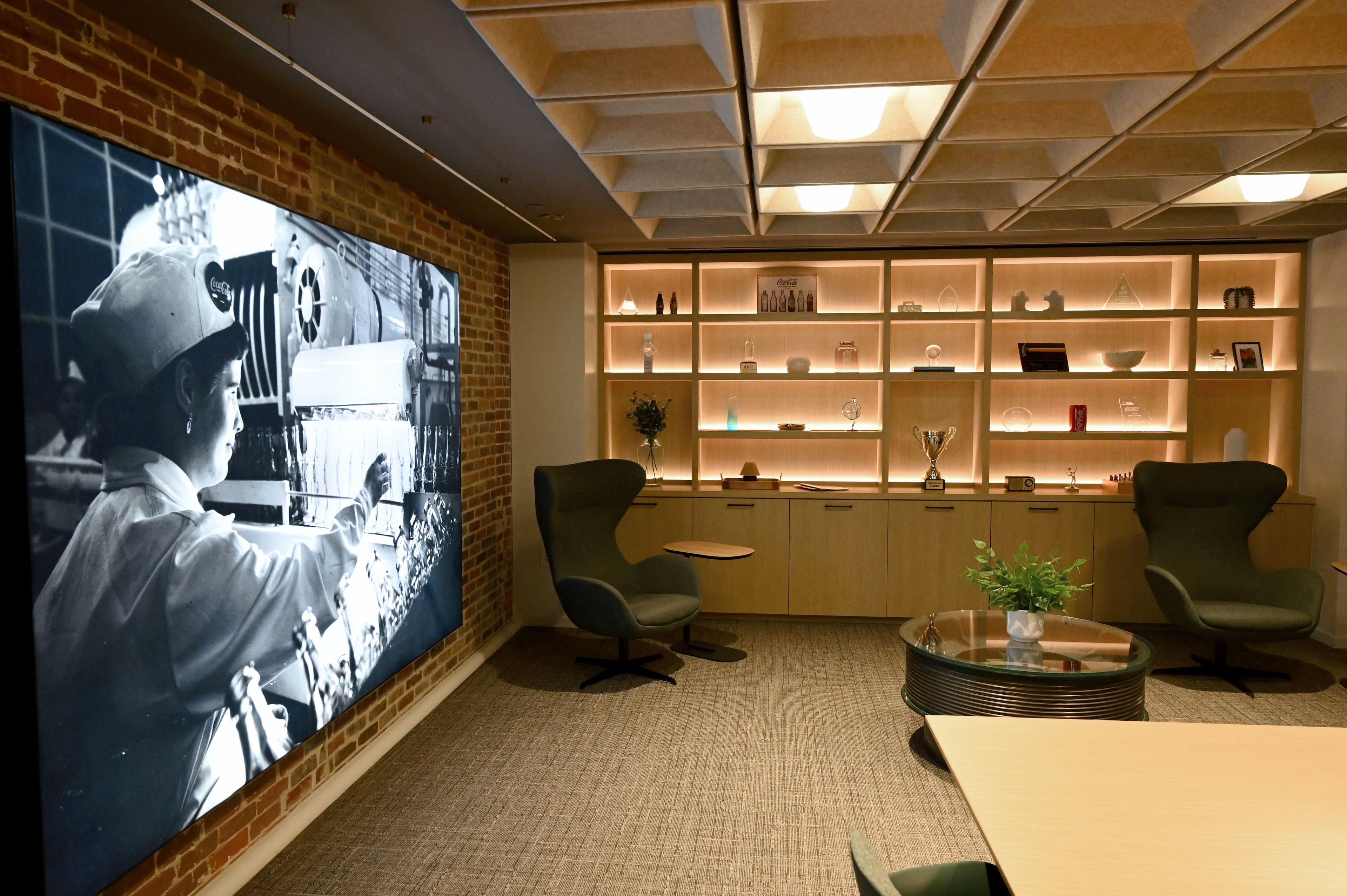
CONA surveyed its employees and also found they wanted access to on-site restaurants, which their former Midtown office lacked. Ponce City Market is known for its food hall and proximity to dozens of eateries.
“Now, you have so (many options) that you have to take out a spreadsheet to decide on where you’re going to have coffee the next day,” White said.
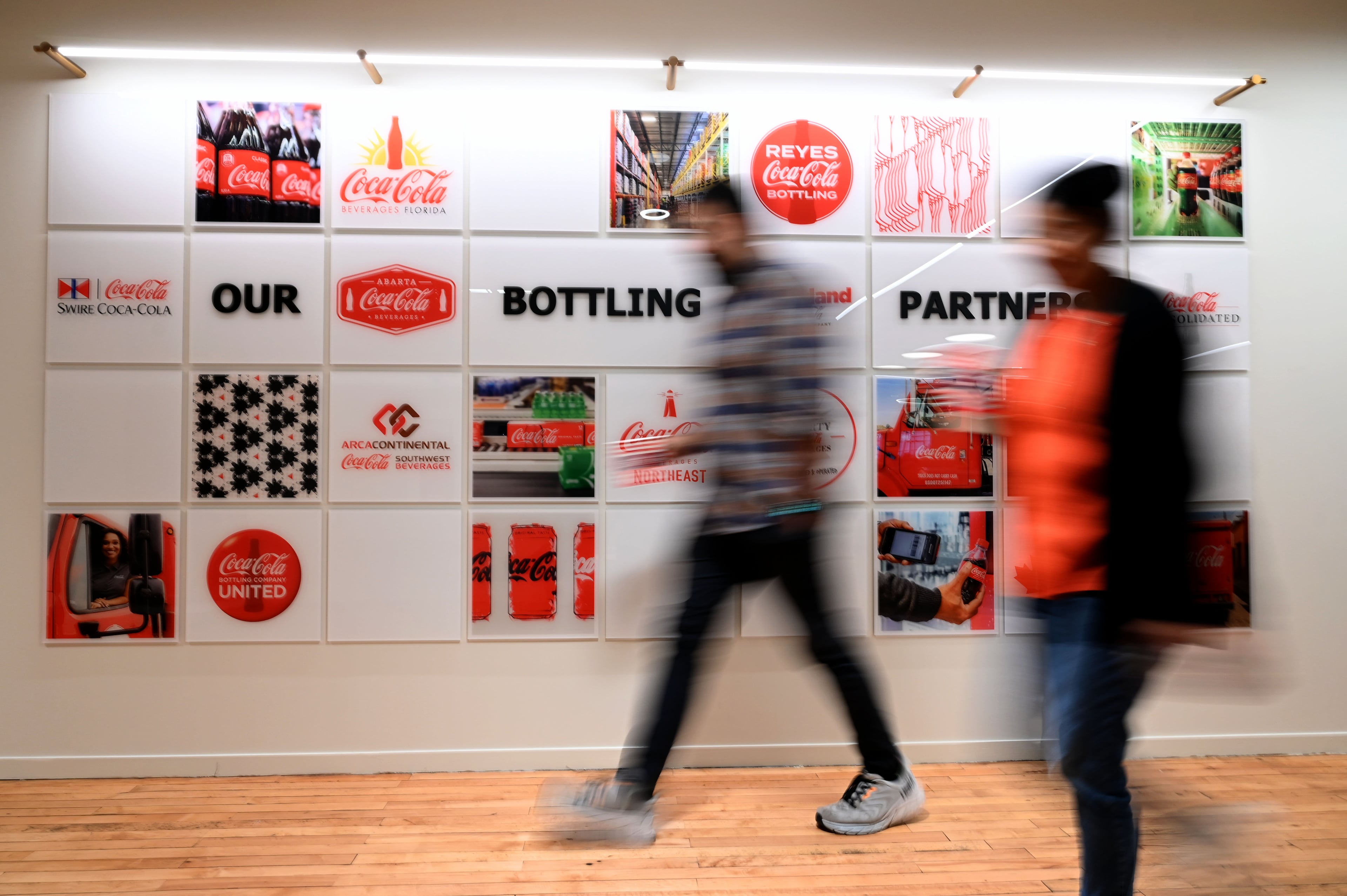
CONA designed the office to be flexible, providing various collaboration spaces and meeting rooms. Not surprisingly, Coca-Cola branding and merchandise plasters the space, including a couple Freestyle machines along with coffee makers for employees to use.
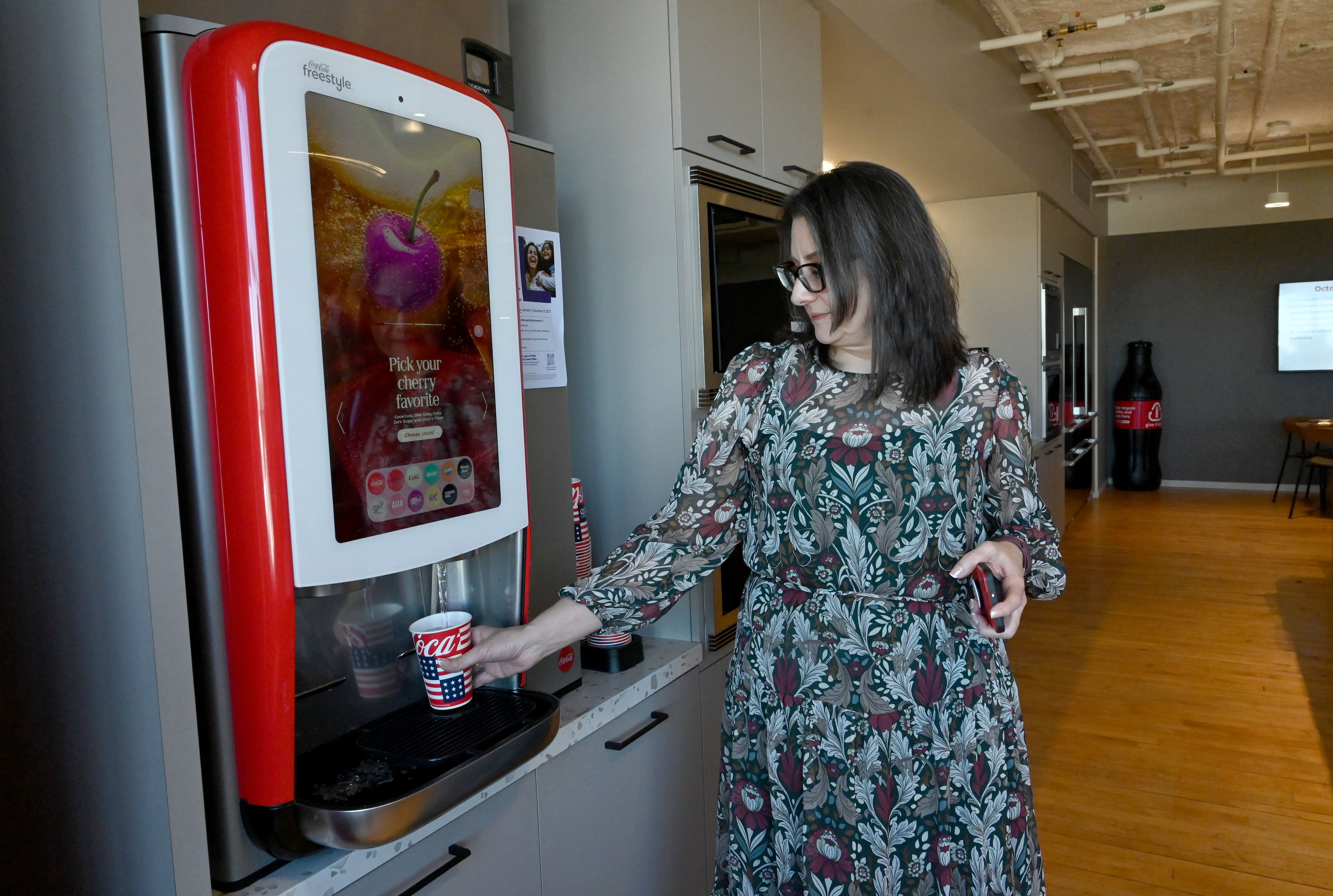
Many companies are trying to strike a carrot-and-stick balance with their return-to-office strategies, rewarding employees with the perks of a high-end workplace to justify requiring them to come back to work. It requires a nuanced touch, which Obiano said CONA has worked hard to refine with its Ponce City Market investment.
“We didn’t build this big space and then tell people to come (only when) you want to,” she said.
“The point was to bring people back together, re-create some of the collaboration and synergies that we had been missing and get the teams around each other again,” she continued.