High fuel costs, triggered by Iran war, driving up airfares, says Delta CEO

Airfares have been rising as fuel prices skyrocket amid the Iran war, with Delta Air Lines CEO Ed Bastian saying the company needs to cover its costs.
“There’s been a number of fare increases. just in the last two weeks,” Bastian said on CNBC Tuesday morning. He added that “customers understand if fuel prices are up, you need to cover the cost of business.”
Bastian’s remarks come amid the spring break travel season and as airlines look ahead to the summer.
Bastian, in his CNBC interview and later Tuesday during an appearance at a key investor conference, discussed rising fuel costs and network disruption caused by weather and the partial government shutdown that has left Transportation Security Administration workers unpaid.
He said jet fuel prices have almost doubled since the start of the year, causing a $400 million hit to the airline this quarter.
“Everything was going great in the first couple months of the year, then a war breaks out,” Bastian said during an investor presentation Tuesday at a J.P. Morgan conference.
Spiking fuel prices
Airline industry prices have increased twice in just the past two weeks, Bastian said. “There’s a sense of urgency about covering this higher fuel,” he said.
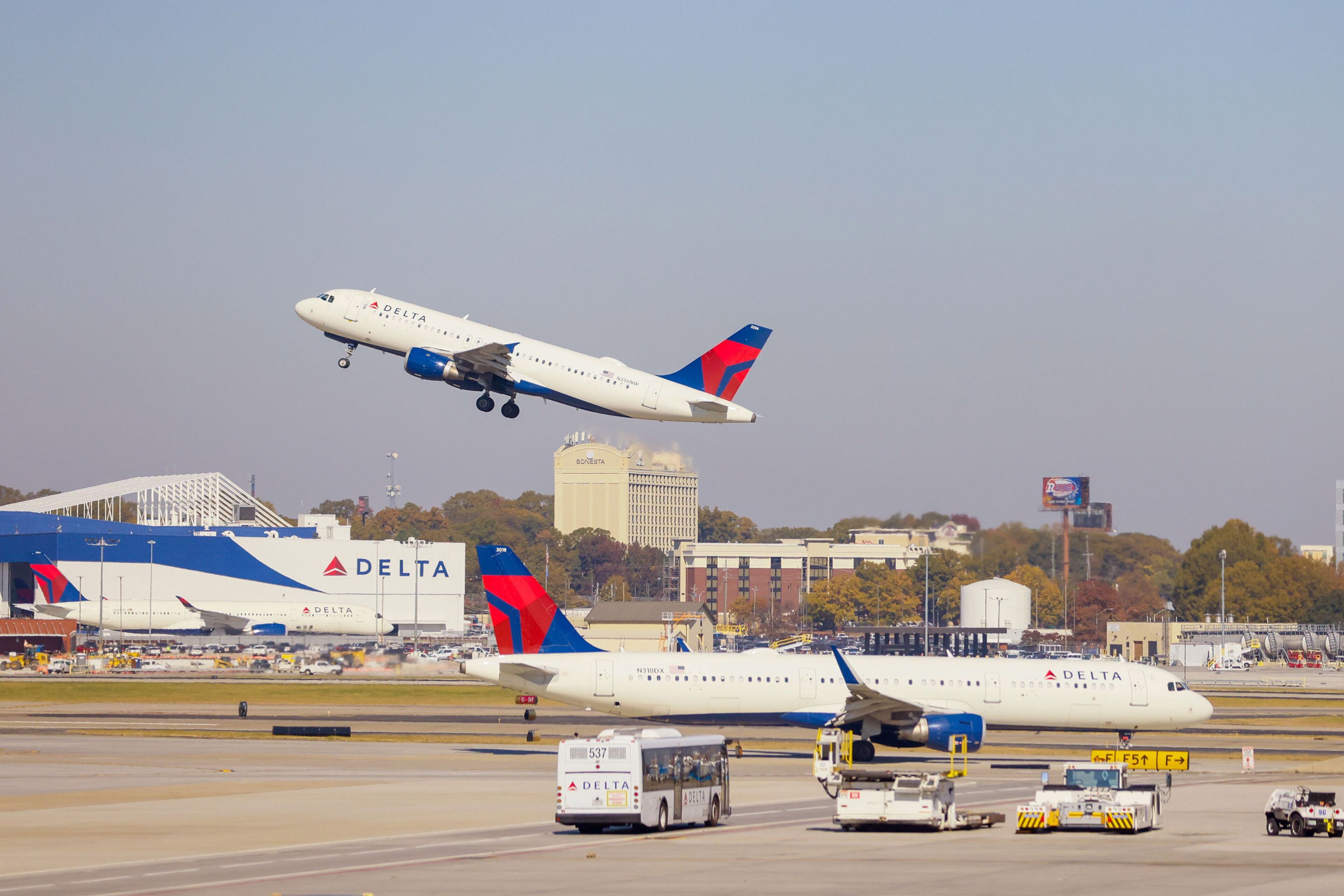
Delta, through its subsidiary Monroe Energy, owns an oil refinery in Pennsylvania, which gives it more control over the supply of jet fuel in the Northeast.
“The fact that we refine our own fuel up at Monroe gives us a meaningful hedge” on the higher cost of jet fuel versus the price of crude oil, he said. That will be reflected in profits starting in the second quarter, he said.
Flight disruptions from storms
Severe storms have led to thousands of flight cancellations this winter, amounting to about 2% of Delta’s flight capacity, according to Bastian.
“We had some pretty tough winter weather over the course of this quarter,” he said.
“Whether it’s the cold snap and the snow that we saw in the Southeast in January or just the storms that continue to roll around here, and they tend to hit us hard on the weekends,” Bastian said. “It’s been pretty tough.”
The airline is still “facing some challenges with our overall ability to respond quicker,” he said. It is working on adjustments to its pilot contract on that issue, he said.
Bastian recently announced a shake-up of the slate of executives who report to him, including naming Chief Financial Officer Dan Janki as the chief operating officer.
Janki is Delta’s first chief operating officer since COO Gil West retired from the company in 2020.
“It’ll create greater speed. It’ll create efficiency,” Bastian said.
The new slate of executives at Delta also includes Erik Snell taking Janki’s place as CFO, and longtime Delta executive Joe Esposito named as chief commercial officer.
Strong demand
Bastian said higher revenue — including from fare increases over the last few weeks — is offsetting higher costs. The company is raising its revenue forecast, saying it now expects revenue growth in the high single digits this quarter.
There has been a decline in travel from Europe since the war started, Bastian acknowledged. But that’s not a strong part of Delta’s business, and it’s “to be expected when you’ve got a war in your backyard, people tend to stay home,” he said.
Overall, Bastian said Delta is still seeing strong demand, with this quarter bringing eight of the company’s 10 highest sales days in history. Sales over the last week have been up 25% year-over-year, he said, with a boost from the “premium” brand Delta has sought to develop.
Challenges and uncertainty
Still, Bastian acknowledged that Delta is “getting through another challenging time.”
“Who knows what the duration of the events that we see unfolding in the Middle East are,” he said. “But however they unfold, the one thing I can guarantee you is Delta will be stronger as a result of that.”
He also said Delta has “responded well to times of turbulence going back 20 years ago, coming through a restructuring and a bankruptcy” to build success.
The duration of the Iran war is “the big question on all our minds, and it’s way too early for anyone to speculate,” he said. It will “certainly change business plans” for airlines that have difficulty absorbing the increased costs. That could result in further industry consolidation.
But Bastian said he said he thinks premium airlines will be seen as more resilient and “we’ll yield a better return in the longer term.”
About the Author