An airport fuel spill contaminated water. Griffin is trying to protect itself.

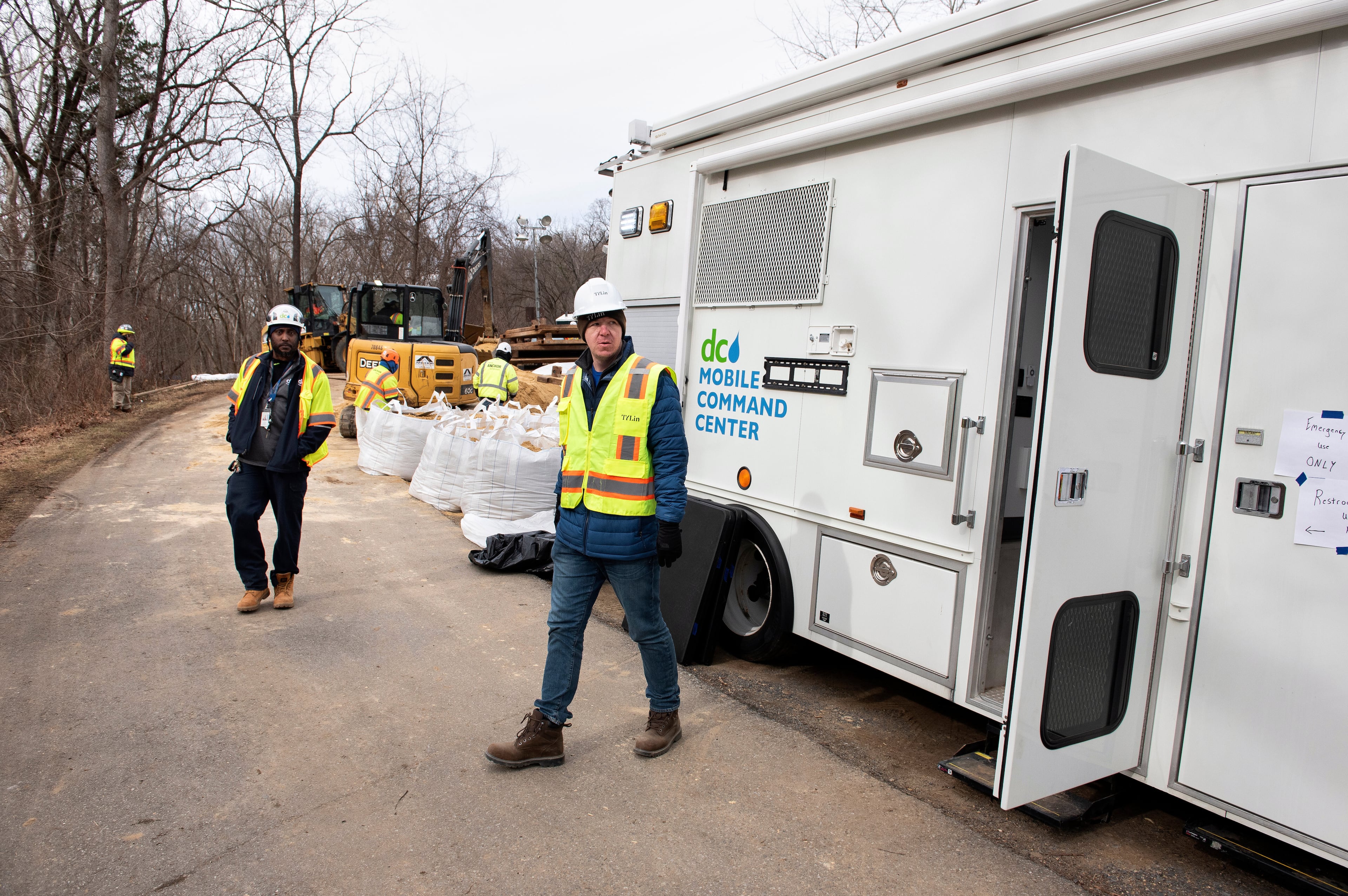
As soon as it learned about a jet fuel spill at Hartsfield-Jackson Atlanta International Airport, the City of Griffin shut off its water intake from the Flint River on Jan. 30.
The small city sits about 30 river miles south of the airport and, like many others, relies on the Flint for its water supply.
But when Griffin started to receive complaints of an odor in customers’ water a few hours later, the state recommended it institute a proactive “Do Not Consume” advisory.
When samples came back negative for toxins including jet fuel hours after that, the city lifted the advisory.
The Environmental Protection Agency says nearly 15,500 gallons of jet fuel have been collected during the cleanup of the airport and the Flint, with the cleanup in its final stages. About 80 cubic yards of contaminated debris have also been recovered, a spokesperson said.
The Georgia Environmental Protection Division’s investigation remains ongoing. An Atlanta Fire Rescue response report said the spill was caused by a failure of the “sight glass on an underground fueling pump within a contained tank” near Gate A34. A sight glass typically allows visual confirmation that fuel is flowing.
But in the days after the incident, Griffin continued to be inundated with complaints and water quality concerns voiced on social media.
More than 200 calls came in over about 10 days, the city’s Director of Water and Wastewater Brandon Lewis told The Atlanta Journal-Constitution.
Lewis’ team smelled the odor too, including at a treatment plant and later at his own home. “I smelled it myself, and then I was a believer,” he said.
Unlike other water departments between Griffin and the airport, Griffin is largely reliant on the Flint as its water source.
While the water had tested negative for fuel, his team wondered if the cause could be propylene glycol, a deicing agent that can yield an odor when mixed with chlorine — a common water treatment chemical.
The airport — and metro Atlanta — had been preparing for subzero temperatures that weekend.
Some residents described it as a “fuel-like odor;” Lewis described it more “like WD-40.”
New samples did test positive for propylene glycol, and EPD agreed the combination could be a cause of the odors, Lewis said.
But while the substance is a common ingredient in airplane deicing and windshield wiper fluids, it is also an additive in some food and beverage products and considered “safe” by the Food and Drug Administration.
Griffin and EPD continued to affirm the water was OK to drink, but the city flushed millions of gallons through its system to purge the odors.
And in an effort to prevent this from happening again, Griffin now plans to spend $100,000 on new water contamination detection equipment.
This early detection system will allow Griffin to proactively test the river water entering its facility, not just rely on notification from regulators.
If something is amiss, the department, which sells water to other nearby municipalities, would be able to shut its intake immediately to protect its supply and complete further sampling.
“The Flint is our source. We rely on it,” Lewis said.
As to whether Griffin will seek compensation for the investment and the general fallout of the spill, the city is meeting with its lawyers this week to discuss the issue, City Manager Jessica O’Connor said.
The situation reflects the double-edged sword communities like Griffin experience being located near the world’s busiest airport.
“You can’t change your location. And we actually almost always tout our location,” she said.
“While we can be a sleepy little town right outside of Atlanta … we can get wherever we want to go because we have Hartsfield-Jackson. With that comes challenges at times.”
“But you have to take the bad with the good,” she added.
‘Something that we didn’t know’
In 2021, Griffin was not quickly notified of an airport jet fuel spill and voiced its concerns.
City officials say this time around they were promptly notified.
“Is there something that they should have done differently? We can’t answer that,” O’Connor said.
“Is there something that we can do differently? Yes, and we will as we can, which is why we’re installing what we’re going to install.”
In the last month Griffin has also learned that its upstream neighbor, Fayette County, has a standard procedure not to pull from the Flint during freezing weather events.
Fayette “knew something that we didn’t know, unfortunately,” Lewis said.
In a statement Fayette told the AJC that it suspends water pumping before winter storm events, because of “past incidents” involving the Atlanta airport, including a deicing spill in the early 2000s.
“Lessons learned from that experience reinforced the importance of proactive measures like temporarily ceasing withdrawals from certain sources during high-risk periods,” spokeswoman Cintia Listenbee said.

The Clayton County Water Authority, which also lies upstream of Griffin, does not have a similar protocol, but says it monitors the Flint “on a routine basis.”
Unlike Griffin, the Flint is not the authority’s primary drinking water source, and it pumps into a reservoir before treatment, which allows for a dilution step.
However, Clayton is also exploring early detection technology to monitor the river proactively, spokeswoman Erin Thomas confirmed. Its own recent testing did not detect high levels of propylene glycol, and it did not issue a water advisory.
“At this time, we are still evaluating the monitoring technologies that would best meet our needs and do not have finalized cost estimates,” she said.
In response to questions from the AJC, Hartsfield-Jackson spokeswoman Alnissa Ruiz-Craig said the airport had no deicing fluid leaks in January and confirmed it is “not normal for deicing fluid runoff to get into the Flint River.”
A 2023 investment in deicing pads and tanks that store 2 million gallons of deicing fluid runoff are designed to divert the chemicals into the city’s sanitary sewer system, she explained.
Ruiz-Craig pointed out that segments of the Flint between the airport and Griffin flow through “heavily populated areas that will produce runoff from industrial sites, parking lots, and roadways. A review of aerial photography shows that 13 roadway bridges cross the Flint from south of I-285 to and inclusive of GA 92.”
“Thousands of vehicles containing engine coolants cross these bridges daily. Propylene and ethylene glycol are primary components of these coolants,” she added.
Griffin’s water director Lewis noted to the AJC that those vehicles are running in all seasons, but said the city has never had this problem.
“I think that there was likely more than one contributing source, but I think there had to be one majorly contributing source,” he said.

‘I’m drinking it’
Complaints to Griffin about water have dropped off, but some customers are still afraid to drink it.
Jayme Aldridge, a resident of Spalding County, said his water’s “fuel-like odor” has improved, but still occasionally has a smell and “an oily feel.”
His family still isn’t drinking the water, but they are using it for washing dishes and laundry and for bathing.
They just started bathing their newborn at home; he was only a few days old when the spill happened.
Aldridge said he is struggling to trust local authorities on the subject and felt resident complaints were dismissed unfairly. He’s considering his own new water safety investments, like whole house filters or even a well.
“Until today, maybe it’s just ignorance, but I didn’t even realize that that’s where most of our water was coming from,” he said.
“I fish the river all the time, and a lot of times we don’t even eat the fish out of the river, because it’s known that it’s coming from the runway of the Atlanta airport.”
O’Connor told the AJC her city is “not trying to hide anything. We have tried to answer every question that we possibly can.”
And “as far as being able to drink the water, I’m drinking it. My children are drinking it,” she said.
“Our communications director is drinking it. Her children are drinking it. Our water director is drinking it, his children are drinking it. I don’t know what else to tell people.”
About the Author

As a business reporter, Emma Hurt leads coverage of the Atlanta airport, Delta Air Lines, UPS, Norfolk Southern and other travel and logistics companies. Prior to the Atlanta Journal-Constitution she worked as an editor and Atlanta reporter for Axios, a politics reporter for WABE News and a business reporter for the Arkansas Democrat-Gazette.