Hyundai to deploy AI-powered humanoid robots at Georgia auto factory
Editor’s note: This story has been updated to reflect that Hyundai has not announced where the Atlas robots will be manufactured.
Humans won’t be the only ones building cars at Hyundai Motor Group’s massive electric vehicle factory in Georgia.
Thousands of humanoid robots are slated in a few years to join their human counterparts working on the assembly lines.
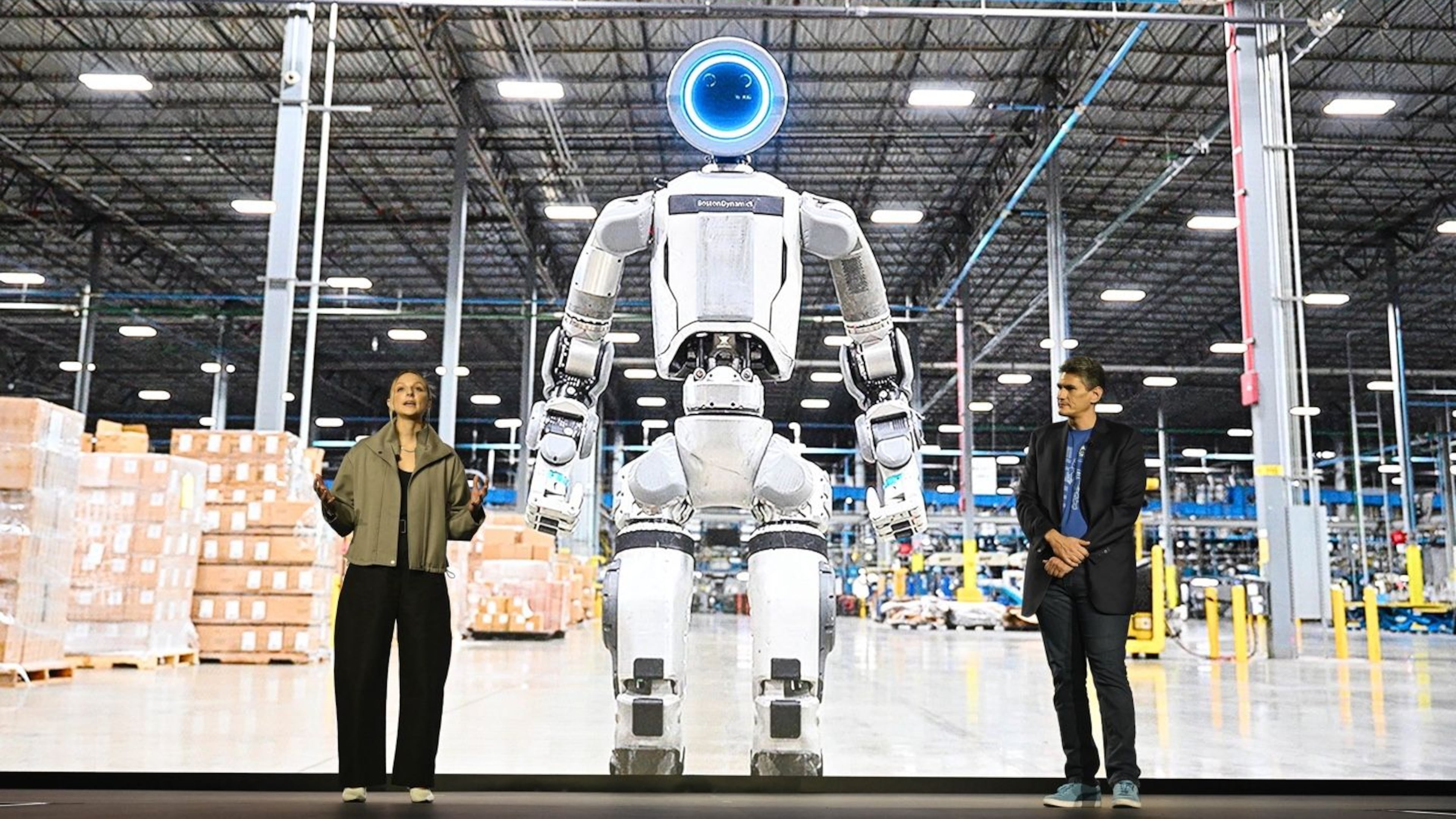
Korean automaker Hyundai and its subsidiary, Boston Dynamics, unveiled a sweeping artificial intelligence robotics strategy at the CES trade show Monday in Las Vegas, a presentation that featured doglike robots dancing to K-pop songs. The pageantry was to highlight a new Atlas robot, a humanoid AI-powered machine designed to help with repetitive tasks in Hyundai’s factories and warehouses.
The company plans to deploy30,000 Atlas robots a year starting in 2028, including at its high-tech factory near Savannah, which Hyundai calls its Metaplant. The robots will integrate within manufacturing operations across Hyundai’s global footprint.
“The convergence of robotics and AI represents more than a technological advancement,” Zachary Jackowski, vice president and general manager of Atlas at Boston Dynamics, said in a news release.
The companies did not announce where the robots will be built.
Located in Bryan County, Hyundai’s Metaplant is the largest state-recruited economic development project in Georgia. The $7.6 billion endeavor began assembling EVs in October 2024 and will eventually span 16 million square feet along I-16. Hyundai has promised to eventually create 8,100 jobs for humans at the factory, which state and local officials recruited with a bevy of tax incentives and other perks totaling $2.1 billion.
By 2028, Hyundai plans to expand its vehicle production to 500,000 units annually.
The workforce at the factory campus was thrust into the spotlight in September after federal immigration agents raided an on-site battery plant’s construction site. They detained hundreds of workers, including more than 300 high-skilled South Koreans who were performing temporary training and installation tasks for the U.S.-based workforce.
The operation triggered outrage in Seoul, delayed construction of the battery factory and reportedly later prompted an apology from the White House.
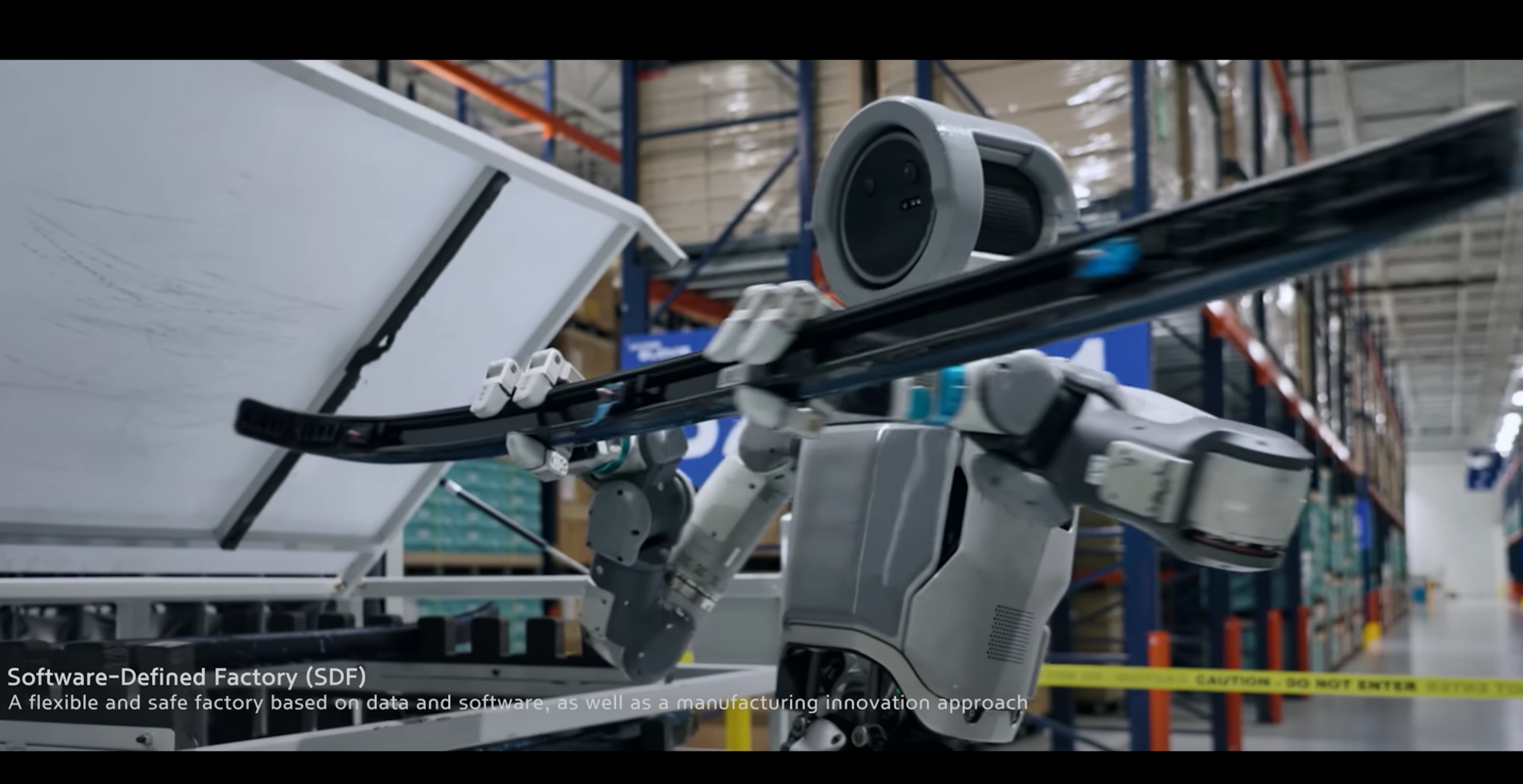
The Atlas robots don’t have enough dexterity to threaten many human jobs, Boston Dynamics leaders said from the stage Monday. The robots will start with tasks such as parts sequencing, where items are moved and positioned for assembly, and are expected by 2030 to begin assembling vehicle components.

More complex jobs that involve repetitive motions and heavy loads will be added to their repertoire, which Boston Dynamics said will make work safer and less taxing for factory employees. The AI technology integrated into the Atlas machines were developed through a partnership with Google’s DeepMind.
— The Associated Press contributed to this report.
About the Author

Zachary Hansen, a Georgia native, covers economic development and commercial real estate for the AJC. He's been with the newspaper since 2018 and enjoys diving into complex stories that affect people's lives.