‘Cabbagetown ’76’ exhibit illuminates iconic neighborhood’s transition
This story was originally published by ArtsATL.
Nestled between the Atlanta Beltline Eastside Trail and the Fulton Cotton Mill Lofts, Cabbagetown today is a highly desirable intown residential neighborhood composed of mostly refurbished bungalows, cottage houses, retail shops and community spaces.
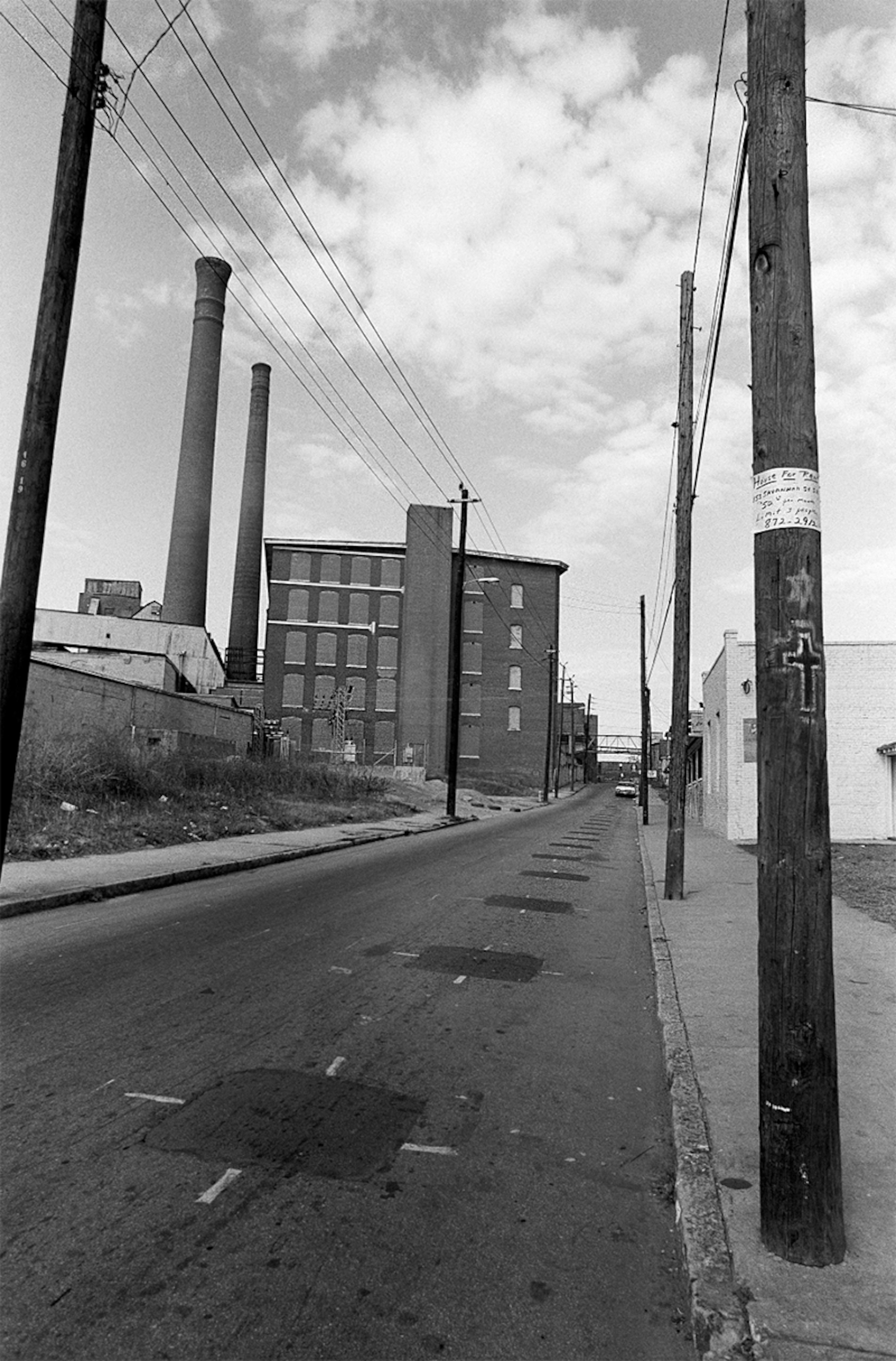
The historic neighborhood has come a long way from its origin as a mill town constructed in 1881 to house and service white laborers, many hailing from the Appalachian region, working at the Fulton Bag & Cotton Mills, the South’s first textile processing facility. When the mill closed in 1977, Cabbagetown went into a period of decline because many of the workers left with their families to seek employment elsewhere, leaving behind a sizable number of original mill residents and a passel of empty houses and vacant buildings.
In the 1980s, attracted by the low rent and convenient location, young artists, mostly musicians, started moving into Cabbagetown. In a short time, the ramshackle neighborhood became the proving ground and production hub for a wildly diverse music scene, the impact of which reverberates through Atlanta to this day.
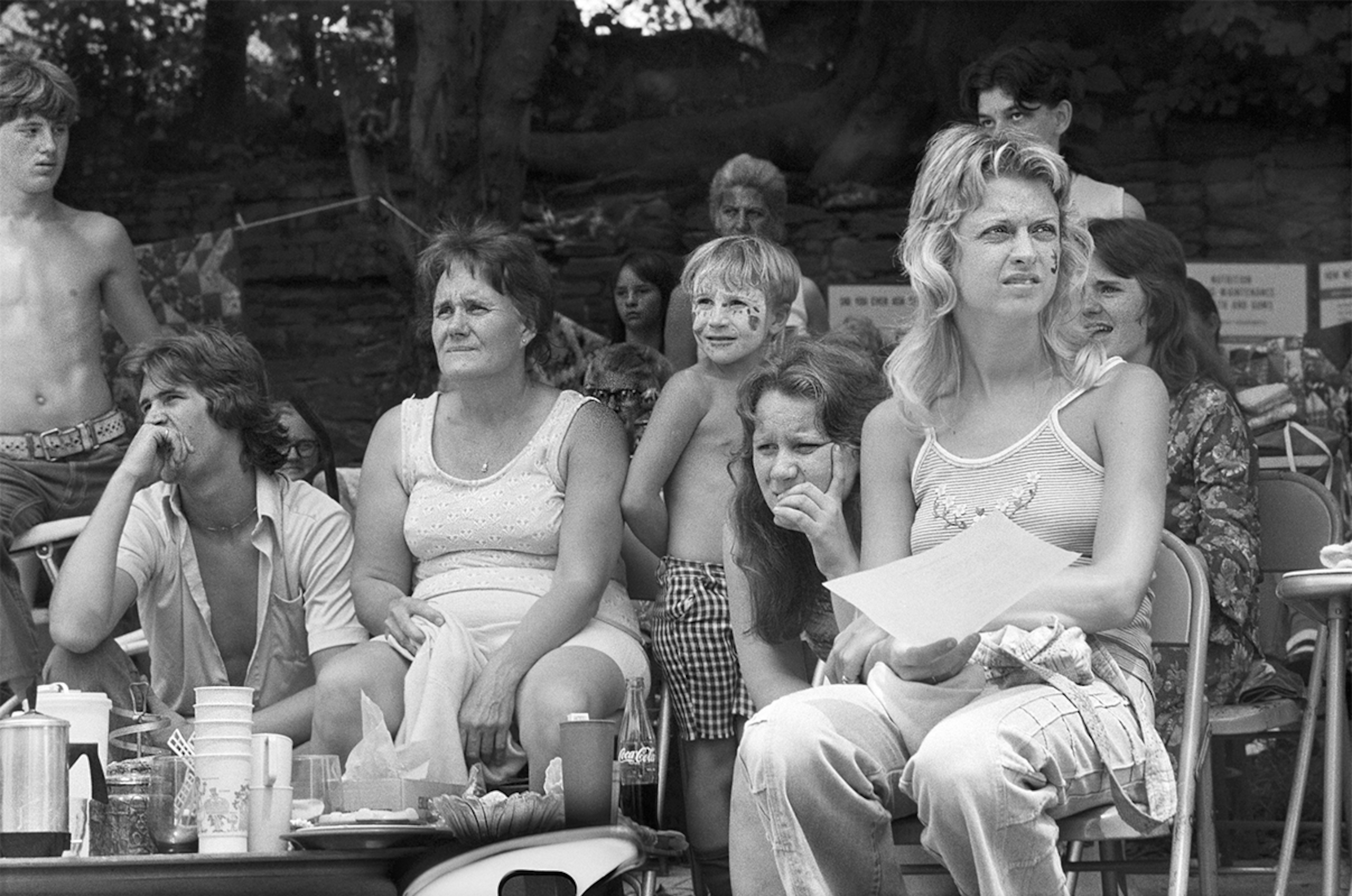
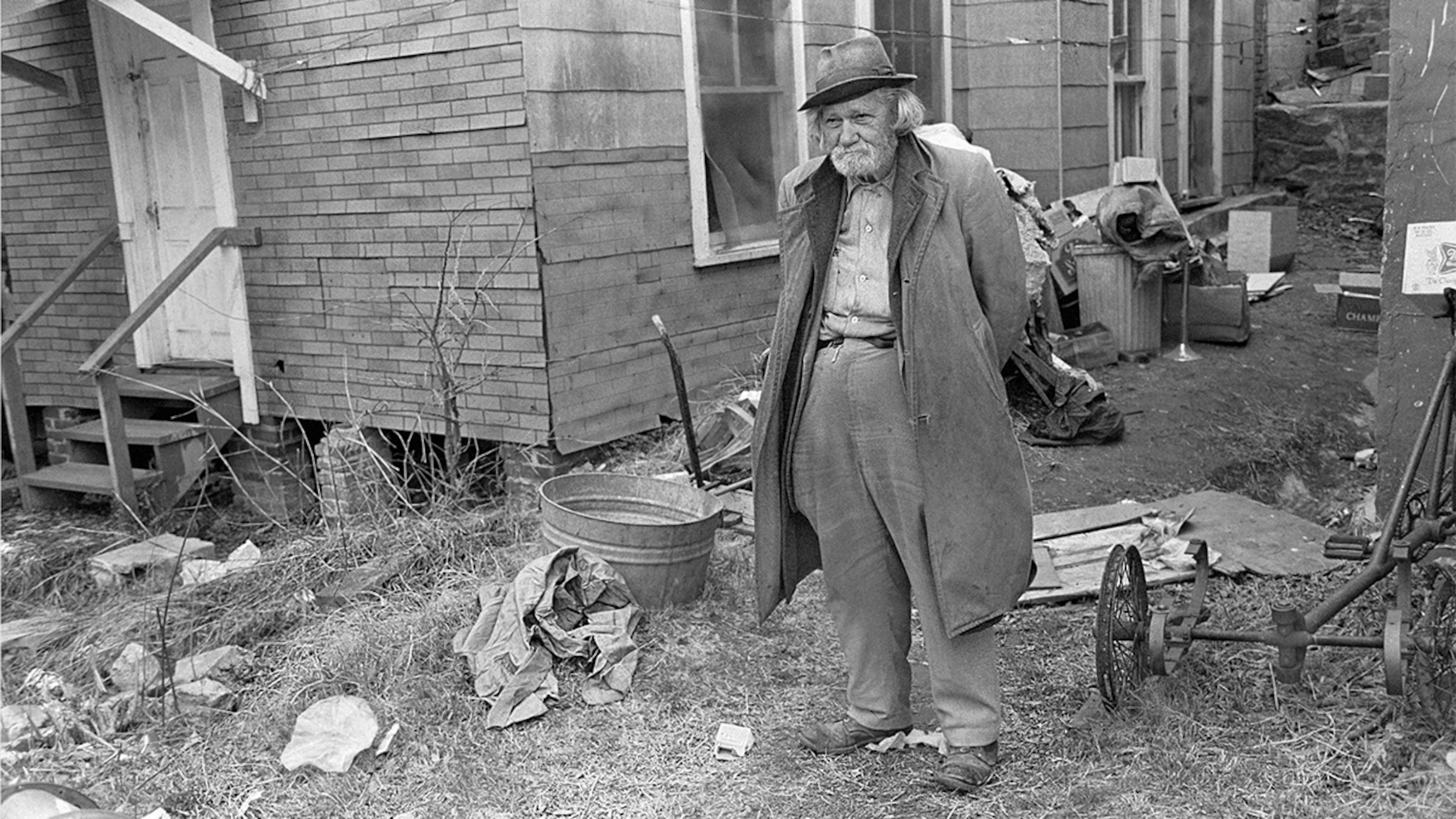
“Cabbagetown ’76: The Photographs of Barbara McKenzie” is an exhibition of never-before-seen photographs documenting the residents of Cabbagetown and their environs during the transitional period between forsaken mill town and the genesis of gentrification. Presented by the Chunklet Music Preservation Project, the exhibition opens Friday for a run through Aug. 30 at Cabbagetown Community Center.
Bringing McKenzie’s photos out of obscurity
Born in 1934 in Mount Vernon, New York, McKenzie was the daughter of Scottish immigrants. In 1976, she was an associate professor of journalism and mass communications at the University of Georgia. Four years later, UGA Press published her book, “Flannery O’Connor’s Georgia,” a collection of vividly expressive photographs of middle Georgians in their native habitat. The book was reprinted in 2013.
Similarly, “Cabbagetown ’76″ portrays the population of a particularly Southern place at a particular time in history, envisioned through a camera lens by a gifted, sensitive, conscientious artist. The subject matter — a boy and his dog posing under looming mill towers; families hanging out on the front porch; dilapidated storefronts; quirkily decorated living rooms; charismatic church services; and eccentric town characters — sounds like standard photojournalist fare.
However, something about McKenzie’s photos struck a different chord when Henry Owings — record producer, music promoter, graphic designer, magazine publisher and co-founder with his wife, Stephanie Quinn Jackson, of the Chunklet Music Preservation Project — first viewed the work.
“I was just hit along the side of the head with this material,” Owings said. “Like, I was familiar with Oraien Catledge’s book (“Cabbagetown,” 1985). I was familiar with (Atlanta photographer) Panorama Ray (who maintained a Cabbagetown studio), but this material had never so much as been muttered about.”

The Chunklet Music Preservation Project is a nonprofit dedicated to collecting and preserving music and related ephemera for future scholarship and public enjoyment. In the last couple of years, under a separate for-profit entity, Chunklet Industries, Owings published a series of books filled with full-color scans of flyers, handbills, posters, ticket stubs and other printed matter spawned by the Atlanta and Athens music scenes between 1962 and 2003.
Culled from hundreds of individual collections, the material runs the gamut from the Beatles, James Brown, Indigo Girls and Wee Wee Pole (with RuPaul) to Hank Ballard, R.E.M., Sun Ra, Chickasaw Mudd Puppies and Elton John. In 2023, a large group of entries from those archival books — “Plus 1 Atlanta,” “Plus 2 Atlanta,” “Plus 1 Athens” and “Plus 2 Athens” — were reproduced for a huge wall display at Hartsfield-Jackson Atlanta International Airport.
An intense focus on alternative music
In 2025, the Chunklet Music Preservation Project acquired McKenzie’s archives. Six weeks after signing the paperwork (supervised by her lawyer), McKenzie, who had been suffering from dementia and other ailments, died from sepsis.
The first batch of photos reviewed by Owings was exclusively music oriented. Although she was a couple of decades older than the people she was photographing (and a teacher to some), McKenzie was a dedicated consumer of the alternative music being performed in Athens and Atlanta at clubs such as the 40 Watt, 688, Celebrity Club, Tyrone’s and TV Dinner.
Chunklet has issued two packets of postcard-sized images from McKenzie’s forays into the music world.
One series showcases Athens and Atlanta heroes such as R.E.M., Pylon, RuPaul, Limbo District, Oh-OK, the Basics, Tone Tones and the Now Explosion. The second set puts the spotlight on the early years of Robert Dickerson, best known as the wonderfully offbeat, cross-dressing chanteuse in the Opal Foxx Quartet and vocalist for Smoke. Dickerson died in 1999.
Photographer’s energy ‘invited’ her into Cabbagetown homes
While Owings was naturally drawn to the music material, when he opened the boxes and leafed through the binders of McKenzie’s Cabbagetown photos, he was awestruck. When he moved to Atlanta in 1997 after a six-year stint in Athens, Owings lived at 215 Carroll St. in Cabbagetown. Familiarity with the neighborhood heightened the encounter with McKenzie’s chronicling.
“The fact that she took so many intimate (photographs) … meaning in their houses, with their children, it says so much about her abilities,” Owings said. “But I don’t think she was pressing people. I think that she just was — her energy just invited herself into it.”
Owings was determined to bring McKenzie’s Cabbagetown work to the public’s attention. He posted a few photos on Facebook with a note urging gallery owners, curators and the like to get in touch.
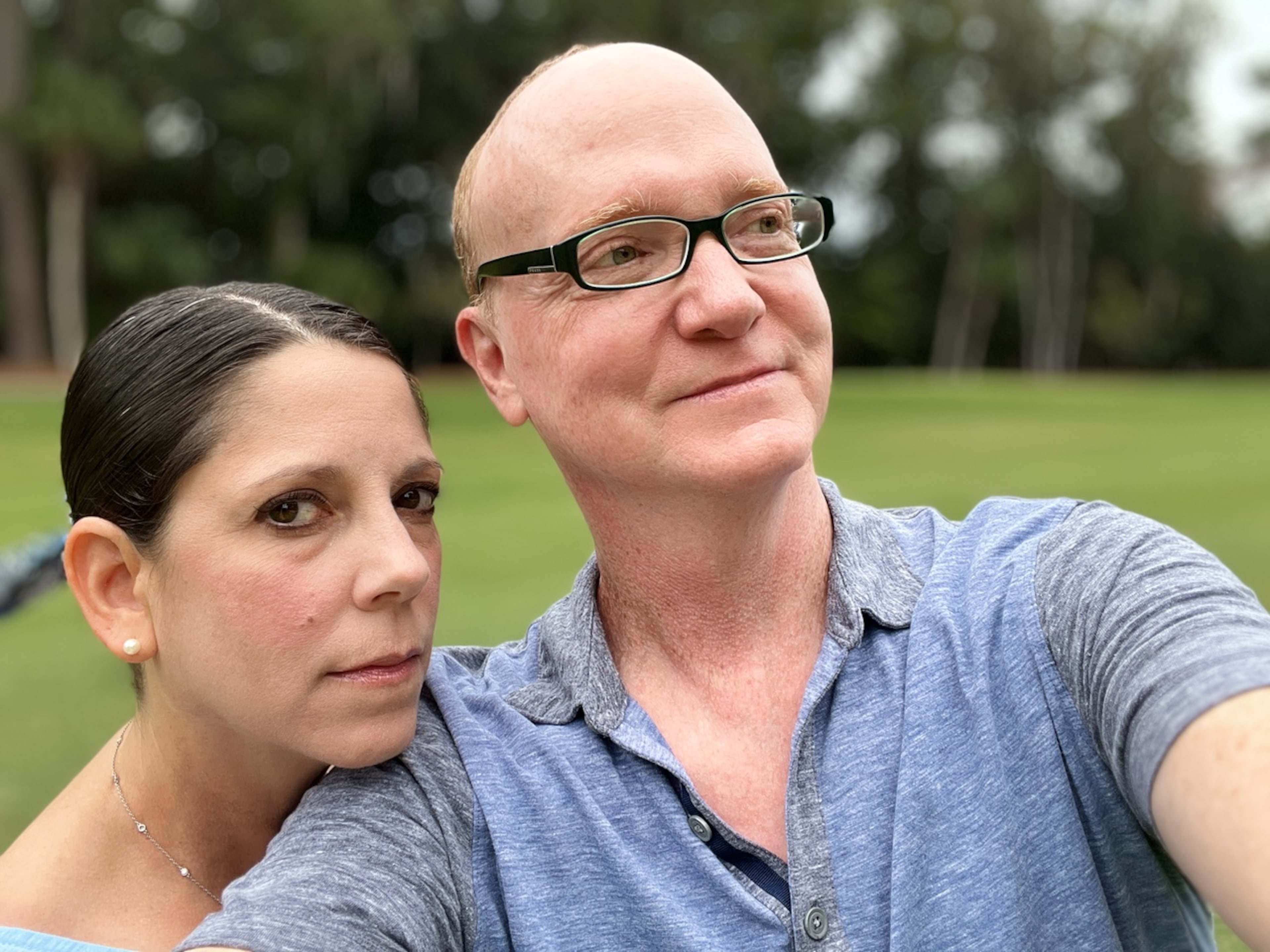
Enter Jacob (Jake) Elsas, executive director of the Patch Works Art & History Center, and Nina Elsas, its curator. Jake Elsas is the great-great-grandson of the founder of Fulton Bag & Cotton Mills, while his wife, Nina, has a background in art history research. A brief viewing session at Owings’ home was enough to convince the Elsases to start laying plans for an exhibition of McKenzie’s photographs at the Cabbagetown Community Center.
“To look at these pictures and know that the majority of them, if not all of them, were just one take is absolutely amazing,” Nina Elsas said. “I had chills. I was like, you know, this definitely needs to be seen and experienced. I’ve never experienced such a connection that I did looking at these photos.”
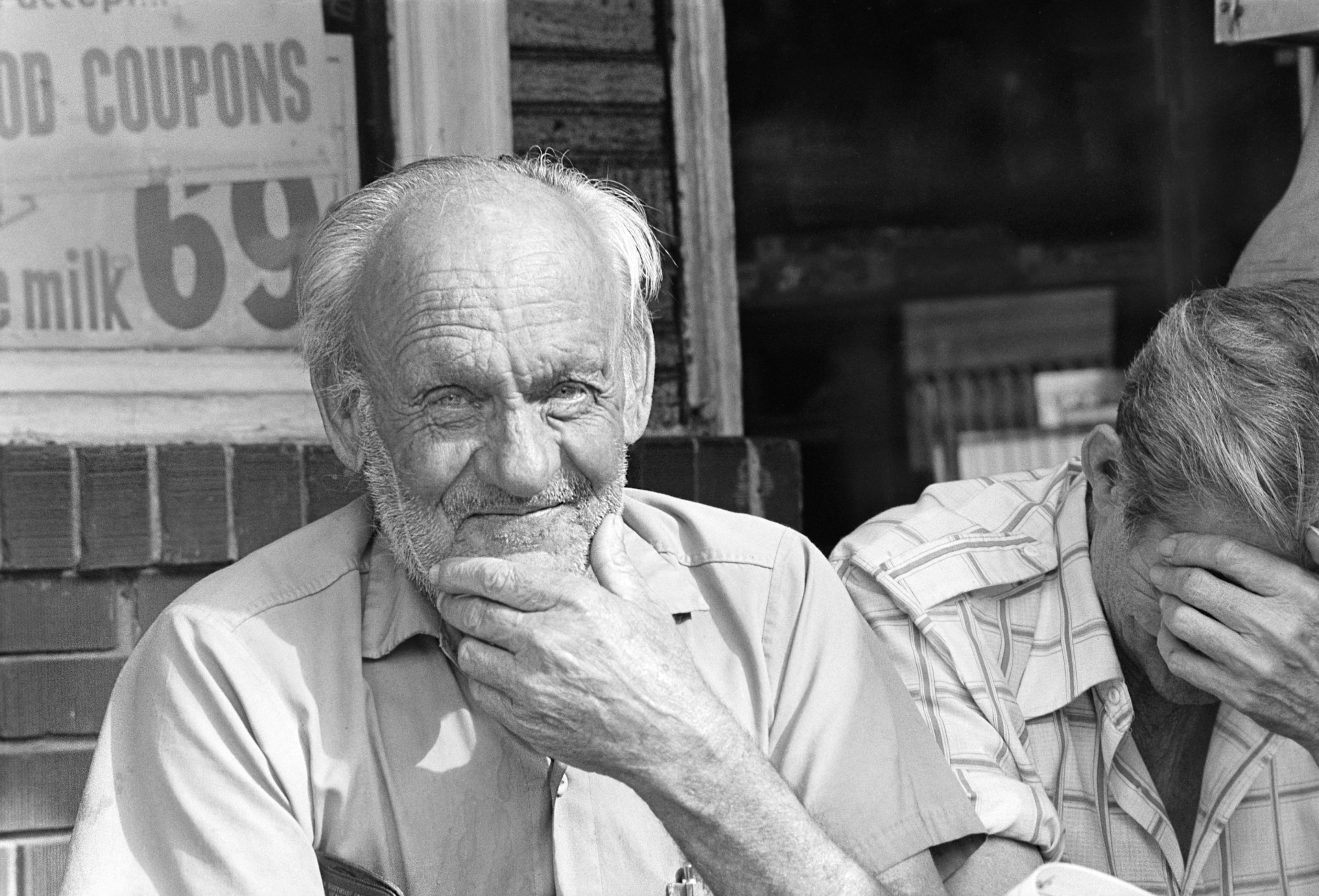
Jake Elsas drew a distinction between McKenzie’s images and the work of other photographers who focused on Cabbagetown.
“She wasn’t trying to manipulate anything, or she didn’t seem to have any ulterior motive,” he said. “Most outsiders in the 1970s looked at Cabbagetown as this blighted community filled with impoverished people who must be just sad about their lives. That’s kind of the inaccurate, erroneous conception from the outside.”
What exhibition-goers will experience
he main exhibition includes 25 photographs culled from more than 700 images in Chunklet’s McKenzie archives. In a separate room adjacent to the exhibition gallery, visitors will experience a 360-degree projection of slides taken by McKenzie, accompanied by an audio recording she made of the first Cabbagetown reunion.
“Cabbagetown ‘76″ kicked off last weekend with three concerts featuring musicians who lived, practiced and hung out in Cabbagetown during the 1980s and early ’90s, artists whose kaleidoscopically varied musical output is sometimes referred to as “the Cabbagetown Sound.” Concertgoers were able to preview the exhibit, which opens to the public Friday.

Kelly Hogan, Bill Taft recall Cabbagetown’s fertile music scene
“I knew all the musicians there, but I also, you know, lived right next to Leon Littles’ store (Littles Food Store, a Cabbagetown landmark),” said Kelly Hogan, who performed during the concerts last weekend. “I knew all my little local guys and, and you know, just folks, old guard folks in the neighborhood, too.”
An Atlanta native, Hogan gained fame in the city as lead vocalist for the Jody Grind before carving out a career that includes critically acclaimed solo albums, stints with the Decemberists and the Flat Five and singing backup with Neko Case and Mavis Staples.
Hogan recalled that she and her mom often took a shortcut through Cabbagetown from Little Five Points to get over to I-20. “I remember growing up and just being fascinated with the (mill) building and the smokestacks and all the row houses and stuff. So, yeah, it’s just in my blood, I guess.”
Joining Hogan during the Cabbagetown ’76 concert series was Bill Taft, who formed the Jody Grind with Hogan, Robert Hayes and Walt Brewer back in the day. Currently, Taft leads W8ing4UFOs when he’s not conjuring up mad science projects that meld elements of spoken word, instrumental improvisation, noisemaking gadgets and theatrical shenanigans.
“So the first band I was in, the Chowder Shouters, started in Cabbagetown,” Taft said. “Ever since that band, other bands grew out of that Cabbagetown community and the sounds and beats kept growing and evolving and changing — and it goes on today.”
The beats go on not only through music but also through the extraordinary images produced by Barbara McKenzie and her camera.
IF YOU GO
“Cabbagetown ’76: The Photographs of Barbara McKenzie”
Friday through Aug. 30. 4–8 p.m. Fridays and noon-4 p.m. Saturdays and Sundays. Free. Cabbagetown Community Center, 177 Estoria St. SE, Atlanta. 404-806-7288, thepatchworks.org.

MEET OUR PARTNER
ArtsATL (artsatl.org) is a nonprofit organization that plays a critical role in educating and informing audiences about metro Atlanta’s arts and culture. ArtsATL, founded in 2009, helps build a sustainable arts community contributing to the economic and cultural health of the city.