Could Braves and Sonny Gray finally happen this offseason?
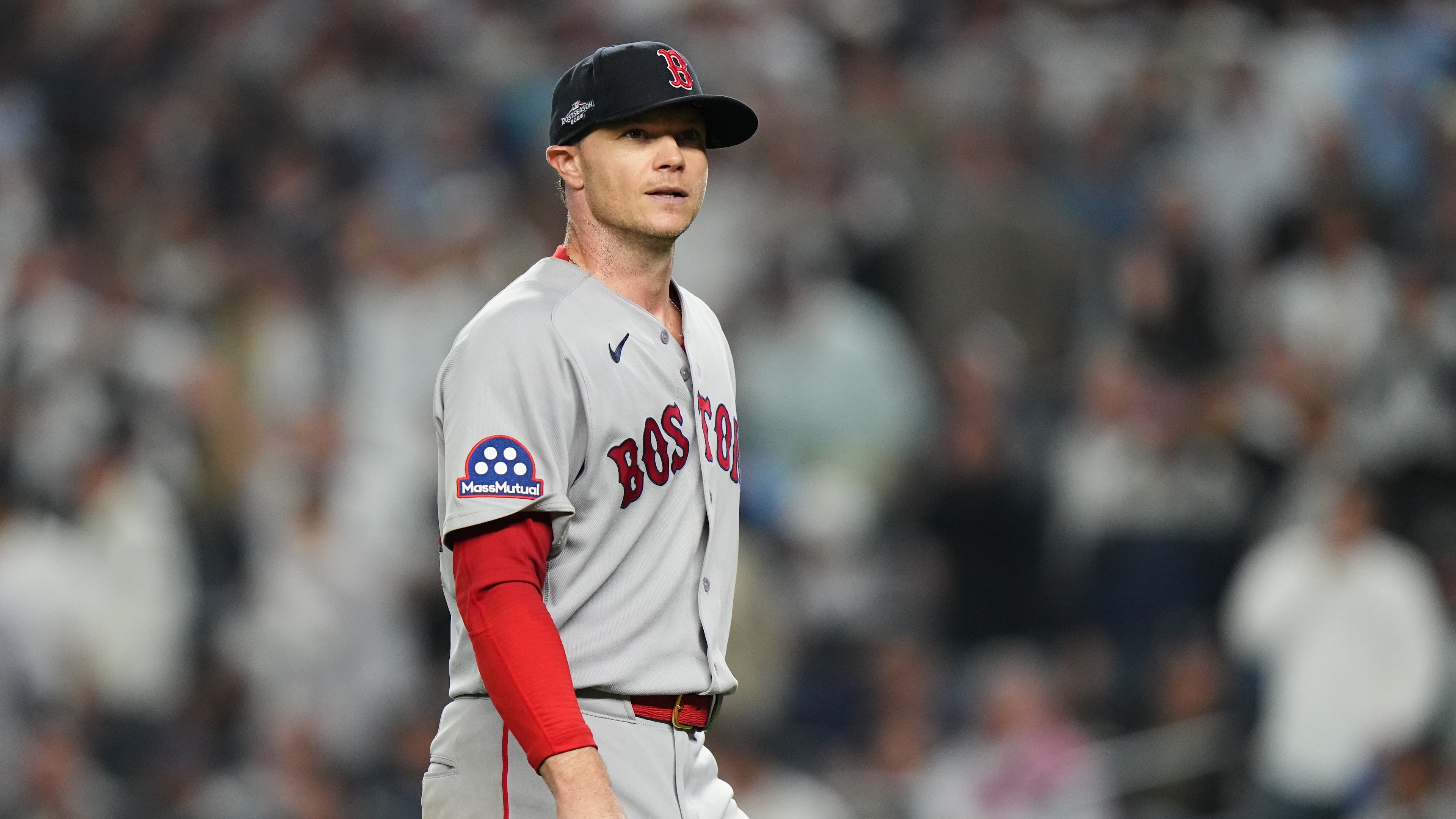

The Braves and Sonny Gray have been like star-crossed lovers for nearly a decade. Is this finally their Tom Hanks and Meg Ryan moment?
Gray, who turns 37 in a few days, is a free agent. He’ll have options as one of the best starting pitchers available in a weaker class. He’s well-documented to prefer playing closer to his home in Nashville, Tennessee.
There’s no closer team to Music City than the Braves. Drive out of Atlanta early afternoon and you can be strolling down Broadway in the early evening. Shoot, Atlanta and Nashville are such close neighbors that Braves president and CEO Derek Schiller has publicly shared his opposition to MLB expanding there, citing the importance of Middle Tennessee as Braves territory.
The geography could loom large here; as in, it could be the deciding factor. Gray has stated how important his family is to him. He reportedly visited Nashville often throughout the 2026 campaign. He’s essentially said he’s playing on a year-by-year basis now (the Braves recently employed a pitcher in comparable circumstances, Charlie Morton).
Gray will likely command a two-year deal (or a one plus one), which is right in the Braves’ wheelhouse. They avoid lengthy free-agent pacts, particularly with pitchers, so this situation fits their preference. Their current roster construction, along with several bustling arms in the minors, makes this a logical signing, too.
Indeed, this union has been discussed for a long time. The Braves were interested in Gray before he was initially dealt from the A’s to the Yankees in 2017 (this was under the former administration). The Braves were interested in Gray again as his Bronx stint fizzled, resulting in a trade to the Reds in January 2019. Gray signed an extension with Cincinnati, which is obviously one of the closer teams to Tennessee.
The well-traveled Gray was dealt to the Twins just before the 2022 season. He became a free agent after the next campaign, inking a three-year, $75 million deal with the Cardinals (another decision that kept him closer to Tennessee). The Braves were interested back then as well.
The Cardinals underwent a teardown last winter that included Gray. The Braves were again among the suitors — he was among the more appealing options as they sought a playoff-caliber starter — but St. Louis dealt him to Boston, where he just enjoyed one of the best seasons of his career.
Gray had a 2.72 ERA over 29 starts, striking out 149 and walking 46 over 169 innings. It was just the third time in the past decade he posted a sub-3.00 ERA. He also led the majors with 18 wins. Gray has also covered at least 165 innings in four consecutive years, reliability that the Braves have needed, and he’s twice exceeded 180 frames in that time.
He’s adjusted well as his velocity dips with age (his fastball averaged 91.5 mph last season and has decreased over multiple seasons). He offers a six-pitch mix that allows him to compensate for the lack of velocity. Gray exhibits sterling command and induces grounders at a high rate. For those who loathe baseball’s velocity obsession, he’s a treat.
The Red Sox reportedly want to re-sign Gray (that might be harder after he expressed frustrations last month), but he’ll have choices. Potentially among them, the Braves.
Starting pitching will once again rank highly on the club’s shopping list. Trade-deadline acquisition Tyler Mahle is also a free agent and one worthy of retaining, but the Braves could need multiple pitchers. Mahle is five years younger than Gray which could boost his market, though this isn’t necessarily an either/or situation.
The Braves can bank on ace Chris Sale. They’ll stretch out youngster Didier Fuentes, who oozes frontline-starter upside. Bryce Elder remains under club control as an innings eater. Grant Holmes has surpassed expectations as a starter. But Spencer Schwellenbach and Spencer Strider are injury questions that can’t be counted upon. There’s some youth, but it’s hard to bet on any of them. The bottom line is there are a lot of “what ifs” in this group — again — and Gray, despite his age, could provide stability.
MLB Trade Rumors released their annual contract projections, which are often in the ballpark of what a player receives, and they had Gray landing a two-year, $55 million deal (one of their three writers predicted he’d join the Braves, with the Cubs and Rays also selected). That’d be a $27.5 million salary, which just edges Sale’s $27 million — the largest single-season commitment in franchise history.
It’s difficult to envision the Braves signing Gray to a higher average annual value than what they gave Sale. They also emphasized the additional meaning in Sale earning the distinction of highest-paid Brave, and how he was deserving of the honor. It would go against the franchise’s DNA to then pay Gray at that number.
However, it might not be at that high. ESPN’s Kiley McDaniel projected a two-year, $42 million deal for Gray, which would be far more palatable for the Braves. There are numerous factors that’ll affect Gray’s market — and the Braves’ interest level.
Where would the value lie that’d make his signing the ideal fit? How would the team weigh potentially committing around $50 million in payroll to two starters in their late 30s? (note that they were willing to take on most of Jacob deGrom’s deal, who was slated for $37 million this year at age 39.) Would Gray take a little less to finally pitch for the Braves?
The rotation-needy Cubs could be the biggest threat. The White Sox will always prioritize pitching. Two of Gray’s former employers — that he chose to sign with — could seek reunions in Cincinnati and St. Louis. Staying in Boston could make sense, though the Red Sox won’t be as desperate for pitching as others. If Gray is willing to return to the West Coast, his market will be even bigger. So there’s a lot to be determined, and there’s much outsiders don’t yet know.
But history says the Braves will be involved here. And history says Gray would want them to be. We’ll see if they wind up finding each other atop Ponce City Market.