
Falcons’ Michael Penix Jr. quieting narrative on under-center capabilities
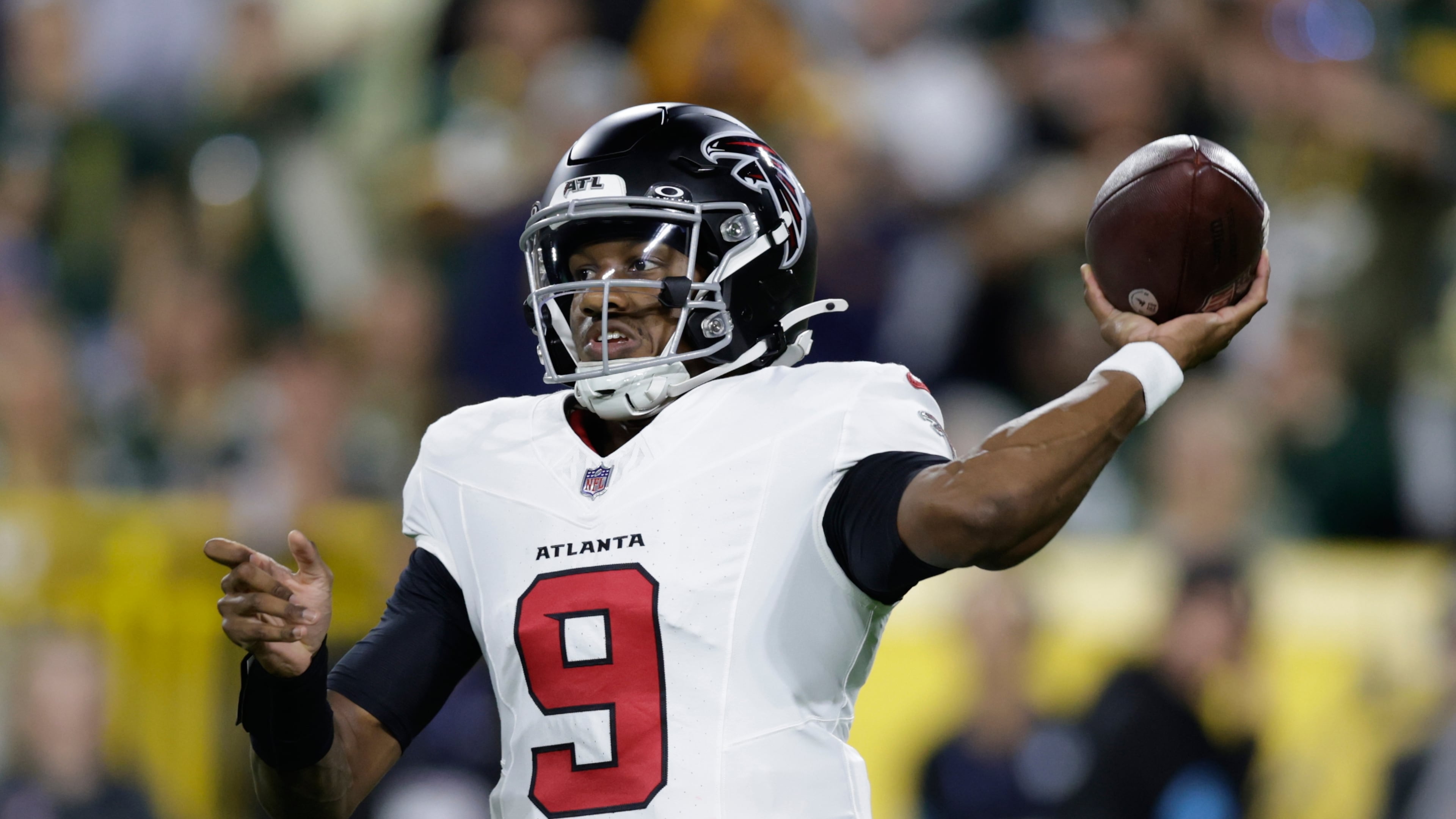

FLOWERY BRANCH — Tommy Rees chuckled at the concept of Michael Penix Jr.’s perceived irritation over his ability to run plays from under center, perhaps because the Falcons’ first-year offensive coordinator has heard so much of it.
Rees doesn’t fully know the makings of the narrative, but the Falcons’ previous coaching staff did little to quell it. Through his first two NFL seasons, Penix played 742 snaps with only 34 coming under center, a 4.6% rate. He threw just six passes from under-center formations.
Some — including ESPN analyst Stephen A. Smith — publicly questioned if Penix was physically capable of doing it. That’s where the disconnect stems. Penix, at no point, felt he was incapable of running plays from under center. The previous staff merely didn’t call them.
“Under center was never hard for me,” Penix said Thursday. “I just do what I’m told to do.”
Now, he’s being told to get directly behind center Ryan Neuzil and take snaps. The Falcons ran 35 snaps under center in their 35-14 win over the Green Bay Packers in Week 3.
The Falcons’ new staff, led by coach Kevin Stefanski and Rees, brought an offense with a significantly heavier dose of under-center plays to Atlanta. Penix took more snaps in those settings this summer, and quarterbacks coach Alex Van Pelt said he improved “greatly” in the category during his first extended work with it since college.
But here’s the catch: Penix feels none of it was challenging. There were no major adjustments required with his feet, or eyes, from the Falcons’ pistol-heavy looks of years past.
Why? Well, because he’s done it before, he does it now and he’ll do it more in the future. It’s merely what he does — and now that he’s being asked to do it, he’s doing it. Simple. And Rees believes he’s a natural fit for under-center concepts because he’s a lanky athlete who covers ground with his feet.
“I know since we’ve been here, it’s never been an issue,” Rees said Friday. “I don’t think it’s ever been a Mike thing. I think it’s something that he’s good at and we want to continue to develop and get better at. We’ll continue to do that.”
Former Falcons offensive coordinator Zac Robinson, who now holds the same role with the Tampa Bay Buccaneers, lived in pistol formations. He felt, because Penix has a unique ability to spin both ways after taking the snap, it created more space at the second and third levels of opposing defenses and forced linebackers to cover more ground laterally.
All told, Penix played 52.3% of his snaps from the pistol, highest in the league, and the Falcons largely ran play-action out of those sets. Given that Penix ranked seventh in the NFL with an average of 8.9 yards per pass attempt, Robinson believed the Falcons were getting the same things accomplished no matter where Penix took the snap.
But the Falcons may have been leaving pass-game productivity on the table.
“Some people say play-action stuff is better under the center,” Penix said. “As long as you give them a good fake, it’s all the same.”
The Falcons found significant success with their under-center passing game in Green Bay, as Penix went 4-for-6 passing for 50 yards, including gains of 16 and 20 yards to receiver Drake London. Each of his six drop-backs featured play-action, and Penix connected on each of his final four attempts.
Stefanski believes there are specific plays that work best from under the center. The Falcons used several different concepts against the Packers, including screens, bootlegs and crossing routes, and of their 41 rush attempts, 29 came under center.
Tendencies across the league, Rees said, show there’s a higher percentage of running plays when teams align under center. Tapping into play-action passing concepts accomplishes the Falcons’ offensive mission of putting defenders into conflict when deciphering whether it’s a run or pass.
“There’s benefits of being under center in terms of things you can dictate from the defense,” Rees said. “A lot of offensive football is trying to give the defense the illusion of run or pass, one way or the other, and counter it. The defense has to react to what the offense is doing. So, the more things you can make look and feel the same, the better off you’re going to be.”
Strong running games help set up more success on play-action throws. Led by running backs Bijan Robinson and Brian Robinson Jr., the Falcons have the NFL’s second-best rushing attack through three games, averaging 173 yards per contest on the ground. Their passing game benefits.
“That balance is something we’re always after,” Rees said. “And I think being under center provides a little bit of balance, provides a little bit of unknown to the defense.”
Penix acknowledged his first start since tearing his ACL last November was “different,” a byproduct of the volume of under-center snaps, over-the-middle throws and new faces surrounding him. There’s Stefanski, Rees and Van Pelt, but there was also new right tackle Jawaan Taylor, receivers Jahan Dotson, Olamide Zaccheaus and Zachariah Branch, and tight end Austin Hooper, who caught Penix’s first touchdown.
Aside from a bumpy first two drives, the Falcons’ new-look offense showed no signs of turbulence. They accumulated 498 yards — Penix threw for 256 and the team rushed for 242 — in a balanced effort. They showed the blending of a vision, of an identity.
And it appears unlikely to change.
“I like what we’re doing,” Penix said. “I like the way that we’re coming in each and every day, the way that we’re getting taught, the way that those guys are pushing each and every day to be our best and it’s awesome to be able to have that.”
Perhaps soon, questions about his under-center capabilities will quiet, too. He certainly appears tired of answering them — and his performance in Green Bay, sharp and efficient with no hiccups behind Neuzil, said as much, if not more, than any words could have.