Acuña ‘didn’t do anything’ in NLDS, and neither did other key Braves hitters
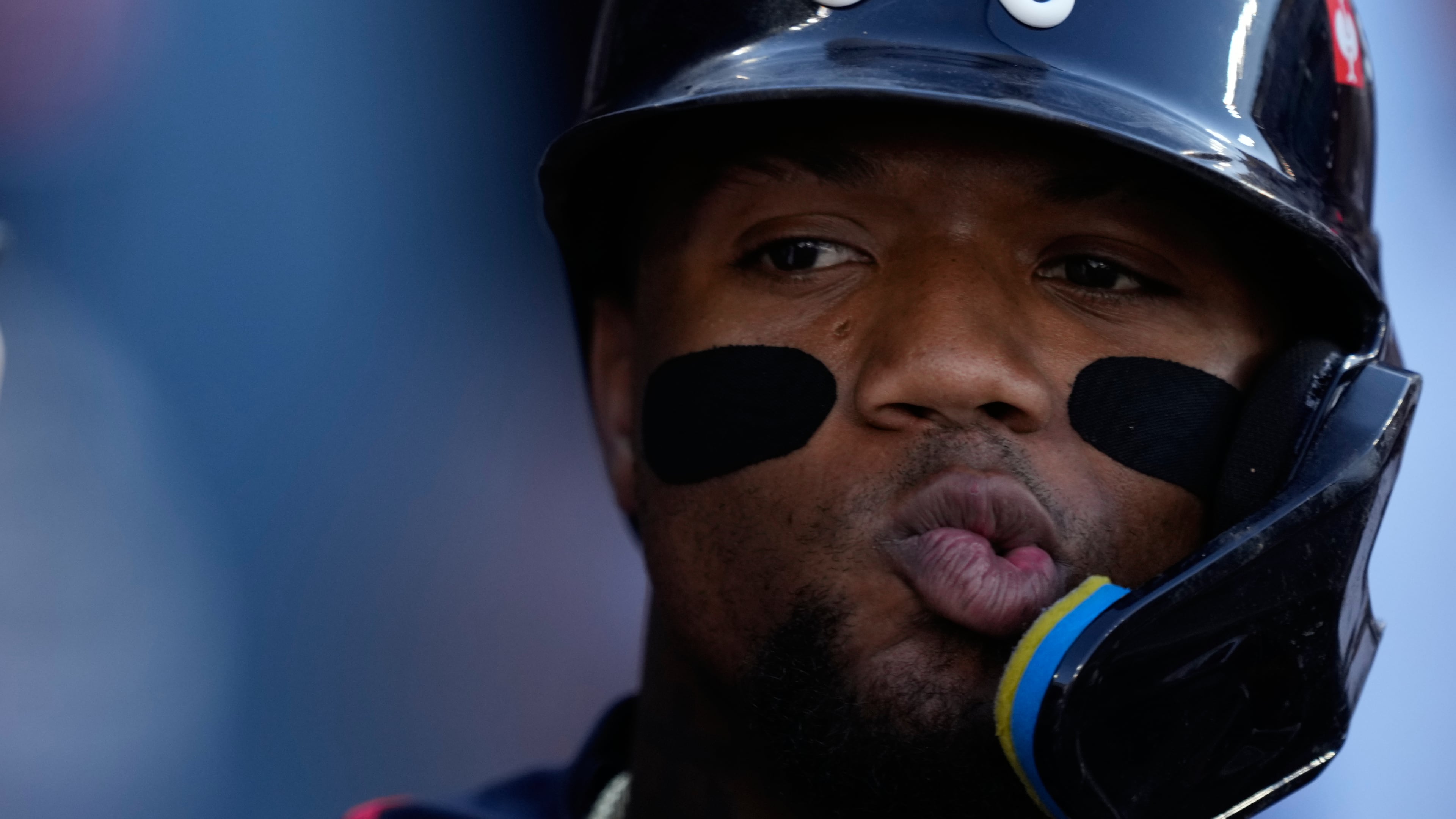
This wasn’t the Ronald Acuña Jr. who became an MLB superstar. There were no signs of the athleticism, the flair or, most of all, the production that once made him National League MVP.
Instead, there were few hits and lots of strikeouts for Acuña during a low-energy performance in the NL Division Series against the Dodgers. Eventually, some Braves fans at Truist Park grew tired of seeing it.
They jeered Acuña after what ended up being his last at-bat of the postseason Wednesday night. He grounded out weakly for the final out of the seventh inning with the Braves down by two runs and Michael Harris II at second base.
“It’s really frustrating because they are well within their rights to boo and to say what they think and feel,” Acuña said via interpreter. “I didn’t do anything.”
Acuña was hardly alone in that.
When looking for reasons why the Braves’ postseason ended now, forget the runs the Dodgers scored late to win 4-1 in the deciding Game 4. Pitching got the Braves this far.
It’s the hitters who went missing. More specifically, it was the veteran, high-priced hitters expected to carry the offense but instead spent much of the NLDS whiffing at pitches or making weak contact.
Acuña was just one of the culprits. Add Matt Olson and Austin Riley to the list, too.
Acuña, Olson and Riley combined to go 4-for-44 (.091 batting average) against the Dodgers in the NLDS, with 16 strikeouts and four walks. They didn’t have an extra-base hit among them. The three batters collectively had 11 at-bats with runners in scoring position and didn’t get one hit.
The Braves squeezed everything they could out of a thin pitching staff that had just two starters available during their seven-game postseason run. They didn’t get much from their hitters in the NL Wild Card Series and got even less in the NLDS.
“And the Dodgers have something to do with that,” Braves manager Walt Weiss said. “They’re going for their third straight world championship for a reason. Their arms just keep coming at you.
“But that’s the postseason. You never know what you’re going to get. It’s very unpredictable. … You have a lot of unsung heroes a lot of times in the postseason, and sometimes guys struggle. It’s obviously magnified because you’re playing under a microscope.”
It can be unfair to judge the offensive production of individual players in the postseason based on the small sample size of one or two playoff series. But you’d expect at least one of Acuña, Olson and Riley to do some damage.
None of them did.
Riley was 0-for-13 in the NLDS. Acuña was 2-for-15. Olson was 2-for-16.
There were some scattered boos when Olson swung wildly for the third strike to lead off the eighth inning of Game 4. But Acuña took the brunt of the vocal criticism from Braves fans at Truist Park.
Acuña suffered a knee injury while sliding into a base during Game 2 on Sunday. He said the injury “had nothing to do with” his offensive struggles.
“To say I’m disappointed would be an understatement,” Acuña said. “I’m particularly frustrated with myself. I feel like I did nothing to help the team in this series. I’m supposed to be the spark plug for my team out there, and I never lit that fire.”
Olson and Riley didn’t do that, either. The Braves got their best offensive production from center fielder Harris and second baseman Ozzie Albies.
Harris was 6-for-16 with two doubles, a triple and a walk. Albies was 3-for-15 with a home run, two doubles and two RBIs.
That wasn’t enough to get the Braves past the Dodgers because they got little production from their experienced, high-salaried hitters.
“Postseason is really tough,” Harris said. “You get the best guy (pitcher) in every situation possible. It’s just like ‘beast vs. beast’ and whoever wins. A lot of the times, it goes to the pitcher.
“Obviously, there are times we want to come through and provide some more runs. But it’s really tough to do in the postseason, especially when everything is under a microscope and you have to be a little bit more perfect.”
Team president Alex Anthopoulos has often pointed out that the Braves are a slugging team at their core. As their offensive production dwindled during the NLDS, Braves hitters talked about passing the baton. That meant focusing on getting on base by any means necessary instead of trying to smash balls over the wall.
But the Braves couldn’t change their free-swinging nature during the NLDS. They struck out 39 times over the four games. That’s a big reason why they scored a total of eight runs in the series.
Meanwhile, the Dodgers showed the Braves how passing the baton is done in Game 4.
The score was tied in the seventh inning when the Dodgers loaded the bases with a single and two walks. No. 9 hitter Andy Pages hit a two-out single against reliever Robert Suarez, scoring two runs.
“Great team,” Albies said. “We were a swing away to tie the game. But they outplayed us. That’s part of the game.”
The Braves might have had a chance to topple the mighty Dodgers if they got more offensive production from one of Acuña, Olson or Riley. But they didn’t do anything, and now the season is over.
You can now get my column sent straight to your inbox. Sign up for my newsletter here.