5 big-picture questions as Braves enter offseason
Some might consider the Braves’ 2026 season a success. The team reclaimed the National League East, rebounding emphatically from a disappointing campaign, and won a postseason series for the first time in five years.
Others will view it as a disappointment, citing the Braves’ failure to capitalize on opportunities — be it in the spring, at the trade deadline or against the Dodgers, who seemed vulnerable — and feel the season was a transaction or a good break away from continuing today.
Either way, the Braves enter the winter with questions about how they should shape their clubs. Here are some early big-picture thoughts on their situation before we later delve more into their winter and what they can and should do in the coming months.
1. How do they close the gap with Los Angeles?
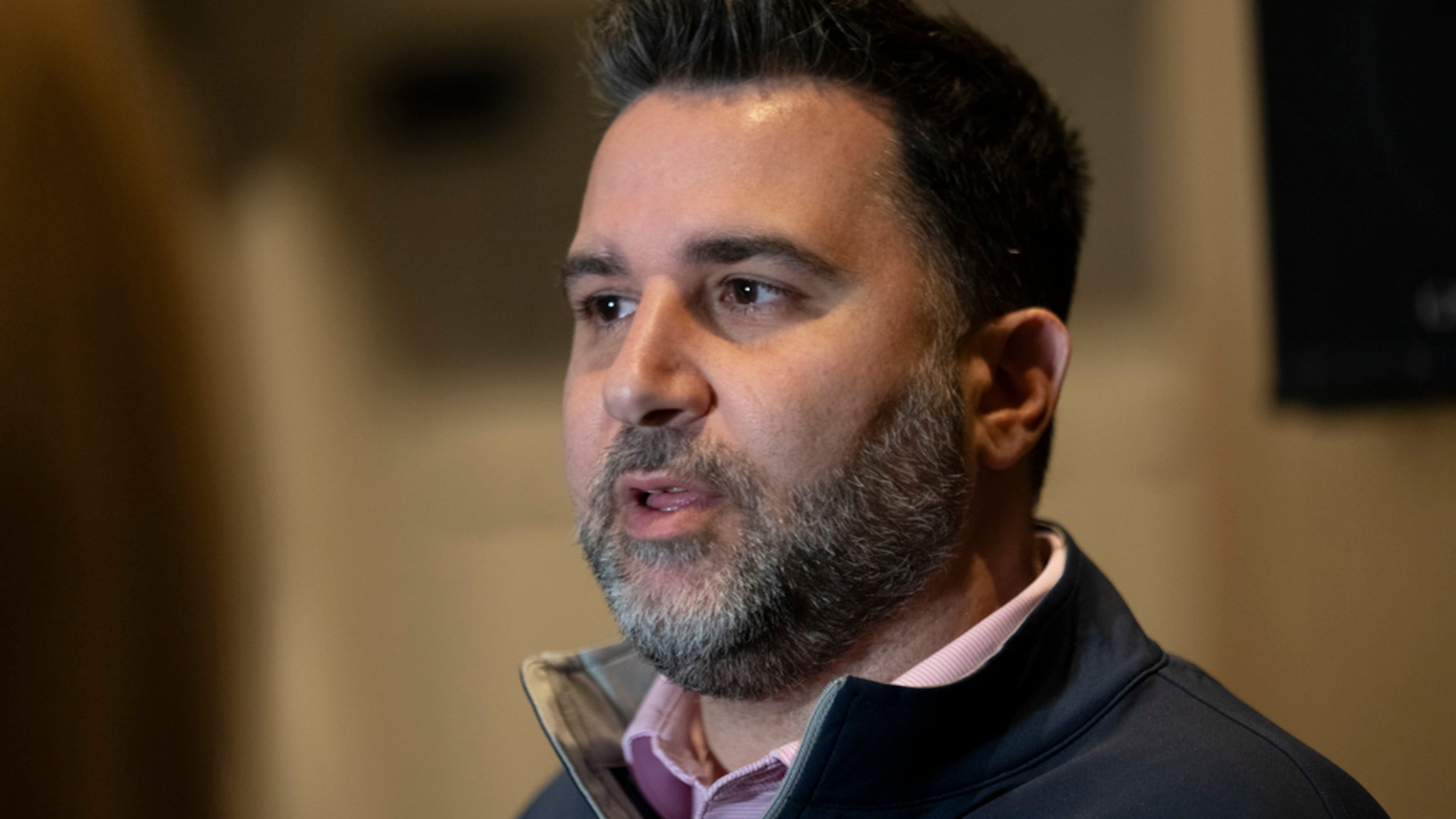
President of baseball operations Alex Anthopoulos was candid while speaking with reporters Sunday, acknowledging how circumstances — such as beating the Phillies in two games rather than three — could have affected the NL Division Series. Indeed, the Braves played the Dodgers close enough to where it felt like they were a pitch or hit away.
But how much does that really matter? They weren’t better than the Dodgers, who can likewise note they didn’t play anywhere near their best. They also struggled with runners in scoring position and didn’t come through until Andy Pages’ series-winning hit in Game 4. And Shohei Ohtani, not 100%, wasn’t the difference-maker you’d expect. They have their own list of issues they’re trying to solve as they face the Brewers.
The Braves have a very good core, culture and infrastructure. They’re in a division with the Phillies, who are trying to widen a closing window; the Mets, who’ve been rich with incompetence; and the Nationals and Marlins, who aren’t to the point of being threatening yet. The Mets had a nice finish that might bleed into them being competitive next year. The two rebuilding clubs are progressing. But the Braves will enter 2027 favored to win this group again.
So the question becomes: Are they OK with the status quo, retaining their prospects, making modest additions and leaving the postseason partly up to chance? It’s led them to sustainable success, though it’s fair to note they’ve made the NL Championship Series just twice since 2018. The Dodgers will surely have an aggressive winter whether they re-sign Tarik Skubal or not. Milwaukee isn’t going anywhere. The Braves need more than tweaks to compete with them when it matters most.
They aren’t far off, but they need more.
2. Does this core need changes?
The Braves might resent this idea, but it’s reasonable to ask. Some of this team’s key players have enough sample size to show they aren’t playoff risers. That’s not to say they can’t buck the trends, but it’s concerning, particularly when revisiting the first question, because the Dodgers and Brewers have myriad individuals who’ve thrived on the grander stage.
Matt Olson and Ronald Acuña Jr. were unproductive in the postseason. Austin Riley’s regular-season issues persisted to the point he went 0-for-13 against the Dodgers. Drake Baldwin underperformed, but he gets some grace since it was his first postseason. The bottom line is no team will play deep into October without its best players carrying their weight. The 2021 team became special because of its unique mix, so an injection of fresh perspective can make the difference.
What can be done? Olson isn’t going anywhere. Neither is Riley, whose contract would make him near impossible to move anyway. Ozzie Albies, who was solid in October, has a cheap team option that’s tough to turn down ($7 million). His trade value likely wouldn’t outweigh what he brings the Braves. Michael Harris II was tremendous in the postseason, while Baldwin is a foundational figure. That takes us to …
3. Will the Braves trade off their major league roster?
Outside speculation has centered on Acuña, an all-world talent with two team-friendly club options remaining ($17 million) before he’s set to explore free agency for the first time. He’s undoubtedly the Braves’ most talented player. When he’s at his best, few in baseball compare.
And that’s why some are arguing it’s justifiable to move him. Although the window for receiving a seismic return has probably passed, Acuña still holds a lot of trade value that’d help the Braves round out their roster. His performance wasn’t MVP caliber, but with two years of team control remaining, this might be his peak value. We’ll look more into this discussion later, but it’s nuanced. There are reasonable cases for and against it. It’s difficult to even consider moving a player with that level of upside while you’re contending.
Catcher Sean Murphy, though, could still have value despite his offensive performance and injuries. Teams need catchers, and at $15 million annually with a wealth of experience, it’s easy to envision clubs having interest in him. Anthopoulos has always put a premium on catching, and in the past he’s resented the idea of moving Murphy, so keep that in mind.
Starter Spencer Strider, because of his injuries, no longer holds premium value and might be considered a bad contract. Anthopoulos acknowledged they cannot count on Strider or Spencer Schwellenbach (injury) entering next year. Strider was part of the Braves’ trade talks for Rangers ace Jacob deGrom, as The Atlanta Journal-Constitution understands it, but at this stage, moving Strider would be financially motivated more than returning anything that’d directly help the roster.
4. How much are they counting on their prospects moving forward?
This was an excellent year in the Braves’ farm system. They have multiple youngsters who could potentially comprise their next core as this one ages out. Outfielder Eric Hartman was the breakout star, becoming a top-30 overall prospect (he stalled a bit after a promotion to Double A, so have some patience). Lefty Cam Caminiti might one day become a front-line starter. Infielder Tate Southisene has a very high floor with his versatility and athleticism.
The depth is improved, but it’s still not enough to rank the Braves among the upper-tier systems. The appeal lies in the blue-chippers and wealth of intriguing pitchers. The Braves have guarded their best prospects in the past — Anthopoulos often notes how he resisted moving Baldwin for Garrett Crochet. Years ago, the team declined to move Acuña to Miami for Christian Yelich. Shea Langeliers is really the only prospect Anthopoulos moved who has blossomed (William Contreras was young but not a prospect).
Now, there were surely deals the Braves rejected that involved moving prospects who ultimately amounted to little, but we’re always going to hear less about those. The Braves were willing to move most of their top talent for Skubal, but the Tigers preferred the Dodgers’ options. Will there be any players available this winter who again tempt the Braves to move some of their youth? Young fireballer Didier Fuentes is close to untouchable. But as exciting as some of these prospects are, they’re also great assets. Ultimately, the Braves have always emphasized building from within.
5. What do the Braves need personnel-wise for 2027?
They’ll need a starting shortstop even if they envision one of their prospects eventually assuming the role. Re-signing Mauricio Dubón would help there, but expect him to have a healthy market. He’s versatile, a defensive wizard, a beloved teammate, and he’s been conducive to a lot of winning teams. This is his first chance to cash in, and he’ll take it.
It made waves this week when MLB Network reported the Braves had previously checked on Rangers shortstop Corey Seager’s availability. Although Seager just had a down season, has consistent injury concerns and has five years and $155 million left on his contract. He also isn’t a plus defender. Seager’s bat is a difference maker when he’s healthy, and notably he’s excelled in the postseason — but there are plenty of roadblocks to that becoming a real conversation.
Houston could trade Jeremy Peña before his walk year, but that would leave the Braves with a shortstop hole again next winter (unless they’re ready to bank on a prospect). Will the Reds listen on the extraordinary Elly De La Cruz? Would Baltimore be amenable to moving Gunnar Henderson, an Alabama native who might benefit from a change of scenery to recapture form? Seattle’s J.P. Crawford leads the free-agent list, which lacks top-end talent. If the Braves are keeping most of their lineup intact, they need more offensively at shortstop and/or left field.
Will they try to re-sign Raisel Iglesias again? They added Robert Suarez last winter on a deal that seemed to make him the next closer. Anthopoulos always invests in his bullpen, but this might be a situation he reallocates that cash elsewhere. Iglesias has been an integral part of the Braves and his underlying metrics don’t indicate a steep decline despite his age (37 in January).
What becomes of Jurickson Profar? The disgraced outfielder has one year and $15 million remaining on his deal after serving his season-long suspension for testing positive for a performance-enhancing substance (again). The Braves will either release him and eat the money, find a way to trade him for more unwanted salary, or bring him back and let him try to earn his teammates’ respect back (again).
They’ll need to add starting pitching. Fuentes might join the rotation, but he isn’t equipped to handle a large workload just yet. Hurston Waldrep is sidelined. Schwellenbach and Strider are essentially wild cards. The Braves outperformed expectations with their rotation this year, though they were a starter short when it mattered. They need more, but one could argue adding a bat is of greater importance now.
Will they re-sign Tyler Mahle, who’s surely trying to capitalize on his great Braves stint in free agency? Is this the winter they sign Sonny Gray after years of flirtation? Could they attempt to reunite with Kevin Gausman, an old Anthopoulos favorite? Would they spend a bit more for someone like Michael King or Freddy Peralta? Will they try to flip prospects for a more cost-controlled proven commodity?
The optimist’s perspective: The Braves have a great team. They have plenty of room for acquisitions that could make them a championship-quality one.