
What UGA basketball will do to ‘reshape’ amid challenges it faces to elevate
ATHENS — UCLA coach Mick Cronin sat behind the microphone in the postgame of the Bruins’ 73-57 season-ending loss to UConn on Sunday.
“Do you feel like anything needs to change,” the reporter asked, “with the approach, the roster construction …. “
Cronin, a former Final Four coach with three Sweet 16s under his belt in the past five years in bringing tradition-rich UCLA back into prominence, shrugged.
“I’d like about 5 more million (dollars),” Cronin said. “There’s my answer.”
Spending money to acquire more talent is everyone’s answer in today’s collegiate sports landscape, regardless of sport, but particularly men’s basketball.
More than 2,300 Division I players entered the 2025 spring transfer portal in 2025 — an average of more than six per team — per a South Bend Tribune report.
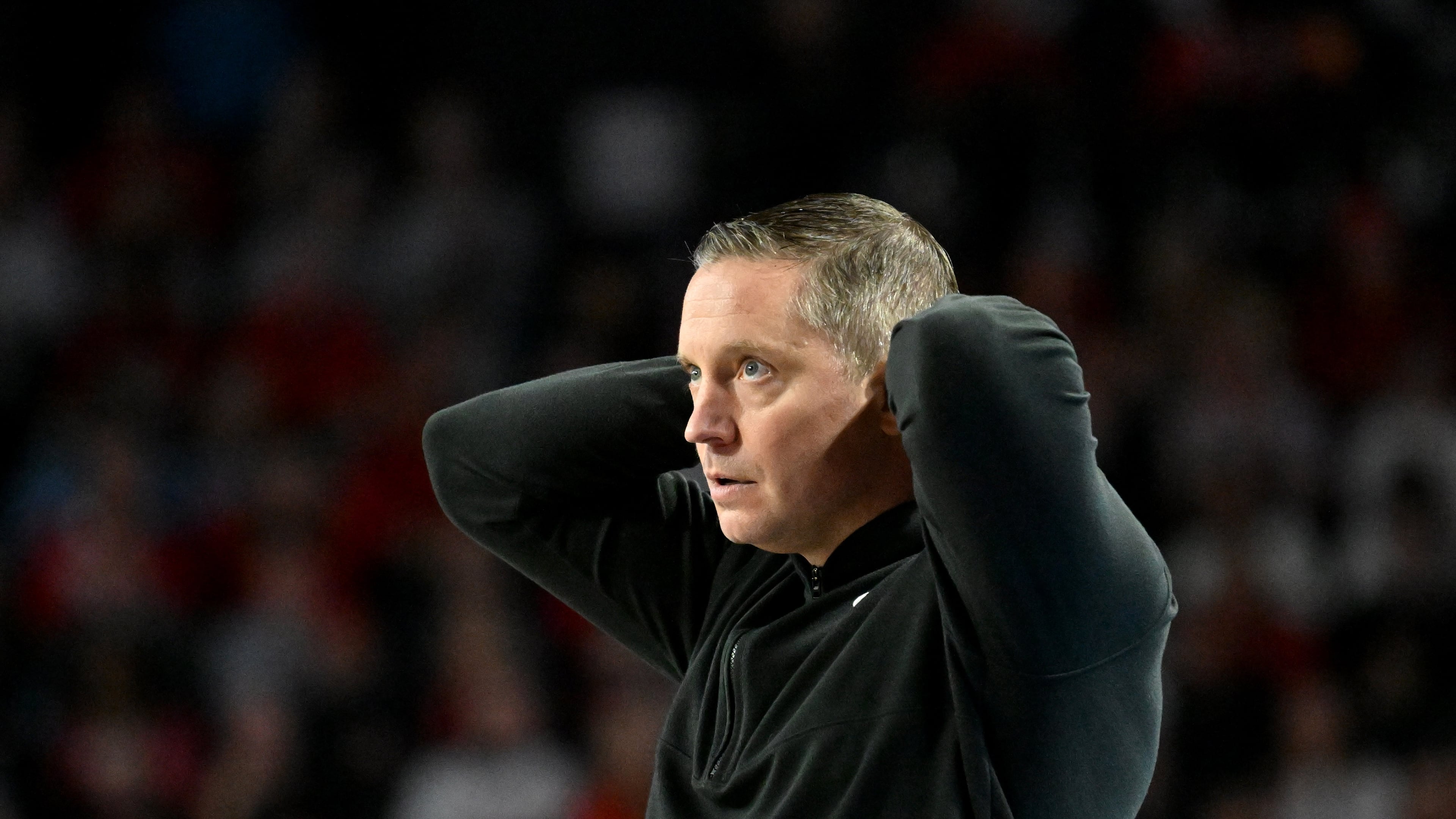
Georgia coach Mike White, on the heels of a school-record 22-win season that saw the program make the NCAA tournament in consecutive seasons for the first time in 24 years, told The Atlanta Journal-Constitution he’s more focused more on roster management than budget.
This year’s basketball portal runs 15 days from April 7-21 — down from 30 days last year, and 45 in 2024.
“Every transfer portal cycle is essentially a chance to reshape your roster,” White said. “With the portal opening right after the NCAA Tournament and being shorter, obviously everything will move faster.
“We have to be ready to evaluate quickly without ever losing sight of who we are and what we’re trying to become as a program.”
No doubt, White looks to make the most of roster management opportunities in the coming weeks in meeting with players and assessing talent.
The transfer portal doors will soon swing open, and in some cases, White notes, players are already considering their options.
“So many of these student-athletes playing in this tournament mentally might have a couple toes in the portal, they might have a foot in the portal, they might have a foot-and-a-half in the portal,” he said after his team’s loss to St. Louis in Buffalo.
“They’ve got communication with relatives, with former coaches and now with agents, right? So, first and foremost, where are we at with our roster? Let’s try to figure that out as soon as possible.”
NIL negotiations
Identifying players is one thing, but retaining and acquiring new ones is another. There are financial decisions to be made.
Things are only going to get more expensive this year and moving forward. As Yahoo Sports reported, NIL spending in college basketball grew to $932.5 million in this fifth year of NIL (2025-26) — up from $314.3 million in the first year.
The various published datapoints on NIL spending and operations budgets fail to provide enough detail to provide complete clarity, as NIL contracts are not subject to open records laws, and budget comparisons are challenged to take into account several variables unique to each program.
UGA athletic director Josh Brooks has indicated in the past that the Bulldogs’ basketball NIL spending has hovered “near the middle” in a conference that sent a nation-high 10 teams to the NCAA tournament this season. A record 14 SEC teams made the field last year.
White himself ranked 11th among SEC coaches in pay this season — a bargain when considering the program’s ascension with a four-year win total of 78. That’s 12 more than any other coach began his career with in UGA basketball history, including 62 wins over the past three seasons, tying the benchmark set by Hugh Durham from 1981-1983.
The Bulldogs recently fell drastically short of achieving what would have been their first NCAA tournament win since 2002 (a win that was later vacated because of NCAA sanctions), falling to St. Louis 102-77 last Thursday in a Midwest Regional first-round game in Buffalo, New York that White referred to as “sickening.”
The social media reactions were, predictably, swift and severe.
“Any time the ending isn’t what you wanted it to be, there tends to be a narrative,” ESPN basketball analyst Dane Bradshaw said during an appearance on DawgNation’s “On the Beat” podcast.
Bubble program
Bradshaw had noted in the final weeks of the season that White’s Georgia team was on the proverbial NCAA tournament “bubble,” needing a strong finish in a deep SEC.
“When you’re on the bubble, teams can fold under the pressure or rise to the occasion,” Bradshaw said. “And I believe Georgia won five of six games to close out the season. They were playing as well as anybody in the country.”
The Big Dance music stopped abruptly, however, drawing immediate disappointment from a UGA fan base that was among the record viewership — according to CBS Sports, it was the most-watched first-round ever.
White didn’t have the answers for the outlier performance: A shooting star going 0-for-11 from the field? A team featuring an All-SEC defensive team post player getting outscored 66-28 in the paint?
March Madness had simply struck again, with White’s capable Bulldogs the victim of an upset in a game they had been favored in by a scant 2 1/2 points.
It was as surprising as seeing Georgia football, as a 1 1/2-point favorite, get bested by Notre Dame in the 2025 Sugar Bowl by a 23-10 count.
Then, like now, the answer was that more money was needed for a UGA sports program to acquire elite talent through the transfer portal to address a glaring need — in this case, the receiving corps.
Former USC wideout Zachariah Branch, acquired through the portal proved the right fix, posting a record-breaking, single-season catch total that enabled Georgia football to repeat as SEC champions and reach the CFP quarterfinals — football’s version of the Elite Eight — once again.
Football is king
UGA ranks as the only program in the nation to have a football team make the CFP quarterfinals and a basketball team in the NCAA Tournament each of the past two sports seasons.
But as most already know, football and basketball do not operate on the same plane in collegiate athletics.
A review of UGA’s NCAA financial report by the AJC revealed that $38.9 million of the athletic department’s $41.3 million in revenue from ticket sales came from football.
The math is simple: Football, with its large venues and high television ratings — second only to the NFL — is a far more profitable venture when it comes to producing revenue to fund other sports in the athletic program.
Indeed, former SEC commissioner Roy Kramer once said that “football is the engine that drives the revenue train.”
In that respect, no SEC football program has been more successful than Georgia in recent years.
Kirby Smart has won the past two SEC championships and is the only active coach with an SEC championship to his name, along with winning the SEC’s two most recent national championships while churning out more NFL draft picks over the past five years than any program in the nation.
Per the NCAA financial report, UGA tallied a staggering $233.5 million in operating revenue in 2025. CNBC reported the department’s estimated valuation at $1.16 billion.
The athletic department’s worth under Brooks’ leadership ranks fourth in collegiate athletics, per CNBC, behind Texas ($1.48 billion), Ohio State ($1.35 billion), Texas A&M ($1.32 billion) and tied with Michigan.
UGA donations reflect the fan base’s priority to maintain its place at the top in football, with $44.1 million directed toward football and $1.5 million designated for men’s basketball out of the $46.6 million reported in contributions.
A significant portion of the athletic department revenue must go back into the football program to maintain both its elite success and its earnings potential, even as Brooks works to spread funds across other sports programs with hopes of providing each coach an opportunity to compete for championships.
On the rise
White, through four seasons, has improved the win total each year in launching the most successful four-year start to a men’s head basketball coaching tenure in school history.
The basketball experience has been enhanced with students and fans often filling 10,523-seat Stegeman Coliseum, which averaged more than 80% capacity.
Bradshaw, who as a player at Tennessee (2004-07) was part of a program that transitioned into an annual SEC and NCAA Tournament contender, said Georgia basketball simply must get bigger to take the next step.
“I think they just have to add depth to that frontcourt,” Bradshaw said, keenly aware of UGA ranking 14th in the league in rebounding margin in conference games.
“It’s fun scoring 100 points and they were really good at it, but how can you not get punished on the boards?”
To Bradshaw’s point, Georgia led the nation with 19.76 fast break points and ranked fifth in scoring (89.4 points per game).
But Georgia, even with a 3.1 turnover margin that ranked 29th in the nation, could not compensate with the added possessions — via second- and-third-chance points — that its lack of rebounding prowess afforded opponents.
“You have to get some frontcourt help in there,” Bradshaw said. “Ultimately, to win in March and compete for an SEC championship, you’ve got to get two or three horses down low. It’s a man’s game ... And the SEC is as physical as they come.”
White left the door open on Georgia’s style of play, but he made clear the mentality of player he’ll be looking for when retaining and seeking talent.
“Our priority remains the same as every portal period: Focus on keeping the players who believe in what we’re building at Georgia, while adding the right pieces who truly fit our culture,” White said. “That’s what we’ve done in the past, and I believe it has served us well. We will stay committed to that approach.”
About the Author

Mike is in his 10th season covering SEC and Georgia athletics for AJC-DawgNation and has 25 years of CFB experience. Mike is a Heisman Trophy voter and former Football Writers President who was named the National FWAA Beat Writer of the Year in January, 2018.