Can Keisha Lance Bottoms withstand Rick Jackson’s spending blitz?

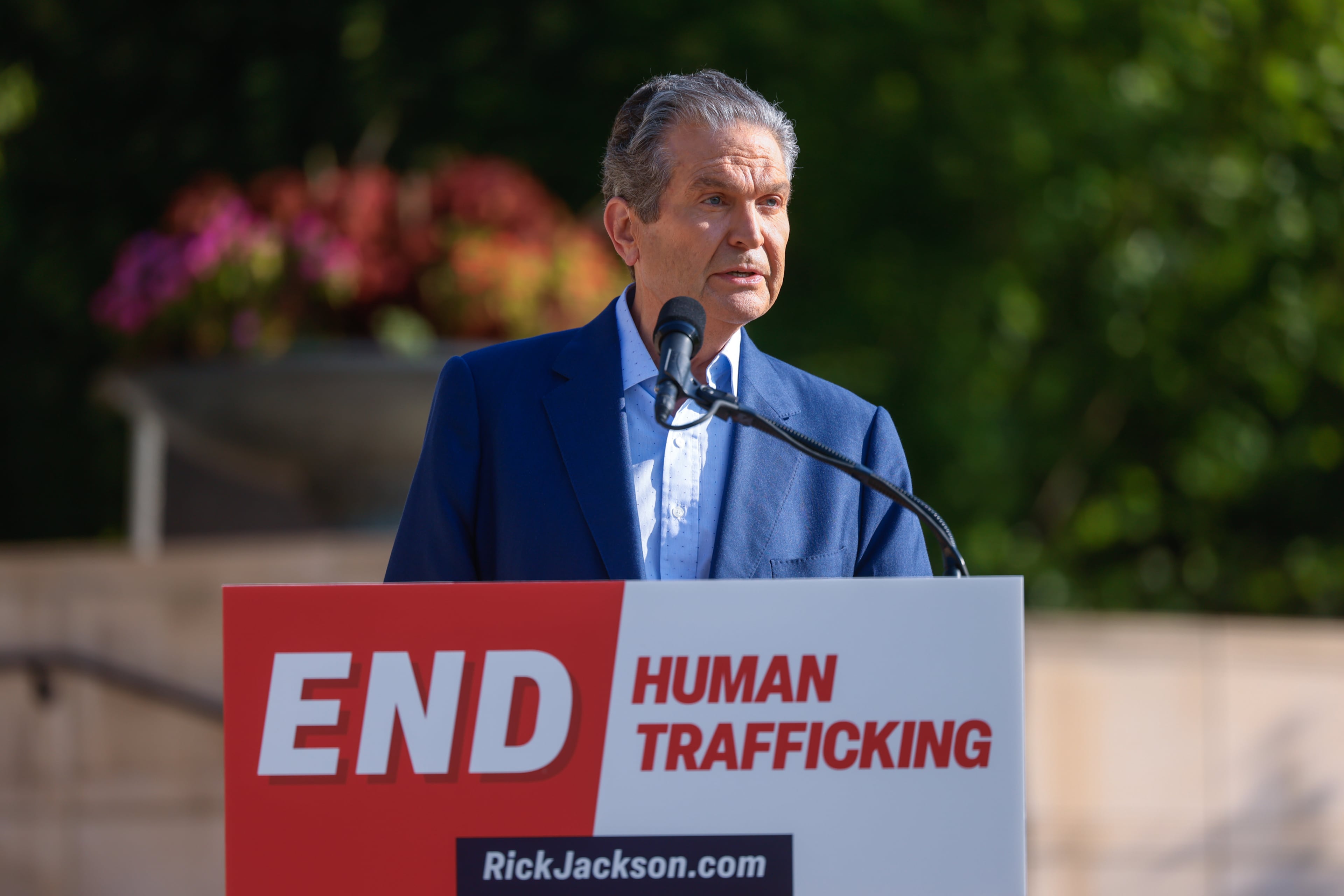
Republican Rick Jackson’s financial advantage has loomed over Georgia’s race for governor since his surprise entry in February. But this week, Democrats got a sobering reminder of just how lopsided it is.
An AdImpact analysis shows pro-Jackson groups have spent or reserved nearly $76 million in airtime ahead of the general election, compared with about $8 million for Democratic nominee Keisha Lance Bottoms and her allies. Her campaign itself has just $42,000 reserved for traditional TV ads.
Those figures don’t capture the full scope of Bottoms’ spending, nor do they reflect a six-figure statewide ad buy the campaign launched early Thursday.
But they brought Democrats face-to-face with a stark reality that has hung over the race from the start: Can Bottoms overcome a financial disparity of this scale?
Bottoms is running with the political winds at her back. U.S. Sen. Jon Ossoff’s strong polling is giving the ticket a lift. President Donald Trump’s approvals are weighing down Republicans. And her history-making bid is gaining national attention.
Yet she’s facing a Republican opponent with a compelling biography, a shrewd campaign team and enough money to dominate television, blanket voters with mailers and build an innovative turnout operation.
Jackson has already spent at least $108 million of his own fortune through June. But even that record-shattering sum doesn’t capture his full financial footprint. Democrats, along with several of his former GOP foes, expect he’ll spend roughly $200 million through the race.
For Bottoms’ allies, the scale of that advantage is bewildering. The fact that polls show the Democrat in a tight race despite the huge imbalance is encouraging.
“She can absolutely still win. Despite the significant spending disparity, the polls remain deadlocked,” said Falak Sabbak, a veteran Democratic strategist. “Jackson has spent heavily, and the fact that he still hasn’t been able to pull away in the polling says a lot about how competitive this race remains.”
Scott Paradise, a longtime Republican consultant who managed Herschel Walker’s 2022 GOP Senate campaign, said the same could be said of Bottoms, who is boosted by Ossoff’s “formidability” and backlash to Trump.
“Rick Jackson’s spending, which is more than even anticipated, might be keeping the entire Republican ticket afloat,” he said. “And Bottoms’ lack of fundraising may cost Democrats their best chance in decades to flip Georgia.”
‘It’s tough’
Money can transform a political campaign. But Georgia history is riddled with examples showing that it doesn’t guarantee victory.
One of the most dramatic came in 2002, when Democratic Gov. Roy Barnes raised nearly $20 million for his reelection campaign against Sonny Perdue, a little-known Republican state senator who raised about $3 million.
Perdue’s upset ended more than a century of Democratic control of the governor’s office and is still one of the starkest examples in state history of an underfunded challenger scoring a win.
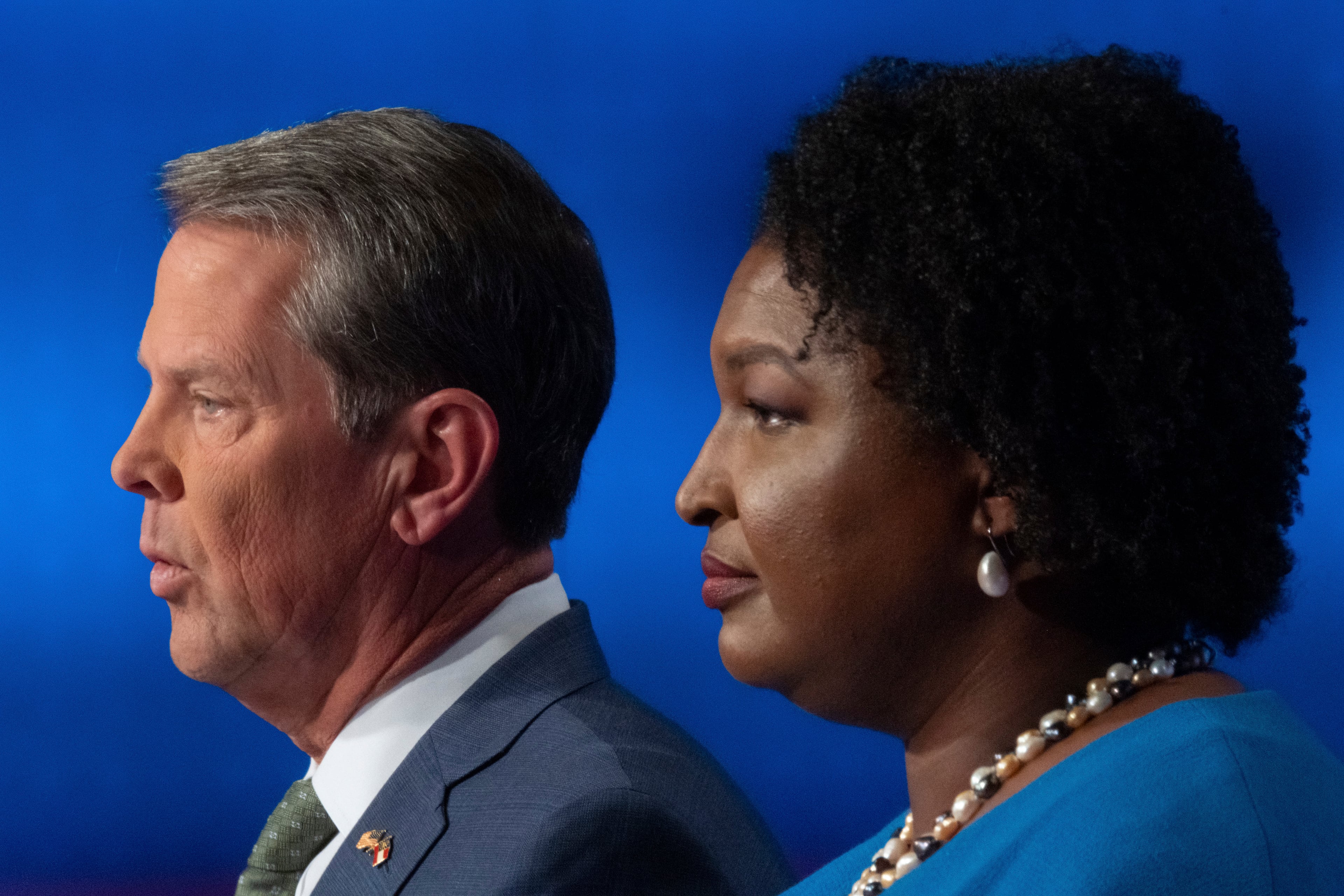
Gov. Brian Kemp offers a more recent reminder. Democrat Stacey Abrams raised a record $113 million for their 2022 rematch, compared with $78 million for Kemp. The incumbent easily won.
And before Ossoff was a household name in Georgia politics, he amassed about $30 million during his 2017 special election bid for a conservative-leaning suburban Atlanta congressional district. Republican Karen Handel, who collected about $6 million, prevailed with aid from a torrent of outside spending.
But Bottoms isn’t helpless. A 2021 law allowing party nominees for governor to raise unlimited sums through leadership committees means just a handful of wealthy donors could narrow the gap. She’s already used that fund to raise at least $3.4 million since winning her party’s nomination.
“Rick Jackson can choose to hide behind his ads and skip debates, but the voters of Georgia see right through him — and that’s why Keisha is winning this race,” said Bottoms’ aide Beth Cope.
And Ossoff, who by July had amassed more than $42 million, is working to boost the ticket.
Ossoff said Wednesday that he’s transferred more than $3.6 million over the past two years to the Democratic Party of Georgia’s coordinated campaign, an operation designed to help not only his reelection effort but also Democrats up and down the ballot.
Even a surge of Democratic money, though, could only narrow a gap this vast, said Attorney General Chris Carr, a former GOP candidate for governor now backing Jackson.
“Trust me, I know what it means when somebody’s got $100 million, and you’ve got eight,” Carr said on the AJC’s “Politically Georgia” podcast. “It’s tough.”
All at once
On the campaign trail, Bottoms has increasingly tried to make Jackson’s fortune part of her case against the Republican.
She argued that enthusiasm was on her side because Democrats outvoted Republicans in the May primary despite the GOP’s spending advantage.
And she’s stepping up her efforts to remind voters of Jackson’s ties to Trump, even as he tries to pivot from the president.
“It’s not the year for the billionaire who says he wants to be Trump’s favorite governor, who says he wants to be Trump with a southern tone, a person who says he doesn’t disagree with a single policy from Trump,” she said during an appearance on MS NOW.

Unable to match Jackson dollar-for-dollar, Bottoms has leaned harder on events and policy rollouts that can generate coverage without the price tag.
Just this week, she followed a raucous Sunday rally with Ossoff with a Monday event highlighting Jackson’s financial stake in a Texas data center and her call for a pause in new projects.
She’s also rolled out a steady series of new policy proposals, including measures aimed at lowering grocery taxes and boosting transit funding.
“You have to utilize earned media,” Bottoms strategist Tharon Johnson told the “Politically Georgia” podcast, adding that’s why her campaign “inundates” reporters with events.
“She believes that we can actually build a winning coalition. And that winning coalition doesn’t just consist of Democrats, but independents, college-educated, suburban moms, hardworking dads who are seeing the rising cost of groceries and gas,” he said.
Jackson, meanwhile, is giving no sign that he plans to ease up.
He unveiled a veterans agenda Wednesday that would create a new statewide office focused on military and veterans affairs, expand healthcare access and offer other benefits.
His campaign is also holding fundraisers to supplement his own spending, including a Sept. 30 gala at a Buckhead estate where it costs $15,000 to join a who’s who of well-known Republicans on the host committee — and as much as $100,000 to attend a VIP reception.
At the same time, Jackson is returning to one of the most personal themes of his campaign, airing a trio of ads featuring foster children praising his work to overhaul the system.
It was a blunt reminder of the flexibility Jackson’s wealth affords him.
One television ad can attack Bottoms over her record as Atlanta mayor, while another highlights his biography, even as mailers and digital ads remind MAGA supporters he won Trump’s endorsement.
Meanwhile, he can pour resources into an expensive grassroots campaign operation, entirely separate from the Georgia GOP’s turnout machine, that his operatives liken to a “concierge service.”
And he can do it all at once.