How Lindsey Graham became a force in Georgia politics


U.S. Sen. Lindsey Graham never represented Georgia. But few lawmakers from outside the state played a bigger role in its turbulent politics.
The South Carolina Republican, who died Saturday at 71, was best known as a foreign policy hawk and one of President Donald Trump’s closest allies. In Georgia, he was a campaign surrogate, a peacemaker, a partisan warrior and, for a time, a potential target of one of the most consequential criminal investigations in state history.
He called Georgia’s top elections official after Trump’s 2020 defeat. He fought a subpoena all the way to the U.S. Supreme Court before testifying in Fulton County. A special grand jury later recommended charges against him, though prosecutors never indicted him.
And in 2024, Graham helped broker the political detente between Trump and Gov. Brian Kemp that reunited two bitter rivals at a critical moment in the presidential campaign.
For a senator from the state next door, Graham had an outsized role in Georgia’s political drama.
“Senator Lindsey Graham was a patriot, an impactful public servant, and a friend,” Kemp said Sunday. “His love of this nation, unyielding belief in its possibilities, and defense of its values made him a true force to be reckoned with in Washington.”
Graham’s death also brought tributes from Georgia Democrats who often clashed with him in Washington and on the campaign trail.
U.S. Sen. Raphael Warnock called him “a man of great faith who served the people of South Carolina with passion and tenacity.” U.S. Sen. Jon Ossoff remembered Graham as “an energetic leader who loved South Carolina.”
The fighter
Graham’s role in 2020 was fraught. In the weeks after Trump narrowly lost Georgia, Graham twice pressed Republican Secretary of State Brad Raffensperger about the state’s absentee ballot signature-matching process.
Raffensperger said Graham questioned if he had the power to reject legally cast absentee ballots to help Trump narrow his deficit in Georgia and floated the possibility that biased poll workers could have influenced the results.
Graham insisted he did nothing wrong. He said he was conducting routine legislative fact-finding as chair of the Senate Judiciary Committee. He also said Trump hadn’t urged him to make the calls.
The exchanges soon became part of Fulton County District Attorney Fani Willis’ sprawling investigation into efforts by Trump and his allies to overturn the election. And few witnesses fought efforts to compel him to testify as aggressively as Graham.
He spent more than four months challenging the subpoena, arguing the Constitution’s “speech or debate” clause shielded him from questioning about his legislative work. He appealed parts of the dispute all the way to the U.S. Supreme Court.
A federal judge ruled that prosecutors could not question Graham about his official congressional duties. But they could ask about any coordination with the Trump campaign and “efforts to ‘cajole’ or ‘exhort’ state election officials to change practices or alter election results.”
Graham finally appeared before the 23-member Fulton County special grand jury in November 2022, testifying for more than two hours behind closed doors. His office said he answered every question and was treated with “respect, professionalism and courtesy.”
In testimony later made public, Graham voiced frustration over Trump’s false claims of widespread election fraud. He said to grand jurors that he repeatedly told Trump “more times than we can count that he fell short,” but to no avail.
“If you told him Martians came and stole votes, he’d be inclined to believe it,” Graham told jurors, according to a transcript of his testimony.
That same day, Graham headed back to the Georgia campaign trail, appearing in Powder Springs with Herschel Walker, the Trump-backed Republican challenging Warnock in a nationally watched U.S. Senate race.
Graham had become one of Walker’s most visible national allies, appearing alongside him at campaign events and in Fox News interviews as the former football star faced a string of controversies.

His advocacy went so far that the Senate Ethics Committee later admonished Graham for soliciting campaign donations for Walker during a Fox News interview from a Senate office building ahead of the runoff. Graham acknowledged the mistake.
“I take responsibility,” he said. “I will try to do better in the future.”
The Fulton County probe, meanwhile, continued. A special grand jury later recommended that Graham and dozens of others face charges under Georgia’s anti-racketeering law.
The panel’s recommendations were nonbinding, and Willis did not seek an indictment against Graham when she brought charges against Trump and 18 others in 2023.
The probe later collapsed amid scrutiny of Willis’ romantic and financial ties to the special prosecutor she hired to help lead it.
The peacemaker
By August 2024, Graham was again in the middle of a Georgia political crisis. This time, he was trying to end it.
Trump stunned Republicans at an Atlanta rally that month by unleashing a barrage of attacks against Kemp, reviving a feud rooted in the governor’s refusal to help overturn the 2020 election. He said Kemp was a “bad guy” and disloyal, and even criticized his wife, Marty.
The attacks set off alarm bells among Republicans who feared the infighting could cost Trump a battleground state crucial to his hopes of defeating Vice President Kamala Harris. Graham publicly urged the two to make amends.
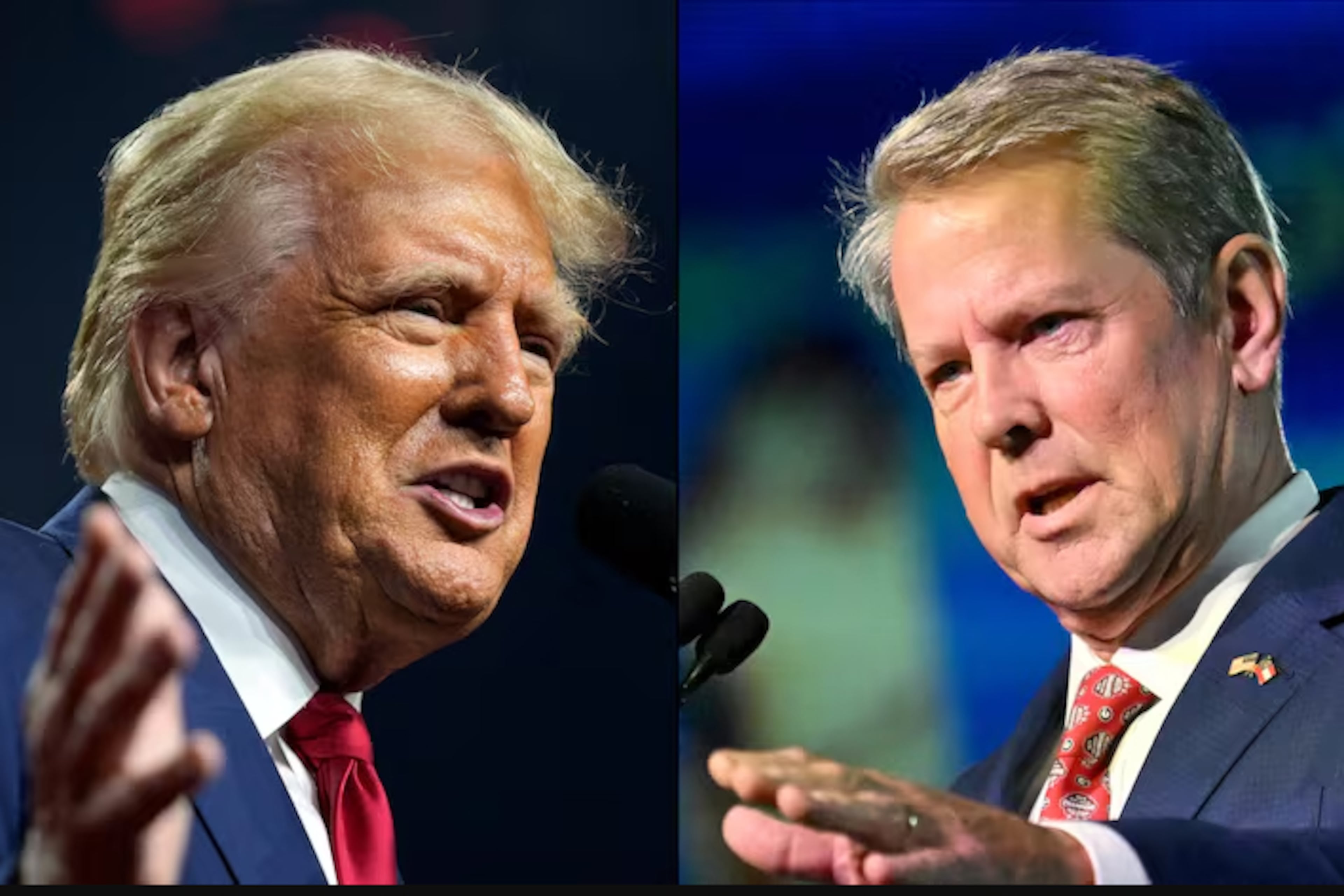
Days later, Graham pulled Kemp aside at a Republican fundraiser at former U.S. Sen. Kelly Loeffler’s Buckhead estate. He acknowledged Trump had been unfair to the governor, according to the book “How Trump Retook the White House and the Democrats Lost America.” But he argued a truce would benefit them both.
“It’s in your interest to have a good relationship with him, and it’s definitely in his interest to have a good relationship with you,” Graham told Kemp. “He just doesn’t know it yet.”
Kemp agreed he didn’t want to fight. Graham offered a path forward: He would get Kemp on Sean Hannity’s Fox News program and make sure Trump was watching. Kemp later appeared on the show and reaffirmed his endorsement of Trump, who soon thanked the governor for his “help and support.”
It was a fitting turn in Graham’s long and unusual role in Georgia politics.