Brian Kemp rules out canceling primary, using new maps in 2026
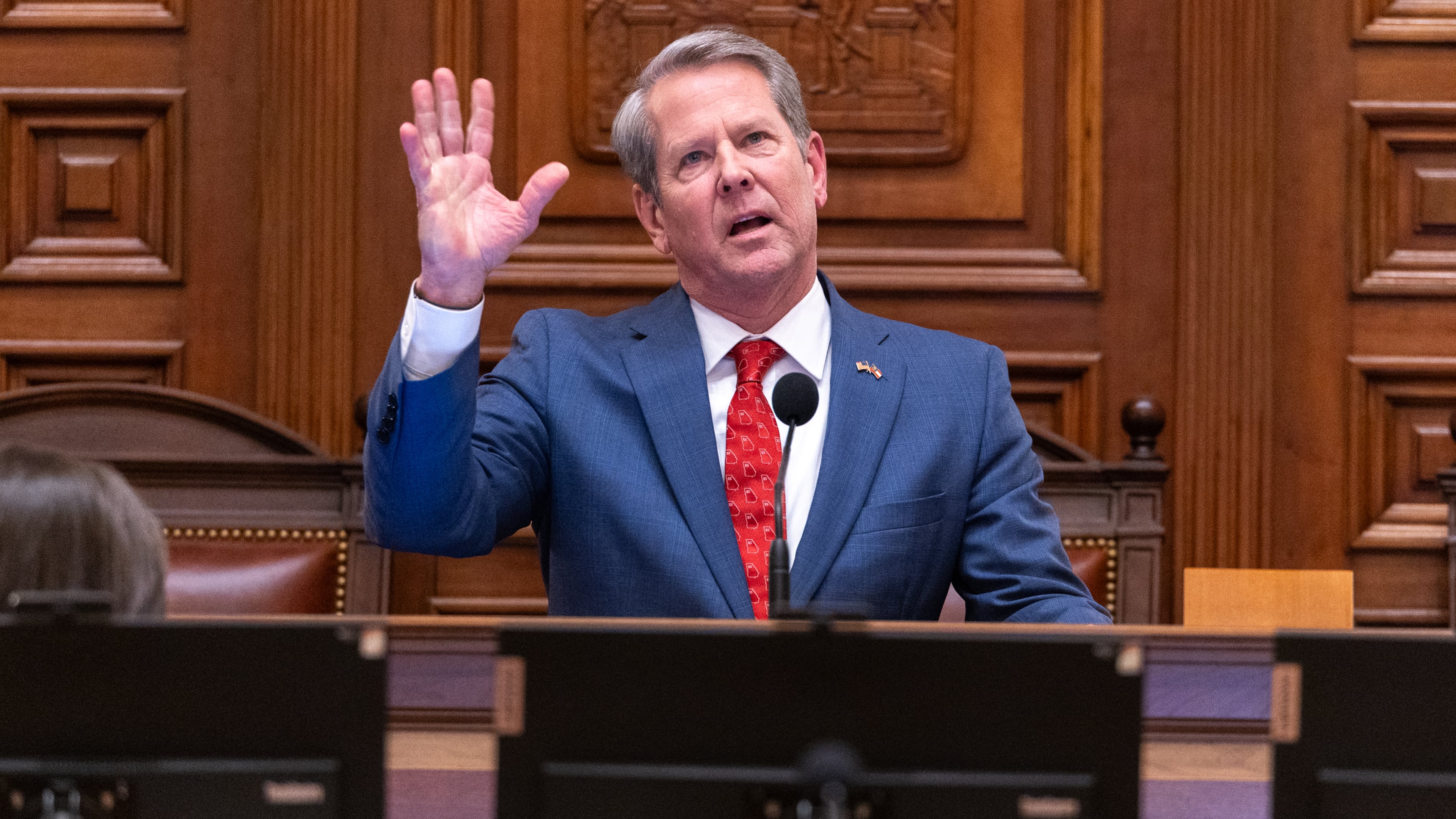
Gov. Brian Kemp made clear Friday he won’t cancel Georgia’s May 19 primary or rush to impose new political maps on this year’s elections after the U.S. Supreme Court weakened a key pillar of the Voting Rights Act.
But Kemp also signaled he could still call lawmakers back to Atlanta to redraw Georgia’s congressional and legislative boundaries. The difference: Any new maps would be aimed at the 2028 elections, not the 2026 midterms already underway.
The governor told The Atlanta Journal-Constitution that the Supreme Court’s decision in Louisiana v. Callais “restores fairness to our redistricting process and allows states to pass electoral maps that reflect the will of the voters, not the will of federal judges.”
But he added that it’s too late to reconfigure the maps before the midterms, with Georgians already headed to the polls and the May 19 primary less than three weeks away.
“Voting is already underway for the 2026 elections,” Kemp said. “But it’s clear that Callais requires Georgia to adopt new electoral maps before the 2028 election cycle.”
It isn’t an idle question. After the Supreme Court found that a majority-Black district in Louisiana relied too heavily on race, Louisiana Republican Gov. Jeff Landry suspended the state’s U.S. House primaries and asked lawmakers to redraw the lines. But unlike Georgia, early voting had not yet begun in Louisiana.
Democrats and voting rights advocates, meanwhile, warn the ruling could erase majority-Black districts that have helped ensure more minority representation in Washington.
“Make no mistake,” Democratic U.S. Sen. Raphael Warnock said, “this ruling harkens back to the darkest days of the Jim Crow era.”
Republicans in several other states are also assessing whether they can reconfigure districts to preserve the party’s edge in the U.S. House ahead of the midterms. President Donald Trump said on social media that he lobbied Tennessee Republican Gov. Bill Lee to overhaul that state’s map to flip a congressional seat to the GOP.
Race for Georgia Governor
Brian Kemp is leaving after two terms, and six Democrats and five Republicans are running to replace him.
Election results: See who’s leading
The candidates: Learn about who’s on the ballot
The polls: See who’s leading
Live updates: Georgia primary elections
Democrats: Debate reveals the race beneath the race
Republicans: Attack ads explode into real life
Money matters: The wealth divide defining Georgia’s governor’s race
Democratic front runner: Keisha Lance Bottoms is racing ahead as rivals battle each other
GOP battle: How Jones-Jackson clash has engulfed governor’s race — and Georgia politics
Georgia Voter Guide: The races, candidates and frequestly asked questions
In Georgia, several prominent Republicans who are running for statewide office urged Kemp to call a special session this summer to overhaul the maps. State Rep. David Clark, R-Buford, said a swift rewrite should create a “more perfect map.” And state Sen. Greg Dolezal, R-Cumming, pressed the governor to be “aggressive.” Both are running for lieutenant governor.
Lawmakers from both parties still expect Kemp to summon them back before his term ends in January for a simple reason: Conservatives want to lock in new maps while they still have a Republican governor to sign them. With every statewide office on the ballot this year, they know there is no guarantee the next governor will bless a GOP-drawn map.