Volunteer group in Albany turns discarded plastic into sleeping mats for the homeless

The idea that “one man’s junk is another man’s treasure” is being demonstrated each week at the SOWEGA Council on Aging, where a group of volunteers is turning plastic bags into sleeping mats for the homeless.
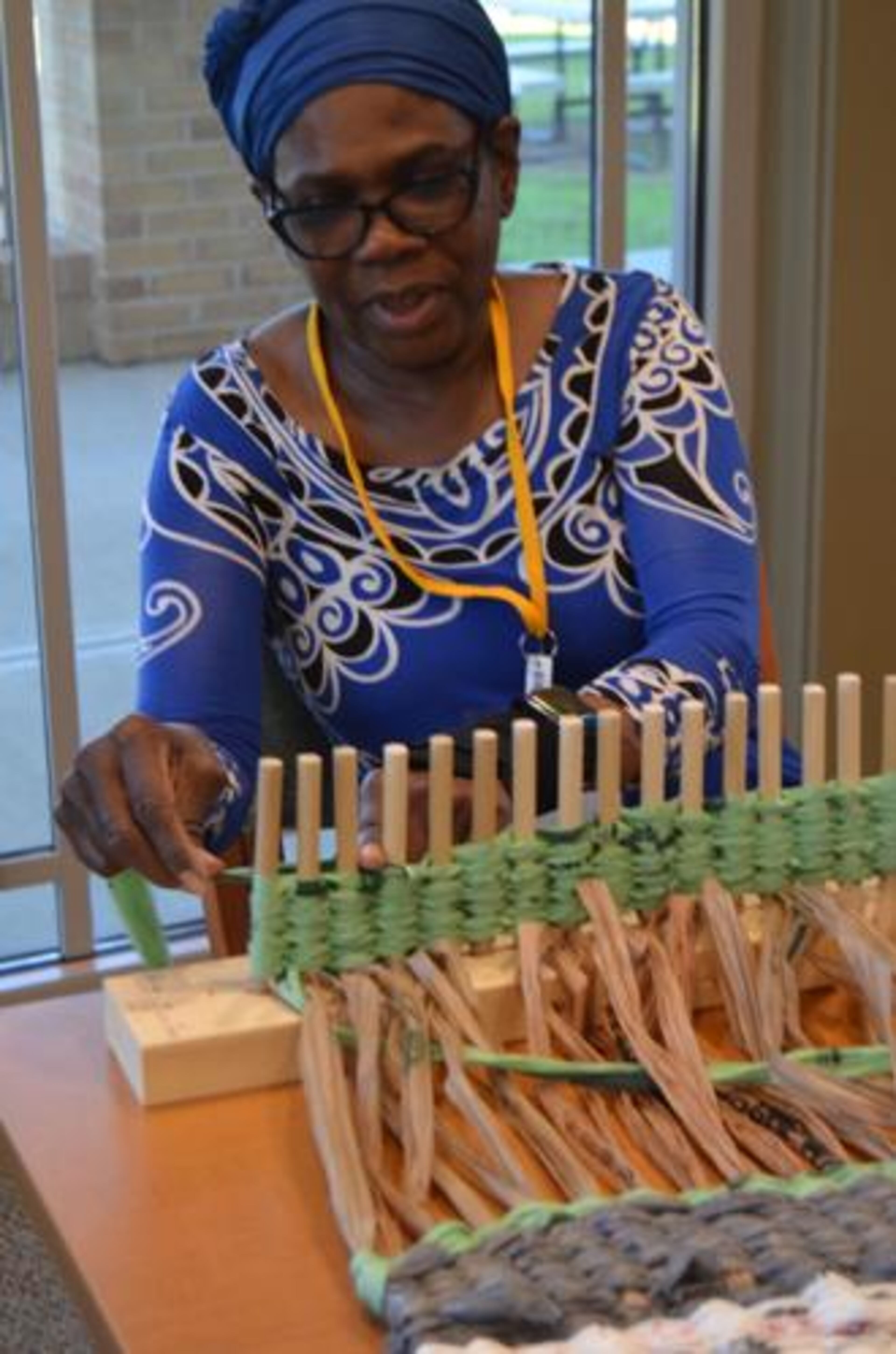
For the team, there’s a process of transforming the bags into “plarn” -- plastic yarn. On Wednesday one volunteer smoothed the bags flat, then they were sent to others who cut the bags into strips suitable for crocheting or weaving into finished products.
The plarn is not only suitable for making mats, but with creativity, the 25 or so AmeriCorps Retired Seniors Volunteer Program (RSVP) project members are also making purses, beach bags, placemats and coasters, rugs and other recycled goods.
Plastic items that end up in underground landfills can take anywhere from a few decades to hundreds of years to photodegrade. And, because they’re manufactured from crude oil, they remain toxic even after breaking down into smaller pieces.
In the ocean, their impact is equally adverse. The Great Pacific Garbage Patch covers an area twice the size of Texas in the northern Pacific Ocean, choking sunlight from the ocean floor and entering the watery food chain.
During the photodegradation process, plastics also leach out bisphenol A (BPAs), and they also absorb other pollutants such as PCBs.
Another item being produced by the group is shopping bags, which can be reused. That keeps new shopping bags out of circulation and out of the environment. And estimates are that 8-10% of U.S. oil consumption is used to make plastic products.
So far the volunteers, who began the project in fall 2022, have produced 10 mats for the homeless, which are donated to the Albany Rescue Mission, Sarah Bass, RSVP volunteer project coordinator at the COA, said.
“After the wind-down of the pandemic, we had a lot of people wanting to volunteer,” Bass said. “My mother in Douglas saw a project in Savannah; their local arts council, the MorningStar Cultural Arts Group, was doing a plarn project. That’s where I got the idea.
“The core is where we’re taking single-use plastic bags and repurposing them into mats for the homeless.”
The mats have a carry handle that users can sling over the shoulder and place underneath a blanket to provide protection outdoors.
The endeavor has been an experience of learning and experimentation. Crocheting the large mats is a laborious and time-consuming undertaking, so the male volunteers who make home wheelchair ramps were enlisted to make two simple looms.
Bonnie Reilly, who completed the first mat, estimated it took her up to three months working in her free time at home.
Colleen Barrett completed the second of the mats, putting in a lot of time and finishing in a week, and on Wednesday was working on the rudimentary loom because her arthritis now makes it painful to crochet for long periods of time.
“Volunteering is giving back,” Barrett said. “I’m able to give the time to give back to others. You also learn new skills.”
In addition to shopping bags, Reilly also has incorporated plastic toilet paper bags and Bounty paper towel bags into her work, providing different colors and textures.
“I had never heard of plarn until a year or so ago,” Reilly said. “We started out telling everybody to bring their clean plastic bags.
“It’s a very social situation. We’re able to get together and chat, but the basic thing is we’re doing something to help others. When we make the mats, they are going to the people who are homeless, on the street, giving them a little more protection. Because they’re plastic, if it gets wet, it dries easily.”

Some in the group also are learning crocheting, she said. A long-time crocheter, Reilly said using plarn is much more difficult than yarn. She also likes the recycling aspect of the project.
“There are so many things that can be created with plarn,” she said. “It keeps all this plastic out of the landfill. If more people could get involved, we could keep a lot of it out.”
At the moment, the COA has a sufficient supply of bags and is not accepting any more, Bass said.
The AmeriCorps program encompasses the “Ramp Brigade” that made the looms, a group that makes Teddy bears for children in the hospital, a group that makes regular phone check-ins with seniors, provides tax preparation assistance, transportation, nursing home visits and volunteers who lead physical activity and wellness classes.
“We would like to have more volunteers with the plarn project and in our garden and to visit nursing homes, " Bass said.
Looming a lap quilt on Wednesday, Hazel Neal discussed her positive experience through the plarn project. Phoebe Putney Memorial Hospital has requested the quilts, she said.
“When I retired, my husband suggested I come here,” she said. “One of the reasons I come here is to socialize.”
In addition to learning the new skill on the loom, Neal also has relearned an old one. She also rides a stationary bike for exercise at the COA.
“My greatest achievement is I know how to hula hoop again,” she said. “Once you find your groove again, you can do it. It’s a great achievement when you can do something like that again.
“I’ve met one woman who’s part of the Teddy bears group, and she’s 93. I think everybody can still do everything you used to do, it just takes you longer than it used to.”

MEET OUR PARTNER
Today’s story comes from our partner, The Albany Herald. The Albany Herald publishes daily in print and online at albanyherald.com, providing coverage of community news, events, and sports in Southwest Georgia.
If you have any feedback or questions about our partnerships, you can contact Senior Manager of Partnerships Nicole Williams via email at nicole.williams@ajc.com.