Future of Atlanta Beltline hangs in the balance. Trains are not the answer.

Has anyone ever said to you, “If you had it to do over again, what would you do differently?”
As a business leader of a complex, multigenerational, private family business here in Atlanta, I am faced with that question a lot. One of the many benefits of being private is the ability to plan for the long haul and also to adjust those plans as facts change over time.
Atlanta, our hometown and the city that we love, is in that position now. As so often happens, we are at a major inflection moment not unlike when Billy Payne brought the Olympics to Atlanta, when Ted Turner launched CNN or when Mayor William Hartsfield cut the ribbon on the airport to the world.
After 27 years, the Beltline — the most ambitious redevelopment project ever conceived in Atlanta, or any major American city — is in sight.
No one should understate the incredible accomplishment that is currently coming to fruition all around us — nor the danger we still run of screwing it up.
How the Beltline came into existence

A little history …
The Beltline is something that could only happen in Atlanta. Ryan Gravel, a visionary graduate student from Georgia Tech, proposed the idea in 1999 of redeveloping an abandoned train corridor around the city to bring access, opportunity and much-needed jobs to Atlanta.
A few years later, then-Mayor Shirley Franklin, showing true leadership, adopted the project and secured funding through the Atlanta Beltline tax allocation district (TAD). Ray Weeks led the advocacy on behalf of Atlanta Committee for Progress.
Cox Enterprises Chairman Emeritus Jim Kennedy funded the construction of the first two miles past Ponce City Market, and we were off to the races.
Eventually, Trust for Public Land bought and created the park land that we now know and enjoy. The PATH Foundation established the model for building green accessible paths across the city and the region — currently used by millions of residents and visitors. And most importantly, private philanthropy collaborated in ways unseen in any other city. Notably, the Woodruff Foundation, the James M. Cox Foundation and the Arthur M. Blank Foundation ultimately donated over $100 million to see it happen.
Today, under Clyde Higgs’ leadership, the results have far exceeded the vision. So far, it has been credited with more than 90,000 jobs and $20 billion in private investment.
Does anybody remember Ponce before the Beltline? Suffice it to say, it was not the beautiful family destination it is today. Nor were the Old Fourth Ward, Reynoldstown, Krog Street, Inman Park, Edgewood, West End or Adair Park. These are resurgent, up-and-coming destination neighborhoods making us the envy of the South.
Atlanta has gone from a typical big city — replete with both gentrified and blighted neighborhoods — to one of the most astonishing modern American success stories where almost anyone, anywhere in Atlanta, is near a beautiful, charming linear park.
The Los Angeles Times once described it as “a lush, emerald necklace of trails, parks and public transit — a jewel that could transform a poster child of sprawl into the archetypal city of the 21st century.”
Why a train is no longer the answer
So, back to the opening question. If we could do it again, what would we do differently? Well, when we change plans here at Cox, we do it because facts and circumstances change. That’s exactly what has happened with the vision of the Beltline.
What was once a vision of trails, parks and public transit — illustrated by pedestrians and bicyclists coexisting with a train corridor — has evolved. Today, we have the best of that plan — trails and parks. What we need to protect it from is an antiquated view of transit and mobility.
Some people are still fighting loudly for the installation of train rail around the entire circumference of the Beltline. Can you imagine a bigger travesty than taking these treasures of in-town pedestrian trails and pouring more than $3 billion of concrete and steel over them to make way for a train — operated by MARTA?
The argument for doing so is alive and well and needs to be put to bed by our city’s leadership. The original intention was right — provide transit, access and opportunity for those who need it most. The reason trains are not the answer is because the situation has changed; most notably, there has been a revolution in mobility, electrification and the need for environmental stewardship.
Gravel himself has said that communities of color have been disenfranchised by roads and highways that provide “mobility and economic prosperity for the suburbanizing white middle class” while communities of color are in decline.
However true that may be, putting a train on the Beltline would only make everything worse. There are several reasons for that.
Atlanta should focus on making the city greener

First, trains are a 19th century concept. I can’t think of anything more divisive and disenfranchising than spending precious public dollars giving underresourced neighborhoods 19th century technology while the rest of us have Uber, Lyft and all the benefits of the digital mobility revolution at our fingertips.
The Atlanta Regional Commission estimates that by 2050, there would be an average of 21,200 weekday boardings of Beltline transit.
So, let’s do the math. To build a train would cost an estimated $3.5 billion. It would be operated by MARTA (which comes with more than a few question marks), and ridership on the failed downtown Atlanta Streetcar was a fraction of the expectations.
More simply, we could create an autonomous electric vehicle network of charging stations for $50 million to 100 million, buy 1,000 Rivians (or your favorite EV, depending on your flavor) for $50 million to $100 million, create jobs for all those drivers and subsidize the transport for all those passengers for a grand total of $300 million. That’s more than a 90% discount to rail and a dramatic passenger enhancement.
Solutions like this have been used in other cities, such as Jacksonville, which has launched a NAVi (Neighborhood Autonomous Vehicle Innovation) for $65 million with great success. Other world-leading countries are also deploying new transit technology. It is where the industry is headed.
Second, Atlanta is known as a green city. Installing a new train would take about 5 billion pounds of concrete.
That would amount to 500,000 metric tons of carbon dioxide (CO2) equivalents to produce — not to mention the trees and green space that would be destroyed to pour that amount of concrete. Using EVs would reduce the carbon footprint of the transit by two to three times per passenger, depending on how many people rode in each vehicle.
Third and most importantly, livability. The health and wellness benefits of having a green, quiet place to walk and recreate are more important now than ever.
Many of us have yards and parks nearby to get that tranquility. But many others don’t have such amenities available to them.
Imagine a kid in a blighted part of town that has access to the Beltline and how nice that would be to go walk and get away for a while. Why change that by turning it into a MARTA corridor?
Cox, like Atlanta, is a multigenerational enterprise. Everything we build, every seed we plant, we are planting for the next generation. Let’s celebrate what we have accomplished in the last 25 years of building the Beltline — a generational accomplishment. But let’s not screw it up now by leaving the next generation with more pollutive, antiquated technology.
Cox is not a sidelines commentator on the Beltline — we are invested. I point that out not only for disclosure purposes but also to explain why we are passionate about making the future all it can be.
As mentioned above, Jim Kennedy, my predecessor as chairman and CEO of Cox, funded, personally, the construction of the first two miles of the Beltline at a time when there was reluctance to do so.
Nancy Rigby, the president of the James M. Cox Foundation, conducted the first feasibility study for the entire project in 2005.
Dallas Clement, our president and chief financial officer, is the past chair of The Atlanta Beltline Partnership.
Cody Partin, the president of the Cox Family Office, currently serves on the board of the partnership. We care about this.
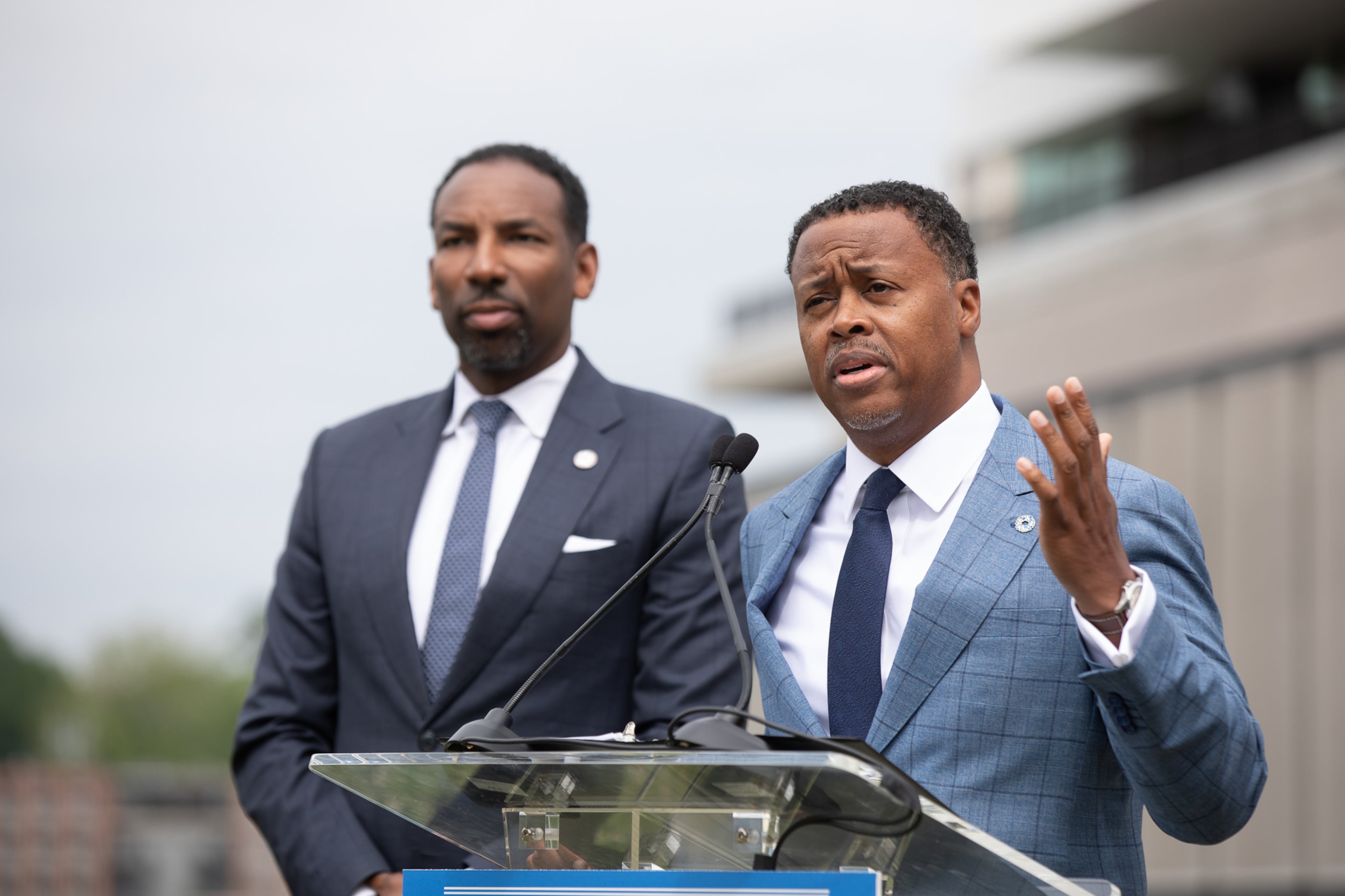
Mayor Andre Dickens and other city leaders are discussing what the finishing touches to the Beltline will be.
Let’s support them in making sure the Beltline stays smart, green and something our kids will thank us for.
Alex Taylor is chairman and CEO of Cox Enterprises, parent company of the AJC, and also a board member of the PATH Foundation and the James M. Cox Foundation. Cox Enterprises also owns about a 3% stake in Rivian.
Send letters to the editor of 250 words or fewer with your name, city or town and contact information to letters@ajc.com.