Aggressive ICE enforcement turns Civil Rights Movement on its head
My family was involved in the 1960s Civil Rights Movement. I’ve always felt my generation’s contribution to the movement was its moral high-water mark, a legacy we baby boomers could be proud to leave to our children and grandchildren.
It was through that lens that I viewed the federal Immigration and Customs Enforcement surge in Minneapolis earlier this year. What I saw was the Civil Rights Movement turned on its head.
In the 1960s, segregationist Southern states led by racist governors like Alabama’s George Wallace empowered brutal law enforcement officials like Birmingham’s Bull Connor to use cattle prods, dogs and fire hoses against peaceful demonstrators seeking the right to vote and to eat at public lunch counters and to sit where they wished on buses.
Wallace, Connor and others demonized and dehumanized the demonstrators, including many women and children, calling them “outside agitators” and “Communists.”
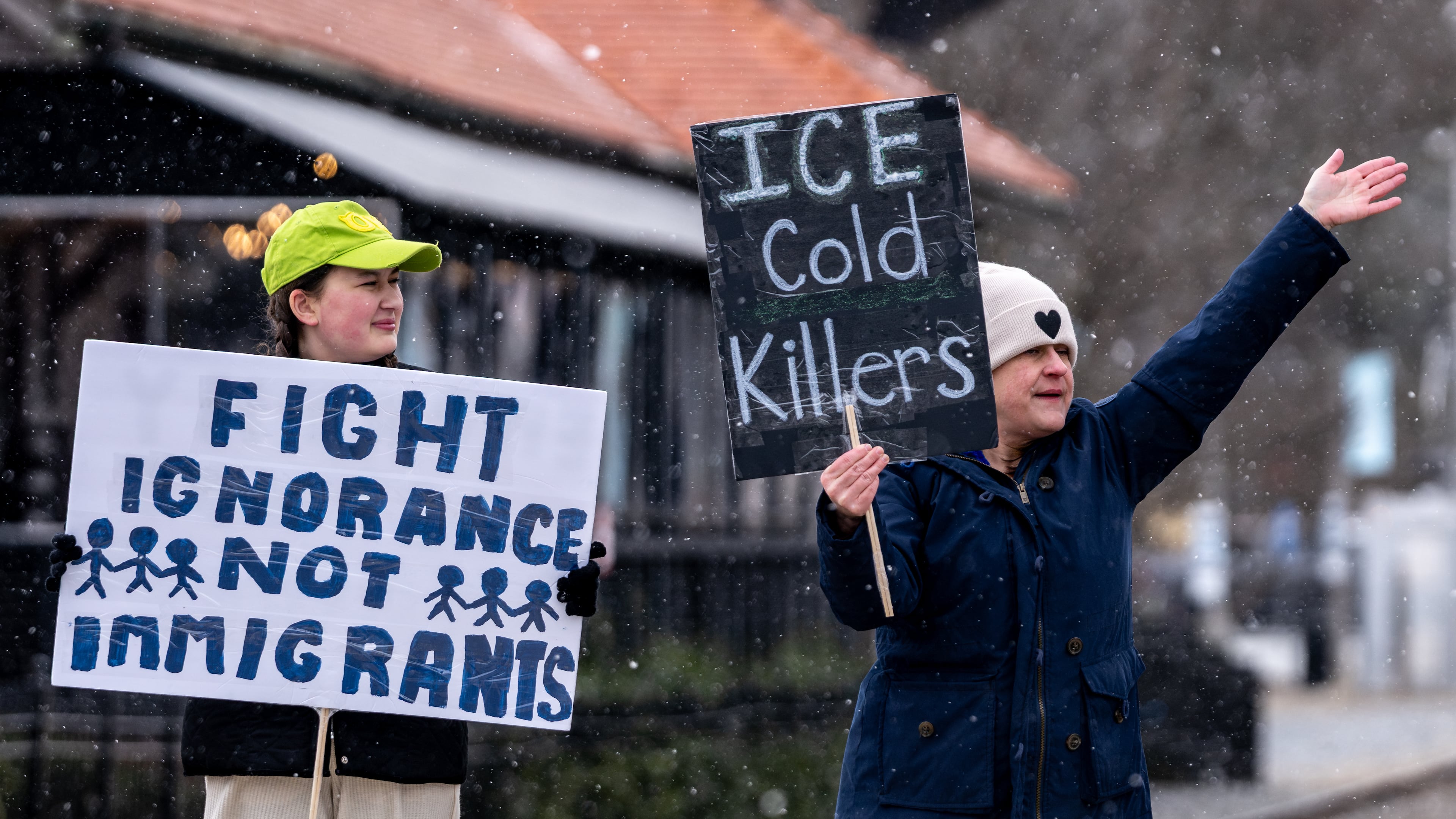
Six decades later in America’s cities, President Donald Trump’s masked, militarized ICE agents use pepper spray, tear gas and flash-bang grenades against local residents assembled to witness and call attention to state-initiated violence against their neighbors. Members of Trump’s administration, like former Homeland Security Secretary Kristi Noem, branded the demonstrators as “assassins” and “domestic terrorists.”
How government tactics changed from 1960s to today
One significant difference between Trump’s storm troopers and Wallace’s is that Wallace’s used mainly nonlethal force while Trump’s use guns.
Two Minneapolis residents — law-abiding citizens, not criminals or terrorists — were gunned down on the frigid streets of their city. Of course, that may be a distinction without a difference since the Southern segregationists of the 1960s had the Ku Klux Klan to do their killing.
There are other differences.
In the 1960s the demonstrators, a mix of mostly Black local residents and white and Black civil rights activists from around the country, were the change agents challenging the segregationist status quo.
Much of the movement’s leadership was headquartered in Atlanta, among them the Rev. Martin Luther King Jr., pastor of Atlanta’s Ebenezer Baptist Church and president of the Southern Christian Leadership Conference.
The people on the streets of Minneapolis fought to protect their peaceful neighborhoods while the surging federal agents sow chaos and, too often, violence.

Never forget civil rights heroes like Daniels and Pretti

My family’s involvement in the 1960s movement included my dad and my two brothers participating in the final day of the Selma-to-Montgomery marches in 1965.
There, they heard King address a crowd of thousands in front of the Alabama State Capitol, where the flag of the Confederacy flew.
My mother, one of my brothers and I separately spent time in Mississippi as civil rights volunteers under the auspices of the National Council of Churches. In his role as treasurer of the Episcopal Diocese of Massachusetts, my dad provided funding for many civil rights volunteers.
In the spring of 1965, my dad handed a check to a young man who was a seminarian at the Episcopal Theological School in Cambridge, Massachusetts. The check was to support him as he headed to Alabama to work as a civil rights volunteer.
On Aug. 20 that young man, Jonathan Daniels, and three other activists — a white Catholic priest and two young Black women — attempted to enter a store in Fort Deposit, Alabama, to purchase soft drinks. Tom L. Coleman, an unpaid, special deputy, threatened the group, aiming a shotgun at 17-year-old Ruby Sales.
Daniels pushed Sales down and received the full blast of Coleman’s shotgun, dying instantly. An all-white jury acquitted his killer. Subsequently, Daniels was designated a martyr by the Episcopal Church.
I thought of Daniels as I watched the video of Veterans Affairs hospital nurse Alex Pretti intervening to help a woman who was being manhandled by ICE agents. He was wrestled to the ground by the agents and then shot 10 times.
I’m glad my mother and dad are not alive today to see how their government is treating its citizens in Minneapolis and elsewhere. They would be ashamed and outraged.
J. Bradford Tillson was a longtime employee and executive for Cox Enterprises in Dayton, Ohio. He was a reporter, editor and for 15 years publisher of the Dayton Daily News, the first Cox newspaper. He retired in 2003 and now lives in North Carolina.