As hate rises, revive the Black-Jewish alliance in the spirit of MLK

As we observe the Martin Luther King Jr. Day holiday, it is imperative that we reflect on the legacy of King, but let’s not forget the profound alliances he formed in the pursuit of justice.
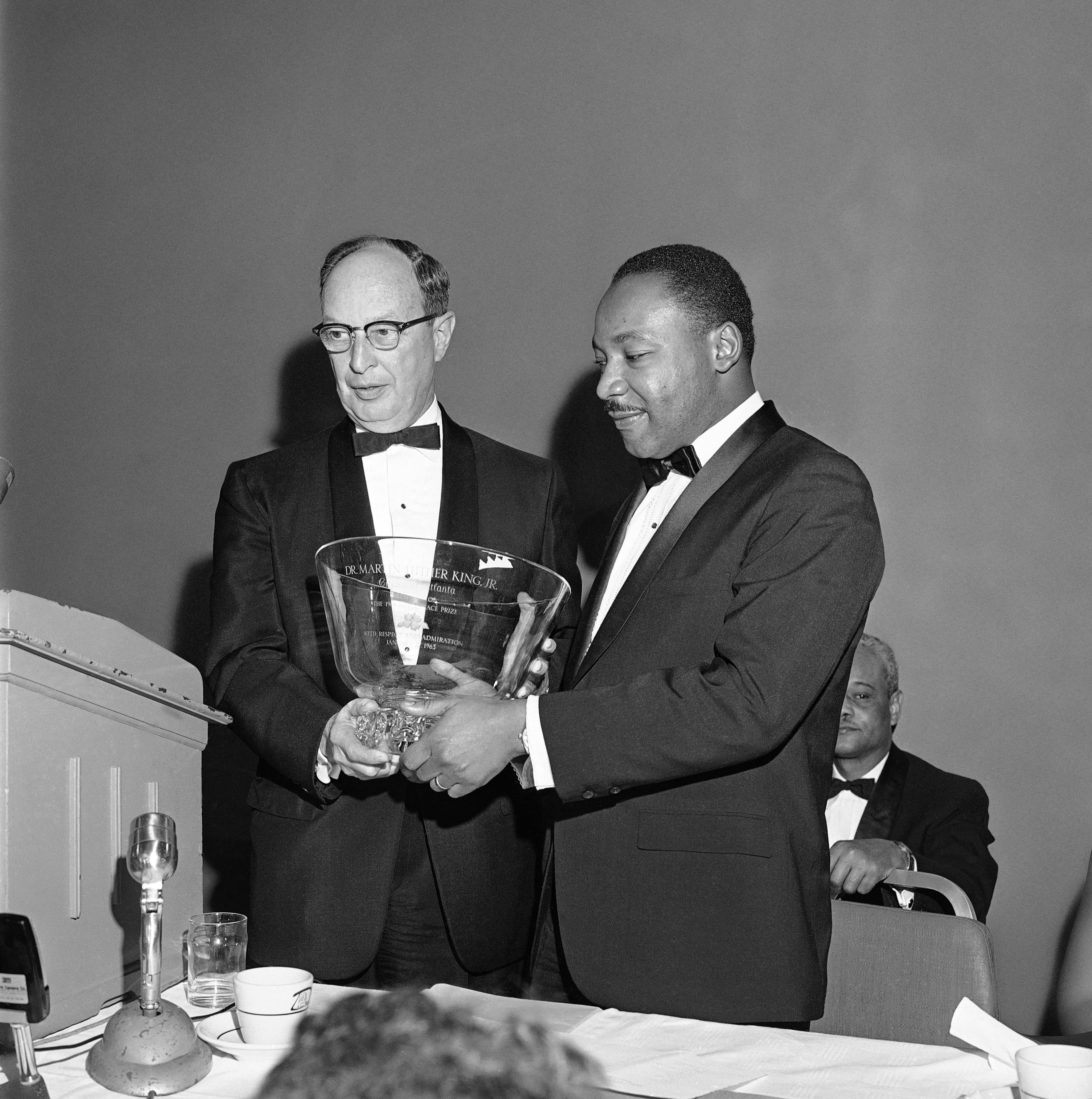
When King was awarded the Nobel Peace Prize in 1964, he was not universally applauded, particularly in his hometown of Atlanta, where a predominantly white business community resisted honoring its own native son.
Yet, in this challenging climate, two Black and Jewish leaders — Benjamin Mays, president of Morehouse College, and Rabbi Jacob Rothschild, the senior rabbi of the Temple — stood resolutely behind King.
Their partnership symbolized a greater alliance between the Black and Jewish communities, which became a cornerstone of the Civil Rights Movement.
The advocacy and persistence of Mays, Rothschild and others, such as J. Paul Austin, CEO of Coca-Cola and Mayor Ivan Allen Jr., led to a sold-out celebration of 1,500 people honoring King in Atlanta on Jan. 27, 1965.
This event marked not only a recognition of King’s contributions but also an affirmation of the solidarity shared between Black and Jewish communities. This partnership was critical in the fight against racism and segregation, rooted in shared experiences of marginalization and discrimination. It serves as a poignant reminder of what can be achieved through unity.
Generational trauma connects Black and Jewish people
Throughout his activism, King strategically built relationships with Jewish clergy. Notable among them was Rabbi Abraham Joshua Heschel, who, after marching alongside King in Selma in 1965, famously stated, “When I marched in Selma, my feet were praying.”
Such connections represented more than mere friendships; they forged a formidable alliance in the struggle against injustice.
Responding to a call to action, numerous young Jewish Americans journeyed from the North to join forces with their Black counterparts in the South, rallying against Jim Crow laws that perpetuated segregation and inequality.
Today, we remember heroes like James Chaney, Andrew Goodman and Michael Schwerner, whose Black and Jewish lives were brutally taken by the Ku Klux Klan on June 21, 1964, as they fought for civil rights in Mississippi. Their sacrifice echoes the profound commitment to justice shared by both communities.
This alliance rests on a mutual understanding forged in the crucible of generational trauma. Both Black people and Jews in America have endured systemic oppression — Black people through centuries of slavery and segregation and Jews through periods of intense antisemitism and violence. The parallels between these histories have created a foundation for solidarity.
I am a proud Black and Jewish American. I owe this dual identity to my paternal grandparents, who converted to Judaism in the early 1900s. Thus, I am personally vested and excited by the historical strength that these communities have achieved through partnership and unity.
However, in recent years, I am troubled that the bonds that have tied Black and Jewish communities together have become fractionalized, as evidenced by a resurgence of antisemitism committed by minority groups and younger people, as well as the rise of anti-Israel sentiment.
Fight against injustice remains unfinished

King often spoke of the “fierce urgency of now.” As we honor King’s legacy, we must acknowledge that his vision for justice, peace and harmony is as relevant today as it was in the 1960s. The divisions in our society seem wider than ever as we near the end of the first year of Donald Trump’s second term.
The rise of hate, the dismantling of diversity, equity and inclusion programs and initiatives, along with reverting the names of military bases to Confederate generals in a sneaky way, calls for a renewed commitment to justice and solidarity among marginalized communities, especially between Black people and Jews. We cannot allow history to repeat itself; we must learn from the past and reaffirm our dedication to the virtues of unity and understanding.
On this King holiday, the fight against injustice remains unfinished, and it is our collective responsibility to stand guard against the forces that seek to divide us. The example of collaboration between Mays and Rothschild, as well as countless other Black people and Jews who took a stand, should inspire us to engage with one another in meaningful ways.
Our commitment to both Black and Jewish unity must be active, intentional and infused with the spirit of collaboration that once brought us together during the Civil Rights Movement.
In our quest for justice, we must create spaces that foster dialogue and understanding — where allies can unite against a common enemy: hatred. We must challenge the tendency to retreat into silence when faced with prejudice. Instead, we should amplify each other’s struggles, building a coalition that is as diverse as the communities we represent.
The legacy of King and the enduring partnership between Black and Jewish communities offer us a road map to navigate the complexities of our present reality.
Let us vow to continue the fight for justice, peace and harmony today.
Together, we can honor the sacrifices of those who paved the way for a more equitable world. On this King holiday, let us stand united in our resolve to dismantle the barriers that divide us and build a future where justice knows no bounds.
Our shared commitment to this vision will illuminate the path forward, affirming that in solidarity, there is strength, and in unity, there is hope.
John H. Eaves is a former Fulton County Commission chairman and a senior instructor in the Department of Political Science at Spelman College. He is a contributor to the AJC.
