The art, and limits, of a transportation deal
The first rule of deal-making is to understand what you truly need out of the encounter.
State Rep. Calvin Smyre was interested in the basics: The removal of a pair of 40-year-old handcuffs on MARTA that date back to the days of Lester Maddox, and state recognition of the legitimacy and need for transit in metro Atlanta.
“Not just on the money side, but on the definition side,” Smyre said. That’s right. The Columbus Democrat wanted commuter rail included in the state’s legal definition of transportation.
You might call that a low bar. Smyre would call it a fundamental one – and an indication of just how deep Georgia’s transportation problems run.
With the 2015 session of the General Assembly over, Republicans are pointing to a $900 million-a-year transportation funding bill as proof that they can govern. But when pressed, they will also tell you that, with their caucuses split over the tax increases required, Democrats were essential to their success.
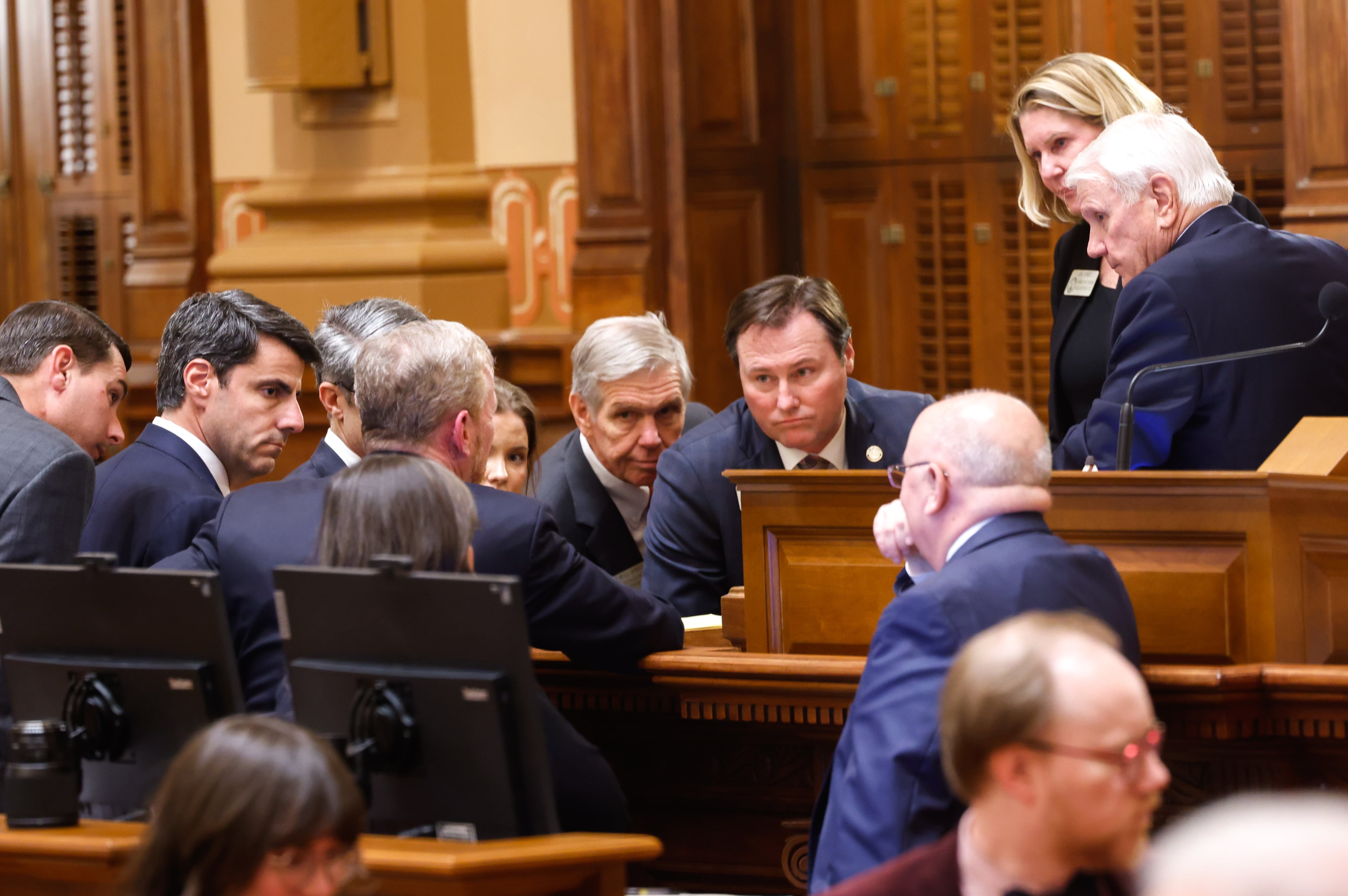
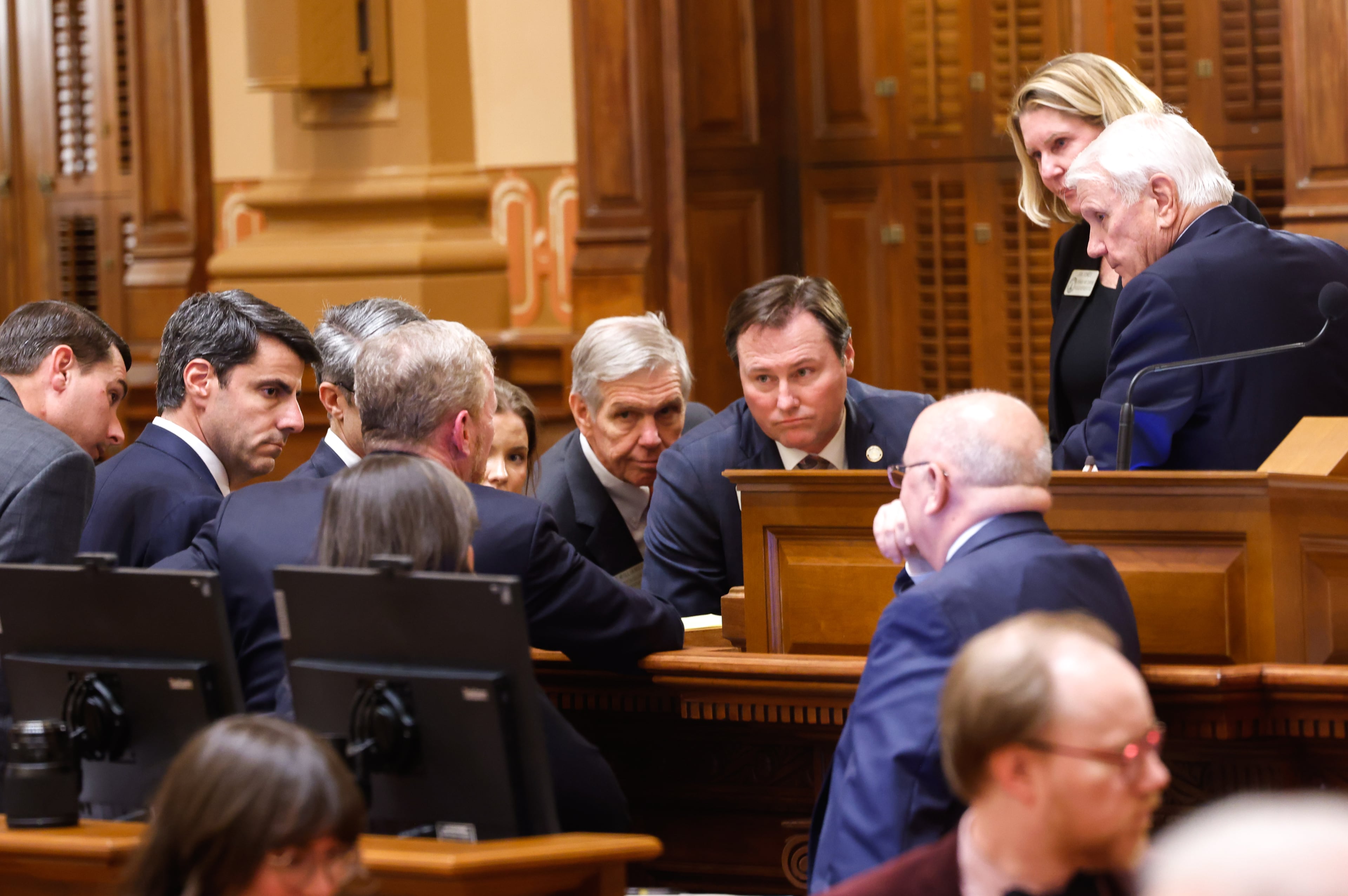
For the last five months, Smyre, the longest-serving member in the General Assembly, had served as the go-between twixt ruling Republicans and necessary Democrats in the House and Senate. By definition it is a thankless task.
On Thursday evening, as the 40th day closed, Smyre was clearly exhausted by a week of dashes between House and Senate to close the deal – something he hadn’t done since serving as a floor leader for Gov. Joe Frank Harris nearly 30 years ago. He’s now 67, and performed those inter-chamber sprints on two artificial hips.
“It was a tough, tough day,” Smyre said. And it had been made a little tougher by the fact that a truly unexpected prize had just disappeared, after dangling in front of Democrats for a precious 36 hours: Permission for MARTA to immediately increase its rail footprint via a half-cent increase in the sales tax. Worth a conservative $150 million a year, for 40 years.
But that puts us too far ahead of the story.
Through Smyre, House Democrats had set their price for cooperation on House Bill 170, the transportation funding bill: Recognition of rail as a legitimate target for transportation dollars, and $100 million in cash for transit projects, later reduced to $75 million. (A state constitutional provision dictates that all gas tax revenue must be spent on roads and bridges.)
Then there was MARTA. Since its inception, the transit agency has been handcuffed by a state requirement that 50 percent of its sales tax revenue be spent on operations, and 50 percent on capital improvements. “I’ve been trying to do that for many, many years. It’s been a pet peeve of mine,” Smyre said.
The keys to the handcuffs were placed in HB 213, which passed the House on the same day as HB 170, which would have raised $1 billion a year in new revenue.
In the Senate, Republicans sought to pass an altered, less ambitious version of HB 170, using only votes from their own caucus. Senate Democrats bided their time on the sidelines.
Despite his status as a Democrat, Smyre was named one of the six House-Senate negotiators who hammered out the final deal – a GOP admission that the package was likely to turn off many Republicans.
Senate Democrats finally stepped into the picture – their bargaining position enhanced by weak support for the transportation package among Senate Republicans.
They demanded minority scholarships for engineers. Done. Substantive steps by the state Department of Transportation to award more road contracts to minority road-pavers. Done. An appointment or two to the state DOT board. Done.
And then there was the icing: After HB 170 passed the Senate with the necessary Democratic votes, the Senate took up HB 213, the MARTA bill. Four Republican senators, led by Butch Miller of Gainesville, the governor’s floor leader, introduced an amendment that would allow cash-starved MARTA to levy an extra half-penny.
The amendment also tickled the transit agency’s bidding process.
Democrats were giddy, but the final concession nearly killed the bargain among Republicans. Brandon Beach of Roswell voted against the half-cent amendment, but found himself casting the deciding 29th vote for passage, along with 10 other Republicans. Eighteen Democrats joined them.
That was on Tuesday, Day 39. By Thursday, the next and final day of business for the General Assembly, the icing was melting away. House Republicans were suddenly worried about that clause about bidding. They were concerned that the proposed half-cent would be forbidden by a sales tax cap on Fulton and DeKalb counties – a contention that some Democrats dispute.
The governor’s floor leaders didn’t replicate their brothers in the Senate. They made no move to help.
So let us just say that a rug laid down on Tuesday wasn’t there on Thursday. Whether the rug was pulled, and if so, by whom, would be irresponsible speculation. Perhaps it was an act of God — revenge for the failure of the religious liberty bill.
Which brings us to the second rule of deal-making: Never forget Rule No. 1. Remember what you really need.
Smyre and House Minority Leader Stacey Abrams, D-Atlanta, might have made a fight of it. But chances of doing so without some change to the bill were slim. That would have sent HB 213 back to the Senate for another vote. “Eighteen Democrats, eleven Republicans — that’s really a thin line to hold,” Smyre said.
Lose in the Senate, and MARTA’s handcuffs would grow another year older. “It was a major risk. It was a risk that I didn’t want to take,” he said. “It was something that could not be delivered on this day, on the House side.”
On the chamber floor, both Smyre and Abrams publicly endorsed an amendment to HB 213 that stripped away the extra half-cent sales tax for MARTA.
It passed the House on a vote of 143-24. Most of the “no” votes were Republican. The Senate quickly agreed.
Smyre said he admired the concession wrung out of Republicans by Senate Democrats, and thinks it could happen again.
“If we’re serious about congestion, you cannot do it without transit. Which is going to require hundreds of millions of dollars in rail and a commitment from the federal government – and a permanent [revenue] stream,” Smyre said. “To me, we gave up a temporary fix to try to get a comprehensive fix when we come back next session.
“For the naysayers out there, I say that for the first time, transit has really elevated itself into the political discourse. And for me that is a good sign going forward,” he said.
And then the Columbus Democrat went back to work. The last piece of the transportation puzzle came shortly after midnight, in the final vote by the Senate. The chamber passed HB 202, the “Christmas tree” tax bill that included a marvelous tax break for Mercedes-Benz workers coming to Atlanta.
The bill also included an $8 million-a-year tax fix for MARTA.
About the Author

Jim Galloway, the newspaper’s former political columnist, was a writer and editor at the AJC for four decades.