Georgia General Assembly: End of session isn’t end of governance
As the Georgia General Assembly session winds down, it’s essential that sound public policy not be lost amid the jousting and infighting that provide great theater for political observers.
In the end, Georgia voters will soon enough judge how well the state Legislature handled a budget year so dire that it’s certain to earn a place in history books yet to be written. That’s politics.
Gamesmanship aside, though, it is results that Atlantans and Georgians are looking to the Legislature to produce. This time around, that means dramatically resetting the size of state government while nonetheless maintaining core functions at a minimal, workable level. That’s policy.
How effectively the Georgia of fiscal year 2011 and beyond will perform on a global economic stage is dependent to a large degree on how keenly legislators discern that distinction in coming days.
Fiscal conservatives and liberals of both political parties have long differed over the size and sweep of government. Inter-party debates and disputes are an expected part of democracy. Last week, however, budget battles triggered political fireworks even within the ranks of ruling Republican conservatives at the Gold Dome.
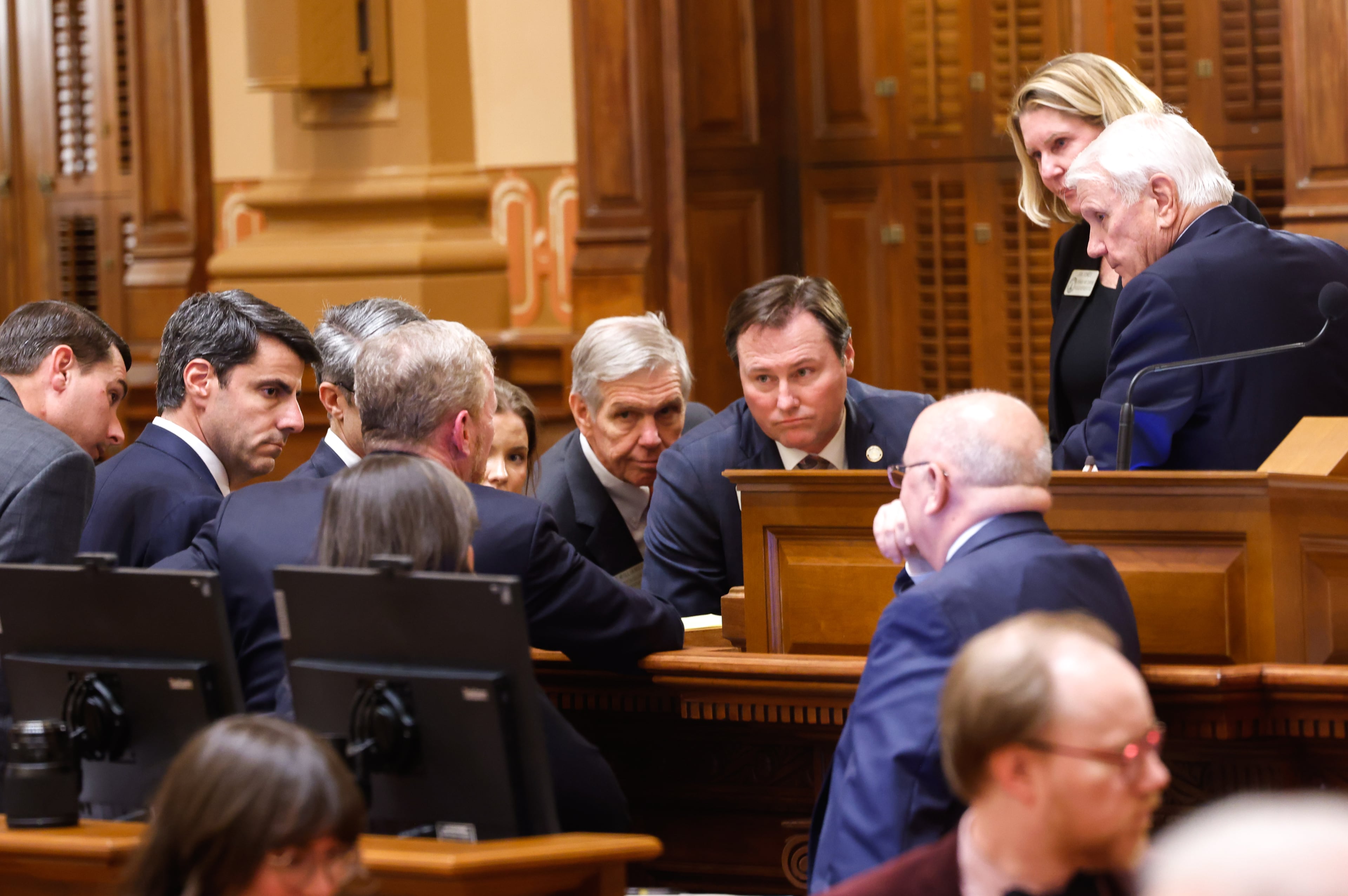
Sen. Preston Smith (R-Rome), during a stinging floor speech, castigated a hospital bed tax proposal that was being pushed hard by Lt. Gov. Casey Cagle, who was anxious to get done a key sticking point in completing work on the shrinking state budget. In his remarks, Smith also hammered hard at his Republican colleagues for what he considered a major break with conservatives’ default position against boosting taxes. Smith’s “no” vote cost him chairmanship of the Senate judicial committee.
Given that politics is usually about the art of at least modest compromise, his impassioned speech was remarkable both for the intensity of his words and the immovability of his heartfelt position.
That’s politics. What is policy is that the bed tax and an unrelated bill that would hike some state fees will not drastically alter the economic endgame for this state. Before tax cuts for retirees were added in as a sweetener, the two measures had been expected to produce a total of about $265 million a year. That’s well under two percent of the state budget, meaning this pair of modest revenue-boosters won’t kick Georgia from the ranks of low-tax states. Georgia’s berth at 29th on the Tax Foundation’s 2010 state business tax climate index is unlikely to be materially affected by these moves. That will keep Georgia firmly among pro-commerce states.
That tax-raising even came to be seriously considered was the result of a painful process that saw state lawmakers stare down a budget reality so grim that they were faced with no other serious choices. At least no choices that would not have carried devastating consequences for the state and its minimum needs.
Seeking to partially plug the state’s billion-dollar budget gap with new income was a necessary acknowledgement of fiscal reality. Rhetoric aside, it’s unlikely to the point of near-impossibility that there remains a billion dollars of waste within the state budget after years of austerity measures and efficiency-seeking efforts that long predate this recession.
That doesn’t mean budgetary fat has been totally banished from state government. Recent reporting by The Atlanta Journal-Constitution indicated that taxpayers are on the hook for $276 million, which is the cost resulting from workers carrying over and eventually cashing-out unused vacation time. Given this budgetary climate, the state should saw down this outdated perk until it’s more in line with the thriftier practices of private industry.
And, if they’re truly serious about belt-tightening, legislators should begin within their own ranks. The AJC, using data requested through the Open Records Act, reported last week that some Georgia lawmakers submitted bills for travel and expenses “on more than one out of every four days while the General Assembly was out of session in 2008, 2009 and the first few months of 2010.” That tab ran to nearly $3.6 million — during a time when the state cut $3 billion from its budget.
Although lawmakers have made some efforts to rein in expenses, there’s still a lot of room to set a better example in cost-cutting. It’s necessary, yes, for legislators to travel on some state business off-session, but greater oversight is needed for what is, in effect, an honor system.
As this year’s legislative session lurches toward a close, much more remains to be done besides sawing down a budget until it balances against state revenues.
The end of the session should not close out the process of examining and subsequently determining what level and type of governance is essential to Georgia’s current and future success.
Much like a successful business, the state must carefully balance resources, obligations and customer needs — taxpayers, in this instance. Cutting costs meets only part of those needs. Innovation, vision and political courage will be needed to do the rest.
Andre Jackson, for the Editorial Board
Atlanta Forward: In coming weeks and months, we will look at major issues Atlanta must address in order to move forward as the economy recovers. Look for the designation "Atlanta Forward," which will identify these discussions.