One SEC championship’s run is at an end. Another is just getting started.


SAVANNAH ― The family, clad in bluegrass blue from their ball caps to their socks, huddle around the University of Kentucky pennant for a photograph. Arms go on shoulders, smiles come to faces and … nothing.
The picture-taker apologizes. Getting the photo without the neighboring flag — one promoting the Georgia Bulldogs — in the frame is proving a challenge. Even a speck of Georgia red would ruin the shot, he jokes, as he adjusts his angle before finally clicking the shutter.
It’s a familiar scene at Southeastern Conference championships, be it for baseball in Birmingham or the men’s and women’s basketball tournaments in Nashville and Greensboro, North Carolina. If it were two weeks later, a similar family could be posing for a similar photo outside Atlanta’s Mercedes-Benz Stadium ahead of the SEC’s football title game.
This episode plays out in front of Savannah’s Enmarket Arena, though, and these fans are here for women’s volleyball. The SEC championship started Friday and concludes Tuesday night, when the Bulldogs will face Kentucky. Officials expect a near sellout of the 5,500-seat venue for the finale.


For five days of matches, attendance is expected to top 25,000, up from 16,000 in 2025. Officials expect continued growth — last year marked the SEC’s first postseason volleyball tournament since 2005, when the league scrapped the championship in favor of extending its regular season.
Hundreds of thousands will watch the tournament on SEC Network, the national cable outlet that’s aired 10 of the 14 matches so far and will broadcast Tuesday night’s championship.
The volleyball tournament’s success comes as the SEC’s premier championship, the men’s football title game, is about to be played for the last time. As part of the College Football Playoff’s expansion from 12 teams to 24 in 2027, the SEC and other major conferences will forego their title games.
The move ends the SEC Championship’s 33-year football run in Georgia.
The crowds for the volleyball tournament won’t rival that of the football game, said SEC Assistant Commissioner Misty Brown, but “the passion of the fans” is the same.

The strong reception is fostering a broader trend for college women’s volleyball — the return of conference tournaments after a two-decade hiatus. The Big Ten is holding its first-ever postseason championship this week in suburban Indianapolis, and the Big 12 is reportedly considering adding a tournament in 2027.
“I think the buzz from our tournament last year was one of the reasons the Big Ten jumped in,” Brown said. “We probably will begin to see more of the power conferences bring back tournaments.”
Demise and rise of SEC volleyball tournament
Kentucky’s volleyball coach, Craig Skinner, recalls why the SEC and its peer leagues abandoned postseason conference tournaments for 20 years.
“The SEC didn’t take it too seriously,” he said. “They basically taped the bracket up on the gym wall and filled it in with pencil, like they do youth tournaments at the YMCA. It was terrible.”
The coaches revolted. Today, the SEC is among volleyball’s premier conferences — current league members have won four women’s national titles this decade — but in the mid-2000s, only Florida had ever made an NCAA Tournament Final Four.
Teams were “fighting for NCAA bids,” Skinner said. Playing a grueling tournament a week ahead of the national championship tournament disadvantaged the teams that did advance.
The top-performing leagues, such as the Big Ten, the Big 12 and conferences centered on the West Coast, didn’t stage tournaments and crowned league champions based on regular-season records instead.
The SEC and another league in the region, the Atlantic Coast Conference, dropped their conference championships after the 2005 season.
Yet for one leader in the SEC office, Commissioner Greg Sankey, the volleyball championship never died. He joined the league in a deputy role in 2002 and became commissioner in 2015. When the SEC expanded in 2024 and added Texas, the two-time defending national champion in women’s volleyball, he resurrected the tournament.
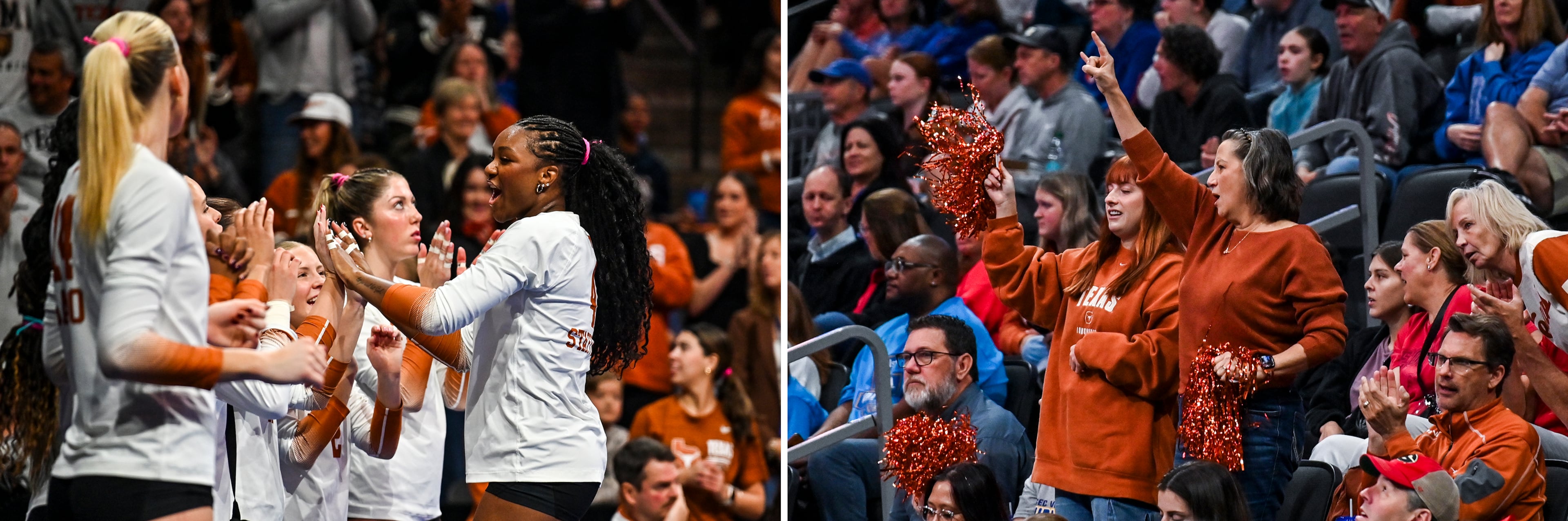

Success has come as no surprise to Sankey. SEC championships in other sports prove what it means to fans and the value of a week’s worth of TV exposure on the SEC Network. Then, there is volleyball’s standing as the fastest-growing sport among American girls this decade.
“We have a track record of doing championships well,” Sankey said.
In Savannah, the SEC found a city looking to prove its championship pedigree.
Savannah takes risk to gain reward
Savannah took what one official calls a “massive financial risk” with the SEC volleyball tournament to test a proof of concept.
The Enmarket Arena is almost five years old and aspires to host big-time college sports events, such as early round NCAA basketball tournament games. The city has the tourism infrastructure, including more than 20,000 hotel rooms, and the arena seating capacity to support it.
But Savannah has long struggled to cement its place as a sports town. The city has hosted Champions Tour golf, IndyCar racing and holiday season college hoops tournaments. Yet until recently the biggest date on the local sports calendar was an ice hockey tournament featuring college club teams.
Savannah’s reputation for putting on show-stopping sports spectacles is spiking, though. The Savannah Bananas are a national, if not worldwide, phenomenon. The Savannah Ghost Pirates, a minor-league hockey team founded five seasons ago, averages nearly a sellout for home games.
Leaders at the local convention and visitors bureau, known as Visit Savannah, and the Savannah Sports Council suspected the SEC volleyball championship could follow that trend. It’s an overused joke locally that the city is home to so many alumni and fans of SEC schools that even a conference Tiddlywinks tournament would draw a crowd.

If Savannah could land SEC volleyball and foster an environment that mimics the league’s other championships, they could aim for more in the future.
“We now have the infrastructure to compete for and successfully host events of a much greater scale,” said Joe Marinelli, president of Visit Savannah. “The SEC Women’s Volleyball Tournament represents another significant milestone in (our) evolution.”
Savannah lost an estimated $60,000 in the first year, 2025. Marinelli projects they’ll be closer to breaking even this year but will still lose money. A small profit is possible next year, the last of a three-year contract.
Some of the losses are offset by an uptick in hotel room nights and visitor spending — welcome revenue as the week before Thanksgiving is a rare slow period in Savannah’s tourism calendar.
The participants seem content with Savannah as host. The teams all stay in downtown hotels, and players and coaches say they feel like celebrities when out exploring the historic city. Calls of “Go Dawgs” can be heard along the river walk and the chorus of “Rocky Top,” the Tennessee fight song, rings out in bars. The sight of the Gator chomp is tolerated, if not appreciated, by the Georgia Bulldog-loving locals. (Georgia upset top-seeded Florida in Sunday’s quarterfinals.)
“It’s cool to be able to experience this along with all the teams in the SEC,” said Georgia player Chloe Elarton, a sophomore from Colorado. “There’s so many small details that we wouldn’t otherwise get to experience.”