State lawmakers prep for another push to ban Okefenokee mining ― ‘It’s time’
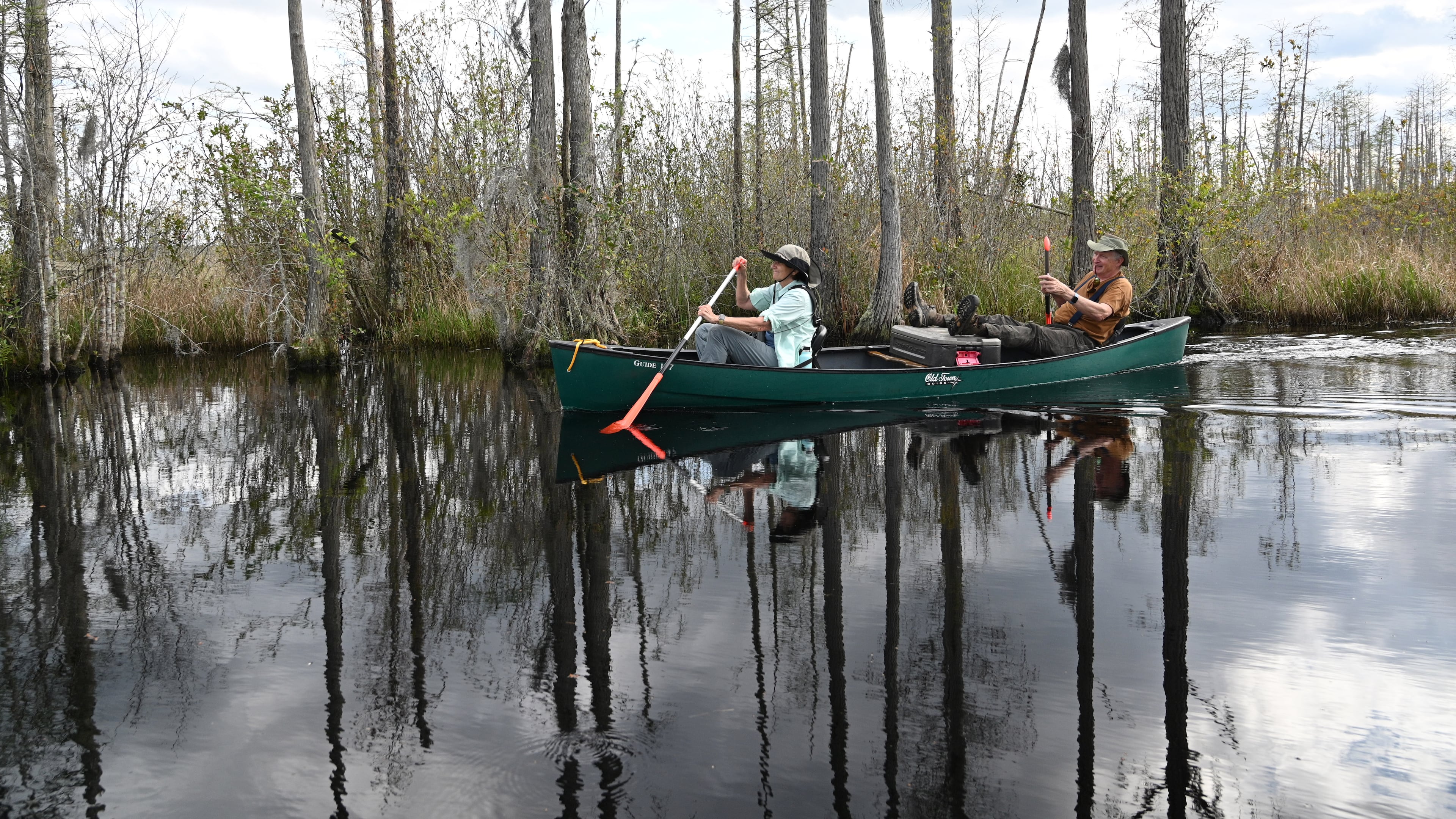

OKEFENOKEE NWR ― Great Prairie is a still expanse of cypress trees and lily pads in the waning light of a November afternoon. Herons stand motionless in the shallows as they wait for supper to swim by. Alligators rise to the water’s surface briefly only to submerge again, leaving behind only bubbles.
Aboard a 20-foot tour boat, an invasive species — humans — fight the urge to doze. That is until a small outboard engine putters to life and the skiff creeps back through the black, glassy water.
The Okefenokee’s tranquility aside, much is different today about this natural wonder from 18 months ago. The end of a nearby mining bid viewed by some as a threat to the Okefenokee’s very existence. The start of the refuge’s standing as a UNESCO World Heritage Site because of its size, at 632 square miles the largest blackwater swamp in North America, and its biodiversity, with more than 1,270 species of plants and animals, including 15,000 alligators.
Come January, a push for another swamp-related change resumes in the Georgia Capitol, where state House lawmakers plan to introduce the Okefenokee Protection Act for the third time.
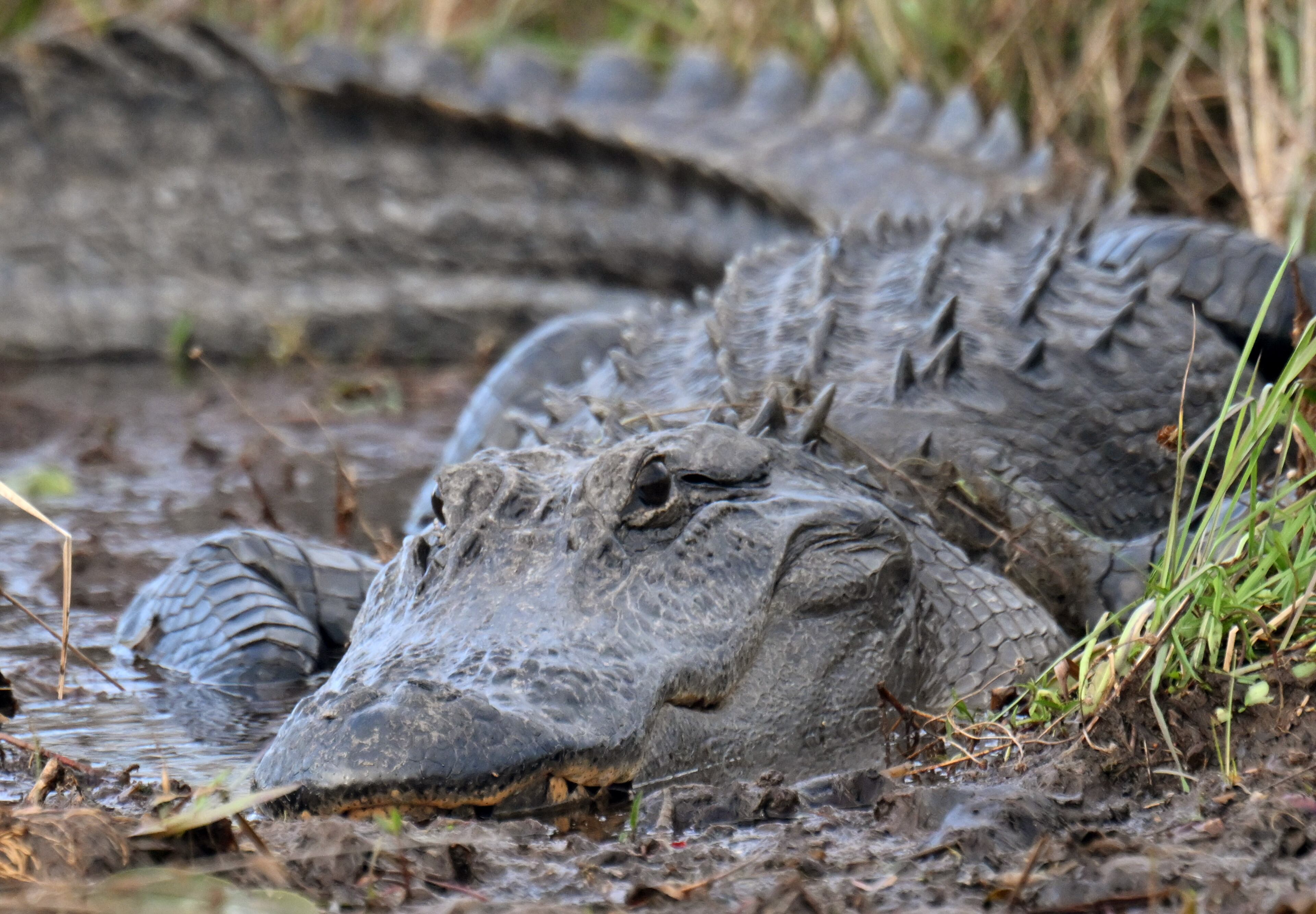
The legislation would ban mining along a 30-mile section near the Okefenokee National Wildlife Refuge’s eastern border and is meant to eliminate the possibility that digging mineral-rich sand would result in the swamp’s draining.
The area known as Trail Ridge in southeast Georgia rises 150 feet above the coastal plain to the east and acts much like an earthen dam. The sandy ledge marked the coastline during the ice age and contains heavy deposits of titanium, a mineral used largely as a whitening agent for products ranging from toothpaste to paint to Oreos.
The UNESCO designation, conveyed in July, does not offer legal protections for the swamp or restrict what can be done on privately owned lands that surround it. That means new mining proposals are possible, though they would still need approval by state regulators.
The midterm election shift in party power makes legislative passage of protections more likely than ever. The state bill had broad bipartisan support in two previous legislative sessions — 2023 and 2025 — but was blocked by the House’s GOP leaders and was not a priority of Gov. Brian Kemp, also a Republican.
With the Democrats winning a House majority on Nov. 3, though, the Okefenokee Protection Act is all but guaranteed a vote in the chamber, the bill’s sponsors say. Republicans still control the state Senate but with only a two-member majority and with Lt. Gov.-elect Josh McLaurin, a Democrat, holding the tiebreaking vote. Only one GOP senator needs to back the bill should all the Democrats support it.
“It’s time,” said Rep. Debbie Buckner, a Columbus Democrat and the bill’s expected lead sponsor. “I think it’s an incredibly unique place and we need to protect it any and every way possible.”

If the legislation’s history in the House is any indication, the act could glide through the Capitol as easily as an alligator through the Okefenokee’s waters. More than 25 Republicans co-sponsored the bill in the 2023 and 2025.
Then it would be up to Gov.-elect Keisha Lance Bottoms, a pro-environment Democrat, to sign the bill into law.
Yet even with politics swinging to support that effort, the journey promises to be messy.
The local senator, Republican Mike Hodges, opposes the bill because the legislation effectively strips mineral rights and thereby devalues property. But he acknowledges protections have broad support.
“We haven’t discussed it in the Senate, so we don’t know where everyone stands,” he said. “Republicans still run the show in the Senate and will try and use our majority to help Georgians, and taking away property rights does not help Georgians.”

Swamp’s neighbors brace for renewed fight
To the people of Folkston, the small town 7 miles east of the Okefenokee, swamp protection talk is best held privately, or at least using inside voices.
Folkston is the type of place where everyone knows everyone else’s business, and not just because with a population of just 4,500, they regularly cross paths. Mention a name, and you learn who went to high school with that person, whose brother is married to that person’s niece and who grew up in a house built by that person’s parents.
“Folks have feelings about it, sure,” said Dixie McGurn, the town’s one-time mayor and the owner of the Whistlin’ Dixie Cafe on Folkston’s main drag. “Everyone has their own way of expressing them — usually in the most polite way possible.”

The movements sparked by the abandoned mining project exposed the rifts and tested that civility. The saga dates to 2018 when an Alabama company, Twin Pines, unveiled plans to mine titanium on Trail Ridge just 3 miles from the swamp’s boundary.
The pushback was marked by public appeals to the U.S. Fish and Wildlife Service, which manages more than 90% of the swamp; the UNESCO World Heritage Site bid; and the Okefenokee Protection Act campaigns.
The pro-mining crowd and others that questioned legislative action labeled environmental concerns as exaggerated or unsupported by science. They also touted the jobs the project and subsequent digs might bring to a socio-economically depressed area. Landowners along Trail Ridge testified before a Georgia House committee that a mining ban would unnecessarily limit the potential uses of their property.
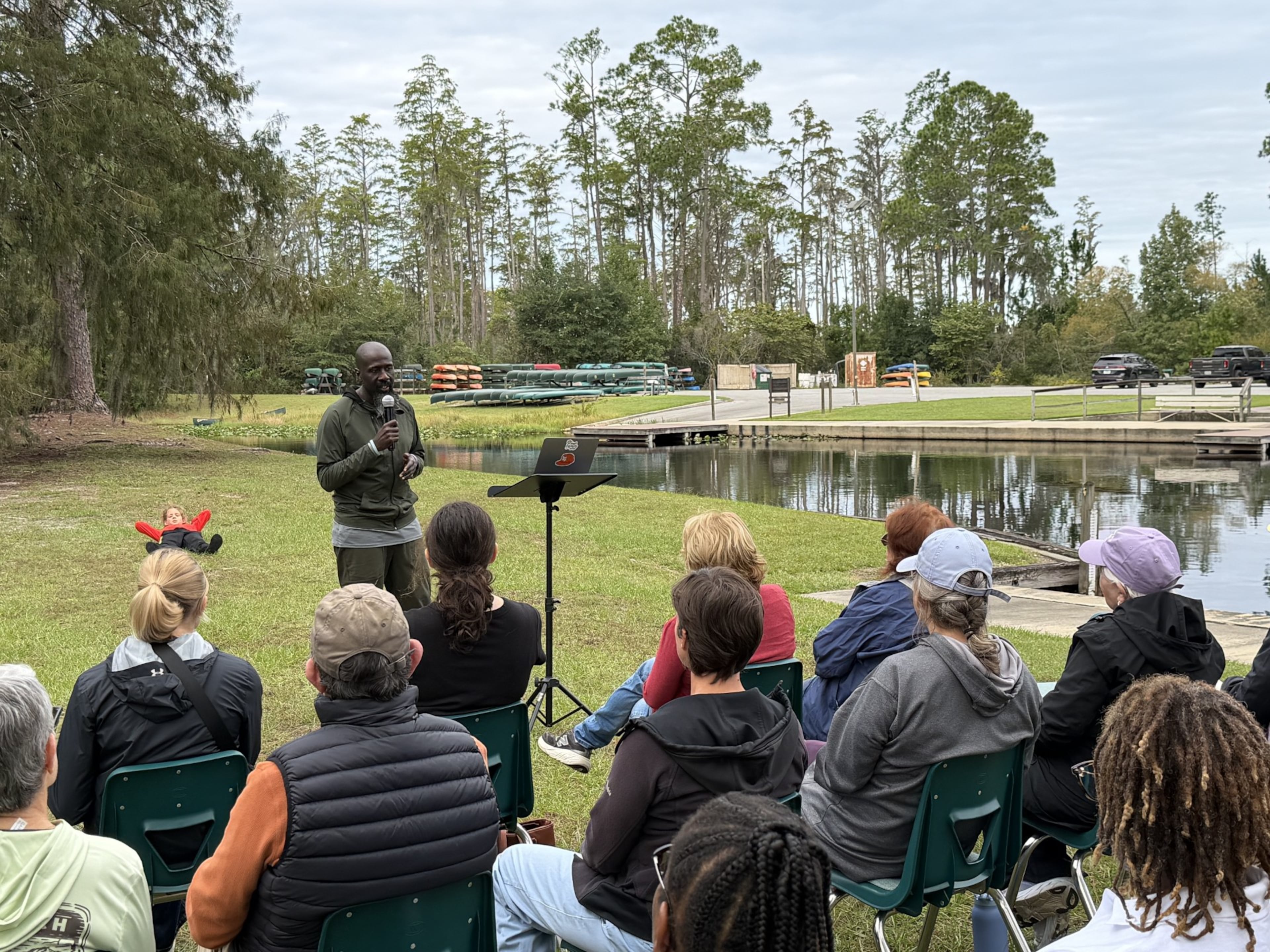
Mine opponents said digging would turn the rural landscape into an eyesore and, more disturbingly, risk the health of the swamp, pointing to research from scientists at the University of Georgia and the National Park Service.
Scientists in the peer-reviewed UGA study warned the proposed Twin Pines mine, by drawing from the Floridan aquifer, could increase seepage from the Okefenokee and lower the swamp’s water level. Hydrologists in the federal study found “critical shortcomings” in the mine’s impact models, determining the models “cannot reliably predict how water levels in the swamp or surrounding ecosystems will be affected by the mine.”
For many, the mining effort was déjà vu — a similar mining proposal by chemical giant DuPont was launched and abandoned in the 1990s. They say only a mining ban can ensure the latest attempt is the last.
Josh Marks has sought swamp protections since the DuPont days in his role as president of Georgians for the Okefenokee. The advocacy group led the opposition to Twin Pines’ mining plans, and Marks sees a legislative opening ahead.
Having “been involved in the defeat of DuPont’s mining proposal at the swamp in the 1990s, I know all too well that unless we have a lasting prohibition on mining, the Okefenokee will never truly be safe,” he said. “Accordingly, it’s now time for the Georgia Legislature to do its part by finally passing the Okefenokee Protection Act and permanently protecting this priceless treasure once and for all.”
It’s a stance that sets the stage for what is to come at the Capitol.