Georgia’s rural healthcare under strain after thousands drop insurance

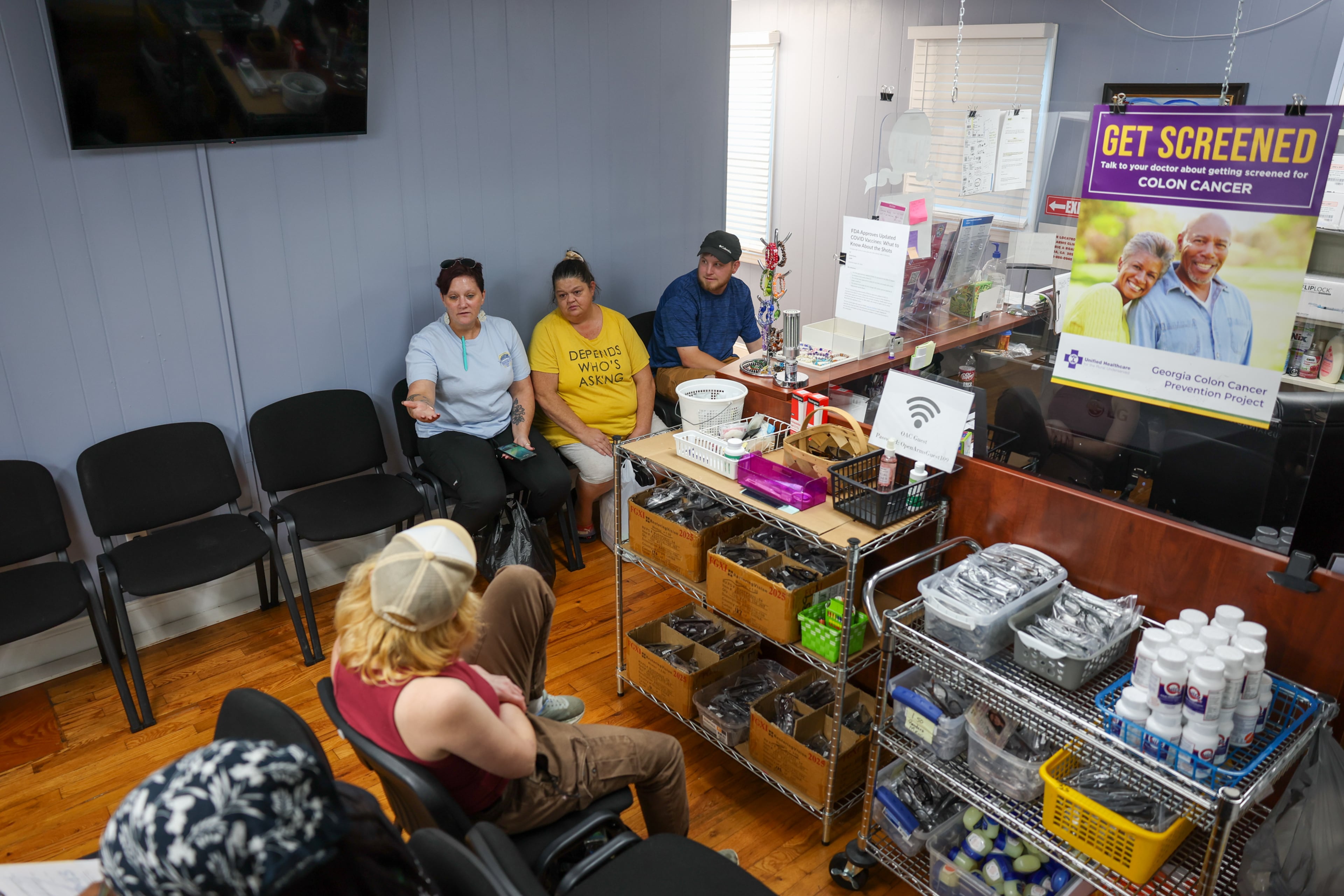
TOCCOA — The workday may have been over on a recent September evening, but the free clinic on the outskirts of downtown was just beginning to hum.
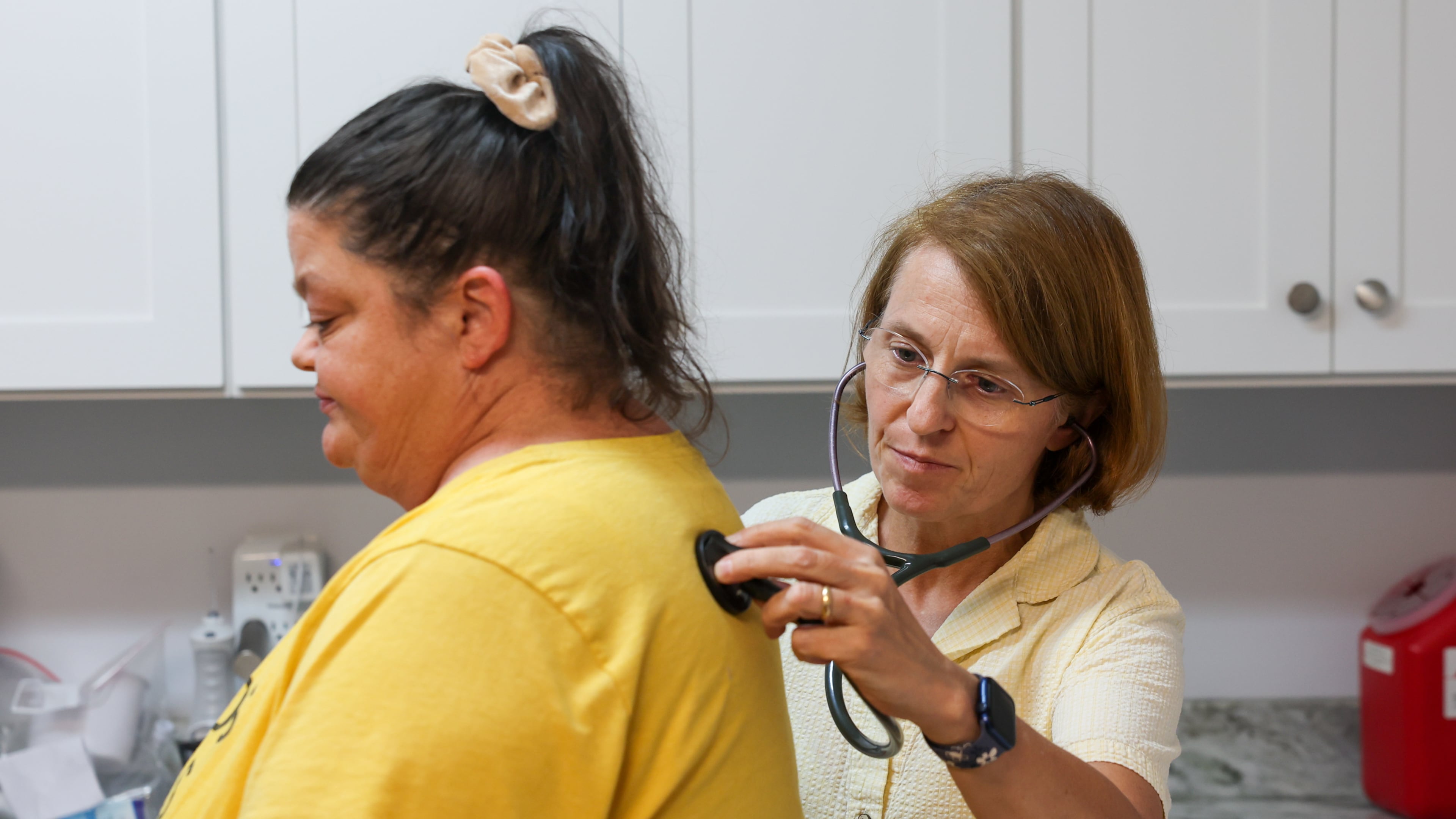
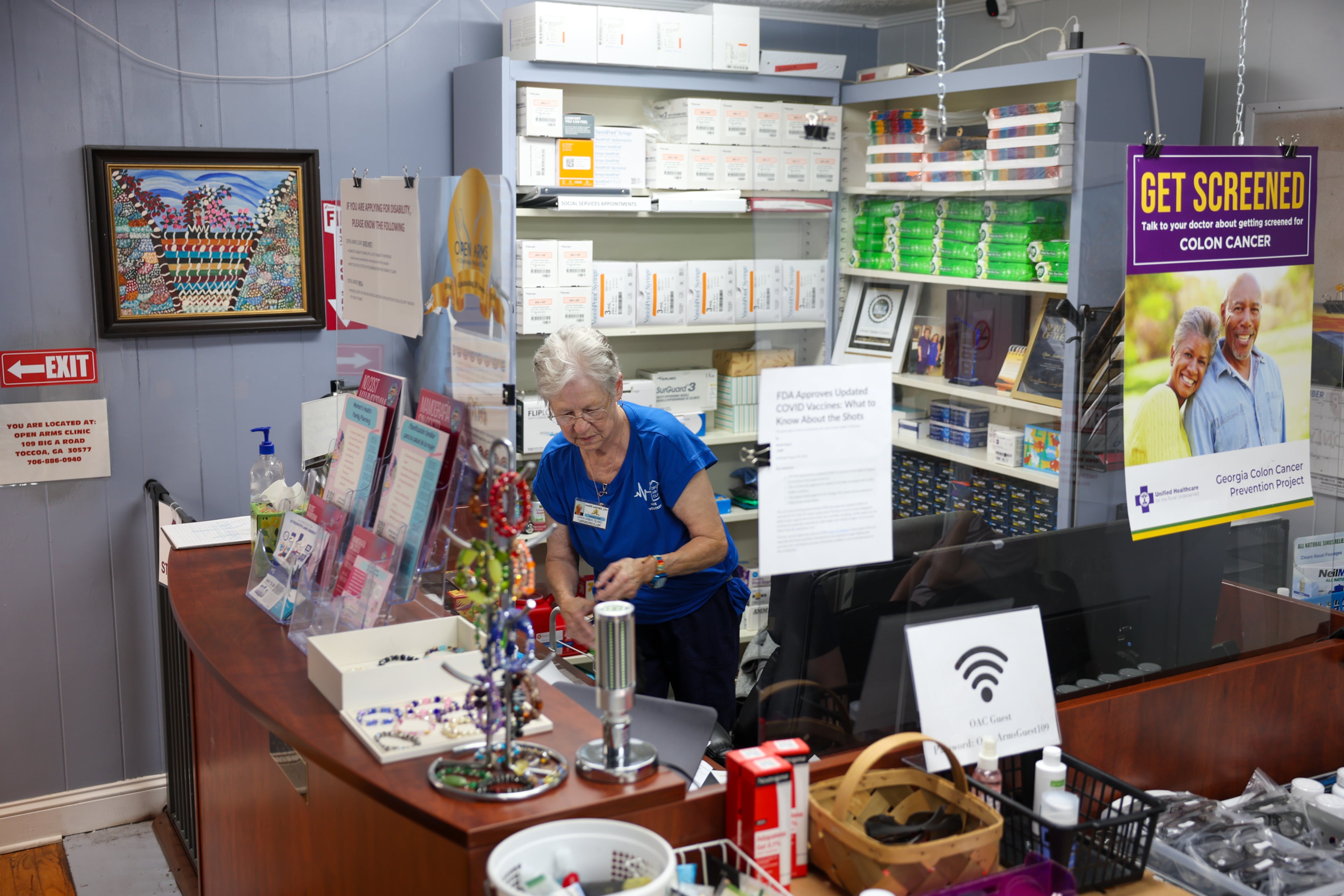
The doorbell rang constantly as patient after patient walked up to the white window and the volunteer receptionist buzzed them in for their appointments. The doctor was scheduled to see 17 people as the sun set in this North Georgia mountain town of roughly 10,000 residents on the South Carolina border.
Open Arms Clinic nearly closed late last year, but its patient load has since been growing rapidly, executive director Sherry Beavers said.
“Within the last year, my patient numbers have doubled,” she said. Beavers expects that number will double again by next summer.
And she is not alone.
Medical providers from all over rural Georgia are reporting new strain since the beginning of the year — the result of major policy changes in Washington that are testing the strength of the country’s safety net programs.
Large funding cuts to food stamps and major changes to Medicaid, the federal healthcare program for the poor, are beginning to be felt downstream as lower-income Georgians have their budgets stretched.
But some of the most acute pain, healthcare leaders tell The Atlanta Journal-Constitution, has come from Congress’ decision late last year not to extend COVID-era enhanced subsidies under the Affordable Care Act, also known as Obamacare. Those subsidies helped millions of low- and middle-income Americans afford their health insurance premiums.
As those monthly costs doubled — or tripled, in some cases — many Georgians have opted to drop their healthcare coverage entirely because they can no longer afford it. When they do need to see a doctor, some skip or delay care until they need to go to an emergency room.
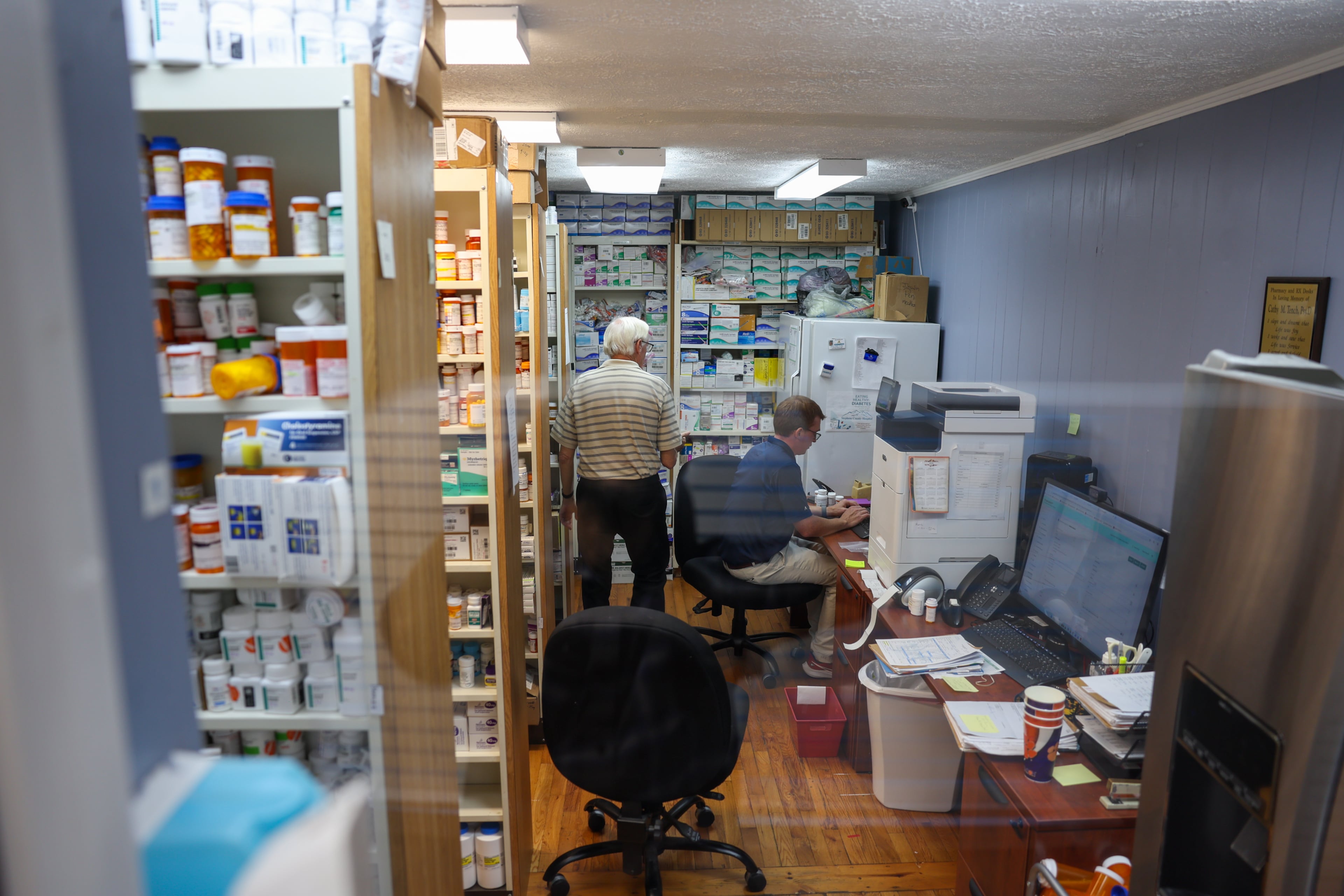
Here in Stephens County, about 90 miles northeast of Atlanta, Open Arms stands in the gap by offering free medical care to uninsured people earning less than $20,000 a year so they can avoid going to the hospital. But many counties in rural Georgia do not have similar providers.
Hospitals around the state have reported a sizable uptick in people visiting their ERs since the subsidies have expired, an increasing number of whom can’t afford to pay. That’s particularly strained rural hospitals, many of which had been struggling financially for years.
“How many of them can absorb that loss? I don’t know,” said Monty Veazey, a lobbyist for the Georgia Alliance of Community Hospitals, which represents nonprofit and community facilities.
A coverage nosedive
Georgia has experienced seismic shifts to its health insurance marketplace over the last year.
Roughly 400,000 Georgians have dropped their Obamacare coverage since last fall, according to state data from the Office of the Commissioner of Insurance and Safety Fire. That’s more than a 30% year-over-year drop as of early September.
In a half-dozen mostly rural counties, the drop-off between 2025 and 2026 has topped 50%, according to data from Veazey’s group. Stephens County saw a 29% decrease during that period, similar to shifts seen in Fulton and DeKalb counties.

Veazey estimates that the changes cost Georgia hospitals $441 million as of the end of the first quarter of 2026, a number that has likely multiplied since then.
For the roughly 900,000 Georgians still on the market, premiums are expected to rise even higher for 2027 healthcare plans. Prices are projected to increase by upwards of 20% when open enrollment begins in November, a figure that was first reported by the Georgia Recorder.
In Toccoa, Beavers has noticed a return of patients who left her care during the pandemic because they could afford subsidized premiums of less than $100 a month. But with those rates now rising quickly, they can no longer afford the plans, she said.
“You’re barely paying for your place to live. You’ve got a vehicle, and with gas what it costs, and with groceries what they cost, you’re barely keeping your head above water — if you are,” she said.
In 2022, Open Arms was caring for between 50 and 60 patients a year, Beavers estimated. It’s now up to about 100 patients, and lately her staff has been receiving five new applications for care a week.
“Slowly but surely, my patients have made their way back, and then with this last cut-off of benefits, they have just been flooding back,” Beavers said, including “patients that were never mine to start with.”
Much of the work at the clinic is helping patients manage chronic conditions like diabetes, heart disease and high blood pressure before they snowball into medical emergencies, Beavers said.
If all goes well, Open Arms helps keep its patients out of the hospital ER.
Millions in bad debt
A federal law requires hospitals that offer emergency services to stabilize a person during a medical crisis regardless of their ability to pay. There are some government programs that help hospitals cover those costs, but the remaining losses are typically written off as bad debt.
Jim Matney, president and CEO of Colquitt Regional Medical Center in Moultrie, estimated that his hospital has seen a roughly 20% increase in the number of people coming into to the ER every day since the enhanced subsidies ended. That includes “significant growth” in self-pay patients who don’t have insurance, he said.
“We’ve seen our bad debt go from $3 to $4 million a month up to $6 to $7 million,” Matney said in a recent interview. “It’s doubled.”
About 70 miles to the east in Douglas, administrators at Coffee Regional Medical Center similarly saw a 40% increase in the number of self-pay patients.
“For us to try to sustain that level of self-pay over a period of time, obviously is very, very difficult,” said Vicki Lewis, the hospital’s president and CEO.
It’s typically far easier for hospitals to get reimbursed directly from insurance companies than having to collect money from individual patients.
Lewis ties the uptick of self-pay patients directly to the expiration of the enhanced premium tax credit late last year. But she said it notably took a few months for the impacts to be felt in her hospital’s corridors. People delayed care after they dropped their insurance coverage, and when they did show up in the ER, they were sicker than they used to be, she said.
“Individuals put off what they think they can put off. Unfortunately, sometimes that’s chest pain and that turns out to be a (heart attack),” she said.
Lewis estimates her hospital has taken a nearly $2 million hit for unpaid services to patients compared to last year.
“That’s not sustainable,” she said.
‘An access issue’
Veazey, the lobbyist, warned that smaller rural hospitals won’t be able to absorb such large losses over time. He estimated there are roughly a dozen around the state that regularly struggle to meet payroll.
“So when the nonpays show up at the door and they (have) got to treat them, it’s a loss to them,” he said. “I expect you’re going to see some hospitals closing.”
Eighteen hospitals in Georgia have closed since 2013, according to a tally from the Georgia Hospital Association. Roughly half of them were in rural areas.
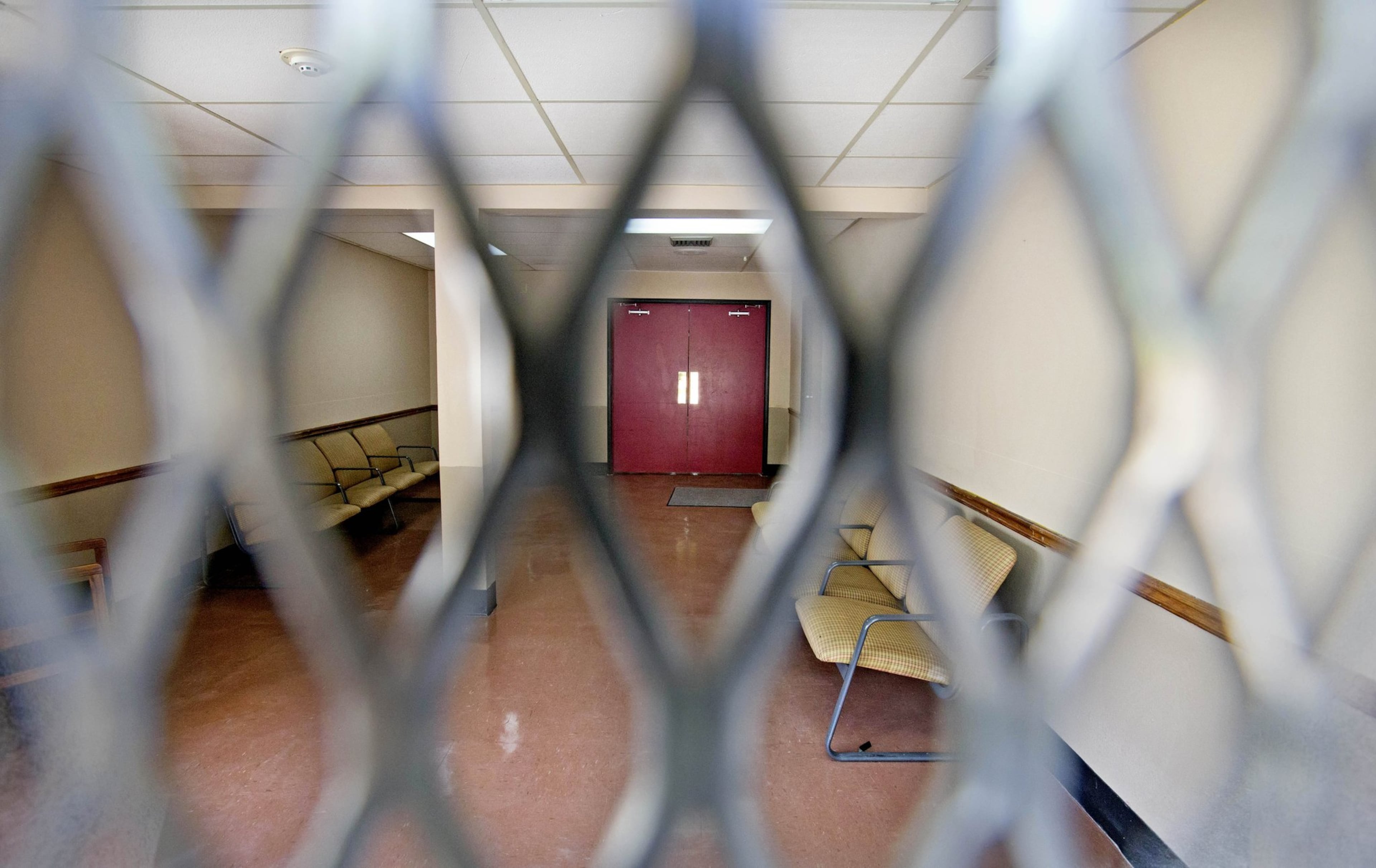
Caylee Noggle, president and CEO of GHA, expects that choices for rural hospitals will only get tougher over time. If debts keep mounting, administrators may need to reevaluate the services they offer, she said.
“It’s not just a numbers and dollars game for hospitals,” she said. “It’s an access issue for our patients. Are the service lines that they need going to be there? Is an OB/GYN going to be available? Is it going to mean longer wait times in Atlanta or the inability to find a specialized provider? We’re very concerned.”
At the hospital in Moultrie, administrators are moving forward with long-awaited plans to build a new tower, expanding from 99 to 150 beds — a bold move intended to increase revenue rather than cut service costs. But Matney said they’re having to reallocate resources to do it that they weren’t expecting.
“A lot of smaller rural hospitals try to control expenses. My philosophy has been you got to grow it through offering additional services so people don’t go out of town for healthcare,” Matney said.
In Douglas, Lewis said she and her team are trying to carefully manage costs at the 98-bed hospital rather than cutting services, which could have an outsized impact given that her hospital is a major employer in the community.
“I don’t believe we’re on the brink of closure by any stretch of the imagination. But I think what we have to do is just carefully manage and carefully navigate through the changes in reimbursement,” she said.
Atlanta feels the pinch
Hospitals in metro Atlanta haven’t been immune.
Janet Christenbury, a spokesperson for Emory Healthcare, said the health system has experienced a “significant increase” in the level of uncompensated care it has provided over the last year in light of the “marked increase” in the number of Georgians without health insurance.
At Grady Health System, which runs Georgia’s largest safety-net hospital in downtown Atlanta, leaders recently confirmed they were implementing a 40% cut to extra pandemic-era wages for nurses, citing in part the expiration of enhanced federal subsidies.
Grady CEO John Haupert said late last year that he expected a $100 million hit to the system in 2026 as a result of the ACA subsidies expiring and people losing Medicaid coverage. Last year, 16% of its patients were uninsured and 18% were on Medicaid.
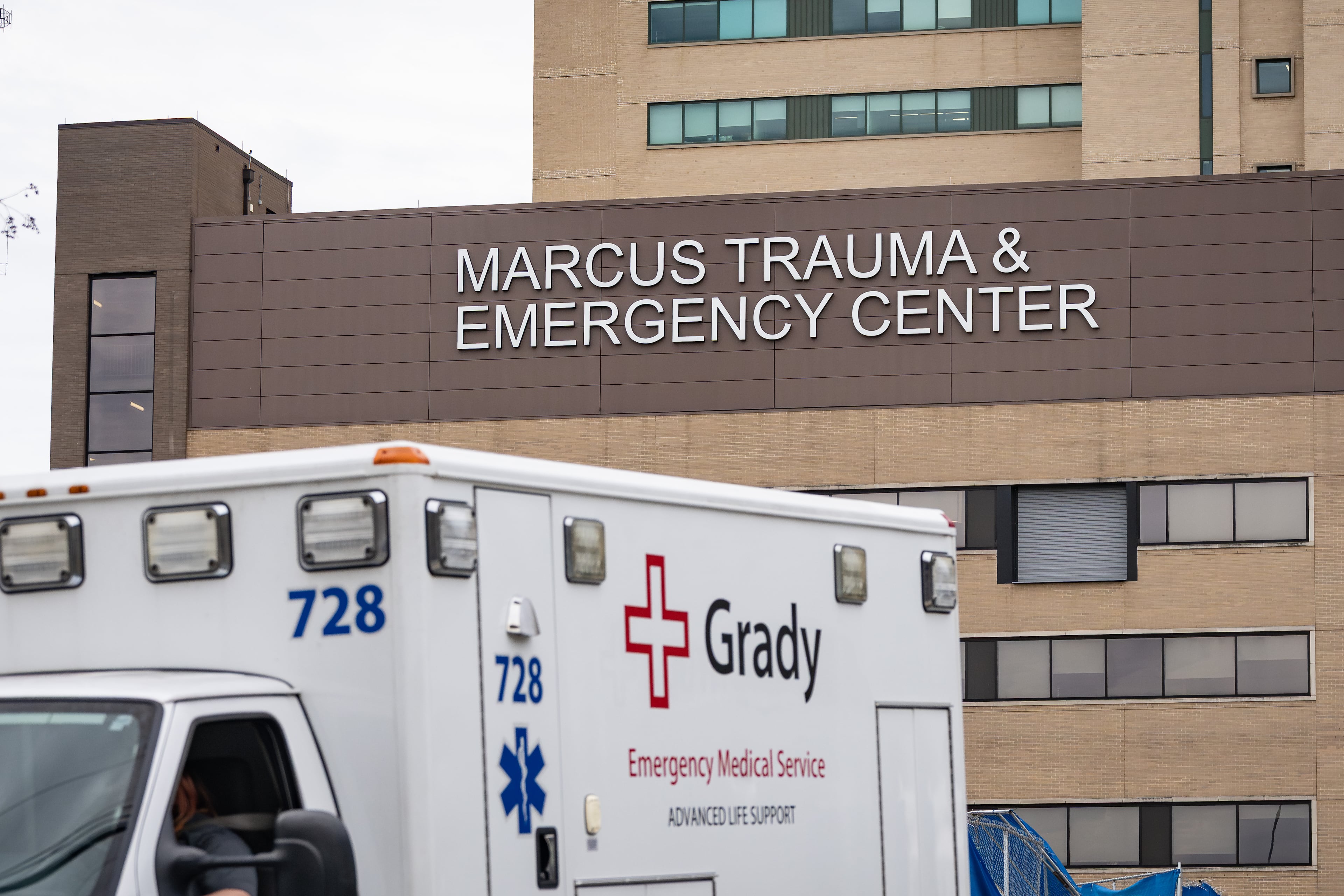
Grady did not respond to requests for comment for this story.
Noggle, of the hospital association, said some metro Atlanta hospitals may have to start rethinking their growth plans.
“They too will have to make tough choices,” she said. “Maybe that means the growth is slowed, or they can’t hire as quickly as they want to, or competition for the workforce changes.”
There could also be a spillover effect should rural hospitals pare back their coverage, she said.
“Our large metro systems cannot absorb all the capacity from the rurals,” Noggle said.
Some fed money coming
Industry advocates say the best help policymakers can provide is finding ways to expand healthcare coverage.
That could mean a full Medicaid expansion, which for years has been rejected by many key Republican leaders in Georgia, or something different that helps make care more affordable.
Meanwhile, some new federal money to aid rural healthcare from the One Big Beautiful Bill Act, President Donald Trump’s signature tax and healthcare law, is beginning to make its way to Georgia.
The state is set to receive $219 million from the first round of the five-year Rural Health Transformation Program.
Local healthcare leaders are expressing mixed views about the program.
On the one hand, any money is helpful, they say. Administrators whose hospitals are receiving awards have expressed excitement about funding for cutting-edge equipment such as surgical robots that will help patients and enhance staff recruitment.
But they note that the grants are temporary — and that the law’s impact on critical healthcare programs like Medicaid are ongoing. Some have also raised concern that the grant money may end up benefiting consultants and tech companies rather than rural hospitals.
Veazey noted that rural hospitals still need help to pay salaries, keep the lights on and maintain their facilities.
“You’ve got hospitals that need roof repairs. You’ve got hospitals that need new AC, major projects,” said Veazey. “And they can’t afford to put a new roof on.”
Supporters of the program say it’s designed to rethink rural health.
“Our hope is not to pay the bills, because that’s not sustainable, because it’s not working,” Mehmet Oz, administrator of Centers for Medicare and Medicaid Services, said last year. “It’s to transform the system.”
To the brink
For free clinics like Open Arms in Toccoa, which largely rely on charitable donations to keep their doors open, that has put more emphasis on fundraising to meet the extra demand.
“They’re working to increase their individual donor base,” said Donna Looper, executive director of the Georgia Charitable Care Network, of her roughly 75 member clinics. “Some have been pretty successful with that.”
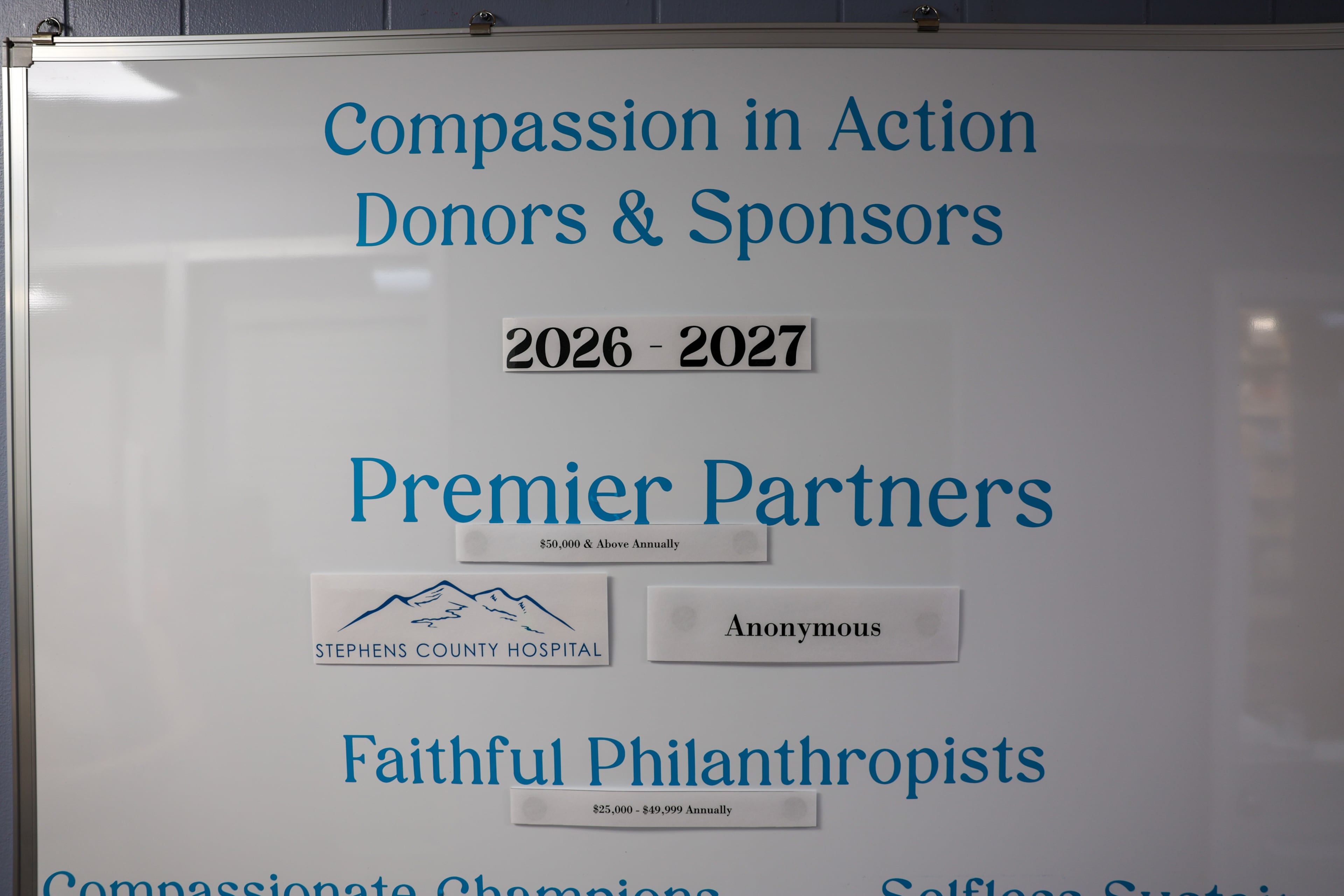
But Looper added she’s concerned that some are being pushed to the brink.
“There’s such a vast gap in services in the rural parts of the state,” she said.
This time last year in Toccoa, Open Arms’ board was on the verge of closing the clinic. The bills were unceasing and funding was running dry.
But Beavers urged the board to reconsider.
New members joined the board, and she and her team launched a new campaign to emphasize ongoing donations from the community rather than one-time giving.
“We’re small,” she said, “but our patients know they can count on us for whatever they need.”
On a recent Tuesday night, the waiting room was full.