Grady cuts pandemic-era pay bump for nurses
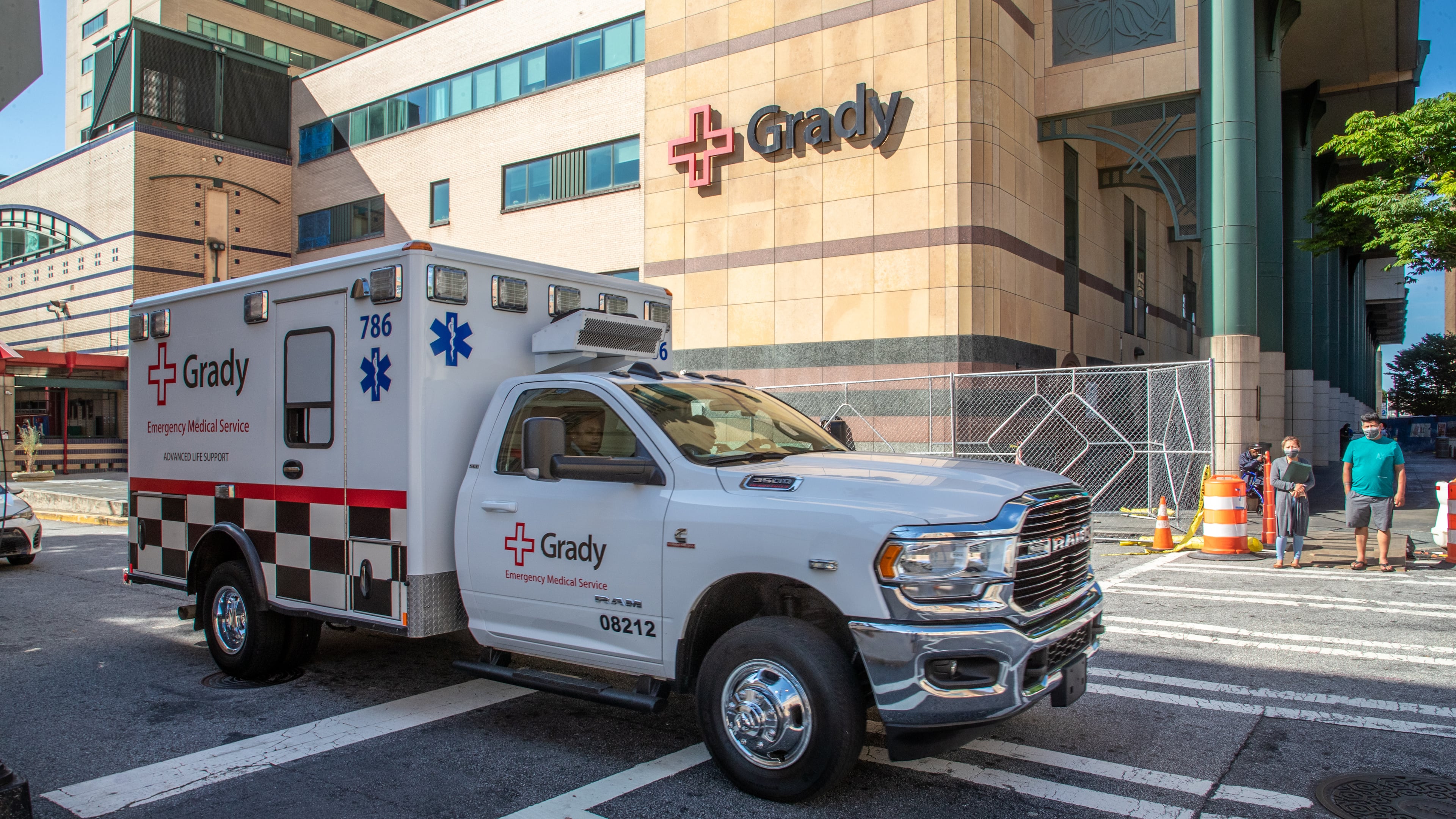

An upcoming pay cut for some nurses at Grady Health System is prompting outrage online and providing a window into how Georgia’s largest safety-net hospital is weathering major policy changes in Washington.
For weeks, nurses have railed on social media about the upcoming cuts to block pay — the extra hourly rate paid for certain high-demand nursing positions during the height of COVID-19.
The posts claim the cuts could decrease the annual pay of some roles in departments such as the intensive care unit and emergency room by $10,000 or more. The Atlanta Journal-Constitution attempted to contact four people who posted on social media about the cuts, and asked how it would affect them or their friends. All declined to comment.
In a statement to the AJC, Grady’s administration acknowledged that nurses and other unspecified employees across its system who receive block pay will see a 40% reduction in those rates beginning Sept. 26. Officials declined to address the amounts of individual pay reductions, saying instead the financial impact will vary per employee.
Nursing base pay, the hospital said, is not being reduced. The median wage for all nurses in metro Atlanta was nearly $52,000 a year, according to 2024 data from the Georgia Center for Nursing Excellence.
“During the pandemic, temporary special pay was implemented for certain positions to address staffing challenges and reduce reliance on higher-cost contract labor,” Grady’s statement said. “Staff were informed at the time that this special pay was temporary.”
The anger is heated on social media, where users warned about the effects to employees’ finances and a potential brain drain on the system’s main hospital in downtown Atlanta — the city’s only remaining full-service trauma center after Wellstar closed its Atlanta Medical Center four years ago.
Grady serves many of the city’s most vulnerable and low-income residents. Nearly one-fifth of its patients in 2025 were covered by Medicaid, the government healthcare program for the poor, according to a hospital fact sheet. An additional 16% were uninsured, according to Grady. The system is jointly owned by Fulton and DeKalb counties.
COVID squeeze
Georgia has long contended with a shortage of nurses, but COVID-19 pushed hospitals to the brink.
Like its peers, Grady fought hard to attract talent as many longtime nurses — burned out from the long hours and increased rates of violence against healthcare workers — retired early, switched professions or moved to less stressful roles. Others were lured by the high salaries and flexibility of travel nurse positions.
Hospital administrators in turn were forced to pay large sums to contract agencies to temporarily fill important positions with those travel nurses. Like in 2021, when Grady, during the height of the delta strain surge, paid $222 an hour for a neurological ICU nurse — triple the normal rate for a temp worker in that position. The hospital had no choice, according to Grady officials, because nurses were so hard to come by at the time.
“Our budget issues are almost entirely related to labor cost,” John Haupert, Grady Health System’s CEO, said in 2022.

In 2022, nearly 200 members of Congress sent a letter to the White House asking for a federal investigation into “inflated prices” staffing agencies were charging hospitals for travel nurses, but no probe was announced.
Anna Adams, chief government relations officer for the Georgia Hospital Association, said facilities got creative during COVID to fill staffing gaps. Some hired EMS workers to do testing in their emergency rooms, or shifted nurses from departments like labor and delivery to focus on critical care patients.
Others, including Grady, a member of the Georgia Hospital Association, expanded block pay to attract in-house nurses so they could avoid relying on travel nurses when possible.
“In that time of crisis, I think the hospitals had to do what they had to do in order to retain their staff,” Adams said.
Although COVID surges have subsided, staffing challenges remain. There is still a shortage of bedside nurses.
At the same time, Adams said there is “a pretty substantial inflation in nurse pay,” and some younger nurses have grown accustomed to the pandemic era’s higher salary.
Not only that, but some who became travel nurses during the pandemic have remained in those roles rather than returning to in-house jobs. That has kept labor costs higher.
“Nurses could go get a lot of money” during the COVID era, said Matt Caseman, head of the Georgia Nurses Association. “I’ve heard of them paying off their mortgages, paying off their student debt and naming where they wanted to go and their hours.”
“But,” Caseman added, “it’s not like that anymore.”
‘Razor thin’ margins
Meanwhile, federal funding from Washington to help local institutions weather the pandemic have dried up, further squeezing hospital finances.
In its statement to the AJC, Grady specifically mentioned Congress’ decision to sunset the COVID-era enhanced Obamacare subsidies as a factor in its decision to scale back block pay.
The subsidies’ expiration in late 2025 led to stiff premium hikes for customers on Affordable Care Act exchanges and prompted more than a half-million Georgians to drop their healthcare coverage. That’s resulted in more uninsured patients showing up in ERs when they’re in medical crisis — and many are unable to pay their bills.
Adams said most hospital revenue margins are typically “razor thin if they are positive at all.”
“Every patient that has an insurance policy helps that margin to be a little bit healthier and hopefully in the black. But when you start to chisel away at that and pick off those patients, it’s easy to put a hospital in the red,” she said.

Caseman said hospitals often cut nursing staff before doctors because the latter help bring in patients.
“I want to see the state of Georgia be the best place in the country for nurses to practice in,” he said. “Certainly, when you hear about cost-cutting measures and such, it concerns you. We’ll just have to wait and see.”
Also on the horizon are steep Medicaid cuts from the One Big Beautiful Bill Act, President Donald Trump’s signature tax and healthcare law. In the years ahead, it is expected to slash program spending by $1 trillion, which could have a major impact on safety net hospitals such as Grady.
In 2025, Grady had nearly 2,800 nurses on staff, according to a hospital fact sheet. It’s unclear how many are affected by the pay changes.
— Staff writer Samantha Hogan contributed to this article.
Grady’s full statement on block pay reductions:
“Our nurses’ base pay has not been reduced. During the pandemic, temporary special pay was implemented for certain positions to address staffing challenges and reduce reliance on higher-cost contract labor. Staff were informed at the time that this special pay was temporary.
“Grady recently reduced this temporary special pay, and affected staff received 30 days’ notice. As a health system, we continually evaluate our compensation programs and operating costs in response to changing healthcare coverage and reimbursement conditions, including the expiration of enhanced federal subsidies. We remain committed to providing high-quality patient care while supporting our workforce.
“The change applies systemwide to all positions previously eligible for block pay, including nursing positions. The 40% reduction in temporary block pay takes effect September 26. The reduction is a percentage of the temporary block-pay rate, so the actual dollar impact varies based on an employee’s position and use of block shifts.”