Nurses concerned about Georgia medical board’s announcement on IV clinics
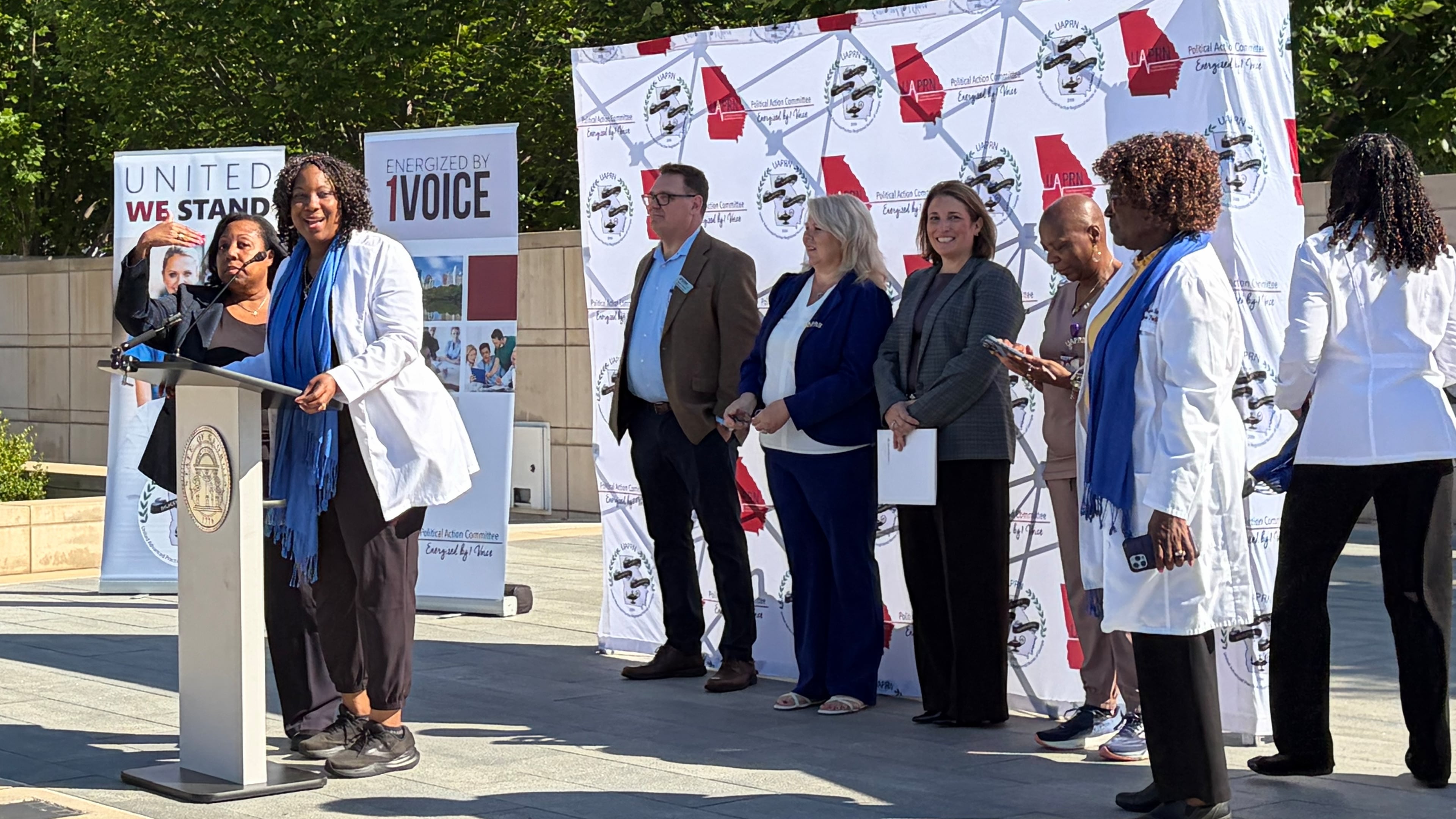

A move by the Georgia Composite Medical Board to protect patients seeking care at the growing number of IV hydration and IV therapy clinics across the state led to a backlash Thursday from nurses, who gathered outside the state Capitol to criticize the action.
The medical board last month issued a position statement intended to clarify Georgia’s current legal requirements for physician oversight of advanced practice registered nurses. APRNs working in IV clinics and other healthcare settings can only prescribe medications and diagnose patients through formal agreements with a physician.
Dr. Kathryn K. Cheek told a packed house at the board’s meeting Thursday that board members were listening to complaints that the position statement was unexpected and was creating a host of issues for APRNs practicing in all sorts of medical settings across Georgia.
“We are trying to provide good healthcare for all the citizens of Georgia,” Cheek, the medical board’s chairperson, said at the meeting. “There is no target on anybody’s back. There are good and bad providers across the board in all sectors. … We’re just trying to let people be informed about the laws as they were presented to us.”
On Friday morning, the board posted a letter and a Q&A to further clarify its position and clear up misinformation that had been circulating about its position statement.
The board said in the letter it issued the original statement last month to combat an increase in protocol agreements that do not comply with the law. The problems of APRNs unlawfully compensating their delegating physicians and the absence of meaningful oversight by physicians that is required by law had become more apparent to the board after it implemented a new licensing system last year.
“Moving forward, when approving protocol agreements or considering enforcement, the Board makes a commitment to closely examine the relationship between the physician and the APP (advanced practice provider) with the purpose of ensuring independent medical judgment and a truly collaborative relationship between the physician and the APP,” the board said in the letter, which was signed by Cheek and Jason Jones, the board’s executive director.
The medical board’s action came amid a monthslong investigation by The Atlanta Journal-Constitution that began publishing this week. Reporters found that Georgia’s board is one of the weakest in the nation, and a lack of oversight has helped foster an environment where questionable treatments are being offered at wellness and alternative-medicine clinics across the state.
“We are trying to provide good healthcare for all the citizens of Georgia. There is no target on anybody's back."
The board’s new action puts it in line with other state medical boards that have discovered patient safety and compliance issues at some med spas, IV clinics and physician offices that focus on anti-aging and alternative medicine.
APRNs testifying at Thursday’s meeting said the statement should be rescinded because, instead of reining in bad actors, it was interrupting care for all sorts of patients, including older residents and pregnant women.
Brent Walker, general counsel at the Medical Association of Georgia, however, said Thursday the board was not changing a policy, but was providing guidance on a law that had been on the books for years. Rescinding the statement entirely, he said, would send a message the board can be made to back down when it attempts to enforce the law.
Cheek told those who made statements Thursday that the board would discuss the matter. “We’re moving forward to listen to what you have said, to listen to the citizens of Georgia, to hopefully provide the very best care for our citizens, and that is our intention here today, nothing else.”