Case filed against Equatorial Guinea for sending US deportees to nations where they face persecution
DAKAR, Senegal (AP) — Rights lawyers filed a case against Equatorial Guinea before Africa’s top human rights body Friday, accusing the central African nation of forcing deportees from the United States back to their home countries in violation of their rights.
The filing asks the African Commission on Human and Peoples’ Rights, the main human rights body of the African Union, to order Equatorial Guinea to immediately halt any further deportations, transfers or removals and improve detention conditions. It also asks the body to grant compensation to people who already have been returned to their home countries.
The case is being brought by several rights groups, including the Global Strategic Litigation Council coalition, on behalf of 14 African migrants deported from the U.S. to Equatorial Guinea between November 2025 and April 2026.
Advocates call it a landmark case
The African Commission on Human and Peoples’ Rights can issue decisions and urgent measures, as well as refer cases to the Africa Court on Human and Peoples' Rights but these orders are not binding. Nonetheless, advocates say this is a landmark case that could exercise pressure on governments of African countries who have taken in deportees from the U.S.
It is the first of its kind in the region involving people who had legal protection from removal but were still sent to countries where they face persecution, said Beatrice Njeri, the Global Strategic Litigation Council's regional litigator for Africa.
In March, the commission had already allowed a suit challenging the unlawful and prolonged detention of third country deportees in the African kingdom of Eswatini to proceed.
A month later, Eswatini’s Supreme Court ruled that four of the men sent there could finally meet with a lawyer after they were denied in-person legal counsel for nine months while held at a maximum-security prison.
Under a series of often-secret agreements, the Trump administration has deported thousands of people to nearly two dozen countries that are not their own, advocates say, all part of the broad U.S. crackdown on immigration. Immigration lawyers said the Trump administration uses deportations to third countries as a legal loophole to indirectly force asylum seekers back to their home countries.
Equatorial Guinea is one of at least eight other African nations that the U.S. has struck third-country deportation deals with.
Deportees returned to countries where they face persecution
Last week, Equatorial Guinea authorities transferred six deportees to their country of origin in eastern Africa, which lawyers say amount to “chain refoulement,” the indirect return of people to places where they face persecution, despite legal protections by courts in the United States.
The lawyers said the migrants face political, religious and ethnic persecution in their home countries, as well as violence based on sexual orientation. Some had previously been arrested or detained by police or military there, and many had experienced torture and sexual violence. All had previously been protected by U.S. immigration judges from being sent back to their home countries under federal immigration law.
Upon arrival in their home country, two of the deportees later fled to another country and have gone into hiding.
Three others were returned to Equatorial Guinea after their country of origin refused to admit them because they lacked valid travel documents and had not been notified of their arrival.
The migrants were then sent back to Equatorial Guinea, where they remain in legal limbo.
“They have effectively been rendered stateless,” said Bella Mosselmans, director of the Global Strategic Litigation Council, describing the process as a “a cycle of hell.”
Equatorial Guinea is a key U.S. partner despite rights concerns
Under an opaque $7.5 million deal with Washington, at least 32 people were deported from the U.S. to Equatorial Guinea, which the top Democrat on the Senate Foreign Relations Committee, Jeanne Shaheen, has called “one of the most corrupt governments in the world.”
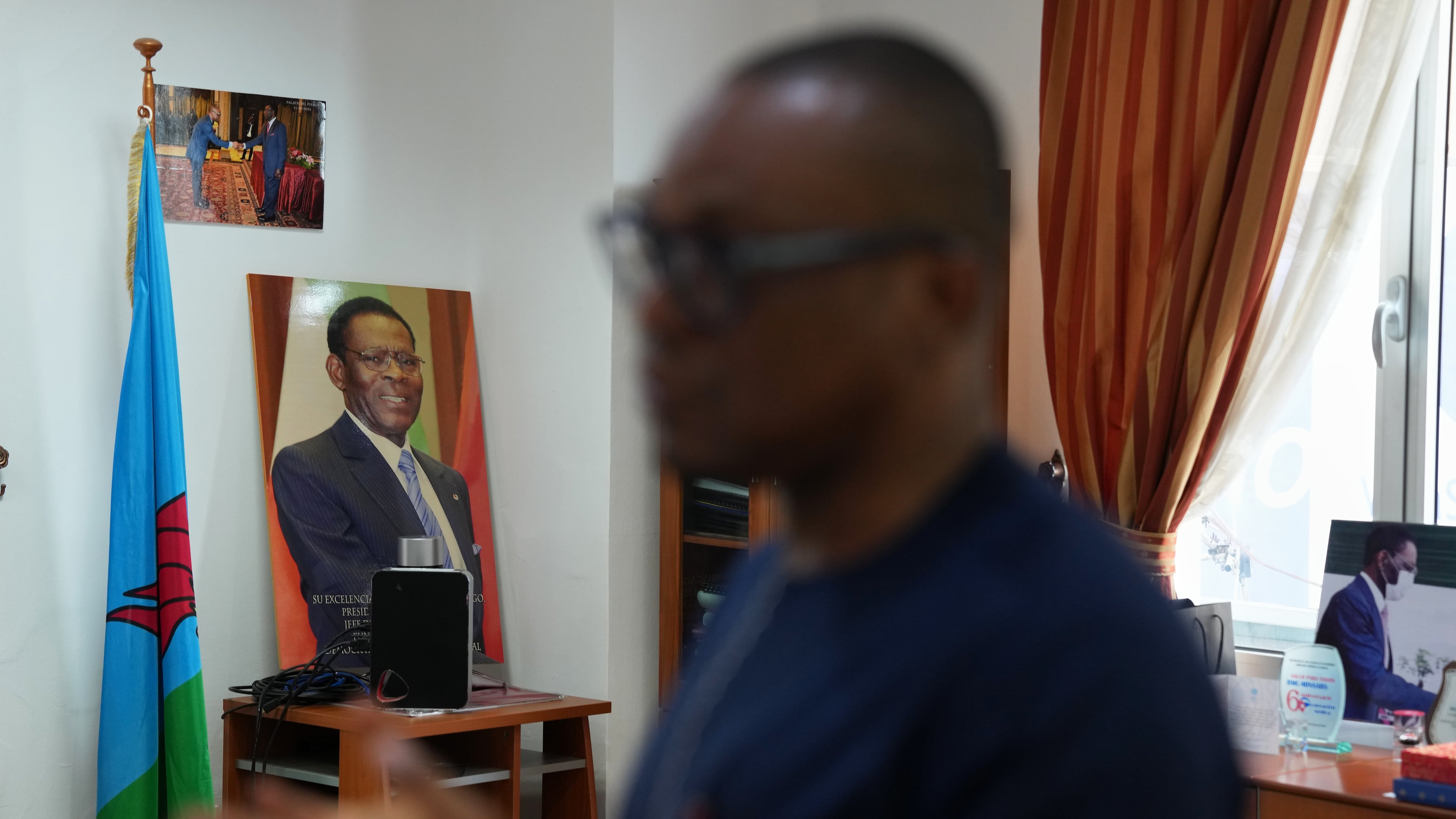
The Associated Press reported on the conditions of deportees who were forced back to their home countries. It also got exclusive access to a hotel turned into a prison for asylum seekers deported from the United States by Equatorial Guinea’s all-powerful president, Teodoro Obiang Nguema Mbasogo.
Equatorial Guinea is one of the richest countries in Africa thanks to its oil resources. It is also rife with corruption and human rights abuses, according to U.S. officials.
There are virtually no critical voices in Equatorial Guinea, where the government has been accused by rights groups and the U.S. State Department of detaining, torturing and even killing those that dare to speak out.
The country's largest foreign investors are U.S. businesses, and its military receives funding for training from the U.S. government.