Tires are your car’s most important safety feature

You’ve probably heard my favorite tire-related cliché: “Tires are the only part of a car that touch the road.”
Usually, that cliché is true. So why do so many drivers ignore their tires until a failure occurs?
To draw attention to those black doughnuts that spin around when you hit the gas, I’m going to explore a few topics:
- What makes up a tire?
- What can go wrong with a tire, and how can that be dangerous?
- What can you do for tire care to maintain your safety?
The parts of your tire
Tires consist of six primary components: the inner liner, the beads, the carcass ply, the crown plies (or belts), the tread and the sidewalls.
Decades ago, tires needed inner tubes to hold air. Now, that’s the job of the inner liner, a synthetic rubber layer inside the tire. It connects to the beads to create an airtight seal with the wheel, keeping the tire seated on the rim.

On top of the inner liner is the carcass ply. This layer uses thin textile cords or cables bonded in rubber to provide the tire’s strength. The crown plies, also called “belts,” are layers of steel or advanced fiber that sit atop the carcass ply, forming a rigid base for the tread, which touches the ground and provides grip. The sidewalls connect the beads to the tread, enclosing the tire’s body. Technical information appears on the sidewall.
What can go wrong
When I think about tire failure, I usually think about inconvenience. Few automotive experiences are more disappointing than a flat tire in a parking lot. Tires seem to go flat only when it’s rainy or cold.
However, a tire failure while driving is more than an inconvenience. It can cause a loss of control and endanger you, your passengers and others. At highway speeds, a tire failure can be life-threatening.
Failure of any component in a tire can affect your safety. The layers of a tire are bonded together during manufacturing. If the bonding fails, the tire can delaminate, losing layers from the outside or even inside. This can quickly compromise the tire’s ability to retain air and vehicle control.
If a foreign object punctures the tread or sidewall, your tire can deflate slowly or quickly, depending on the puncture. Neither situation is great when you’re driving.
The tire bead is tough and protected by the wheel rim. However, beads do fail, and wheels are vulnerable to damage. If you hit a pothole or debris in the roadway, you can bend, dent or break your wheel rim, which can lead to rapid deflation or a blow-out — never a good thing.
What can you do to keep your tires (and yourself) safe?
Fortunately, caring for your tires is easy and requires a little maintenance and common sense.
Experts agree that tire inflation pressure is critical for proper tire operation. “The key thing for tire safety is to monitor and know and make sure tire inflation pressure is correct,” said Dale Harrigle, chief engineer for consumer replacement tire development at Bridgestone Americas. “(Underinflated) or overinflated tires definitely compromise performance.”
Harrigle said you should check tire pressure at least monthly and before any long trips. “Take an extra five minutes and check your tires,” he said. “Look them over visually, check the tire pressure and make sure you’re ready for that trip.”
Make it a habit to give your tires a quick look before each drive. Buy a low-tech tire pressure gauge and check each tire’s pressure at least once a month, as Harrigle recommends.
Your car’s manufacturer makes it easy to find the right levels, printing the number on a label inside the driver’s door and in the owner’s manual. Many new cars come with a sensor in each wheel and an instrument panel readout to warn you of low tire pressure. This fail-safe can help, so don’t ignore a warning. Pull over, check your tires, and get to an air pump as soon as possible if the tire is still holding air. Never drive on an underinflated or flat tire. It isn’t safe, and you will ruin your wheel and possibly more.
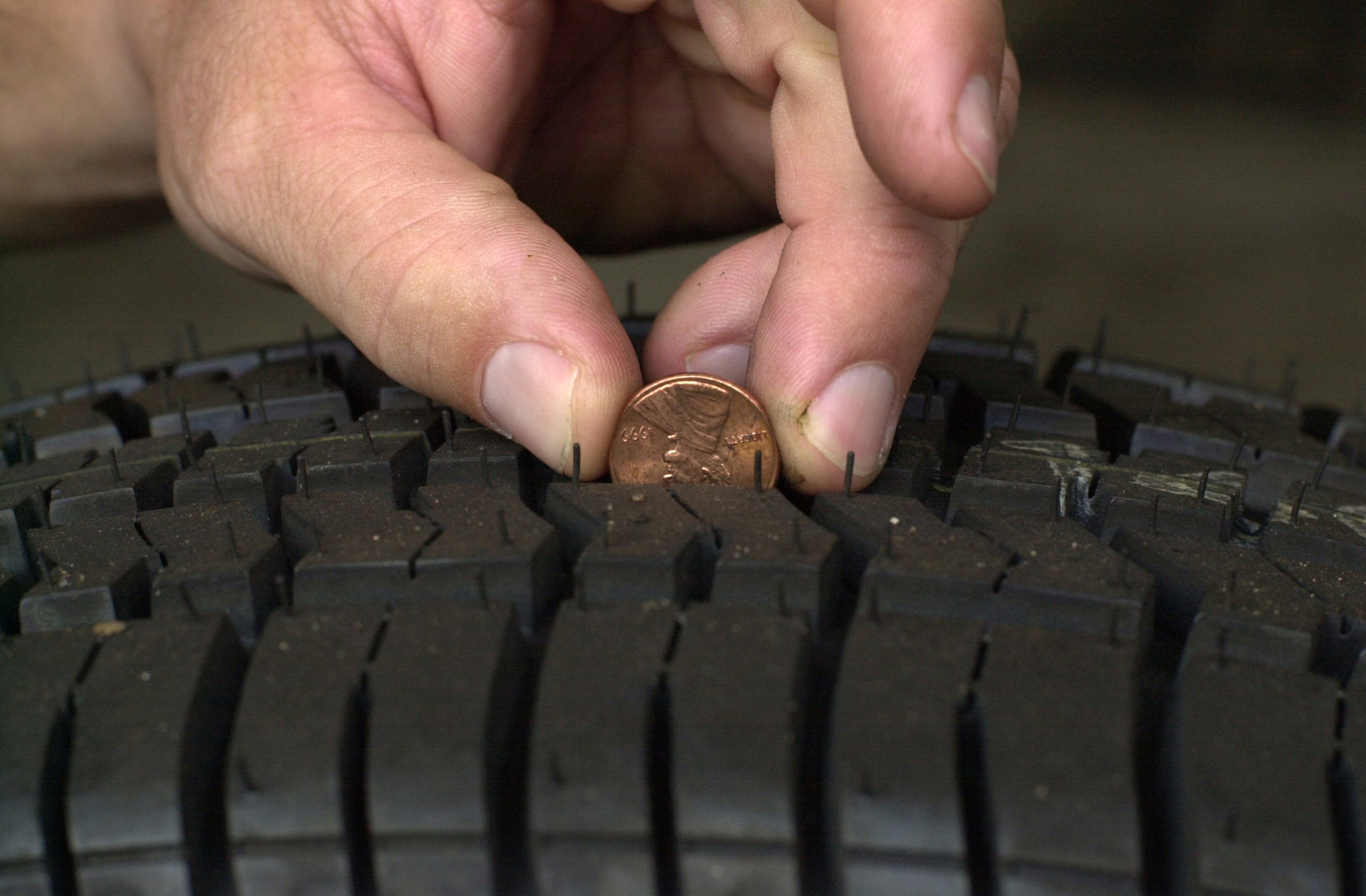
Also, inspect your tread, sidewalls and beads when you check tire pressure. If anything looks unusual, or if you notice excessive wear or bulging, get to a tire shop right away.
Does your car have a spare tire? If it does, check that monthly, too, and ensure that you have a working jack, tire iron and other tools for changing the tire. Watch a video about how to change a tire and look for specific advice about your vehicle before you try it. Anyone can change a tire with the right information. Blundering through the operation can lead to vehicle damage and injury. Be careful. If your car comes with a tire inflation kit, make sure it’s complete and that you know how to use it. Get to a tire shop as soon as possible once you’ve used the kit — it’s not a permanent fix.
Don’t wait too long
One of the biggest mistakes owners make with their tires is deferred maintenance. Many tire issues, like underinflation, can be corrected in minutes if you notice them in time.
Once you have worn out your tread or damaged your sidewall, though, you may have no option but to replace your tires. And that is expensive.
Jason Fogelson is a managing editor for Kelley Blue Book and Autotrader. A veteran automotive journalist, he has written for multiple national outlets through the years.
The Steering Column is a weekly consumer auto column from Cox Automotive. Cox Automotive and The Atlanta Journal-Constitution are owned by parent company, Atlanta-based Cox Enterprises.