Rubio aims to ease tensions with NATO allies as Trump confounds them with abrupt decisions
WASHINGTON (AP) — Secretary of State Marco Rubio already faced a difficult task in soothing NATO allies anxious about President Donald Trump’s often-abrupt announcements. Then Trump did it again.
Just hours after Rubio departed for Friday’s NATO foreign ministers meeting in Sweden, Trump stunned virtually everyone by announcing he would send an additional 5,000 troops to Poland, a country that recently was told it would not be getting an expected deployment.
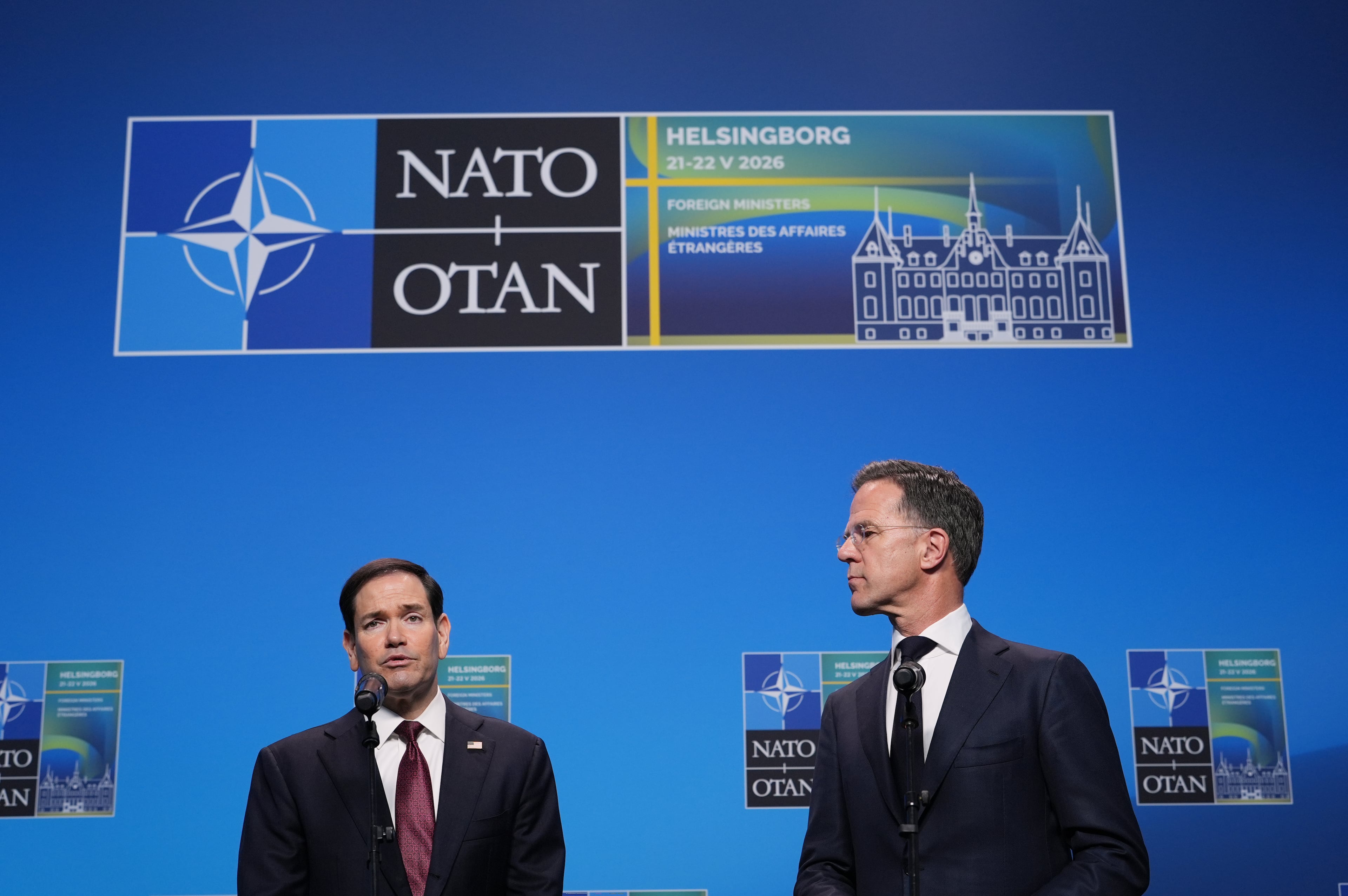
At the meeting, Rubio tried to calmly explain the situation to Europeans who have been unnerved by Trump’s constant unpredictability: The U.S. remains committed to NATO but will adjust its military footprint in Europe, which eventually will mean fewer American troops on the continent.
Rubio and NATO chief Mark Rutte insisted that the U.S. is consulting with allies. Yet the announcements have blindsided some countries.
“At the end of the day, I think it’s well understood in the alliance that the United States’ troop presence in Europe is going to be adjusted," Rubio told reporters. “That work was already ongoing, and it’s been done in coordination with our allies. I’m not saying they’re going to be thrilled about it, but they certainly are aware of it. It shouldn’t be a surprise to anybody.”
Rubio insisted that “none of this is surprising, although obviously I understand why it creates some nervousness.”
America's top diplomat has often been called on to offer a calmer, less antagonistic presence from the Trump administration. Rubio has been dispatched on several such missions this year, including to the Munich Security Conference in February and, more recently, to Italy, where he met with Italian officials and Pope Leo XIV after Trump criticized the American pontiff for his stances on crime and the Iran war.
Lack of clarity remains about US troop drawdowns in Europe
Friday’s meeting in the city of Helsingborg, which precedes a NATO leaders’ summit in Turkey in July, also came amid great uncertainty over how the war in Iran will play out and whether stalled U.S. efforts to broker an end to the Russia-Ukraine conflict will resume. Resentment also still simmers on the continent over Trump’s criticism of allies and his interest in taking over Greenland, a territory of NATO ally Denmark.
Still, it was the abrupt reversal of the Poland decision and an earlier announcement about drawing down thousands of U.S. troops in Germany that attracted the most attention.
Rubio said “this is not a decision that was made on the back of a napkin” and that the Germans “didn’t freak out about it” because the reduction brought the numbers back to where they were three years ago.
With details about the Poland deployment still unknown a day later, Dan Fried, a former U.S. ambassador to Poland and assistant secretary of state for Europe, slammed the Trump administration for its initial decision and an inability to explain the reversal.
He called it the result of a “bad process or lack of process” and said it created “an absolute mess” with America’s European allies. “It was a poorly managed decision — people were appalled,” he said.
Fried, who was traveling throughout Europe for three weeks before returning home Friday, said he had been doing a live TV interview in Poland on Thursday night when Trump announced the surprise reversal. He said he and the host had to laugh when they saw the news.
Although Fried welcomed the step, he said it pointed to larger issues that raise major concerns about the administration’s commitment to NATO and its seriousness about demanding reforms, such as spending more on defense, that most members have already agreed to.
“The administration’s seriousness about that policy is now in serious question,” he said. “They are so haphazard and chaotic that they can’t take yes for an answer. The administration needs to pull itself together.”
For the second day in a row, Rubio declined to discuss any further changes to the American military presence in Europe, including a possible reduction in the number of troops that the U.S. will commit under the NATO Force Model, which is a contingency plan for European defense in the event of serious security concerns.
Rubio reiterates criticism of NATO over the Iran war
Rubio repeated that he is a “strong supporter” of the transatlantic military alliance and called it important. But he reiterated complaints that some NATO allies, notably Spain, had refused to allow access to U.S. bases for the Iran conflict and others had been reluctant, if not resistant, to join a coalition to reopen and protect the Strait of Hormuz, a crucial oil shipping route that Iran largely has closed.
“When some of those bases are denied to you during a conflict that we’re involved in, then you question whether that value is still there,” he said Friday. “So that’s going to have to be discussed.”
Rubio, who was heading next to India, noted that nearly all NATO allies agree that Iran should not be allowed to develop nuclear weapons, but few, if any, stepped up when Trump said he would take action to prevent it.
More Stories
The Latest