Q&A: Anna Gomez is the sole Democrat on the FCC. She has a warning for big media companies
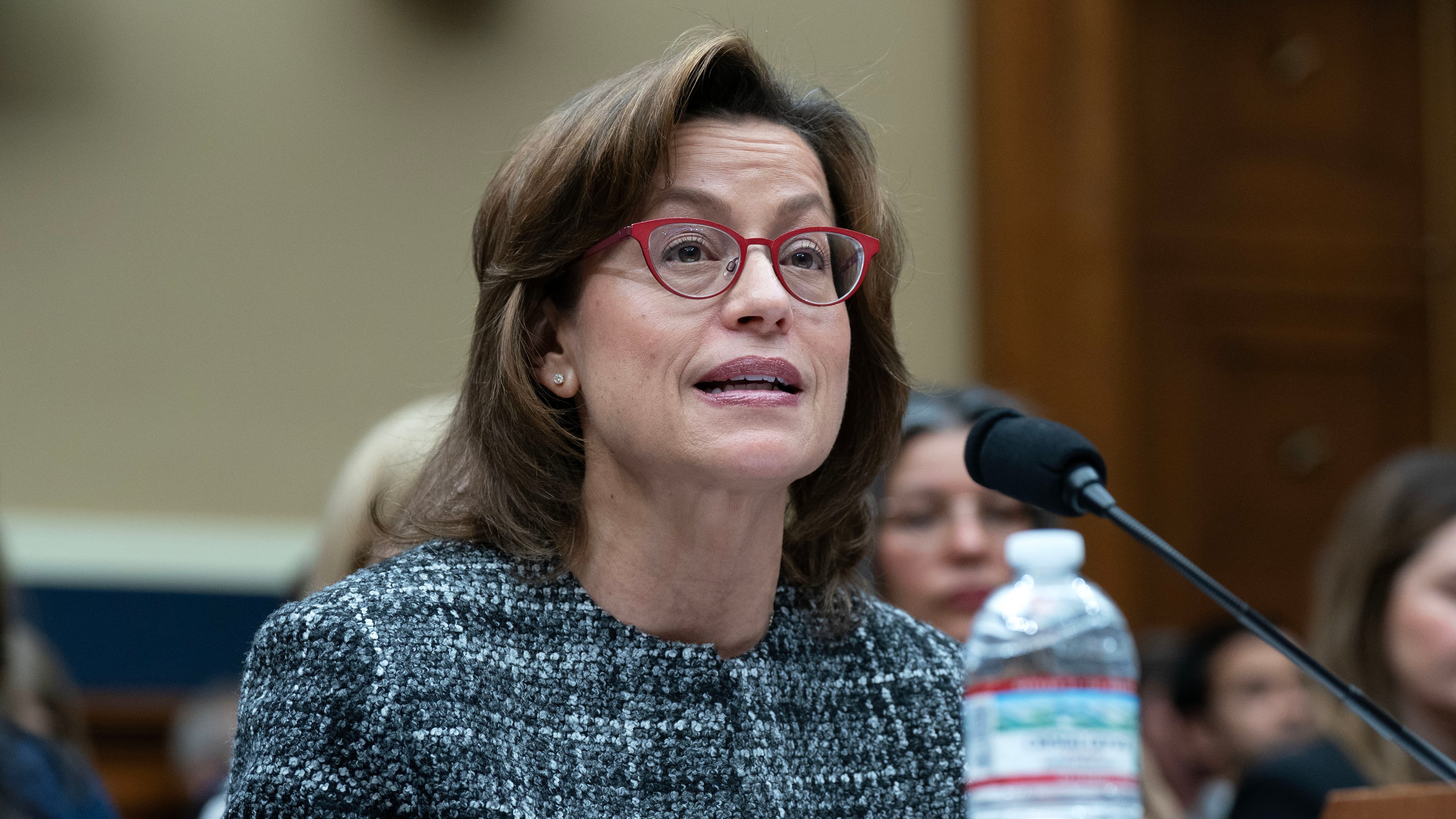
WASHINGTON (AP) — Anna Gomez wakes up every morning and checks her phone to see if President Donald Trump has fired her yet.
For now, she remains the sole Democrat on the Federal Communications Commission, where she's on an increasingly urgent mission to press media companies to more forcefully combat an administration she says is cracking down on free speech.
Her immediate focus is Disney, the parent of ABC. It is the subject of investigations launched by the FCC under Chairman Brendan Carr, a Trump ally.
In an extraordinary four-page letter earlier this month to Disney CEO Josh D'Amaro, Gomez outlined what she described as the FCC's “sustained, coordinated campaign of censorship and control” against the company. She noted probes touching on everything from diversity practices to ABC's moderation of a 2024 presidential debate and the guests booked on “The View” along with the administration's calls for late-night host Jimmy Kimmel to be fired.
She's particularly worried that the FCC's move for early reviews of ABC's broadcast licenses in the markets where it owns local stations is an effort to intimidate the network. She called it “the most egregious assault on the First Amendment this FCC has taken to date.”
Her message was simple: Fight back. She argued that Disney's controversial decision to pay a $15 million defamation settlement shortly before Trump returned to office did the company little good and set a bad precedent for the rest of the industry
“That settlement did not buy you peace,” she wrote in the letter, which she also posted to social media. “It only bought you time.”
D'Amaro hasn't publicly responded to Gomez. But he has signaled a new approach in a filing this month, accusing the FCC of taking actions that could “chill critical protected speech.”
In an interview from her Washington office, Gomez said she was heartened by Disney's response and encouraged other broadcasters to prepare for similar fights. She's an exceedingly rare figure in the nation's capital, one of just a few Democrats who have held onto their seats at federal agencies after Trump fired most of them in a bid to bend the bureaucracy to his will.
The Supreme Court is considering the constitutionality of Trump's moves and could issue a decision in the coming weeks.
While that plays out, Gomez's term is slated to end June 30. But unless Trump fires her, she's likely to remain at the agency, where her presence allows for a quorum that gives Carr the opportunity to keep enacting his agenda. Given the Senate's narrow divide and dwindling calendar ahead of the midterms, it would be hard for Trump to muscle through a replacement.
Here are highlights of the interview, edited for length and clarity.
A letter to Disney ... and a warning
AP: What prompted you to write the letter to Disney?
GOMEZ: At the beginning of this administration, I was growing increasingly alarmed by what I saw as this administration’s campaign to control and censor speech. And so I embarked on a tour across the country where I was talking to journalists, local broadcasters, legal scholars, press freedom advocates. And what I came back with was more of a conviction that we really needed to do something.
Then I started watching the capitulation. We saw CBS settle its lawsuit with the president and then agree to terms that basically require an ombudsperson to oversee the content of the network in order to get its transaction approved by the FCC. We saw ABC, of course, settle its lawsuit and I grew more and more and more concerned about the fact that this capitulation breeds capitulation.
And so I wrote the letter and the letter had two goals in mind. One was to basically put on the record and call out everything that this FCC has done to try to bring Disney to heel but also to encourage it and other broadcasters to stiffen their spine. We know, based on the record of this administration, every time it gets taken to court for these violations of the First Amendment and against the freedom of the press, it loses.
AP: Is your ultimate goal to get a court to rule against the FCC?
GOMEZ: In the end, what I want is for companies to push back because if this gets to court, any entity that challenges what this FCC is doing is going to win.
Regulation in a changing media environment
AP: The media landscape has changed so dramatically from when the FCC was founded. What is the government’s role in this space now?
GOMEZ: Traditionally, the FCC has licensed the local broadcast stations, and what we license is actually their spectrum, their airwaves over which they broadcast their television, their radio. And it has done so with three basic principles in mind. Competition, because competition’s always good for consumers and for viewers and for the market. Localism, which really means serving your local market, whether that means actually airing 24 hours a day the content, but truly local content. And finally, viewpoint diversity. We want to encourage more voices, not fewer.
And that is, I think, the right role for the FCC. Being a censor is not the right role for the FCC.
Life as the FCC's sole Democrat
AP: You’ve been in and out of the FCC for decades. You’re a lawyer, some might even say a technocrat. When you look back at your career, did you think you would take such a vocal stand against the actions of the agency and ultimately an administration?
GOMEZ: No, never in my entire career did I think that I would be having to speak up this strongly for the First Amendment in our Constitution and our democracy.
As you said, I’m a bit of a technocrat. I’m used to talking about the airwaves and I’m used to talking about broadband and how important it is for everyone to have access to broadband. I'm used to talking about really boring things like how to attach to light poles. But media wasn’t something that I particularly thought I would have to really delve into. But, like I said, this administration has just been alarming me so much and so I’ve had to pivot.
AP: You and Chairman Carr have a cordial relationship even though you disagree quite intensely. Is there a secret you want to share with the rest of Washington on how to do that?
GOMEZ: You know, we do have a collegial relationship and we do work well together. He has been in my position and he understands my need to speak out and I do so freely, knowing that some day I may face the consequences for it. But we do work at maintaining a cordial relationship.
AP: You're talking about the potential of being fired by the president?
GOMEZ: Yes, especially when I saw last year when the administration was firing all the Democratic members of different independent commissions and bodies. I just checked my email every day. Literally every day I pick up my phone and I say, “Am I going to work today?” And so far, so good.
AP: Your term lasts through June 30 and you're needed for a quorum. Absent an email that you wake up to in the morning, what are your plans?
GOMEZ: I can continue serving for another year and a half-ish after my term expires as long as no one else is nominated and confirmed for my particular slot. So I intend to continue working and to continue speaking out as long as I can.