Federal appeals court rejects ICE’s no-bond policy, a win for immigrants

A federal appeals courts has struck down the Trump administration’s mandatory detention policy for immigrants in federal custody, clearing the way for more people to wait at home while their deportation cases wind through the court system.
In a 2-1 decision issued Wednesday by the 11th U.S. Circuit Court of Appeals, a three-judge panel ruled that the Department of Homeland Security can no longer deny bond hearings to people in immigration detention, including those who have been living in the U.S. for years with no criminal records.
“This is huge,” said Joshua McCall, a Gainesville-based immigration attorney. The Trump administration “can’t do mass deportation without this policy.”
For decades, immigrants without legal status arrested inside the country had been able to access bond hearings to potentially cut short their time in Immigration and Customs Enforcement custody while a judge considered their cases.
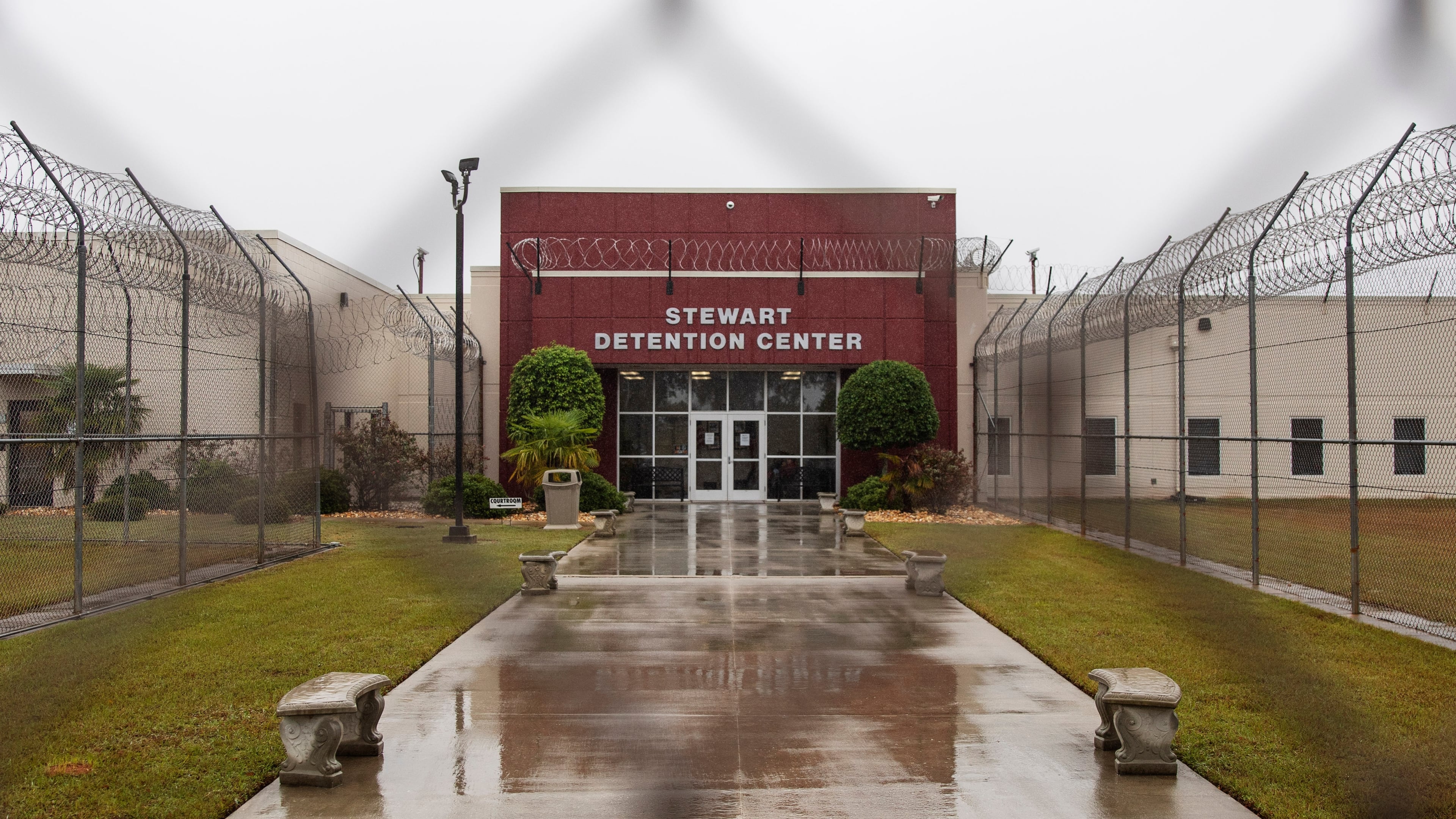
That ended last year, when the Trump administration rolled out a sweeping no-bond policy. Immigration attorneys say being forced to spend long stints in remote ICE facilities such as Georgia’s Stewart Detention Center can exhaust immigrant detainees into accepting deportation.
The restrictions on bond contributed to the growth in the immigrant detainee population under Trump.
As of early April, there were more than 60,300 immigrants in ICE custody — a 50% increase since the end of the Biden administration.
Georgia has the fifth-largest ICE detainee population (roughly 4,400) in the country. The decision out of the 11th Circuit applies to detainees in Georgia, Alabama and Florida.
In its ruling, the court found that, pursuant to federal immigration law, only recent immigrants apprehended at the border or a point of entry — such as an airport — can be categorically denied bond. Those arrested in the interior of the country are entitled to bond hearings.
“Simply put, the language that Congress has chosen to use does not grant to the Executive unfettered authority to detain, without the possibility of bond, every unadmitted alien present in the country,” the ruling says. “Nowhere in the text, structure, or history of the (Immigration and Nationality Act, the applicable statute) does that reading find steady footing.”
The Department of Homeland Security did not respond to a request for comment.
Getting access to bond hearings does not necessarily mean immigrants will ultimately receive bonds, but those have traditionally been granted to people with no criminal histories and who don’t pose a flight risk.
In recent months, immigrants seeking bond hearings have had to individually sue the administration in district court and file what is known as a habeas corpus petition claiming illegal detention. Those habeas petitions quickly multiplied.
“The district courts have been clogged with these cases,” McCall said.
This week’s decision echoes an earlier ruling by another federal appellate court in New York City. But appellate court panels in New Orleans and St. Louis have ruled in the government’s favor and upheld the no-bond policy.
The deepening split among the federal appeals courts likely means the U.S. Supreme Court will need to step in to resolve the issue, McCall said.
Clarification
This story was updated to clarify that the 11th Circuit Court of Appeals is a federal appeals court. The ruling applies to Georgia, Alabama and Florida.