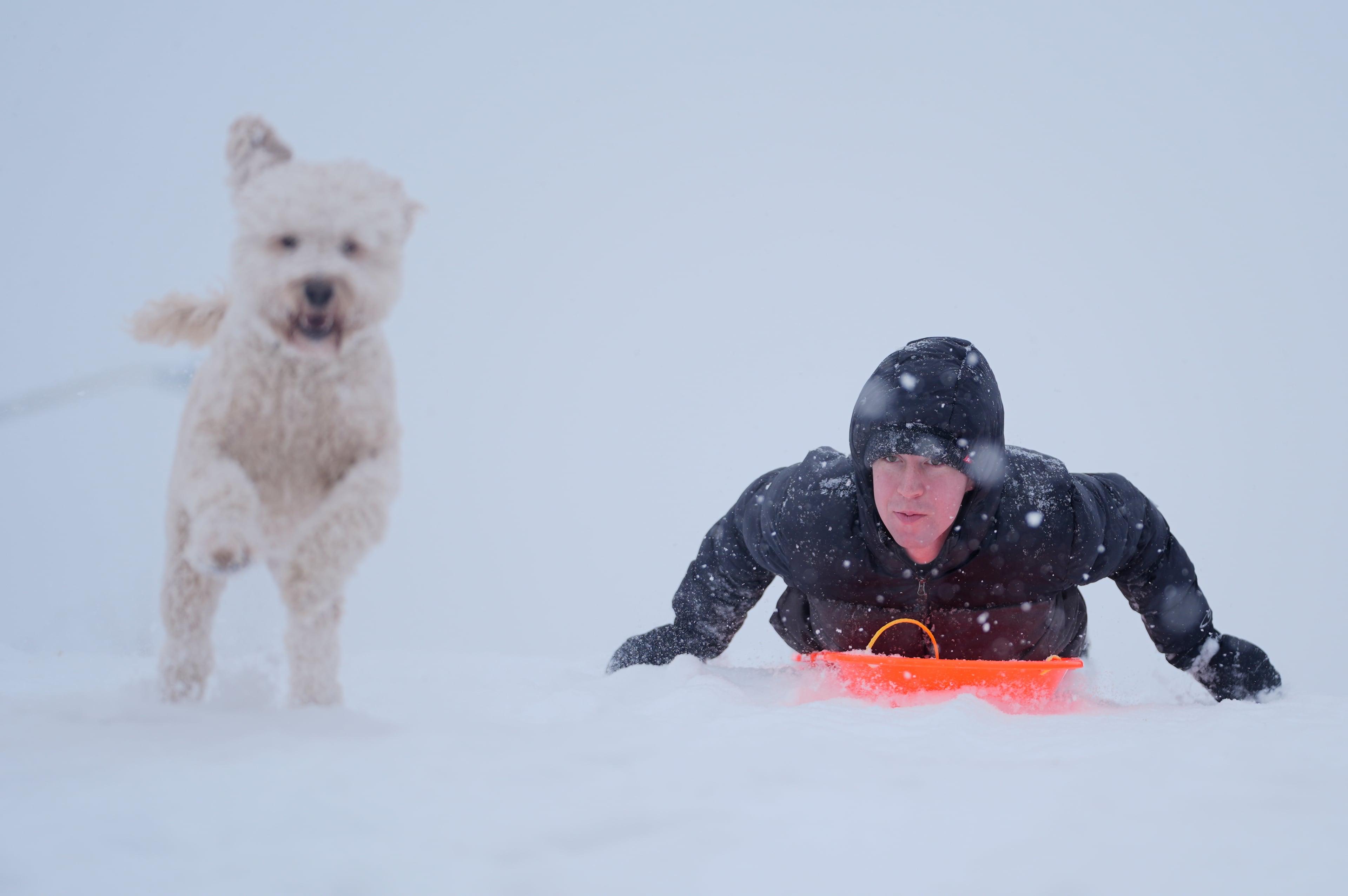
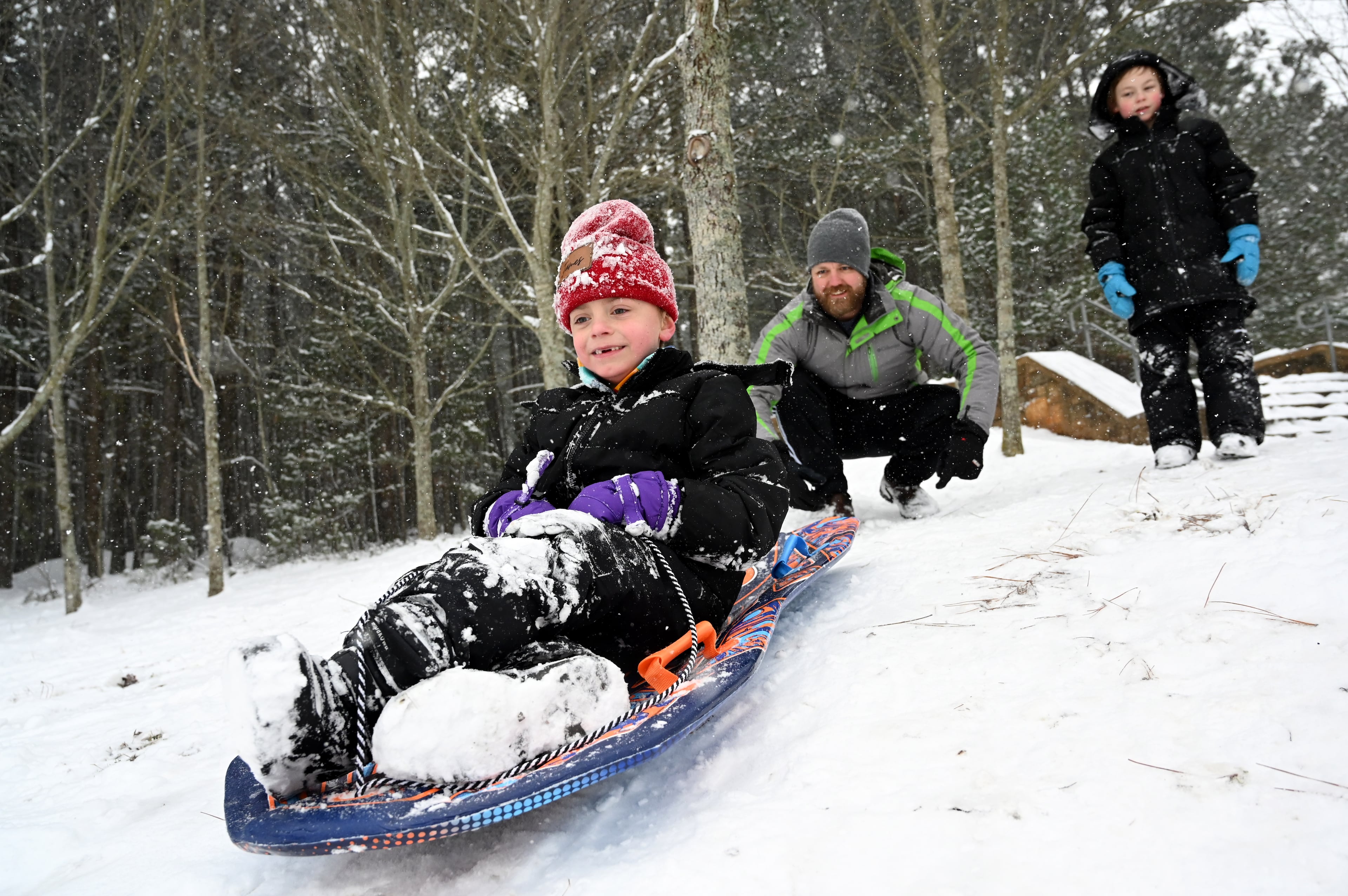
More frigid temperatures expected in much of US after a weekend of heavy snow
MEMPHIS, Tenn. (AP) — Forecasters warned that dangerous extra-cold conditions will persist into Monday morning for a huge swath of the U.S. from the Gulf Coast into New England that was cleaning up after a weekend bomb cyclone brought heavy snow and flight cancellations to North Carolina and flurries and falling iguanas in Florida.
Temperatures will begin inching up throughout the day but more misery was expected for thousands who were still without power from the ice storm last month in the South.
About 150 million people were under cold weather advisories and extreme cold warnings Sunday in the eastern portion of the U.S., with single-digit temperatures in southern states and the coldest air mass in South Florida since December 1989, said Peter Mullinax, a National Weather Service meteorologist in College Park, Maryland.
Heavy snowfall in North Carolina
The National Weather Service office for Raleigh, North Carolina, warned that wind chills will drop early Monday to near zero Fahrenheit (-17 Celsius). “Snow and ice will linger, with refreezing tonight making travel hazardous,” the office said Sunday on social media. “Use caution on roads and dress in warm layers.”
In eastern North Carolina, James City recorded 18 inches (45 centimeters) of snow, while Swansboro recorded 17 inches (43 centimeters), the weather service reported.
The bomb cyclone, known to meteorologists as an intense, rapidly strengthening weather system, contributed to nearly a foot (30 centimeters) of snow in and around Charlotte, North Carolina’s largest city. The snowfall represented a top-five snow event all time there, Mullinax said.
Flight cancellations exceeded 2,800 in the U.S. on Saturday, with at least another 1,800 on Sunday, according to FlightAware, a flight tracking and data company. More than 800 of those Sunday cancellations were for flights departing from or arriving at Charlotte Douglas International Airport.
The storm caused an hourslong mess on Interstate 85 northeast of the city, after a crash left dozens of semitractors and other vehicles backed up into Saturday evening, according to the State Highway Patrol. More than 1,000 traffic collisions and two road deaths were reported, North Carolina Gov. Josh Stein said Sunday.
“It’s an impressive cold shot, for sure, and there are daily records that are being seen down in the South,” Mullinax said.
Freezing temperatures in the Sunshine State
The Tampa-St. Petersburg area in Florida saw snow flurries, while temperatures dropped to the 20s in the Panhandle and 30s in South Florida on Sunday. That left cold-stunned iguanas lying motionless on the ground. Iguanas in South Florida go dormant in the cold and though they usually wake when temperatures warm, the reptiles can die after more than a day of extreme cold.
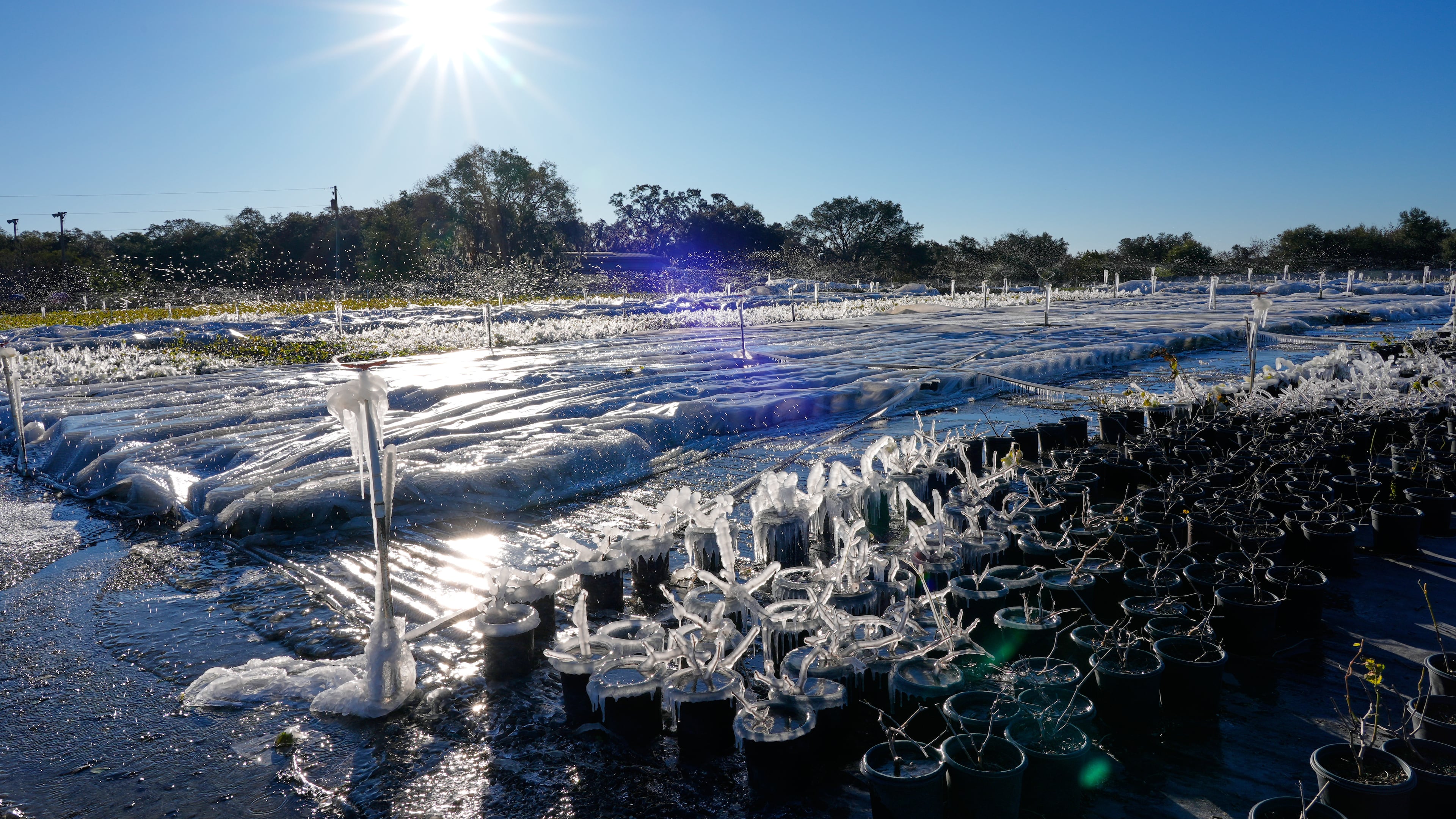
The cold also left ice on strawberries and oranges in the state. Farmers in Florida sometimes spray water on fruit trees and berry plants to protect them from the cold.
More than 110 deaths connected to the wintry weather and storms have been reported around the U.S. since late January. In Tennessee and Mississippi, two states struck by a previous storm carrying snow and ice, more than 81,000 customers were still without electricity by Sunday evening, according to the outage tracking website poweroutage.us.
Nashville Electric Service said it expects 90% of its customers to have power restored Tuesday, with 99% getting electricity back by next Sunday, two weeks after the earlier storm hit. Gov. Bill Lee said he shared “strong concerns” with leadership of the utility, which has defended its response and said the storm was unprecedented.
Mississippi officials said it was the state’s worst winter storm since 1994. About 80 warming centers were opened and National Guard troops delivered supplies by truck and helicopter.
Jamita Washington, a resident of Vicksburg, Mississippi, said she lost power in the previous storm and spent a three nights at a hotel with her son before her electricity was restored Thursday.
However, one of her two furnaces froze over and she has taken up sleeping on the living room sofa since returning home to freezing temperatures at night.
“It's been frustrating, but I look at it like this: There's people in a worse position than we are,” she said. “I know a few homeless people, so I just look at it like we're technically blessed.”
One house shook and another collapsed
In Kitty Hawk on North Carolina’s Outer Banks, Susan Sawin said her house got a “whopping” amount of snow and strong winds that reminded her of a nor’easter.
“It was blowing around like crazy,” said Sawin, 63. “It was a roaring wind ... The house shook.”
She has a snow drift about 2 feet (.6 meters) high outside her house, but she did not lose power. Sawin said she was thankful there was sufficient warning from officials ahead of the “bomb cyclone.”
“That is what it felt like, with the wind and driving snow last night,” she said. “That’s an accurate description.”
An owner of three book stores, she closed her businesses over the weekend and plans to remain shut Monday as well.
“We rarely close for a whole day,” she said. “This past August, we had a hurricane brush by, and I think we opened late one day. It’s pretty unusual to close for three days in a row.”
Also in North Carolina, officials said an unoccupied beachfront house in the Buxton community on Hatteras Island collapsed in heavy surf Sunday.
Mullinax said parts of the Carolinas are going to be “digging out” for several days as they contend with gusty winds and bitterly cold wind chills. Heading into Tuesday and Wednesday, light snow could fall in the Ohio Valley and the mid-Atlantic, from Washington and possibly into New York City, he said.
___
Christopher Weber in Los Angeles, Trân Nguyễn in Sacramento, California, Julie Walker in New York and other Associated Press reporters from around the country contributed to this report.