Federal judge in Georgia calls out ICE for continuing to deny bond hearings
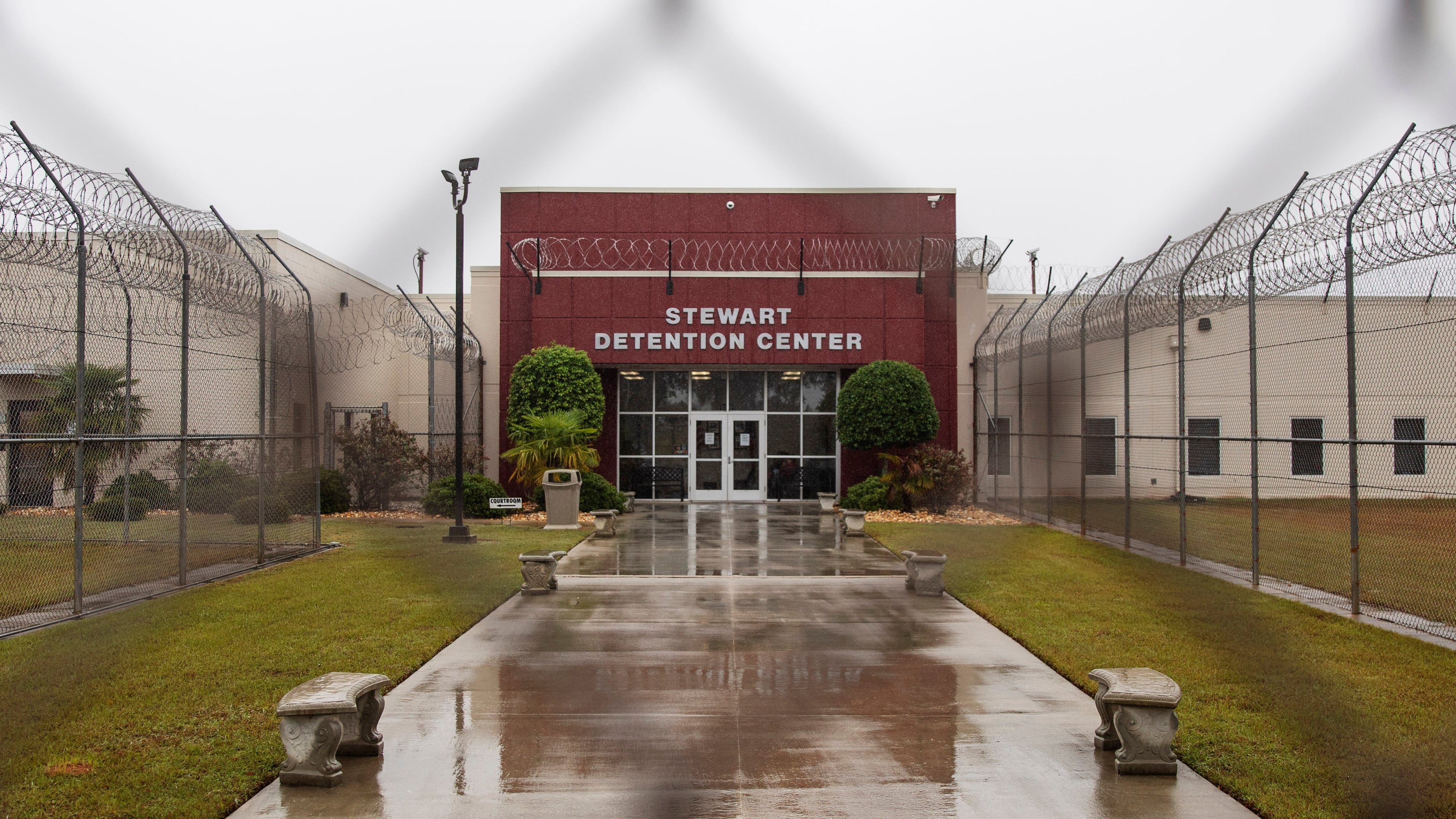
The country’s third-busiest Immigration and Customs Enforcement detention facility is in Stewart County, Georgia, a rural stretch of the state not far from the Alabama border. As of January, the facility held more than 2,000 detainees, according to ICE detention data.
The high number of detainees, combined with a Trump administration policy of denying bond for immigrants in custody, has created an “administrative judicial emergency” in Georgia’s Middle District, U.S. District Court Judge Clay D. Land wrote in a court filing last week.
The Middle District court oversees Stewart County and has been on the receiving end of a raft of habeas corpus petitions, court filings compelling the federal government to justify keeping a detainee in custody.
In the order, Land described the number of habeas petitions as “extraordinary” and connected them to the Trump administration’s immigration policies.
“Most of these petitioners” have seen the court rule in their favor, Land wrote, with judges finding the Trump administration’s mandatory-detention policy noncompliant with federal immigration law, and that they are entitled to bond hearings.
But “despite these clear and definitive rulings, the Government refuses to provide bond hearings” to detained immigrants, forcing those with access to attorneys to file individual lawsuits – and clog up the court system.
The order sets out a process to systematically approve habeas petitions from detained immigrants at Stewart with profiles similar to those who were successful in their cases in the past. The order is needed “to promote justice and judicial economy,” it says.

In the past, not all immigrants arrested by ICE in the interior of the country were held in detention centers while waiting for an immigration judge to determine whether they should be deported.
Those with serious criminal records were kept in ICE custody, but others were typically released on bond to await their court date at home — a benefit granted to immigrants deemed neither a flight risk nor a public safety threat.
A new policy from the Trump administration scrambled that.
Issued last year, it subjects virtually all immigrants who entered the U.S. illegally to mandatory detention. To seek relief, detained immigrants have resorted to individually suing the administration through habeas petitions.
In a statement shared with The Atlanta Journal-Constitution late last year, a spokesperson for the Department of Homeland Security defended its broad no-bond policy, and dismissed judges approving habeas claims as “judicial activists.”
“ICE has the law and the facts on its side, and it adheres to all court decisions until it ultimately gets them shot down by the highest court in the land,” the DHS spokesperson said.
Karen Weinstock, an Atlanta-based immigration attorney whose office has filed dozens of habeas petitions, said the “vast majority” of clients with successful habeas cases have ultimately been released on bond.
But Weinstock also said immigration judges at Stewart have, after being ordered by the federal court to grant bond hearings, recently begun denying bonds to immigrants who are neither flight risks nor safety threats, which she called a “troubling trend.”
Weinstock described the standing order as a good step.
“But it doesn’t resolve the underlying problem,” she said. “What it does do is spare the Middle District of Georgia from having to rewrite the same order in case after case. The court is clearly inundated with dozens, if not hundreds, of similar habeas petitions.
“The standing order is essentially a triage mechanism for a crisis that the executive branch created.”
About the Author