Trump pressures Iran with tariffs that could raise prices in the US
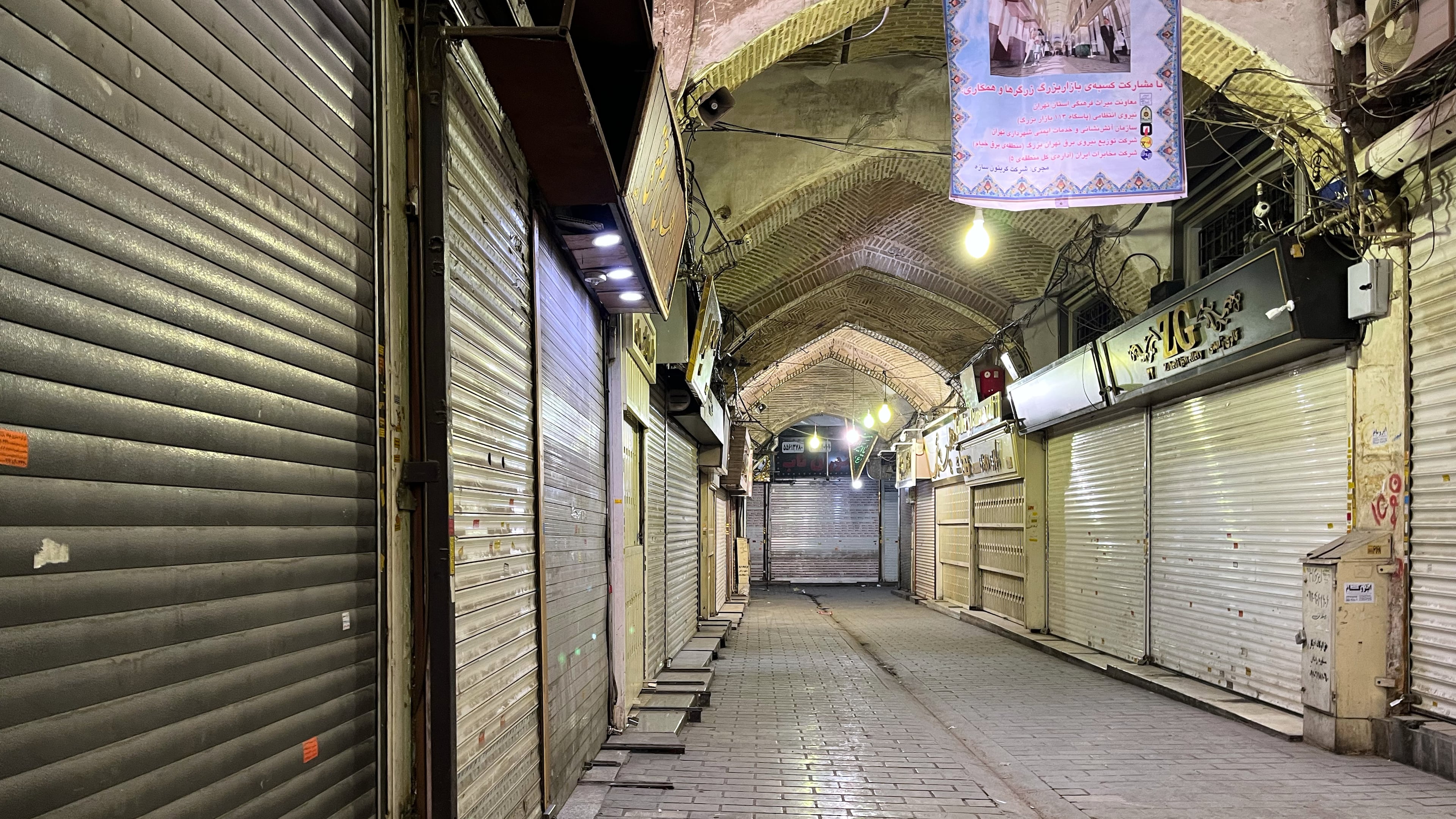
WASHINGTON (AP) — President Donald Trump has once again drawn his go-to diplomatic weapon — tariffs, this time to coerce the Iranian government to end its bloody crackdown on nationwide protests.
Trump said in a social media post on Monday he would impose a 25% tax on imports to the United States from countries that do business with Iran. The sanctions could hurt the Islamic Republic by reducing its access to foreign goods and driving up prices, which would likely inflame tensions in a country where inflation is running above 40%.
But the tariffs could create blowback for the United States, too, potentially raising the prices Americans pay for imports from Iranian trade partners such as Turkish textiles and Indian gemstones and threatening an uneasy trade truce Trump reached last year with China.
The death toll from the latest protests in Iran surpassed 2,500 as of Wednesday, activists said, as the hard-line Islamist government attempts to tamp down dissent against economic hardship and political repression.
The Trump administration has offered scant details since announcing the new tariffs targeting Iran. For instance, the White House has not said whether the taxes would be stacked on top of double-digit levies Trump imposed last year on almost every country on Earth. Or whether he would exempt some energy imports as he has in the past.
It's also unclear what legal authority the president is relying on to impose the import taxes. He invoked the 1977 International Emergency Economic Powers Act to justify his most sweeping tariffs last year. But businesses and several states have gone to court arguing that Trump overstepped his authority in doing so. The Supreme Court is hearing the case and could throw out Trump's tariffs and force him to send refunds to the U.S. importers that paid them.
Years of sanctions aimed at stopping Iran's nuclear program have left the country isolated. But it still did nearly $125 billion in international trade in 2024, including $32 billion with China, $28 billion with the United Arab Emirates and $17 billion with Turkey, according to the World Trade Organization.
Iran bought more than $6 billion worth of imports from the European Union that year. Energy dominates Iran's exports. Its top imports include gold, grain and smartphones.
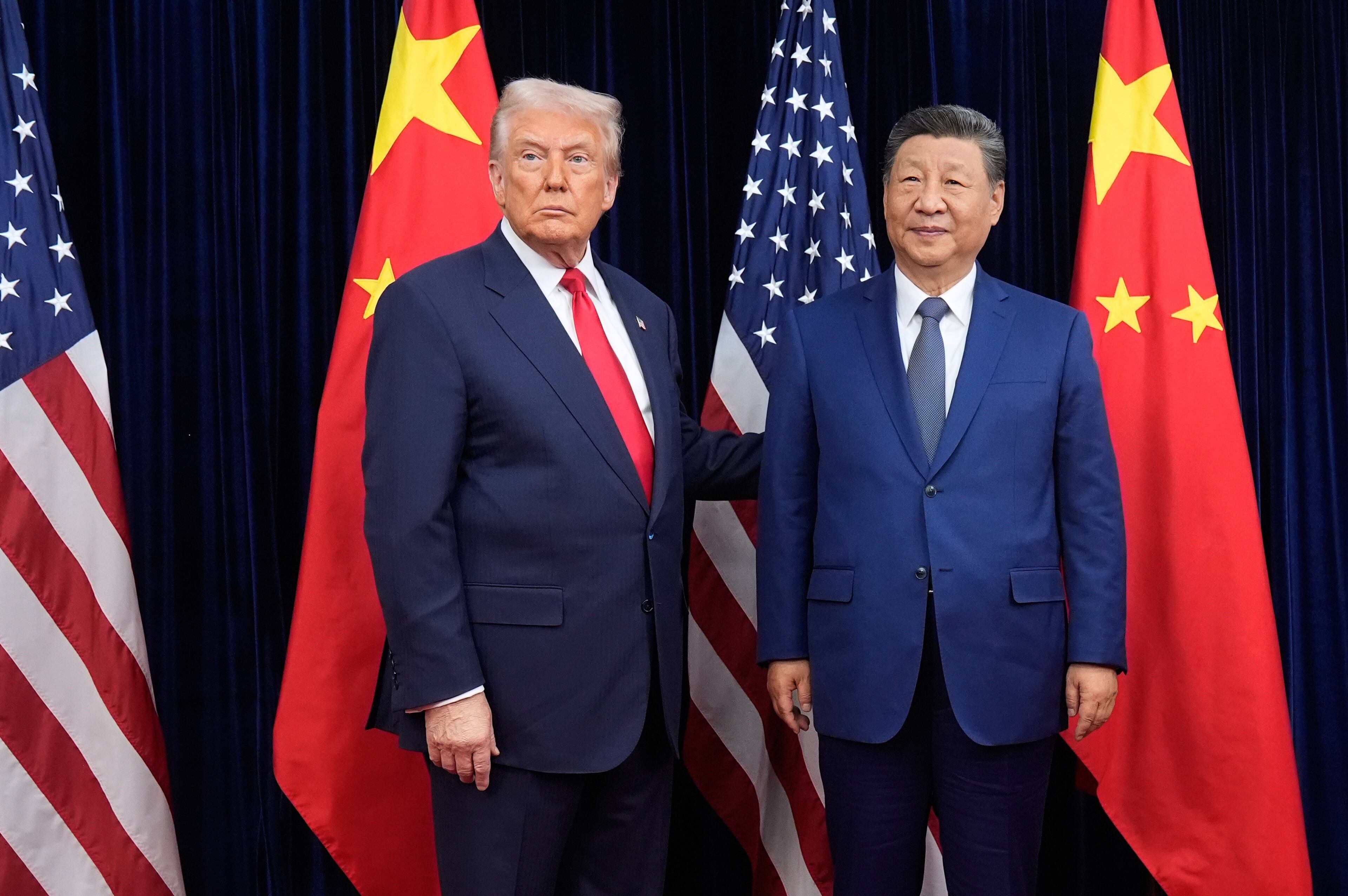
Trump's attempt to pressure Iran is likely to cause collateral damage. Most prominently, his tariffs could upend his attempts to maintain a trade peace with China.
Last spring, the United States and China hammered each other with triple-digit tariffs, threatening to end trade between the world's two biggest economies and briefly panicking global financial markets. The two countries spent the rest of year trying to deescalate their trade conflict, reaching a truce in October that reined in tariffs, ended China's boycott of American soybeans and eased its restrictions on exports of rare-earth minerals and technologies critical for fighter jets, robots and other products.
The new tariffs, aimed at punishing Iran, would hit China because of its trade ties with Tehran. The Chinese, for instance, buy roughly 80% to 90% of the oil Iran exports, according to a 2024 report by the U.S. Energy Information Administration.
“President Trump’s threat to increase tariffs by 25% against China and other trading partners due to developments in Iran underscores just how fragile the U.S.-China trade truce is,” said former U.S. trade negotiator Wendy Cutler, now senior vice president at the Asia Society Policy Institute. "Even if he does not actually implement the tariff hike, damage has already been done. This threat erodes trust between the U.S. and China which is already at a low level.''
Beijing has made it clear it would retaliate against Trump’s new tariffs, just as it has done before. “China’s position on tariffs is very clear: there are no winners in a tariff war,” said Mao Ning, a spokesperson for China’s Ministry of Foreign Affairs Tuesday. “China will firmly safeguard its legitimate rights and interests.”
“One thing I can guarantee you is that if an extra 25% is slapped on China, China is definitely going to retaliate with another 25% of tariffs,” said John Gong, a professor at University of International Business and Economics in Beijing.
Since trade tensions with the United States start rising in Trump’s first term, Chinese businesses have shifted away from America. China’s trade surplus surged to a record of almost $1.2 trillion in 2025, the government said Wednesday, in spite of a decline in exports to the U.S. Chinese businesses have pivoted towards other regions like Europe and Southeast Asia.
“The United States market is not that important to China anymore,” said Gong. “Definitely, we can respond and retaliate if President Trump does something like this.”
For India, the worry about Trump’s latest tariffs isn’t what happens to its trade with Iran but about its access to the massive U.S. market. India sent $1.6 billion in exports — mainly rice, tea, sugar, drugs and electrical machinery — to Iran in 2024, a pittance compared the $129 billion in goods and services it sold the United States that year. It is also well below the nearly $15 billion in trade with Iran before the coronavirus pandemic, after India stopped importing Iranian crude oil in early 2020.
New Delhi is already facing 50% U.S. tariffs, punishment for its purchases of oil from Russia. “The impact everybody is thinking about is not in terms of India-Iran trade, which is much smaller, but the impact on India-U.S. trade. So obviously that market is in danger,” Abhijit Mukhopadhyay, a senior economist at the Chintan Research Foundation in New Delhi. He said textiles and garments, gems and jewelry, and engineering goods are likely to be the most vulnerable sectors.
Mukhopadhyay said Trump’s latest move could also affect India’s investments in Iran, including the strategically important Chabahar port, which gives India a trade route to Afghanistan, Central Asia and Europe while bypassing its rival Pakistan.
Adnan Mazarei, a nonresident senior fellow at the Peterson Institute for International Economics, doubts that the tariffs will do much to ease the Iranian government's crackdown on protesters.
“I do not think this is going to be very successful,'' said Mazarei, a former deputy director of the International Monetary Fund with crisis-fighting experience in the Middle East. ”They will not for this alone change their views or their practices. It is a repressive regime, and it is willing to pay a high cost in terms of people’s blood to stay in power.''
____
AP writers Piyush Nagpal in New Delhi, Huizhong Wu in Bangkok and AP video producer Wayne Zhang in Beijing contributed to this story.