This trio of tiny birds can help brighten cold winter days
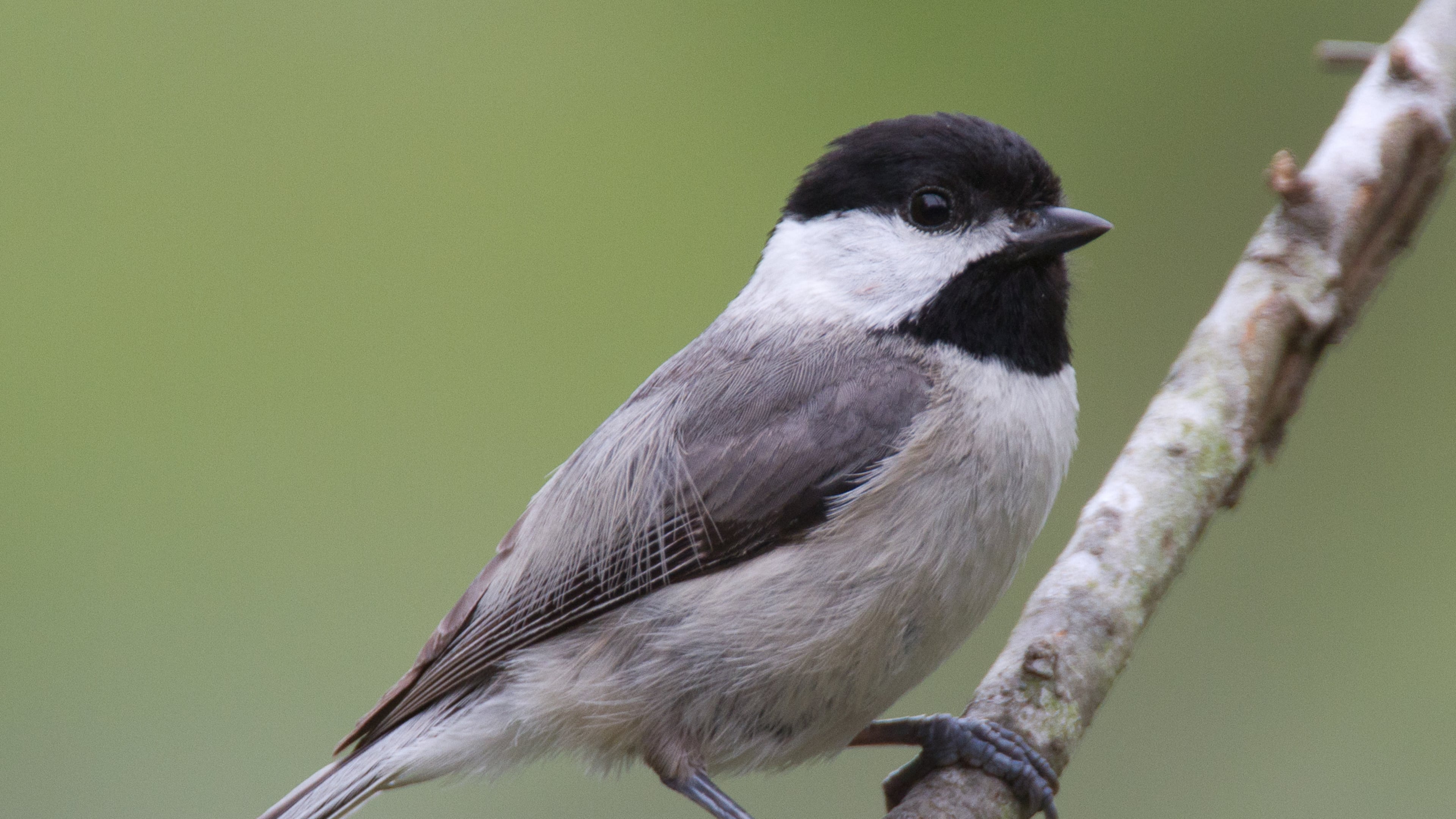
I call them the “little winter trio”: the Carolina chickadee, the tufted titmouse and the white-breasted nuthatch. They seem to belong together at this time of year.
Even on the coldest days, I can rely on seeing all three of them at the bird feeders, dining on black oil sunflower seeds, which they love.
They bear little resemblance to one another — except for their small sizes. Each weighs less than an ounce on average, making them some of Georgia’s tiniest, year-round birds.
Of course, I can depend on seeing other birds — cardinals, downy woodpeckers, Carolina wrens and others — at my feeders, but the little winter trio shows up with exceptional regularity. On a frigid January morning, they are a source of constant activity and a joy to watch.
The three little birds, in fact, are so compatible during winter that they usually travel together in loose flocks, or “guilds,” to find food and share vigilance for predators like hawks and owls. In particular, white-breasted nuthatches seem bolder and braver when they are with chickadees and titmice than when they are alone.
The flocks are common in yards, woods and neighborhood parks across Georgia at this time of year. They often forage in treetops for seeds and insects but also drop to the ground for fallen morsels.
Other tiny birds, such as downy woodpeckers, brown-headed nuthatches and kinglets (which are winter migrants), may join the flocks. But regardless of a flock’s makeup, the chickadees nearly always emerge as the “nuclear” or leader species. The chickadees might get help from their cousins, the titmice, but they typically are the leaders of the pack.
With its distinctive black cap, black bib, gray wings and black-and-white underside, the Carolina chickadee (Georgia’s only chickadee species) is a handsome little bird. But it’s also a bold, energetic creature that seems to have a knack for finding food.
Its distinct calls alert an entire flock to a food source or to danger from an approaching predator. Thus, chickadees typically get the leadership roles.
Scientific studies also indicate that several larger bird species may stay in close range of the small bird flocks to listen for the alarm calls. Thus, the small birds may serve as sentinels for other birds during winter.
Birders like me also pay attention, because a twittering flock of small birds may indicate a variety of birds nearby.
Another reason I call chickadees, titmice and white-breasted nuthatches the little winter trio is that they have some common habits. At feeders, they will take only one sunflower seed at a time, fly away and perch nearby to eat it.
They are not equipped to break seed hulls open with their tiny, thin beaks, so they take a seed to a nearby limb, hold it with their toes or wedge it into the bark and hammer the seed husk apart to get at the kernel inside. They also cache seeds in tree bark and other spaces to retrieve and eat later during lean winter times.
The three of them also have a reputation of being fearless, curious and friendly. That may explain why they allow close approaches by humans and are among the first birds to show up at a newly stocked feeder.
In addition, they also display remarkable adaptability, surviving the cold months through a mix of physical traits and behavioral adaptations — including an ability to lower their body temperatures overnight and enter a state of torpor to conserve energy. In addition, the three species may huddle together in a tree cavity or nest box to share warmth and survive extremely cold nights.
IN THE SKY: From David Dundee, retired Tellus Science Museum astronomer: The moon will be first quarter Sunday and full Feb. 1. Over the next week, Mercury and Venus will become visible, appearing low in the west just after sunset. Mars will not be easily seen. Saturn will become very low in the southwest just after dark. Jupiter will appear high in the east after dark.
Charles Seabrook can be reached at charles.seabrook@yahoo.com.


