Press freedom advocates worry that raid on Washington Post journalist's home will chill reporting
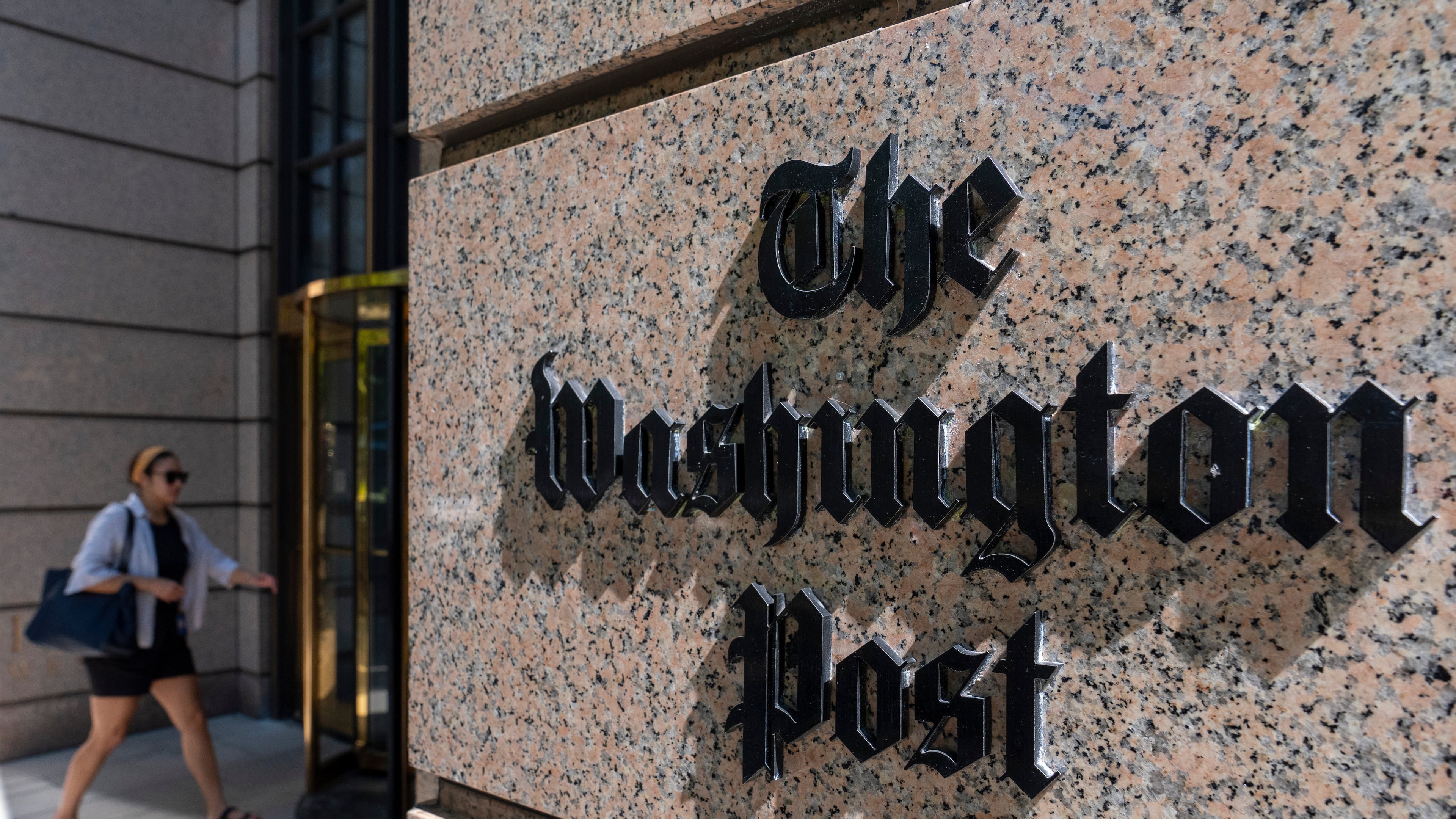
If the byproduct of a raid on a Washington Post journalist's home is to deter probing reporting of government action, the Trump administration could hardly have chosen a more compelling target.
Hannah Natanson, nicknamed the “federal government whisperer” at the Post for her reporting on President Donald Trump's changes to the federal workforce, had a phone, two laptops and a Garmin watch seized in the Wednesday search of her Virginia home, the newspaper said.
A warrant for the raid said it was connected to an investigation into a government contractor accused of illegally retaining classified government materials, said Matt Murray, the Post's executive editor, in an email to his staff. The Post was told that Natanson and the newspaper are not targets of the investigation, he said.
In a meeting Thursday, Murray told staff members that “the best thing to do when people are trying to intimidate you is not be intimidated — and that's what we did yesterday.”
The Reporters Committee for Freedom of the Press said Thursday it has asked the U.S. District Court in Virginia to unseal the affidavit justifying the search of Natanson's home.
Attorney General Pam Bondi said that the search was done at the request of the Defense Department and that the journalist was “obtaining and reporting classified and illegally leaked information from a Pentagon contractor.”
“If the attorney general can describe the justification for searching a reporter's home on social media, it is difficult to see what harm could result from unsealing the justification that the Justice Department offered to this court,” the Reporters Committee said in its application.
Government raids to homes of journalists highly unusual
Jameel Jaffer, executive director of the Knight First Amendment Institute at Columbia University, has been working on press freedom issues for a decade and said a government raid on a journalist's home is so unusual he couldn't remember the last time it happened. He said it can't help but have a chilling effect on journalism.
“I strongly suspect that the search is meant to deter not just that reporter but other reporters from pursuing stories that are reliant on government whistleblowers,” Jaffer said. “And it's also meant to deter whistleblowers.”
In a first-person piece published by the Post on Christmas Eve, Natanson wrote about how she was inundated with tips when she posted her contact information last February on a forum where government employees were discussing the impact of Trump administration changes to the federal workforce.
She was contacted by 1,169 people on Signal, she wrote. The Post was notably aggressive last year in covering what was going on in federal agencies, and many came as a result of tips she received — and was still getting. “The stories came fast, the tips even faster,” she wrote.
Natanson acknowledged the work took a heavy toll, noting one disturbing note she received from a woman she was unable to contact. “One day, a woman wrote to me on Signal, asking me not to respond,” she wrote. “She lived alone, she messaged, and planned to die that weekend. Before she did, she wanted at least one person to understand: Trump had unraveled the government, and with it, her life.”
Natanson did not return messages from The Associated Press. Murray said that “this extraordinary, aggressive action is deeply concerning and raises profound questions and concern around the constitutional protections for our work.”
The action “signals a growing assault on independent reporting and undermines the First Amendment,” said Tim Richardson, journalism and disinformation program director at the advocacy group PEN America. Like Jaffer, he believes it is intended to intimidate.
Sean Spicer, Trump's press secretary at the beginning of his first term, said the concerns are premature. If it turns out that Natanson did nothing wrong, then questions about whether the raid was an overreach are legitimate, said Spicer, host of the political news show “The Huddle” on streaming services.
“If Hannah did something wrong, then it should have a chilling effect,” he said.
A law passed in 1917 makes it illegal for journalists to possess classified information, Jaffer said. But there are still questions about whether that law conflicts with First Amendment protections for journalists. It was not enforced, for example, when The New York Times published a secret government report on U.S. involvement in Vietnam in 1971.
“It’s the government’s prerogative to pursue leakers of classified material,” the Post said in an editorial. “Yet journalists have First Amendment rights to gather and publish such secrets, and the Post also has a history of fighting for those freedoms.”
Not the first action taken against the press
The raid was made in context of a series of actions taken against the media during the Trump administration, including lawsuits against The New York Times and the BBC. Most legacy news organizations no longer report from stations at the Pentagon after they refused to sign on new rules restricting their reporting set by Defense Secretary Pete Hegseth. Funding for public broadcasting has been choked off due to Trump's belief that its news coverage leaned left.
Some news outlets have also taken steps to be more aligned with the administration, Jaffer said, citing CBS News since its corporate ownership changed last summer. The Washington Post has shifted its historically liberal opinion pages to the right under owner Jeff Bezos.
The Justice Department over the years has developed, and revised, internal guidelines governing how it will respond to news media leaks. In April, Bondi issued new guidelines saying prosecutors would again have the authority to use subpoenas, court orders and search warrants to hunt for government officials who make “unauthorized disclosures” to journalists.
The moves rescinded a policy from President Joe Biden’s Democratic administration that protected journalists from having their phone records secretly seized during leak investigations.
“Leaking classified information puts America’s national security and the safety of our military heroes in serious jeopardy,” White House press secretary Karoline Leavitt said in a post on X. “President Trump has zero tolerance for it and will continue to aggressively crack down on these illegal acts moving forward.”
The warrant says the search was related to an investigation into a system engineer and information technology specialist for a government contractor in Maryland who authorities allege took home classified materials, the Post reported.
The worker, Aurelio Perez-Lugones, is accused of printing classified and sensitive reports at work, and some were found at his Maryland home, according to court papers. He was arrested last week on a charge of unauthorized removal and retention of classified documents.
Perez-Lugones made a brief appearance in a Baltimore courtroom on Thursday. His attorney said they weren't prepared to proceed with a hearing to determine whether he should remain jailed until a trial.
___
Associated Press writers Alanna Durkin Richer and Eric Tucker in Washington and Michael Kunzelman in Baltimore contributed to this report. David Bauder writes about the intersection of media and entertainment for the AP. Follow him at http://x.com/dbauder and https://bsky.app/profile/dbauder.bsky.social.
More Stories
The Latest