How the US captured Venezuelan leader Nicolás Maduro

WASHINGTON (AP) — For months, the U.S. military had been amassing a presence off Venezuela's coast and conspicuously blowing up alleged drug trafficking boats and killing the occupants.
At the same time, U.S. intelligence agencies were carefully studying the country's authoritarian President Nicolás Maduro, learning minute details such as his eating habits while special forces secretly rehearsed a plan to forcibly remove him.
Months of covert planning led to the brazen operation overnight, when President Donald Trump gave an order authorizing Maduro's capture. The U.S. plunged the South American country's capital into darkness, infiltrated Maduro's home and whisked him to the United States, where the Trump administration planned to put him on trial.
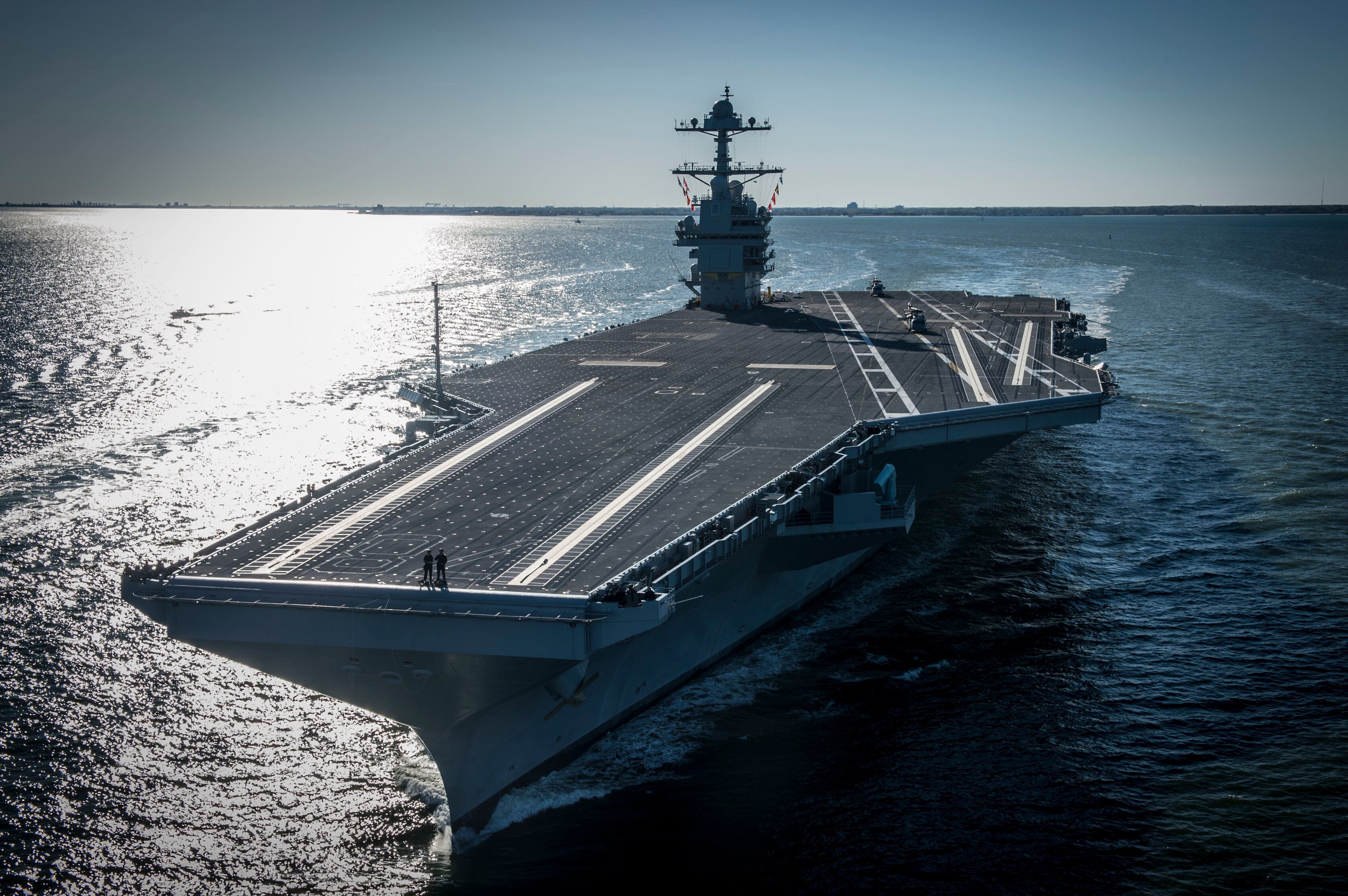
Trump, during a news conference Saturday at his Florida home, laid out the details of the strike, after which he said Maduro and his wife, Cilia Flores, were flown by helicopter to a U.S. warship.
The operation termed “Absolute Resolve” unfolded under the cover of darkness, with U.S. forces holding fast in the region, awaiting the ideal weather conditions to give pilots clear routes into Caracas. The extensive planning included practice on a replica of the presidential compound, as well as U.S. service members armed with what Trump said were “massive blowtorches” in the event the steel walls of a safe room needed to be cut open to extract the pair.
“He didn’t get that space closed. He was trying to get into it, but he got bum-rushed right so fast that he didn’t get into that," Trump said an interview earlier Saturday morning on “Fox & Friends Weekend.”
A carefully rehearsed mission
Gen. Dan Caine, chairman of the Joint Chiefs of Staff, said at Trump's news conference that U.S. forces had rehearsed their maneuvers for months, learning everything about Maduro — where he was at certain hours as well as details of his pets and the clothes he wore.
“We think, we develop, we train, we rehearse, we debrief, we rehearse again, and again,” Caine said, saying his forces were “set” by early December. “Not to get it right, but to ensure we cannot get it wrong.”
Trump said on Fox that U.S. forces had practiced their extraction on a replica building.
“They actually built a house which was identical to the one they went into with all the same, all that steel all over the place,” Trump said.
Trump said in the television interview that U.S. forces held off on conducting the operation for days, waiting four days for cloud cover to pass. Caine said that on Friday night, “the weather broke just enough, clearing a path that only the most skilled aviators in the world could move through,” adding that helicopters flew low to the water to enter Venezuela and were covered above by protective U.S. aircraft.
Trump said the U.S. operation “was dark and it was deadly,” adding that “the lights of Caracas were largely turned off due to a certain expertise that we have,” but giving no further details.
The attack, which Defense Secretary Pete Hegseth described as part of "massive joint military and law enforcement raid,” lasted less than 30 minutes. At least seven explosions were heard in Caracas, and Venezuela’s Vice President Delcy Rodríguez, who under law takes power, said some Venezuelan civilians and members of the military were killed.
In a televised address later Saturday on state television, she demanded that the U.S. free Maduro and called him the country’s rightful leader. But Rodríguez also left open the door for a dialogue with the U.S. when she said, “We are willing to have respectful relations.”
Yanire Lucas, a Caracas resident whose house sits pressed up next to a Venezuelan military base struck overnight, said she began to hear explosions next to her house around 1:50 in the morning.
Trump said a few U.S. members in the operation were injured, but he believed no one was killed. Caine said one helicopter was struck by fire as it closed in on Maduro's compound but it was able to safely fly on its return.
Months of escalating actions
Trump said Maduro and Flores were flown by helicopter to a U.S. warship and would go on to New York to face charges. He posted on Truth Social a photo of the Venezuelan leader, wearing a gray sweatsuit, protective headphones and blindfold.
The raid was a dramatic escalation from a series of strikes the U.S. military has carried out on what Trump has said were drug-carrying boats in the Caribbean Sea and eastern Pacific Ocean since early September. On Dec. 29, Trump said the U.S. struck a facility where boats accused of carrying drugs “load up.” The CIA was behind the drone strike at a docking area believed to have been used by Venezuelan drug cartels, the first known direct operation on Venezuelan soil since the U.S. began its strikes in September.
Few details about how the US will now run Venezuela
Though Trump had warned for months that the U.S. might conduct strikes in Venezuela, he gave little hint on Friday what was coming.
He spent the morning posting on social media defending his health and complaining about the impact of wind turbines on birds before he went shopping for marble and onyx for the ballroom he’s building at the White House and a visit to his golf club.
Privately, he was readying to give the go-ahead for a military mission that already has generated criticism in the U.S. and abroad. Now, the president said the U.S. will direct the path forward for Venezuela, as questions have emerged about the legality of both those plans and Maduro's capture.
Trump said at his news conference that the group of officials standing behind him, including Hegseth, Caine and Secretary of State Marco Rubio, will “be a team that's working with the people of Venezuela.”
The Republican president left open the possibility that U.S. troops would have a presence in the country. “We're not afraid of boots on the ground if we have to,” he said, adding, "We had boots on the ground last night."
The U.S. will now “run” the country until a new leader can be chosen, Trump said.
“We’re going to make sure that country is run properly. We’re not doing this in vain," he said. “This is a very dangerous attack. This is an attack that could have gone very, very badly.”
___
Kinnard reported from Chapin, South Carolina. Associated Press reporters Regina Garcia Cano and Juan Arraez in Caracas, Venezuela, contributed to this report.