Atlantans, visitors remember legacy of MLK by visiting historic sites

On a near-freezing Sunday morning along Auburn Avenue in the Old Fourth Ward, bundled in layers and wearing a gray hat scrawled with the words “No War” in Sharpie marker, John Waters stood peering up at the brown and cream Victorian house where the Rev. Martin Luther King Jr. was born in 1929.
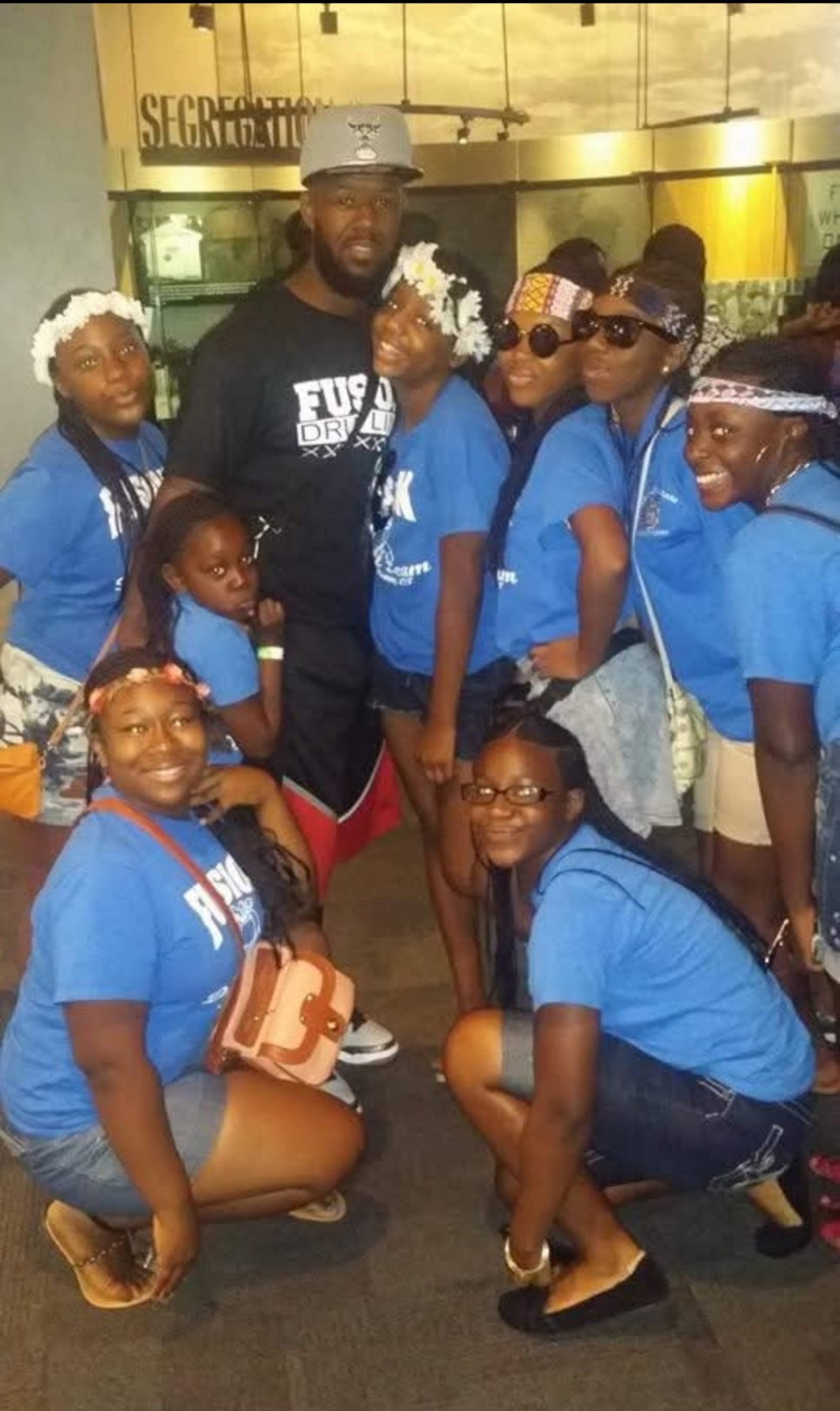
Waters, 47, a drum teacher visiting Atlanta from New Haven, Connecticut, over the MLK holiday weekend, had visited the house once before, 12 years ago, with a group of nearly 70 students from his drill team.
The group, comprised of kids ages 4 to 16, had a memorable response.
Waters had taken his youngsters to King’s home, as well as his grave site and Ebenezer Baptist Church, where the civil rights leader was baptized as a child and later became an ordained minister at 19.
“They were crying,” Waters recalled. “It was a surprise from all these kids … when they saw it, they couldn’t believe it. Tears in their eyes. Some of their parents too. … It’s different when you see it in person. When you just read about it in school, or the teachers tell you about it, they don’t really go into detail. You get a picture by being here and seeing it all.”
Now a dozen years since his first visit, Waters, who visited with two friends, said the sites hit him “even deeper.”
“Because of what we’re going through right now (in the country), and the people protesting, it’s like making you relive it all over again in some aspect,” he said. “It’s shocking. … I’m looking at this stuff and saying ‘Wow. I can’t believe it that we’re still fighting this fight.’”
A few blocks down, at the edge of the fountain and reflecting pool where MLK is entombed with his wife, Coretta Scott King, another visitor to Atlanta was exploring the King Center for the second time. Shayna Sautman, 36, from Fort Lauderdale, Florida, was with her 8-year-old son, Justice, who was wearing a Michael Jackson T-shirt and practicing his moonwalk.

The duo was visiting Atlanta for a youth basketball tournament, but used the trip as an opportunity to come back to the Martin Luther King Jr. National Historic Park.
On their first visit there two years ago, they stumbled upon an older gentleman who had been friends with the King family (Sautman cannot recall his name). That man, she said, was kind enough to tell them about the King family and take them on an impromptu, personal tour of the neighborhood. Even though Justice was only 6 at the time, he still remembers it.
“It was impactful,” she said.
Justice’s father is Black. In recent years, Sautman said she has been discouraged by how teachers have noticeably shied away from teaching Black history.
“It’s important to know about Black history,” she said. “(Justice) is half-Black, so I think it’s especially important for him. But just in general … it’s super important for all races to know.”

The crowd at the park Sunday morning was indeed diverse.
Inside the park’s temporary visitor center at Fire Station No. 6 (while the original visitor center is closed for renovations), a family of four Japanese visitors from Virginia — Okuda, Natsuki, Shota and Mariko — perused civil rights history while speaking very little English.
Seanna Johnson, 46, a Midtown resident and tour guide for Peachtree Trolley Company, was hosting guests at the Dr. Martin Luther King Jr. Fountain. She said she had heard New Zealanders earlier Sunday morning.

“People from all around the world,” she said. “… It’s nice to see that the information and the history is being told and shared, and they get really excited when they come here. I think every person I’ve met, from every country, has been very excited that this exists. Especially now.”
As a tour guide, she said, responses to the historic civil rights sites are moving.
“Lots of people will have emotional responses to being here on the sacred ground,” she said. “It’s weird to say it’s nice that you see people brought to tears when they experience the history, but I think considering how long ago this happened to Dr. Martin Luther King Jr., and what’s currently happening now, it’s almost refreshing to see that people still care.”
The historic park district offers Atlantans and visitors alike opportunities to learn and be inspired — not just by King, but by other civil rights trailblazers as well.

Along Auburn Avenue, wanderers can stop at dozens of historical signs. There is one for the old site of Bryant Preparatory Institute, a night school for Black adults wishing to further their education during a time when schools were not only segregated, but stopped teaching Black students after the eighth grade.
Another, for the Harper House, marks the home of Charles Lincoln Harper, an educator and civic leader who fought to change Atlanta’s segregationist policies.
On Sunday, however, the day before Martin Luther King Jr. Day, the most visited stop seemed to be Dr. Martin Luther King Jr. fountain.
At the entrance is a quote from MLK Jr.’s late wife. The King Center, Scott King writes, “is not just a place, not just a building, but a spirit, one undergirded with his philosophy on nonviolence and love in action.”
Nonviolence, the courtyard reminds through many engraved signs, is not about passivity.
“People who think nonviolence is easy don’t realize that it’s a spiritual discipline that requires a great deal of strength, growth and purging of the self so that one can overcome almost any obstacle for the good of all without being concerned about one’s own welfare,” states one wall, quoting Scott King.
Others display the six principles of nonviolence, including “nonviolence seeks to win friendship and understanding” and “nonviolence chooses love instead of hate.”
As the clock struck noon and the sun warmed the morning’s frigid air, churchgoers streamed from service at Ebenezer Baptist Church across the street into the King Center courtyard, past the fountain, past the eternal flame and past the engraved words reminding them that the work continues.


About the Author