When ICE takes breadwinners, it takes a toll on families ... and on the economy
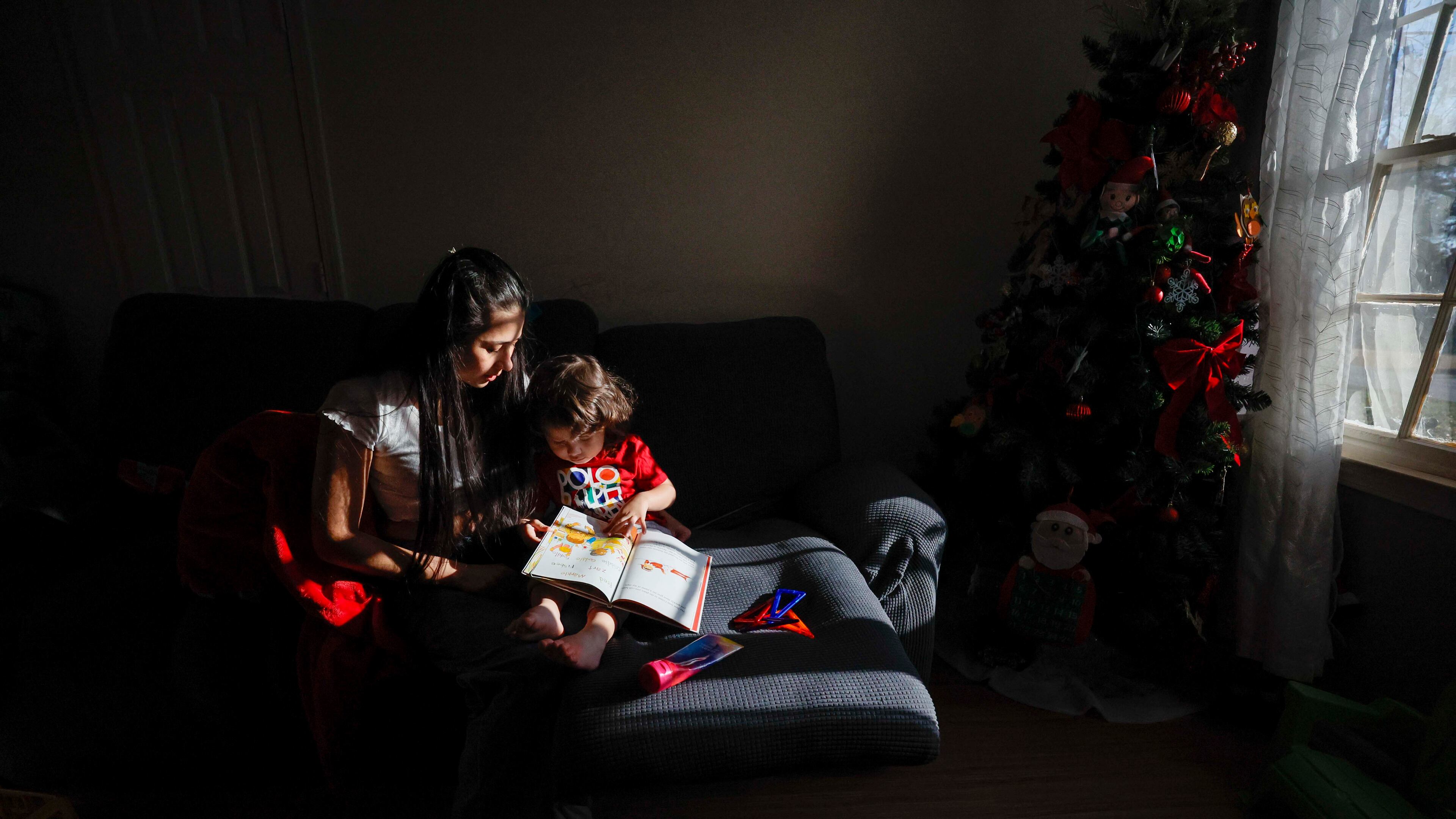
Ceudy Gutierrez took her first steps on U.S. soil in the fall of 2023, after wading across the Rio Grande with her then seven-month-old son in tow.
Alongside her husband and their other children, a set of twin girls, Gutierrez made her way to metro Atlanta, where the family stayed first in a hotel room then in a single room inside a shared apartment with inflatable mattresses splayed on the floor.
Gutierrez mostly stayed home with the children while her husband, Omar Estribi, strung together construction jobs, zipping across town in a secondhand work van to gigs in flooring, painting, plumbing and remodeling.
By January 2024, the family could afford to rent an apartment of their own.
That economic ascent came to a halt with a thump on their door shortly after 6 a.m. on a Saturday in September.
Gutierrez answered the door and said she found four masked federal immigration agents asking for her husband. When he came out, Gutierrez said he was handcuffed and driven away. He has now spent nearly three months in Immigration and Customs Enforcement custody, most of it inside South Georgia’s Stewart Detention Center.
To make do without her husband’s income, Gutierrez has turned to local churches for donated groceries and for help making rent payments. She sold her husband’s van for $1,000, raised $300 in a GoFundMe fundraiser, and has tried finding work cleaning houses. When a job comes along, Gutierrez takes her son, now about to turn 3 years old, because of a lack of child care.
“The pillar of the family, well, that was him,” Gutierrez said in reference to her husband, and his role as the family breadwinner.
The kind of economic crisis faced by Gutierrez and her children is an increasingly common phenomenon across immigrant populations, as the Trump administration surges resources toward immigration enforcement to meet its goal of mass deportations.
The impact is twofold. There are families who lose breadwinners to ICE detention and deportation, advocates say, and there are others who preemptively choose to pull back from the labor force to avoid ICE encounters.
The disruption to immigrant livelihoods could spill into the broader economy, some studies indicate, as family spending nosedives — and as key industries like construction are roiled by growing labor shortages.

Immigrants’ role in the economy
Stephen Miller, a senior White House adviser and the architect of Trump’s hardline immigration agenda, has said mass deportations will create jobs and result in higher wages for Americans.
In a report synthesizing empirical academic research into the effects of immigration on the U.S. economy, the University of Pennsylvania’s Wharton School found immigration can trigger lower wages and higher unemployment for native-born workers in the short term. But in the long run, natives’ employment and wages tend to benefit from immigration, as does the health of the overall economy, according to the study.
That dynamic is due, in part, to the fact that immigrants generally appear to complement U.S.-born workers rather than replace them, taking on physically taxing work that locals eschew in fields such as construction and agriculture.
The report’s authors stress that immigrants don’t just work — they also buy goods and services, stimulating the economy with their spending power.
Immigrants “spend their wages on homes, food, TVs … and expand domestic economic demand,” the report says. “This increased demand, in turn, generates more jobs to build those homes, make and sell food, and transport TVs.”
According to an analysis from the non-partisan Congressional Budget Office, the immigration surge that began during President Joe Biden’s time in office — a cohort that includes Gutierrez and her family — will add $1.3 trillion to the country’s GDP over the next decade.
That’s if they’re allowed to stay.
Another study evaluating 2023 data by the American Immigration Council, a research and advocacy group, found unauthorized immigrant households paid $89.8 billion in federal, state, and local taxes and held $299 billion in spending power that year.
In total, both legal and unauthorized immigrant households paid nearly $16.80 in every $100 of tax dollars collected by federal, state, and local governments, funding a wide range of social services.
“Immigrants help increase wealth and prosperity for all Americans,” said Nan Wu, director of research at the American Immigration Council.
In metro Atlanta, there were more than 998,000 immigrants who paid $13 billion in taxes, according to the council’s study.
Growing food insecurity
The Latin American Association is on the front lines of growing uncertainty among metro Atlanta immigrant families.
The Hispanic-serving nonprofit, headquartered on Buford Highway, says it is serving more people through its daily food pantry and one-off food drives than ever before.
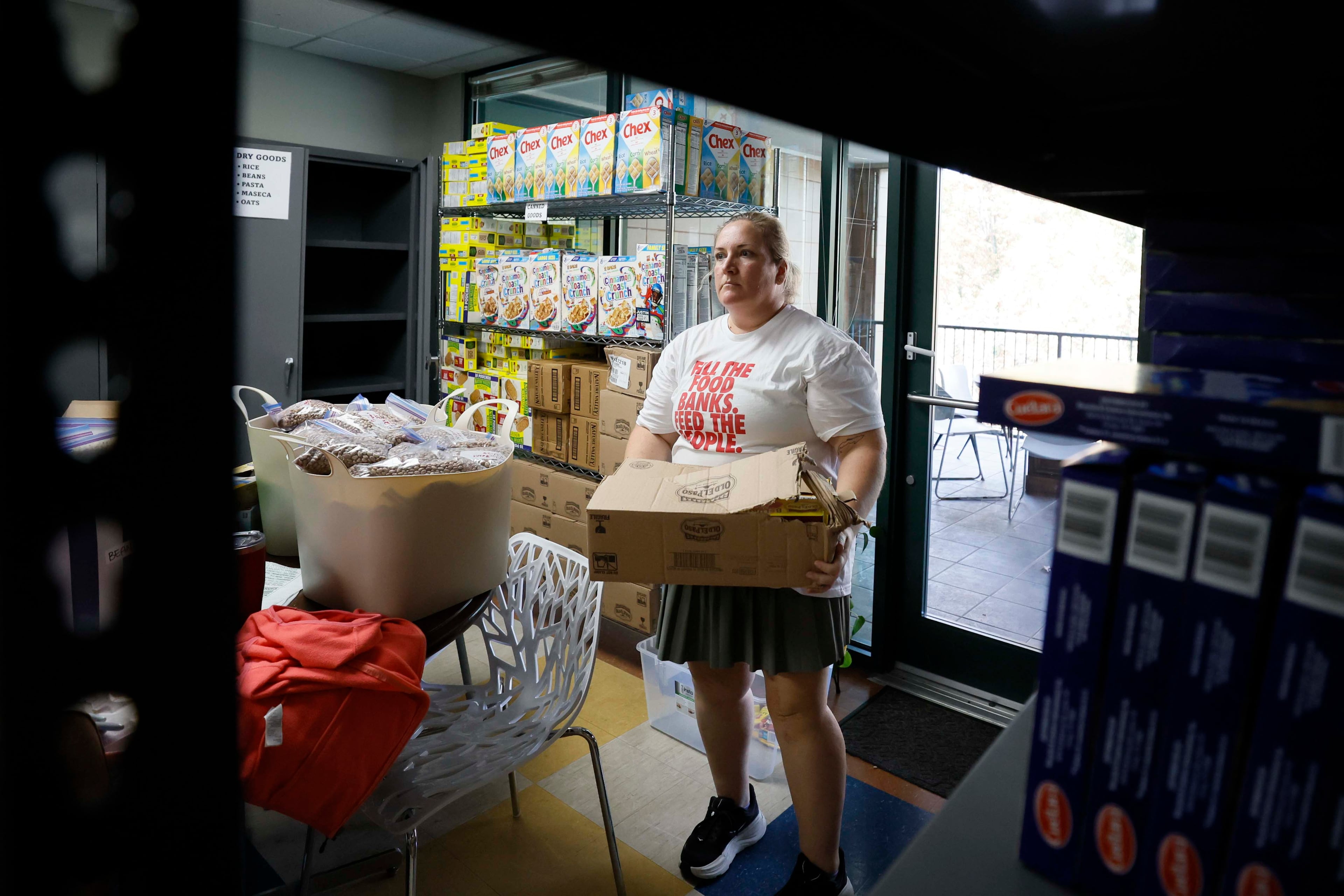
In the last three months, visits from families to the LAA’s food pantry have risen from an average of 19 per day to more than 39 per day. The nonprofit attributes what it describes as “a time of deep and escalating need” to “the ongoing deportation crisis.”
Among the people visiting the pantry are parents trying to put food on the table following the arrest of a family breadwinner, said Santiago Marquez, the LAA’s chief executive officer.
“Usually, it’s the mom that stays here with the kids,” he said. “That creates a situation, obviously where there’s much more need and demand for basic services.
“I think that’s when they’re relying on food pantries and food banks to help them survive.”
Other families, he said, are seeing their spending power dwindle because breadwinners are picking up fewer shifts to lower potential exposure to law enforcement at their worksite or on their commute.
“These are folks that have to work to get paid — they’re hourly employees, they’re not salary,” Marquez said. “If they show up, they get paid. If they don’t, they don’t. And so that creates a lot of turmoil within a family.”
Marquez added that immigrants choosing to remain in the shadows, even at a cost to their livelihoods, is a recurring dynamic in times of increased enforcement.
“Whenever there is a spike in ICE activity, things go quiet,” he said. “It kind of stops that economic activity for a while.”

Expansion of ICE detention
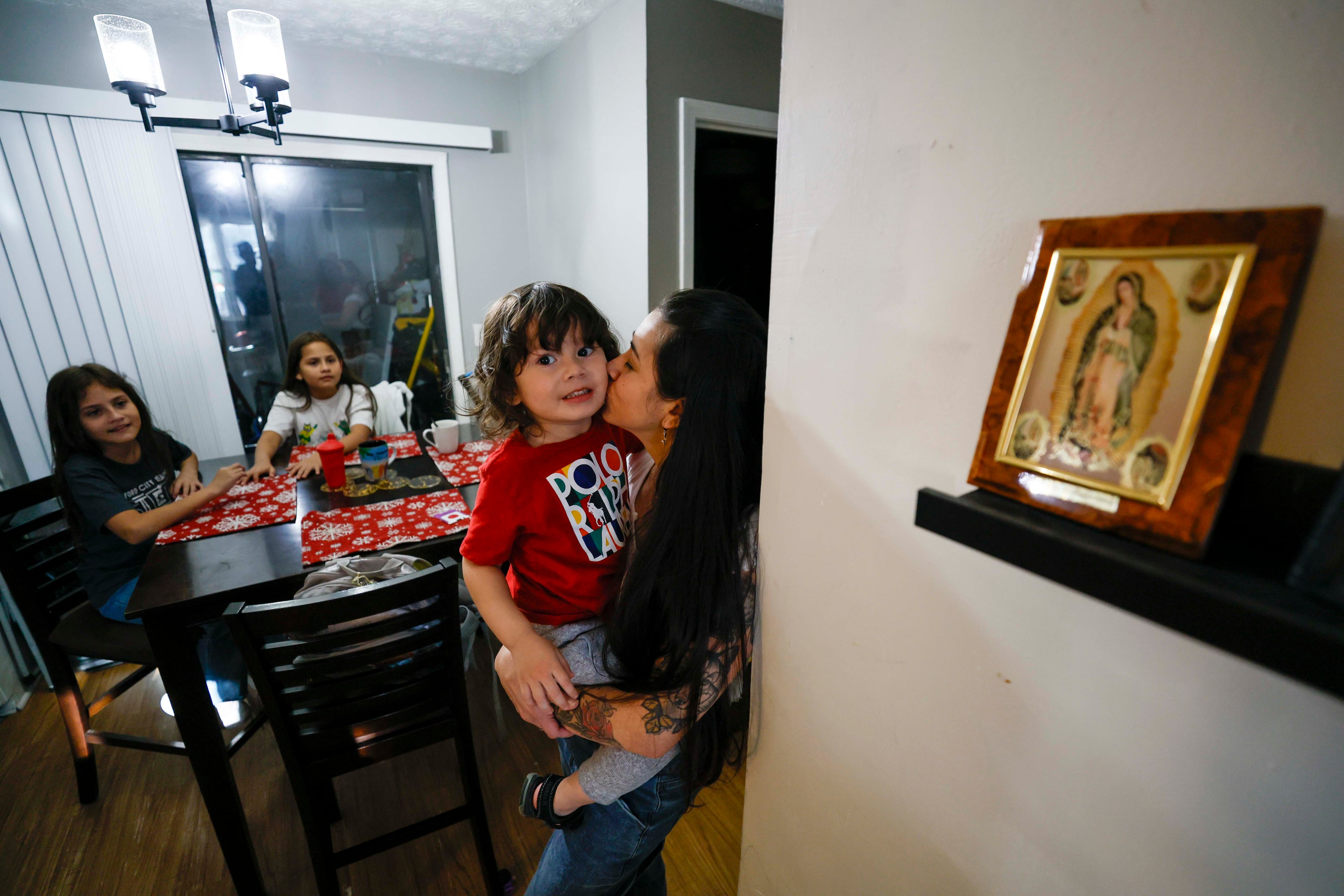
Minutes before Gutierrez was due to pick up her daughters at the school bus stop on a recent Tuesday afternoon, she received a phone call from Stewart Detention Center. Estrebi was on the line.
Matias, the couple’s son, quickly got ahold of his mother’s cellphone and began singing a nursery rhyme he’d just learned to his father, about a cow named Lola.
According to Gutierrez, the family turned themselves in to Border Patrol agents immediately after crossing into the U.S. from Mexico. They spent four days in government custody before being released. Once in Atlanta, Gutierrez and Estribi formally applied for asylum.

Gutierrez says she has been internally displaced by guerrilla violence several times while living in her native Colombia. Over a decade ago, she found refuge in Panama, where she met her husband and where her children were born.
But reports she’d heard of Colombian paramilitary groups operating in the Darién Gap, the jungle stretching between Panama and Colombia, convinced Gutierrez to move once more and come to the U.S.
Within months of filing for asylum, Estribi and Gutierrez applied for and received work permits and Social Security numbers — benefits asylum-seekers may receive while they wait for an immigration judge to make a determination on their asylum claim.
Under U.S. law, ICE has the authority to detain, though not deport, immigrants with pending asylum claims, said Adriana Heffley, legal director at the Georgia Asylum and Immigration Network.
But the agency has historically not made asylum-seekers like Estribi a priority for detention, she said.
“In the past, if you had a pending asylum case, you were attending your hearings, you hadn’t committed a crime, ICE generally would not detain you because it didn’t make sense to do that,” Heffley said. “It drains the taxpayer dollar to spend money detaining someone unnecessarily who we know is going to attend their hearing and isn’t a danger to public safety.
“But following the rules no longer means that asylum-seekers are safe from detention.”
Both Trump and Miller have criticized the practice of allowing asylum-seekers into the U.S. while they await court dates with immigration judges, labeling it as “catch and release.” In the view of Tom Homan, the Trump administration’s border czar, the practice encourages people to come to the U.S. illegally.

“If you end catch-and-release, they’ll stop coming,” he has said, according to CNN.
The Trump administration has built up detention capacity, including in Georgia, because it believes that more people would voluntarily accept removal instead of pursuing an asylum claim if they had to be detained for the entire duration of the legal proceedings, which can take several years.
In addition, Heffley said that immigration attorney groups have surfaced examples of the administration deporting asylum-seekers before a judge has weighed in on the merits of their asylum claim.
“Unfortunately, the law is not always being followed,” she said.


In a phone call from Stewart, Estribi said his patience with being locked up is wearing thin. He would prefer to be deported rather than continue to be held indefinitely, so he can try to support his family from his homeland.
“I have responsibilities,” he said.
About the Author