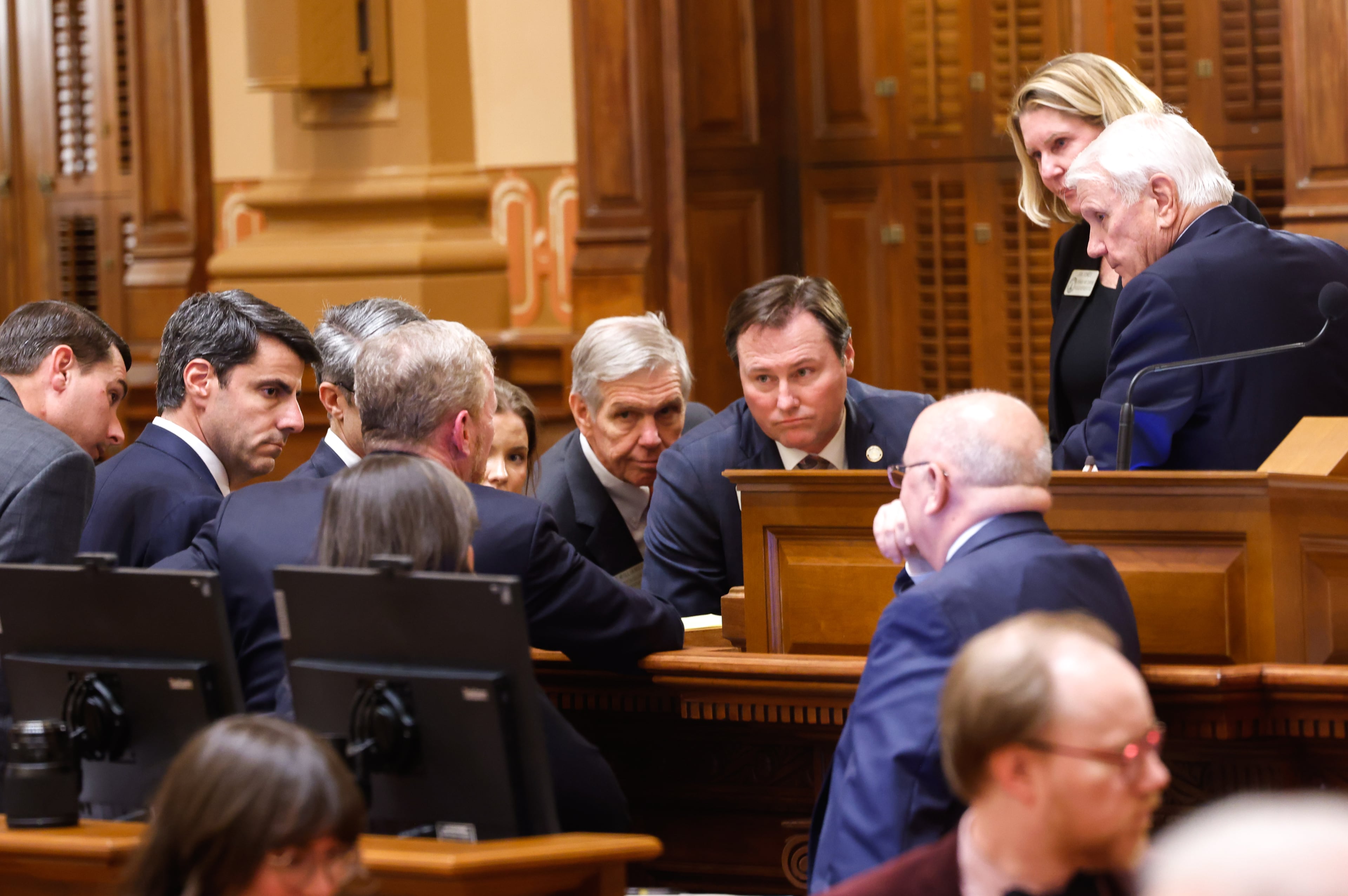
Georgia’s special ed program promised help. Families say it delivered them harm.

The Richards’ mission to rescue their son came with an unthinkable price tag.
Over the course of a decade, the Georgia couple moved across three counties and enrolled him in more than a dozen schools. In desperation, they even tried homeschooling and virtual learning.
At home, the family was splintering. The pressure of trying to find a school to accommodate their son’s autism diagnosis pushed the parents to divorce and his mother to put her career on hold.
“It tore our family apart,” said his mother, Nichole Richard, as tears trickled down her face.
The most dramatic point in their journey was in 2021, when the Richards’ 12-year-old son landed in a controversial state and federal-funded program known as the Georgia Network for Educational and Therapeutic Support. The program aims to serve students with emotional and behavioral disabilities and has long been a target of public scrutiny by the federal Department of Justice, a federal class action lawsuit and state auditors.
GNETS, once a model of innovation in the 1970s, has evolved into a patchwork of 24 programs that routinely separate students from their nondisabled peers, The Atlanta Journal-Constitution found in a monthslong investigation. Programs do not always provide the services students need, while staffing and basic school offerings — like cafeterias and playgrounds — vary widely.
The AJC also found that the 2016 DOJ lawsuit cited problems that persist in some GNETS programs across the state: separate facilities, and inadequate staffing and services, raising new questions about the funding and direction of the program.
The federal DOJ lawsuit accused the state of violating federal law by “unnecessarily segregating students with disabilities from their peers.”
The state insists that its responsibility is limited to passing along federal and state funds and monitoring how it is spent. The state has chosen not to use the scope of its powers to fully monitor and direct what the GNETS program delivers.
Separate Schooling
The AJC’s three-part series investigating the Georgia education program that serves students with emotional and behavioral disabilities:
Part 1: Georgia’s special ed program promised help. Families say it delivered them harm.
Ahead of her time 50 years ago, she now laments the state of GNETS
Part 2: How Georgia’s special ed program failed one child
Part 3: School districts forge their own way as troubled program faces a crossroads
“We do not directly provide or administer GNETS or any other special education services,” said Meghan Frick, spokesperson for the state Department of Education. “GNETS is not a separate school or school system, but a service provided by local school districts.”
In the near decade that the state has been fighting the lawsuit in court, families say their children in need of special help have suffered harm and were denied their legal rights to an education.
They include those whose stories appear in this investigation.
While the parents agreed to be identified for this series, they asked that the names of their children be withheld out of concern for their privacy.
Students with disabilities must be educated alongside their nondisabled peers as much as possible, in the “least restrictive environment,” according to federal law. The goal is ensuring equal education, fostering acceptance and belonging for all students.
In Georgia, the GNETS program was designed for students who needed more support than their neighborhood school could provide.
The state, with some federal help, funds the 24 GNETS programs, which can include separate schools or programs within existing schools. Local districts can supplement that funding.
Jon Zimring, a veteran attorney who has spent decades fighting for children with disabilities, has long seen how GNETS fails students who give up clubs, music and sports at their local schools.
“The charade was that you traded those things for specialized behavior services, but the services were often non-existent, and even where they may have existed, they were services that should have been in a regular school anyways,” he said.
No choice
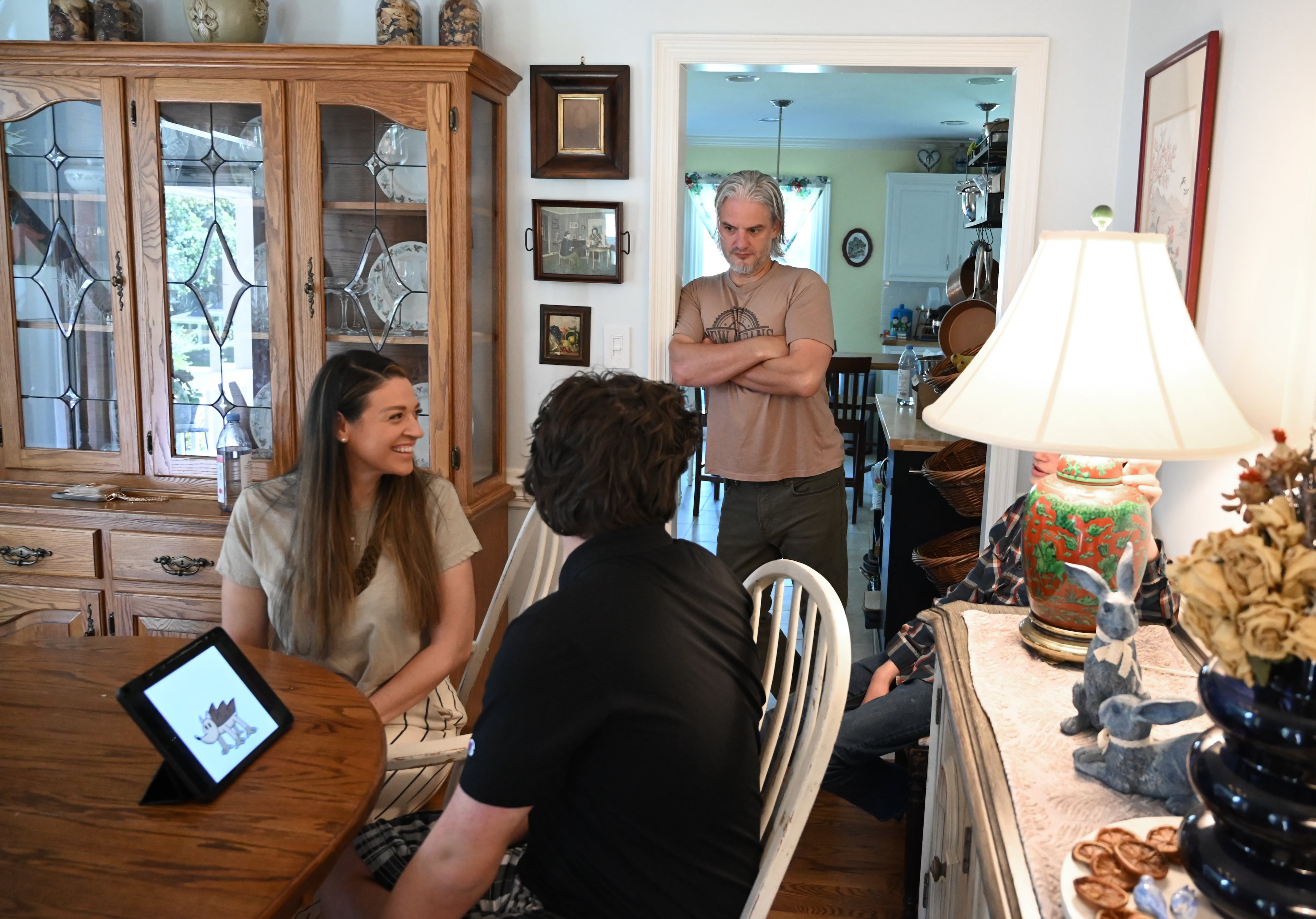
The Richards never wanted their son in a GNETS program. They had heard horror stories stemming from the federal investigation and feared that being placed in the program would only worsen his condition.
As a 2-year-old, he was diagnosed with autism spectrum disorder, a condition related to brain development that can cause problems with communication and getting along with others socially. The parents said the disorder made it difficult for their son to regulate his emotions, especially when in an unfamiliar, frenzied environment, sometimes resulting in emotional and physical responses.
In a Gwinnett County special education meeting to discuss where their son should be placed, everyone but the Richards voted to send him to GNETS.
“They blindsided us and they railroaded us,” said his father, Gabe Richard.
The Richards went with GNETS.
Shortly after, when Nichole Richard finally got to tour the school, it took only a few minutes for her to break down crying.
In that moment, she said, she knew she had just made the biggest mistake of her life.
A tale of two GNETS
It’s a story of the haves and the have-nots.
That’s how former teachers, parents of students and attorneys who spoke with the AJC all depicted the patchwork of 24 GNETS programs throughout the state. In some programs, staff promptly work with children so they can return to their neighborhood schools. In others, little is done and the students appear to languish.
On a warm spring day in late March, Melanie and Chip Glazier’s daughter, then nearly 18, walks around a therapeutic horse farm in Newnan, chatting with other riders and parents alike. A bright, bubbly personality, she easily asks lots of questions and shares details about herself.
But as a middle school student from 2017 to 2021 at Mainstay, a GNETS program in Fayette County, the Glaziers said her personality faded.
The couple’s daughter has both autism and atypical Prader-Willi syndrome, a rare genetic disorder that causes insatiable hunger and developmental delays.
“She would come home a lot very upset because she was missing out on other things other kids got to do. She was just kind of depressed,” Melanie Glazier said.
The differences between Mainstay and her neighborhood school were stark.
The program lacked many of the things she had at her old school, like field trips or book fairs. At one point, her parents said, a film crew had rented the gym to shoot a movie for a week, depriving students of physical education for that time. The Glaziers shared an email exchange with administrators that confirmed the incident.
Former GNETS teachers who spoke with the AJC expressed similar concerns.
Bob Grimes, a teacher’s aide turned special education teacher, retired in January after working for the Futures Program since 2019. That North Georgia GNETS program was spread across multiple locations with sharp differences.
While high school students in the program in Dawson and White counties could join nondisabled students for activities and electives as long as their behavior was not an issue, Grimes found the atmosphere at the Futures Program’s Cornelia Center in Cleveland more restrictive for the middle-school students.
“Locks on your doors,” Grimes said. “Prison-grade hinges to keep the kids in.”
At the Cornelia Center, Grimes said he also wasn’t always supported as a teacher. He had to buy supplies and wasn’t provided needed textbooks and study guides. Aides were scarce, and some teachers pushed kids to the next grade even when not ready.
Students were supposed to be there temporarily and then return to their local school. “They were not returned to their school often,” he said.
Throughout his time at the Cornelia Center, he said he was bruised, nearly broke an arm and had one of his ribs dislocated.
The Futures Program GNETS director, Meg McDuffie, disputed Grimes’ criticisms. In a detailed rebuttal, she insisted that teachers get the same resources as teachers statewide, and the program offers students therapies and individual and group counseling with licensed school counselors.
The program’s “main mission” is to help students learn “coping skills and strategies” so they can return to their neighborhood schools. Over the last three years, 15% of students returned to local schools with 3.4% coming back to GNETS, according to her statement.
She said classroom and building doors are locked for safety, as they are in most nearby schools. “There are fences around our playgrounds, as we serve students from ages 5 to 21,″ she wrote. Some have behavioral issues that can include trying to leave campus.
Another teacher, Edward Mobley, described the four years at the Horizon Academy GNETS program in South Georgia as “one of the best experiences I had as a teacher,” where he could watch a student improve and be able to return to their neighborhood school. His middle school students started each day with a “social hour” to talk about how they were feeling and review their personal goals. Mobley’s site had Chromebooks for every student, licensed counselors and a full-time nurse. He tracked student progress closely and monitored their behavior through daily logs.
But, he got a different view at conferences with other GNETS teachers, who described programs housed in separate wings, physically locked off from the rest of the building, and some lacked kitchen facilities.
Some programs had no resource officers, no on-site counselors and no mental health professionals. A few had no computers at all, he said. From what they described, “you could see the disparity among the different schools.”
Administrators at GNETS programs around the state echoed concerns in fiscal year 2024 self-assessment reports to the state Department of Education that were obtained by the AJC. They warned state officials that staffing shortages, inexperienced teachers and funding cuts were putting pressure on their programs.
“We have teaching staff who do not have education backgrounds and/or are inexperienced in the classroom,” staff at the Cedarwood program in Statesboro in southeast Georgia wrote in 2024, later noting, “We have continued to be plagued with unfilled positions and staff absences.”
“Funding has been slashed and critical therapeutic support has been lost,” wrote leaders at the Pathways Educational Program in Thomasville in South Georgia. “The focus is so much on behavioral support that the academics are sometimes put to the side.”

Contrast that with Elam Alexander Academy, a GNETS school in Macon. On a gray day in January, AJC reporters toured the school, one of four schools that responded to the news outlet’s requests, where a library was filled with shelves of books, a cafeteria with students chatting and an outdoor garden ready for new seedlings in the spring.
It was clear that Elam caters to students in special education and had therapeutic and mental health counselors on staff. One of two sensory rooms that are open to all students was filled with tools like swings and weighted blankets often used to help kids with autism soothe themselves. Nearby, another room was set up for kids to learn daily living skills — like learning how to cook basic meals or sort and fold clothes.
Brooke Cole, the director who oversees GNETS for Bibb County and nine surrounding counties, an area that includes Elam, said the public often draws misconceptions about GNETS from news reports that focus on poorly performing programs. In her county, staff stay focused on transitioning kids out of GNETS to their neighborhood school, she said.
“They don’t see that educating students is actually taking place. And sometimes you got to meet kids where they are, build them up before you can move them out.”
An AJC reporter also toured Westside School in Coweta County, which houses two programs: GNETS and a separate program geared specifically toward children with autism. The school offers a robust sensory room and “calm-down areas” where students can take breaks with items tailored to their needs.
The school moves about a quarter of its GNETS students back to a less restrictive setting every year, according to school officials. There’s a strict referral process for kids when they enter the program, and teachers make sure to offer the maximum amount of support before referring a student to GNETS, according to administrators.
Connie Lytten, principal at Westside School, said she loves her job and all of the kids they serve. The school is well supported by the county and has little staff turnover, she said.
With GNETS, she said that people cast doubt on the entire program because they hear of one bad apple and then generalize it to all other programs.
“We don’t have anything to hide,” Lytten said.
The other playground
In Georgia, 1 in 7 or about 265,000 students qualify for special education services, which can range from tutoring to intensive behavioral therapy.
Often, one of the last stops is the GNETS program.
Advocates see the program as helping some of the state’s most vulnerable students who could otherwise be placed in an institution. Critics say the program can separate students to a different school based on their disabilities, which are often behavior-related. Yet, they have no assurances they will get the education they need.
Among some of the AJC’s key findings:
- Limited state oversight: Georgia’s Department of Education insists its role is to fund GNETS, which receives nearly $52 million per year in state and federal funds, and monitor spending.
- Little public information: The state’s website lacks a full explanation of GNETS, including locations. The AJC received a list of locations after repeated requests.
- Program quality varies widely: The lack of an organizing authority makes for a patchwork of programs across the state with unequal levels of therapeutic resources, curriculum, computer access and basics like cafeterias or enough extracurricular activities.
- Dwindling enrollment: GNETS is at a crossroads. Enrollment has declined dramatically while more kids than ever before are seeking special education services. In all, about 2,500 students were enrolled in GNETS in 2024, down from approximately 4,500 in 2014.
Despite some changes to the programs, such as the closure of substandard facilities, attorneys who represent kids with disabilities say the core issue remains. Students are still being separated, if not in separate schools, then in separate hallways and even separate playgrounds.
“Any representation that this isn’t a segregated program is completely unfounded. They separate these kids based on their disability,” said Craig Goodmark, who was among the attorneys who unsuccessfully sued the state in 2017 challenging the program.
Goodmark, who withdrew from the case in August after taking a new job, said some programs are still housed within a traditional school building but function as two independent schools: The kids will eat lunch separately, or the GNETS program is in a hallway separate from the rest of the school.
Goodmark said he’s even seen a school where children were directed to different playgrounds at recess. Goodmark said he witnessed a teacher tell a student not to play on the main playground and return to the area where the kids with disabilities were playing.
“Schools have changed. Mental health treatment has changed. How we deal with children with autism has changed,” said Zimring. “The only thing that hasn’t changed is that GNETS isolates kids.”
The first room
Just minutes into the tour of the Buice Center, her son’s new GNETS program in Gwinnett County, Nichole Richard could feel her heart pounding as she gasped for air. She was undoubtedly experiencing a panic attack — triggered by the sight of the first room teachers had shown her.
The room in the school, which is no longer part of GNETS, was tiny — maybe 8 feet by 8 feet — with no windows and made of cinder block, she said. That’s where Nichole was told her son would be sent when teachers couldn’t calm his outbursts.
Nichole knew there would be times when her son needed a quiet room, something warm and inviting. But not this.
“That’s when I realized what I had done,” Nichole said. “I saw so much when they opened that door.”
Her fears were later confirmed, she said, when teachers told her their son spent time in that room to quell his emotional outbursts. The Richards said they felt the experiences only caused him to further spiral.
Nichole said her son previously suffered distress after being put in in a separate room in Cobb County. They felt he was being placed there out of convenience. District spokespeople for Cobb and Gwinnett schools said their programs follow state law which allows the use of timeout rooms.
“Schools have changed. Mental health treatment has changed. How we deal with children with autism has changed. The only thing that hasn't changed is that GNETS isolates kids."
Separating kids by themselves has been a controversial issue in Georgia. A 2010 rule change outlawed the use of seclusion rooms, where children were placed in closed rooms alone. Parents and advocates pushed for the change after a teenager in Gainesville was repeatedly placed in seclusion and then died by suicide. The new rule allows time-out or calm-down areas but they must be safe spaces with unlocked doors and students can leave if they want.
Limited oversight
The pleas for help from GNETS administrators jumped off the pages that the AJC reviewed.
Leaders of Northstar, the GNETS program that serves several districts near the border of Tennessee, reported that “systemic staffing shortages and staff turnover” made it challenging to meet students’ needs.
Leaders of the Pathways Educational Program in Thomasville said they are struggling the most with funding. “Program funding is the #1 issue that we are facing and this is totally out of our control,” the leaders wrote. “Our program should be providing therapies to our students and we are at risk of losing these special therapies. Our staff has completed some fundraising to assist with these costs.”
These are excerpts from self-assessment forms that the state-required program administers to complete in 2024. But that unvarnished look is no more. Program leaders still do a self-assessment, but now it’s only for discussion with staff, Frick wrote in response to questions from the AJC.
That’s just one example the AJC found of how the state has pulled back in recent years from providing information on the GNETS program. There are other information gaps on test scores, graduation rates and how children in the program are faring. Test scores for GNETS students are reported with their home districts and not reported or analyzed as a group, Frick wrote.
State rules say the state education department must monitor GNETS to “ensure compliance with federal and state policies, procedures, rules and the delivery of appropriate instructional and therapeutic services.”
The state says it meets those requirements. Critics see a drop in oversight.
Frick, the DOE spokesperson, wrote that the state supervises GNETS “to make sure local programs are meeting federal and state special education requirements” and monitors academics by sampling education plans every five years for 300 of the 2,500 GNETS students.
But when asked for so-called service reports that collect information on each program, Frick wrote that the document was suspended in 2013 by a prior DOE administration but will be reinstated next year “now that this has been brought to our attention.”
State DOE did not respond to multiple requests from the AJC for grant applications from each program or to locate “student and program data” that programs are required to submit.
The state is ignoring its legal responsibility, according to Leslie Lipson, an attorney who has led the charge against the GNETS system in Georgia.
Lipson said the AJC findings show the state has clearly reduced its oversight of the GNETS program compared to years past, a “deeply troubling” trend.
“It really goes against a lot of what our government talks about around accountability and a government that doesn’t waste your funds,” she said.
Lipson and others, including the Georgia Advocacy Office — a nonprofit that protects the rights of people with disabilities — tried to get help from the federal court by filing a class action lawsuit that accused GNETS of imposing unnecessary segregation and unequal educational opportunities.
It failed.
In his ruling in September dismissing the case, U.S. District Court Judge Michael Brown wrote that local school boards decide how to spend the GNETS funding.
Once a program receives funds, “nothing in the GNETS Rule nor any other State act requires local officials to exercise their discretion to use those funds to physically separate GNETS students or to use that money in any specific way,” Brown wrote.
The focus now shifts to the DOJ, which, as a federal agency, is in a stronger position to pursue the issues than a citizen-led lawsuit, said Devon Orland, litigation director for the Georgia Advocacy Office.
The U.S. attorney’s office and the state attorney general’s office did not respond to requests from the AJC for comment on the case. The governor’s office referred the AJC to the state Department of Education.
Frick, the DOE spokesperson, said she could not make anyone available to the AJC to be interviewed about GNETS and she could not comment on the DOJ lawsuit because the legal action is ongoing.
But, in court documents, including its most recent filing in September, the state challenges the allegations and the government’s right to sue.
The boy they no longer recognized
Soon after he started at the Buice Center in Gwinnett County, the Richards watched as their son unraveled into a boy they “no longer recognized.” His emotional expressions became flat, he spoke few words and his cognitive function plummeted, they said.
Before going to GNETS, her son was progressing in school, Nichole said. “Then they put him in a room with baby toys.” The Richards said that in the rare times he did speak, he became aggressive and would curse in words he had never said before.
The family gave it just five months before they decided to pull him out for another round of homeschooling.
Bernard Watson, a spokesperson with Gwinnett County Schools, declined to comment on the Richards’ son’s case, citing student privacy laws. He said Gwinnett County stopped participating in GNETS as of the 2024-25 school year but uses the state and federal funds to provide services to its students.
A mother’s bet
The Richards took one last gamble.
A few years ago, Nichole started frequently driving her son to Athens, where he joined a group called “Extra Special People” for those with disabilities. Slowly, the boy was improving and was finally around other kids in a safe space, she said.
Nichole decided to make a bet. If there were such strong resources available for people with disabilities in the Athens area, maybe the same would be true of the schools.
She was right. The family relocated from Gwinnett County to the Athens area so their son could enroll in the neighborhood public school.
The son, who is now 16, is doing well. He rides the bus to high school and spends the full school day in classes with his nondisabled peers who are co-taught by a special education instructor, according to his individualized education plan.
He’s raising his hand in class and participating in his education plan meetings — an experience he didn’t have while at GNETS.
Finally, he’s going to a school where he feels accepted.
“He’ll always be on the autism spectrum,” Nichole said. “But his behavior recovery is real.” A low dose of antianxiety and antidepression medication to level any outbursts has helped too.
For once, the Richards say they aren’t worried about whether he will succeed.
He towers over his mom — at over 6 feet — and in many ways is a typical American teenager. He loves animation, and on a Saturday morning in June, he flicked on his iPad through dozens of drawings: a universe of characters he likens to the anime series “Pokémon,” but it’s of his own creation. In between bites of a doughnut, he explained the powers each character held.
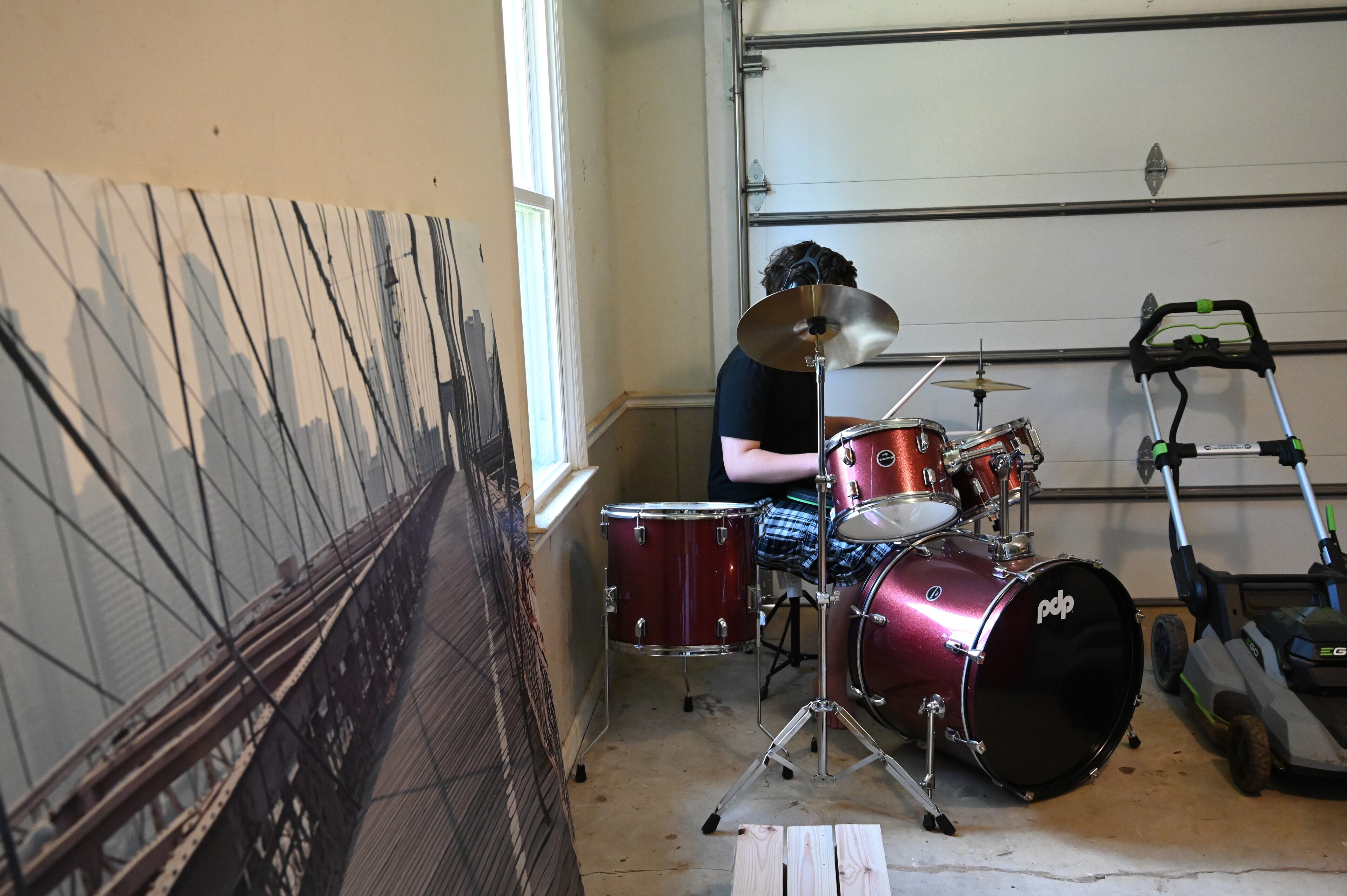
And their family is doing better too. Pulled apart by their struggle to help their son, Nichole and Gabe Richard are now remarried.
The Richards said their journey illustrated how GNETS can hold students back, particularly those with autism. It’s a disservice to all kids to have their world “sterilized” at school, by removing children who are different, they said.
Now, the meetings about his education updates are positive and involve new descriptors of his character and behavior. He’s showing empathy, remorse, self-awareness. He’s disciplined, driven and passionate. All words that the Richards never heard to describe him before.
“That’s what people never believed that (he) could do,” Nichole said. “He is already doing and living the impossible.”
— AJC reporter Rosie Manins contributed to this investigation.
About this investigation
This was the year when the federal Department of Justice’s nearly decade old lawsuit targeting Georgia’s program for children with severe emotional and behavioral disorders was supposed to go to trial.
It didn’t happen.
This year is also almost a decade since The Atlanta Journal-Constitution first investigated this state and federally-funded program, known as the Georgia Network for Educational and Therapeutic Support, or GNETS. The same year, the U.S. Department of Justice filed the lawsuit accusing the state of “unnecessarily segregating students with disabilities from their peers.”
To dig deep into this program, which was founded to serve the state’s most vulnerable children, the AJC assembled a team: Katherine Landergan, investigative reporter; Martha Dalton, education reporter; Stephanie Lamm, data reporter; editors Rose Ciotta, Eric Stirgus and Charles Minshew; and photographers Hyosub Shin, Daniel Varnado and Arvin Temkar.
The team interviewed dozens of people with current and former experience with GNETS: parents, teachers, students, administrators, attorneys, advocates, lawmakers, researchers and special education experts, including Mary Wood, the educator who envisioned a very different GNETS more than 50 years ago. Reporters and photographers also visited schools in Atlanta, Macon and Coweta County and interviewed officials at other schools around the state.
They reviewed records from families, GNETS programs, the state Department of Education and federal and state court lawsuits, including depositions in the ongoing DOJ lawsuit.
They analyzed state data on the demographics of students attending GNETS, 10-year enrollment trends for GNETS and all special education students and state and federal funding. They also used social media to reach readers and school district superintendents to share their experiences.
About the Authors

Martha Dalton is a journalist for The Atlanta Journal-Constitution, writing about K-12 education. She was previously a senior education reporter at WABE, Atlanta's NPR affiliate. Before that, she was a general assignment reporter at CNN Radio. Martha has worked in media for more than 20 years. She taught elementary school in a previous life.
Stephanie Lamm is a data reporter for the Atlanta Journal-Constitution. She works with data to uncover stories that would otherwise remain hidden.