An easy, warming butternut squash soup
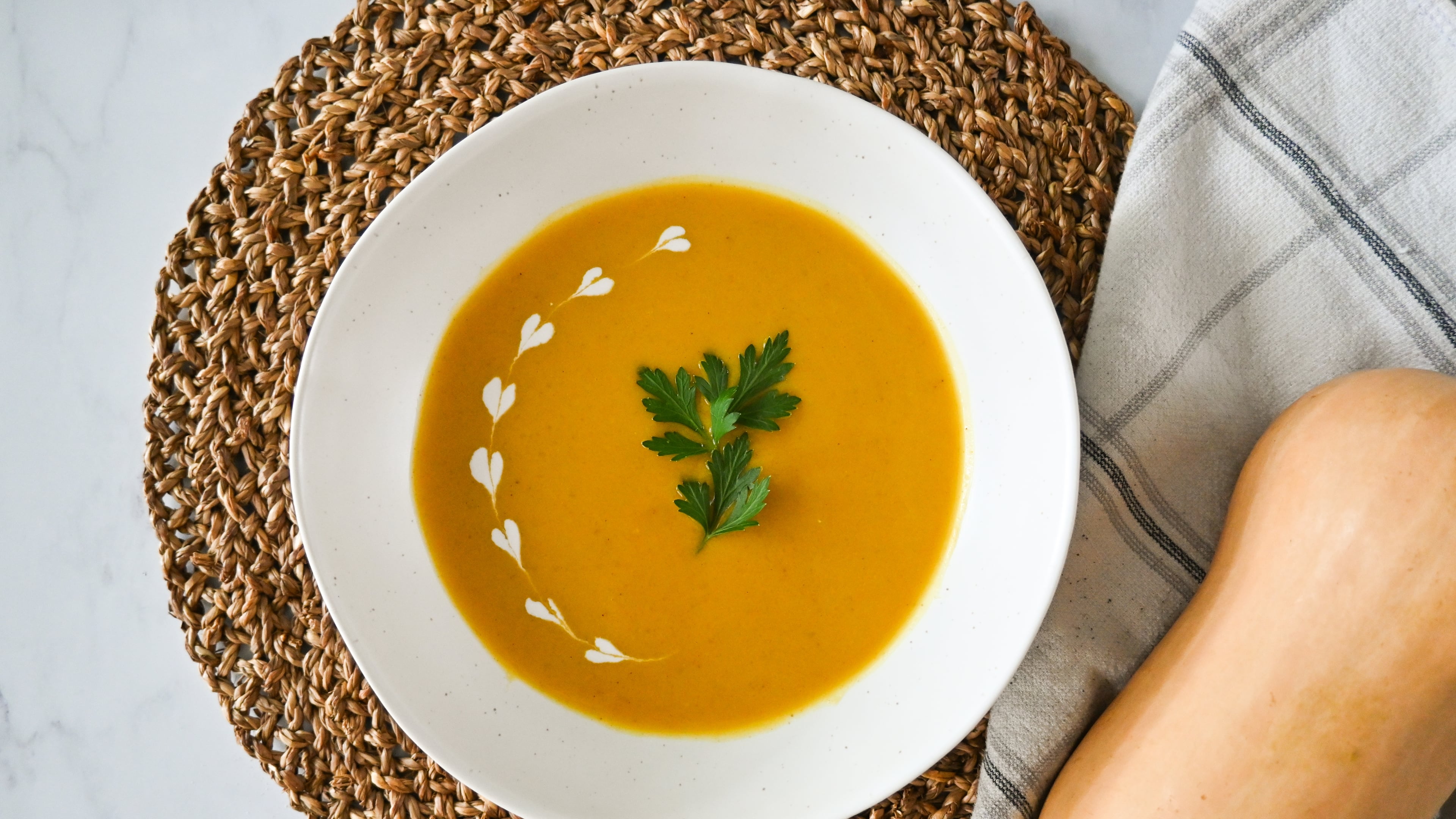
Once that first leaf satisfyingly crunches beneath my shoe, I take it as a sign to make more comfort foods, such as butternut squash soup. If you’re a big wholesale shopping fan like I am, chances are you’ve seen the clamshell packages of precut butternut squash around this time of year. Even if you’re not, there are cornucopias of squash in every local supermarket.
How to choose the right butternut squash
Squash should have a uniform beige color and the surface should be matte, not glossy. When lifted, the squash should feel heavy, indicating it’s not dry inside. And just like other vegetables, the squash should have a stem; avoid the squash without a stem, as the exposed opening hints at a possibly rotting interior. The squash should sound hollow when tapped, similar to a watermelon.
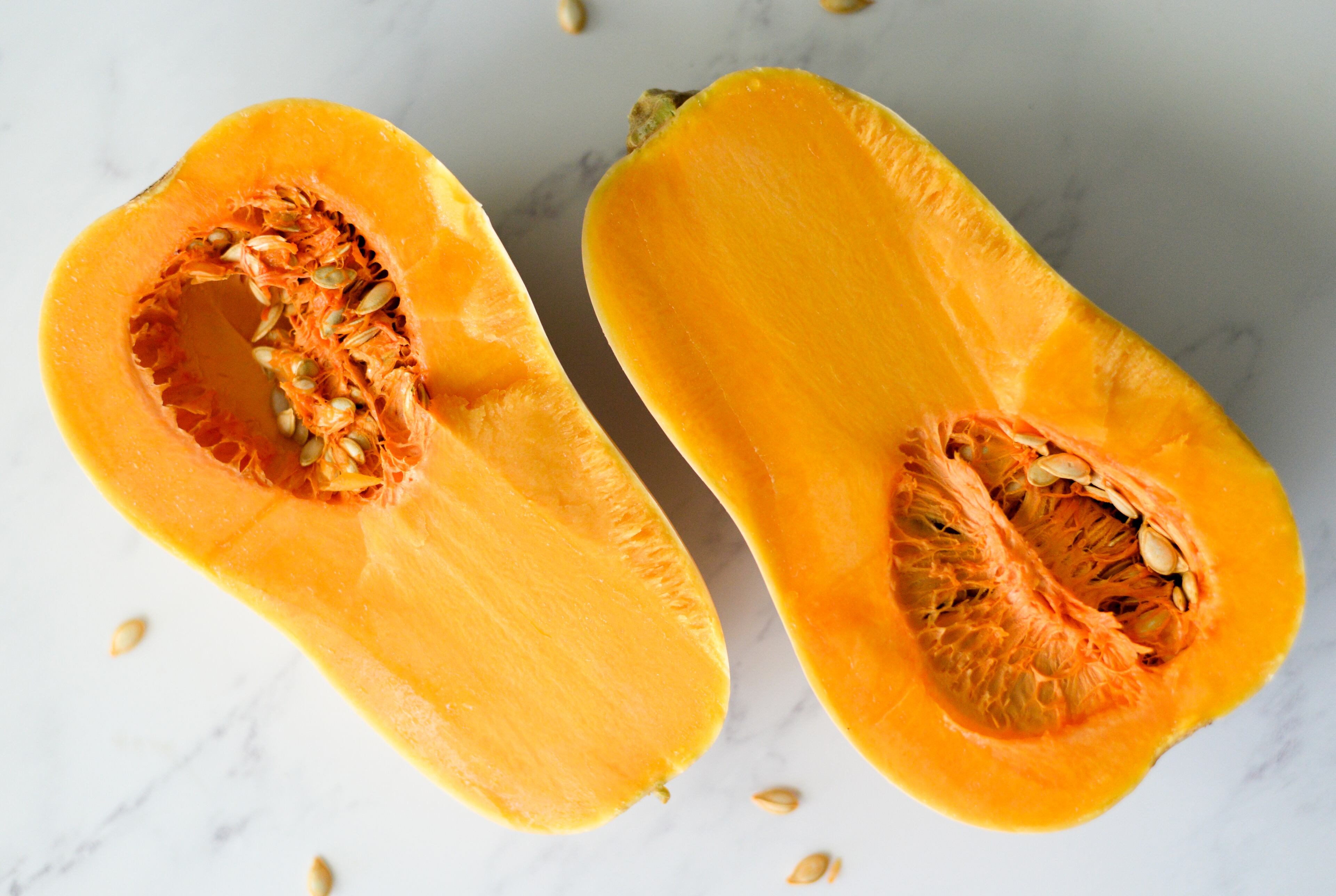
How to cut a butternut squash
While the packages of fresh or frozen precut squash reduce your prep time, it’s not difficult to break down a whole butternut squash as long as you have a sharp chef’s knife.
First, remove the skin with a vegetable peeler. Using a sharp knife, cut the ends off and slice the squash lengthwise. Scrape the seeds out and discard them, then chop the squash into 1-inch cubes.
What is curry powder made of?
Contrary to the name, curry powder is not made from pulverized curry leaves but a blend of various spices, all slightly different depending on the specific regional inspiration. The Madras curry powder I use for this recipe consists of coriander, turmeric, fenugreek, cumin, curry leaves, cinnamon, clove, chile, ginger, black pepper and garlic. No matter which curry powder you choose, it will add a layer of deep flavor to your soup. The two teaspoons of curry powder in this recipe are subtle and not overpowering — feel free to add more.
Curry powder and its complicated origin
Curry powder was a spice blend developed by British colonists to mimic the flavors within Indian cuisine — its oversimplification was formulated for convenience, a homogenization of Indian flavors in one small tin. During the 1800s, the British colonization forcibly displaced nearly 2 million Indian indentured servants onto trade ships in the Caribbean, Asia and Africa. Consequently, the use of curry powder grew in these regions, too. You’ll taste it in Jamaican patties, Trinidadian goat curry and jollof rice, among other adaptations.
However, critics, scholars and community members go back and forth on curry powder’s origin and authenticity. Some shun its ties to Indian cuisine; others embrace it while bringing awareness to its painful past.
There are dozens of curry powders offered now. You can find it in most international grocery stores, such as Patel Brothers, or even local supermarkets. Each has a unique blend of spices, and all will add an extra depth of flavor to your soup.
Potato mashers, immersion blenders are your friends
To create the silky-smooth texture for this soup, you’ll need two pieces of equipment: a potato masher and an immersion blender. The masher is used the same way you would for mashed potatoes. 0nce the butternut squash chunks are cooked and softened, mash them into the chicken or vegetable stock you cooked them in. Then finish the process with an immersion blender in the pot to puree until smooth.
To avoid splashing, make sure the liquid level is high enough that the blender’s head is fully immersed. If it isn’t, you can transfer the soup into a smaller pot before using the immersion blender. Or, cool the soup to room temperature then transfer it to a countertop blender.
Coconut milk gives this soup lactose-free creaminess
Coconut milk gives the same creaminess as heavy cream, and it makes this recipe lactose-free. The ingredient also adds a coconut flavor that complements the curry flavor nicely.
The coconut milk is added at the tail end of the cooking process at a lower heat because it can curdle, and its aroma and flavor are lost when boiled over high heat for a long time.
Shake the can well before opening, as coconut milk naturally separates into a watery layer and solid cream, or stir it well before pouring into the soup.
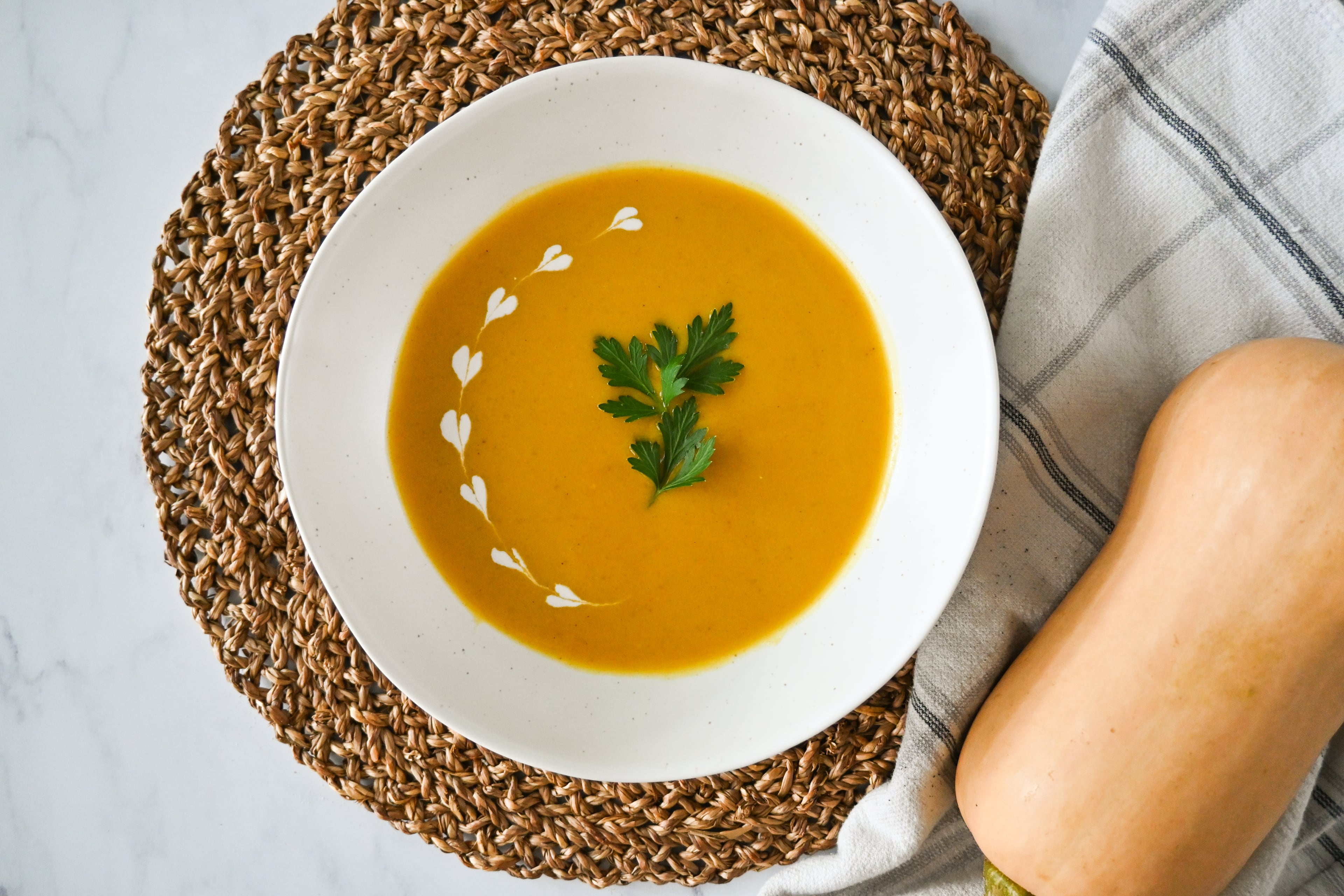
Curried Butternut Squash Soup
To make this soup vegan, use vegetable broth instead of chicken broth.
Makes 6 to 8 servings
Equipment:
- Potato masher
- Immersion blender
Ingredients:
- 2 tablespoons olive oil
- 1 large onion, coarsely chopped
- 2 teaspoons curry powder
- 2 pounds (1-inch cubed) peeled, seeded butternut squash
- 4 cups low-sodium chicken broth
- 1 can coconut milk, with 1 tablespoon reserved for drizzling
- 2 teaspoons salt, plus more to taste
- Ground black pepper, to taste
Instructions:
- In a large Dutch oven, heat oil over high heat. Add onions and saute for 2 to 3 minutes. Add curry powder, mix well to combine, then add butternut squash and stir again.
- Add broth to the Dutch oven and bring to a boil, then lower to medium heat and cover with the lid. Cook for 20 minutes, or until the squash falls apart when pierced with a fork.
- Remove the Dutch oven from the heat and carefully mash the squash with a potato masher. Then use an immersion blender to puree the mixture until smooth.
- Return the Dutch oven to the stovetop over low heat. Stir in coconut milk and simmer for 2 minutes. Add salt. Taste, then add additional salt and pepper if desired. Drizzle reserved coconut milk over soup before serving.