The quiet labor of cooking for someone who isn’t there
The left side of the couch is his side.
I still catch myself leaving it open, this small pocket of space where he slurped homemade chicken noodle soup and balanced fresh-baked brownies on napkins, his eyes glued to the TV. It’s where he wiped his hands on the cushions as I blurted, “Use a napkin!”
It feels strange now to eat alone on that couch. My eyes still wander to his spot when I laugh at a show I’m watching, remembering the way his full body would lean over to cackle when a joke landed just right.
He hasn’t been there for a long time now.
A year ago this week, my 16-year-old son and I got into a fight.
I’d just pulled a honey pie out of the oven. It was steaming hot, the crust pale-gold, the middle jiggling loosely. The kitchen smelled like butter and warm sugar, floral and soft, the kind of smell that makes you pause and take deep gulping breaths.
I asked if he wanted a slice. He said yes with the enthusiasm of a teenage boy who is always just shy of starving. I grinned and told him we needed to wait a few minutes for it to cool.
It was so ordinary, the kind of moment you assume will be followed by thousands more just like it. But within minutes, everything changed.
I was confused when he reached into his backpack and pulled out a big blue Ikea bag and started packing his things. Clothes. Some video games. A worn copy of “Where the Sidewalk Ends” by Shel Silverstein, the one I used to read to him when he was little, struggling to keep my eyes open while pretending I was putting him to bed.
It was seeing that book land in that blue bag that made me realize this wasn’t my son’s weekly ritual of getting a few things together to take to his dad’s house.
I don’t remember saying, “What are you doing?” But I’ll never forget when he told me that he wanted to live full time with his dad.
I wanted to talk about it. He didn’t. The argument escalated the way arguments sometimes do, not because of what’s happening in that moment but because of all the little things stacked underneath it.
He walked away without looking back.
The honey pie sat untouched on the counter.
There is a quiet labor in not feeding someone you’ve fed for 16 years. It’s in the dull ache I feel while loading the dishwasher after a meal for one, and in the soft shock when I find a bag of chips still half full, days after I opened it. In the grocery store, I reach for the family-size bag of frozen dumplings, then stop mid-aisle when I remember there is no longer a teenage mouth to feed.
Food has always been how I show love. Gathering ingredients, prepping them, cooking them, transforming them into something I know will make you smile — that’s my language. It’s how I say the things I don’t know how to say out loud.
When that person is gone, where do I put all that is left to say?
It’s been a year since I made that honey pie.
This week, something shifted. It happened as I walked to work. A young man about 200 feet away ambled toward me with the sloppy, loose-limbed gait of a gangly teenage boy. For one split second, my heart skipped. Because there is nothing I want more than to see my son walking toward me again — annoyed, hungry, pretending he doesn’t care what’s for dinner.
When I got home, I took pie dough out of the fridge. It rolled out easily. I patched a ripped edge with the press of a finger. The kitchen warmed slightly as the crust par-baked.
I measured the honey slowly, watching it ribbon into the bowl, thick and amber. I mixed in sour cream, goat cheese, cream cheese and eggs, transfixed as the batter turned pale yellow.
Once the crust had cooled, I poured in the filling slowly, deliberately, aware of how easily things can go wrong.
I placed the pie in the oven, and almost an hour later, the house filled with the familiar smell of butter and sugar. I took in the deepest breath and held it the way I wished I could hold my son, tightly with my eyes closed.
I’d started crying before I opened the oven door.
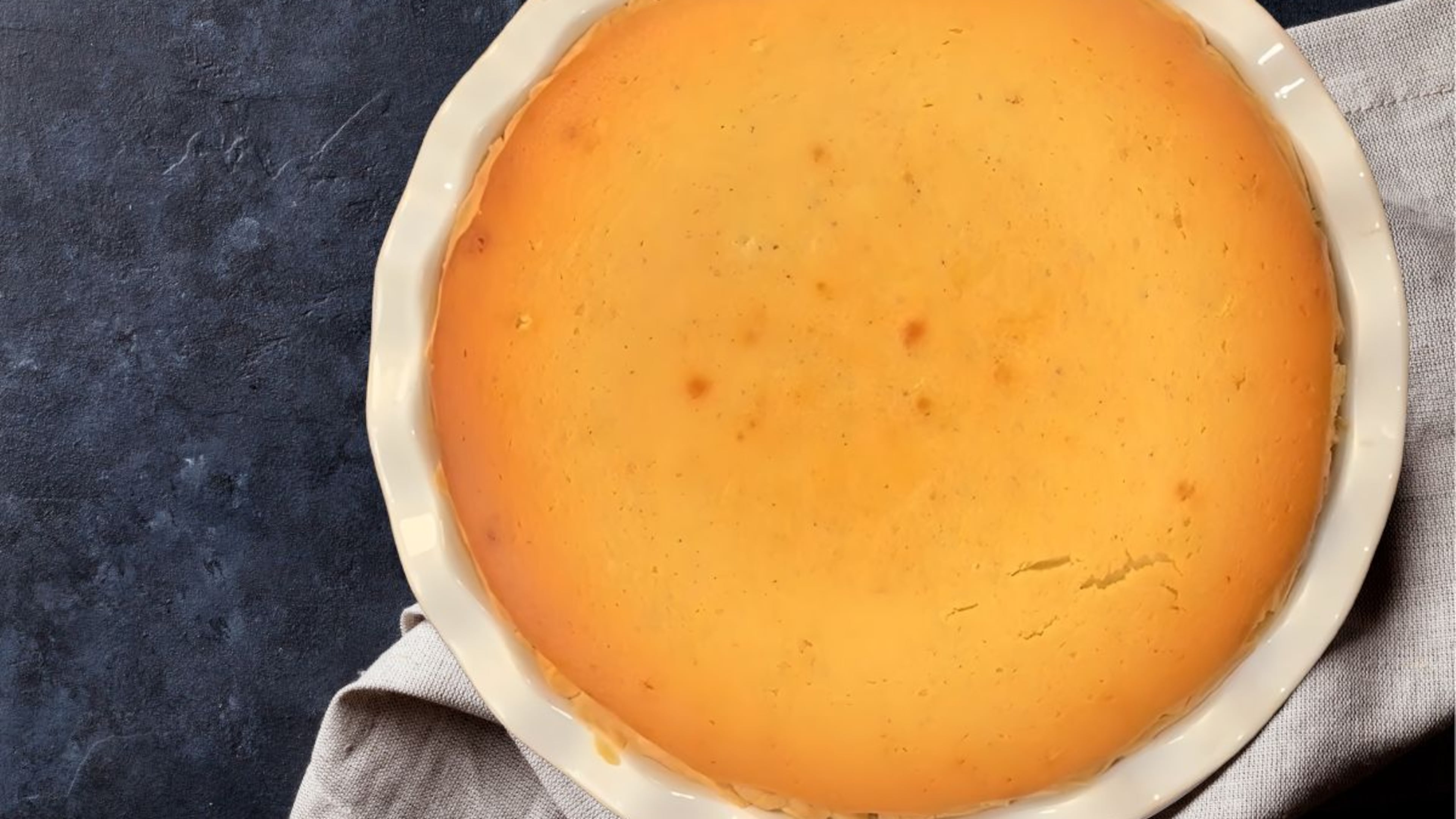
The filling was a golden, honeyed custard with a dull sheen. The crust a deep amber, with some of its edges more caramelized than others.
This time, when I pulled the pie from the oven, there was no one to ask if they wanted a slice.
I cut into it anyway. The filling was still steaming hot, soft and cloudlike, nestled in the embrace of a crispy, buttery crust. I ate a slice standing at the counter, because sitting down on our couch still felt like too much.
Memories of us eating pie together shuffled through. For a moment, I felt like my son was with me again. The pain of his leaving didn’t disappear, but it loosened its grip.
Maybe the ache I had lived with for a year wasn’t proof that our relationship would never be the same again. It was proof that I had loved deeply, with the sweet hope that maybe one day, that love would come back to me.

Honey Pie
Honey Pie has a creamy, subtly sweet filling with a gentle tang from cream cheese, goat cheese and sour cream. It bakes in under an hour, nestled in a flaky, buttery crust that stays crisp beneath the custard. If you’re short on time, store-bought pie dough or par-baked pie crust works just fine.
- 1 disk All-Butter Pie Crust Dough or prepared 9-inch pie crust dough, chilled (see recipe)
- 1 large egg white
- ½ cup salted butter (1 stick)
- 1 cup cream cheese, room temperature
- 1 cup goat cheese, room temperature
- ¾ cup honey
- ½ cup sour cream
- 2 tablespoons brown sugar
- 1 teaspoon vanilla extract
- 1 tablespoon cornstarch
- ¼ teaspoon kosher salt
- 2 large eggs
- 2 large egg yolks
- ¼ teaspoon flaky salt, for garnish
- Par-bake the pie crust: Place a pizza stone or an upside-down cast-iron skillet on the center oven rack. Heat the oven to 350 degrees.
- On a lightly floured work surface, roll the chilled dough to about ⅛-inch thick. Fit it into a greased 9-inch pie plate, letting the dough settle naturally into the corners. Trim and crimp the edges. Dock the bottom of the crust, piercing it a few times with the tines of a fork. Cover with plastic wrap.
- Place the pie plate in the freezer for 15–20 minutes, until very firm. Remove the plastic wrap.
- Line the bottom and up the sides of the frozen crust with parchment paper and fill the crust with pie weights or dried beans. Place the pie plate directly on the heated stone or skillet and bake for 15–20 minutes, until the sides are set and the bottom looks dry and matte, not glossy.
- Remove the weights and parchment paper, discarding the beans (or reserving for par-baking additional pies) if using. Return the crust to the oven for 3 to 5 additional minutes, just until the base firms slightly. The crust should still be pale.
- Remove pie plate from the oven, leaving the pizza stone or cast-iron skillet on the center rack. While the crust is hot, lightly brush the bottom and sides with the egg white to seal. Let cool slightly while you prepare the filling.
- Reduce the oven temperature to 325 degrees.
- Make the filling: Place the butter in a large microwave-safe bowl and cover loosely with parchment paper to prevent splattering. Microwave in 1-minute increments until the butter foams, sputters and turns lightly golden and nutty, about 4 minutes. Allow to cool slightly.
- In a stand mixer (or a large bowl if using a hand mixer), add the browned butter, cream cheese, goat cheese, honey, sour cream, brown sugar and vanilla. Mix on medium speed until smooth and fully incorporated.
- Reduce the mixer speed to low. With the mixer running, add the cornstarch and kosher salt and mix well, stopping to scrape down the sides of the bowl as needed. Add the eggs one at a time, mixing just until incorporated, then add the egg yolks. Mix until just smooth; avoid overmixing.
- Pour the filling into the par-baked crust. Place the pie on the heated stone or skillet and bake until the edges are set and the center is still slightly jiggly, 40 to 50 minutes.
- Remove the pie from the oven and immediately sprinkle lightly with flaky salt.
- Cool the pie completely at room temperature, then refrigerate until fully chilled before slicing. The pie is best served cold or just cool, when the custard is fully set and the crust snaps cleanly.
Makes one 9-inch pie.
All-Butter Pie Crust Dough
- 10 ounces all-purpose flour (about 2 cups)
- 1 pinch kosher salt
- ¾ cup salted butter (1½ sticks), cubed, cold
- 3–5 tablespoons ice water
- In a large bowl, whisk together the flour and salt. Add the cold butter and toss to coat. Using two butter knives or a pastry cutter, work the butter into the flour until the mixture looks shaggy, with pea-size pieces and a few flatter shards.
- Drizzle in the ice water 1 tablespoon at a time, gently mixing the dough with a fork until it just holds together when squeezed. The dough should look rough, not smooth.
- Turn the dough out onto a floured work surface and gently press it into a disk. Wrap tightly with plastic wrap and refrigerate for at least 1 hour, preferably 2.
Makes dough for one (9-inch) pie crust.
About the Author

Monti Carlo is the AJC's Senior Editor of Food & Dining and a Telly Award-winning TV host, cookbook author and special events chef. She covers culinary culture, spotlighting the people redefining Southern food today. Her cookbook, Spanglish, a love letter to bicultural Puerto Rican cooking, publishes May 19, 2026. Email her at monti.carlo@ajc.com


