Atlanta needs its tax dollars for its public schools, not TADs

At our last board meeting, a Tax Allocation District presentation was given in executive session by Courtney English, the chief of staff to Atlanta Mayor Andre Dickens.
I was very concerned that this agenda item was a closed-door presentation. TADs have been a highly debated topic in our communities and I felt that our constituents had a right to hear it in real time. I emailed the general counsel, Nina Gupta, twice before the session explaining my concern.
“The Tale of Two Cities” was the theme of the presentation. After about the third slide, it did not seem that this was a confidential matter. I immediately challenged that this should be open to the public. After I voiced this several times, English said that his presentation could be shared publicly.
How TADs work
Tax Allocation Districts are designated areas where property tax revenue growth is diverted from governments and used to fund development and infrastructure improvements within that district.
Here’s how the process works inside a TAD: Property values are frozen at a baseline amount. When the value appreciates, APS continues to receive that baseline amount, while the incremental increase in revenue goes toward neighborhood redevelopment projects.
In 2019, board members signed an intergovernmental agreement with the city to participate in four of the city’s TADs through the end of 2050. That means any upcoming decision on TAD extensions will center on whether the school district gives up tax revenue for 30 years in the more lucrative Eastside and Westside TADs, which are set to expire in 2030 and 2038, respectively.
APS currently receives annual fixed payments, known as PILOTs — or payments in lieu of taxes — that are a small percentage of the revenue earned in a TAD. For example, the school district gets $9.5 million a year from the Beltline TAD. Atlanta School Board Chair Jessica Johnson said the school board will probably want to ensure PILOTs continue if they agree to the mayor’s proposal.
It is still unclear to me why this was placed on the agenda under executive session. It appears that anything can be deemed private and confidential when it comes to our tax dollars for our children. This practice has to stop. I will always advocate for transparency and equitability. My fiduciary responsibility is to make sure our tax dollars go to educating our students and providing them with a premier school district that will be here for generations to come. (Editor’s note: Any changes to the TAD guidelines must be approved by the school board in a public vote.)
There are three schools in my district that will close this school year. This is very personal to me because one of those schools, Continental Colony Elementary School, where my son started as a kindergarten student, is closing.
I am a mother, a 23-year veteran public educator and now a locally elected school board member. My most important job on Earth is being a mother first. With each hat that I wear, I always think how would I feel if this were my child, colleague, school, neighborhood, city, etc. Each time I advocate for transparency and equitable practices for our communities, it comes from a place of care that I have for all people, especially our right to a free and public education for all people.
Since 1993, when the first TAD started, more than $900 million of our tax revenue that could have been used for our schools were instead used toward city development. This is a practice that should have never started. There are other cities across our nation that have abolished these practices because it does not stabilize our school districts or cities.
In order for true development to remain in our cities, we first have to offer a premier school district. Good schools attract developers, increase property value and boost our economy. The evidence is clear: schools cannot forgo having our tax dollars to go toward city development.
Many Atlanta neighborhoods were dismantled when our underserved communities were pushed out of the inner city right before the 1996 Olympics. The first TAD was in the Techwood community. Many of the public housing options such as Techwood Homes, University Homes and Harris Homes, were demolished and residents moved to other cities including to Douglasville where I have worked for over 20 years. These families were sent to suburban and rural areas where they no longer had access to public transportation, healthcare, housing, etc. Many generations no longer had access to live and grow in our inner city. Our population decreased dramatically because of practices where our tax dollars no longer went to our schools, but instead went to city development.
As an elected official, my main goal is to have transparency for our school district and constituents. We are losing our traditional schools, especially in our most underserved areas, because of false promises. People need to know that over $300 million per year is being spent on non-traditional schools that are not performing as well as, or in many cases, worse than our traditional public schools. The false promise that these alternatives are a better option in our underserved communities was a failed experiment. We do not need to pay non-traditional contracts to educate our children. Traditional educators are more than capable of educating our children. We do not need to pay other contractors to do a job that we are already doing ourselves.
TADs should never have been or ever should be discussed in a closed-door meeting between our city and our school district. It should be transparent and open to the public. We also cannot continue the practice of forgoing our tax dollars — meant for our schools — to go toward city development. If we do not have access to our fully funded budget in our traditional schools that they were meant to go in, we will lose them.
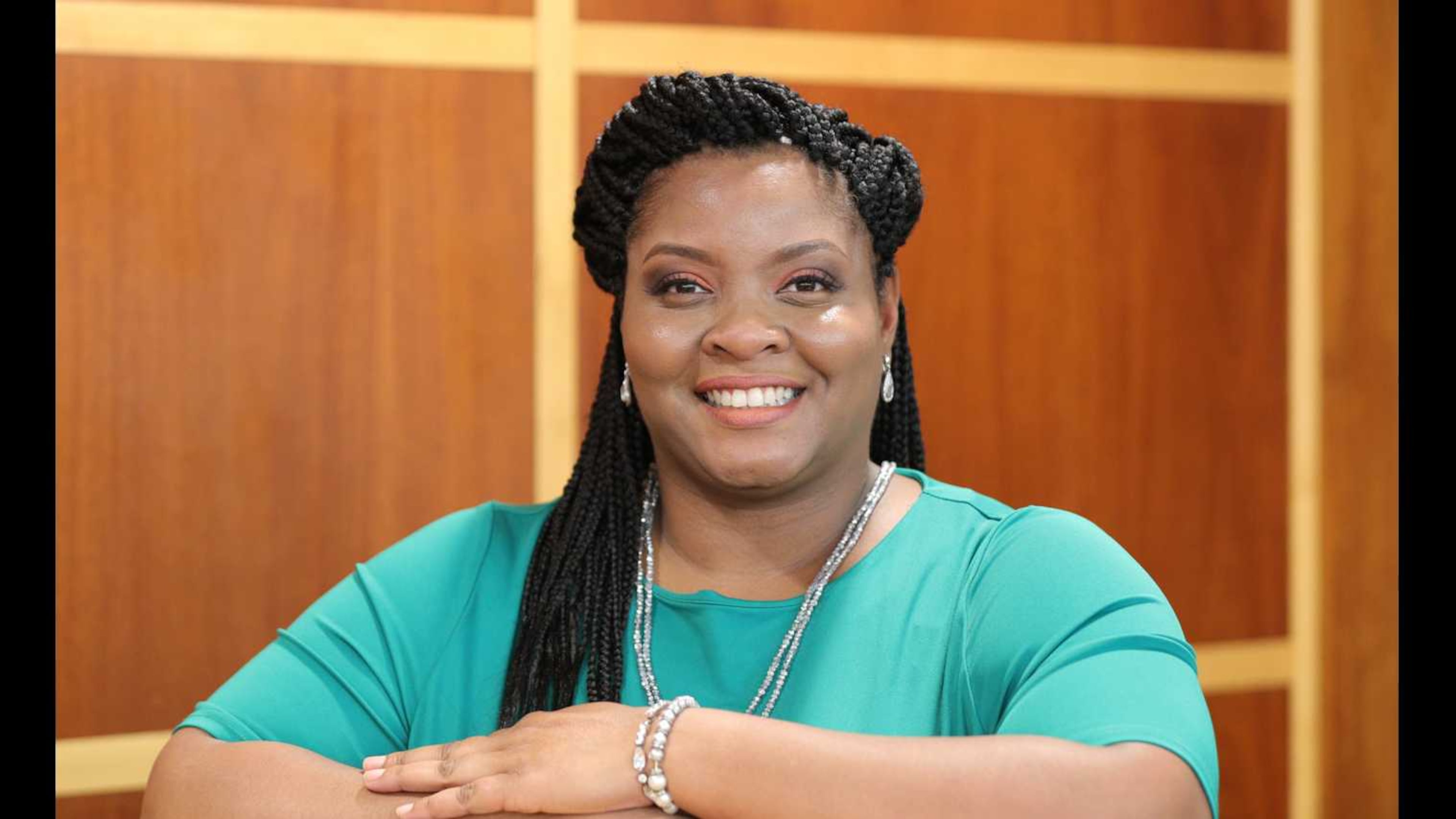
Patreece Hutcherson is the District 6 representative on the Atlanta Board of Education. The views expressed are solely those of the representative are not intended in anyway to be interpreted as the consensus or representation of the board as a whole.
If you have any thoughts about this item, or if you’re interested in writing an op-ed for the AJC’s education page, drop us a note at education@ajc.com.