Emory University students make a life-changing discovery in Utah
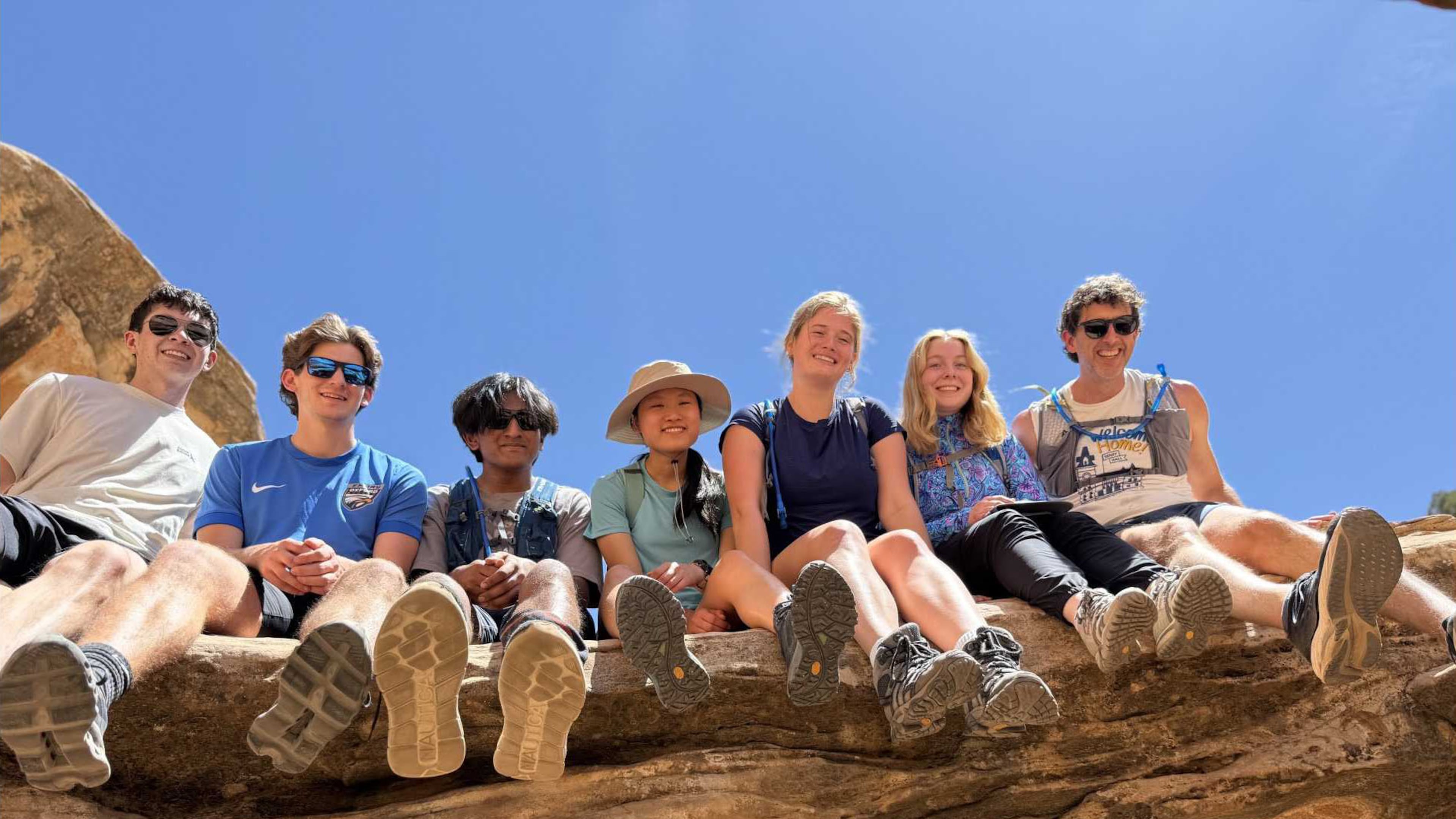
We were 200 feet up a sandstone cliff near Moab, Utah, no trail beneath us and the light going gold. The petroglyphs we’d hiked to see were far below us, small and getting smaller. Every part of this was a reason to turn around.
In May, we traveled to Utah through Oxford College of Emory University’s Global Connections program, a course centered around experiencing awe. We set out one evening for a documented petroglyph site near Moab. We pushed through deep sand, cactus and scrub brush to reach the panel of carved figures, a journey that felt arduous and adventurous right up until we realized it was five minutes from a major road.
Soon, a mountain rose above, with the carvings appearing proudly high up a rock face. Weathered into the rock centuries ago, a sheep stood — tangible evidence of people who had lived, traveled and left their marks on this landscape long before us. We admired them. We took pictures. And then we looked up at the rest of the mountain rising above the panel.
There was no trail leading higher. No guidebook promised another petroglyph site. Every reason, in fact, to believe there was nothing above us but rock. This just made us want to climb it more.
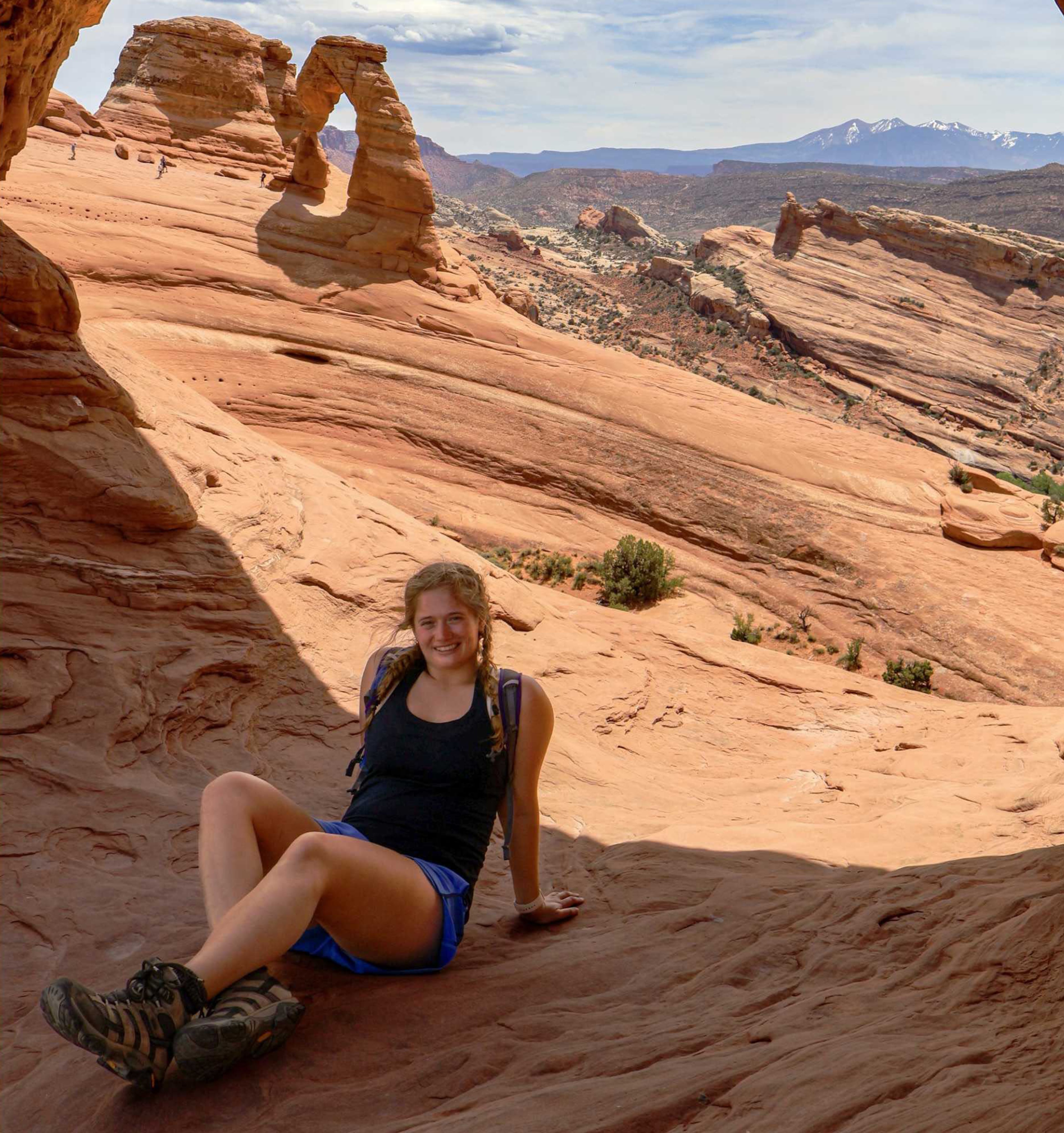
Maybe we wanted more of a challenge, or maybe we just wanted to return to our group with tales of our heroic feats, inspiring awe and perhaps a little envy. Mostly, though, we were just curious. What lay behind the ridge? What couldn’t we see?
We started upward with the overconfidence of two college students who assumed enthusiasm was an adequate substitute for a plan — with our chaplain, Brent Huckaby, right beside us.
The climb started innocently enough, then turned much steeper than we’d expected. Twenty minutes later, we pulled ourselves onto a narrow plateau. We stood there catching our breath, admiring the view, and congratulating ourselves.
Then Ashton turned around.
“Um … are those petroglyphs?”
“What?”
“You’re not serious.”
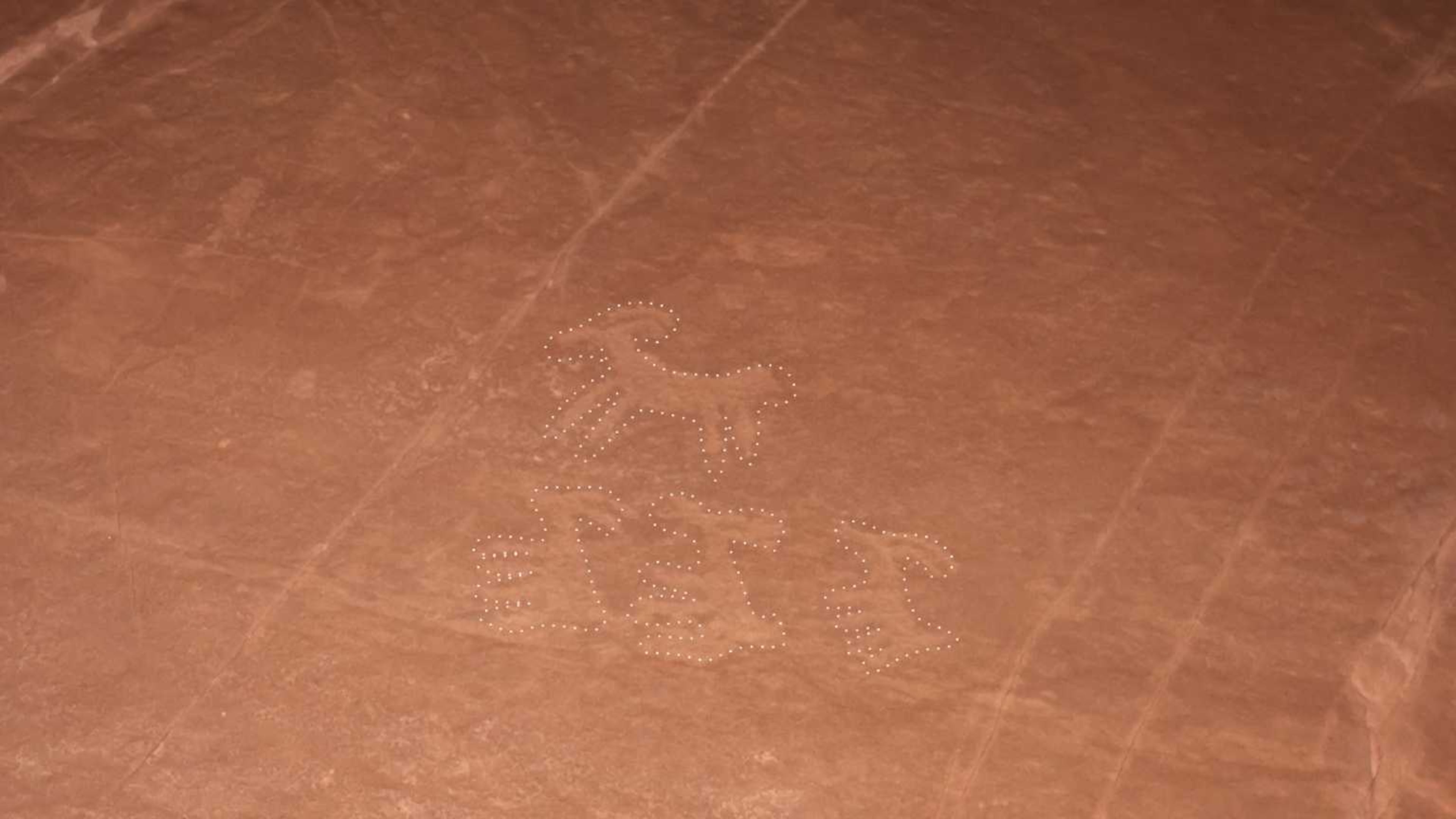
Barely 2 feet above our heads, four bighorn sheep sat pecked into the stone. For a second neither of us moved. Then we started laughing. Not because it was funny, but because it was impossible. We looked at each other, back at the wall, then back at each other again.
Nearby, a line of anthropomorphic figures stood shoulder to shoulder. Another, larger and alone, emerged from off the rock; off to one side stood a single sheep. Each image was built from hundreds of tiny peck marks, individual strikes of stone against stone, made by someone’s hand centuries ago.
And they were at our eye level. Not behind museum glass, not roped off — right there, at the height of the hand that made them. We weren’t looking at “artifacts.” We were standing where a person had stood, hundreds of years ago, doing the one thing they had done: looking closely at this rock.
We’re not archaeologists, and we can’t say for certain who created these images. But researchers note that the style resembles petroglyphs attributed to Fremont or Ute peoples, whose descendants live in the region today. What’s clear is that these carvings were never mere decorations. Petroglyphs like these may have carried cultural, spiritual or social meaning — marking clans or journeys, recording events, expressing belief.
Ashton was the first to notice the petroglyphs. It reminded him why he wants to become a physician in the first place — not simply to diagnose disease, but to understand people. Every patient carries a story that cannot be found in a medical chart alone. A diagnosis explains what illness a person has; listening reveals what kind of person has the illness.
For Claudia, an art history major, the carvings immediately became questions rather than answers. Why here? Why these animals? What did these images communicate to those who created them, and to those who encountered them? Art history has always been less about admiring beautiful objects than uncovering the lives embedded within them. That is what first drew her to art history: the realization that a single object can reveal an entire world.
We often think that medicine and the humanities exist on opposite ends of the university. One is rooted in science, the other in interpretation. But standing before those carvings, the differences mattered less than the thing they share. One studies the living; the other studies the traces people leave behind — their objects, images and stories. Yet both begin in the same place: careful attention and the belief that something overlooked is worth understanding.
Both are ways of encountering another life on its own terms and taking it seriously. Our Emory classes trained us to ask questions, but it took standing on a Utah cliff to encounter people who’d lived nothing like us. That meeting is our future jobs: in a hospital or in an archive, it’s what the rest of our lives will ask of us.
We photographed the site, noted the coordinates and sent them to the Bureau of Land Management to see whether the panels had ever been recorded. They say they hadn’t. The carvings are now in the record, where they can be protected — not only from vandalism, but from construction that could erase them altogether. That’s the part that matters most to us.
Across the Southwest, petroglyphs have faced rising vandalism, graffiti and accidental damage in recent years. Once these images are gone, they cannot be remade. A recorded site can be monitored and protected, but an unknown one is invisible to the people safeguarding it.
The petroglyphs will stay protected in Utah. We’re back at Emory — Ashton in his labs and lecture halls, Claudia in her studio and the archive. There are no cliffs on Emory’s campus. But the instinct is the same: keep climbing past the thing you came for, keep looking after you’ve stopped searching and, every so often, turn around to see what was there the whole time.
Claudia Fodor is an art history and visual arts major. Ashton Graham is a pre-med student majoring in biology.
If you have any thoughts about this item, please go to our AJC Get Schooled Facebook page. If you’re interested in writing an op-ed for the AJC’s education page, drop us a note at education@ajc.com.