10,000 gallons of jet fuel spilled into Flint River, EPA says
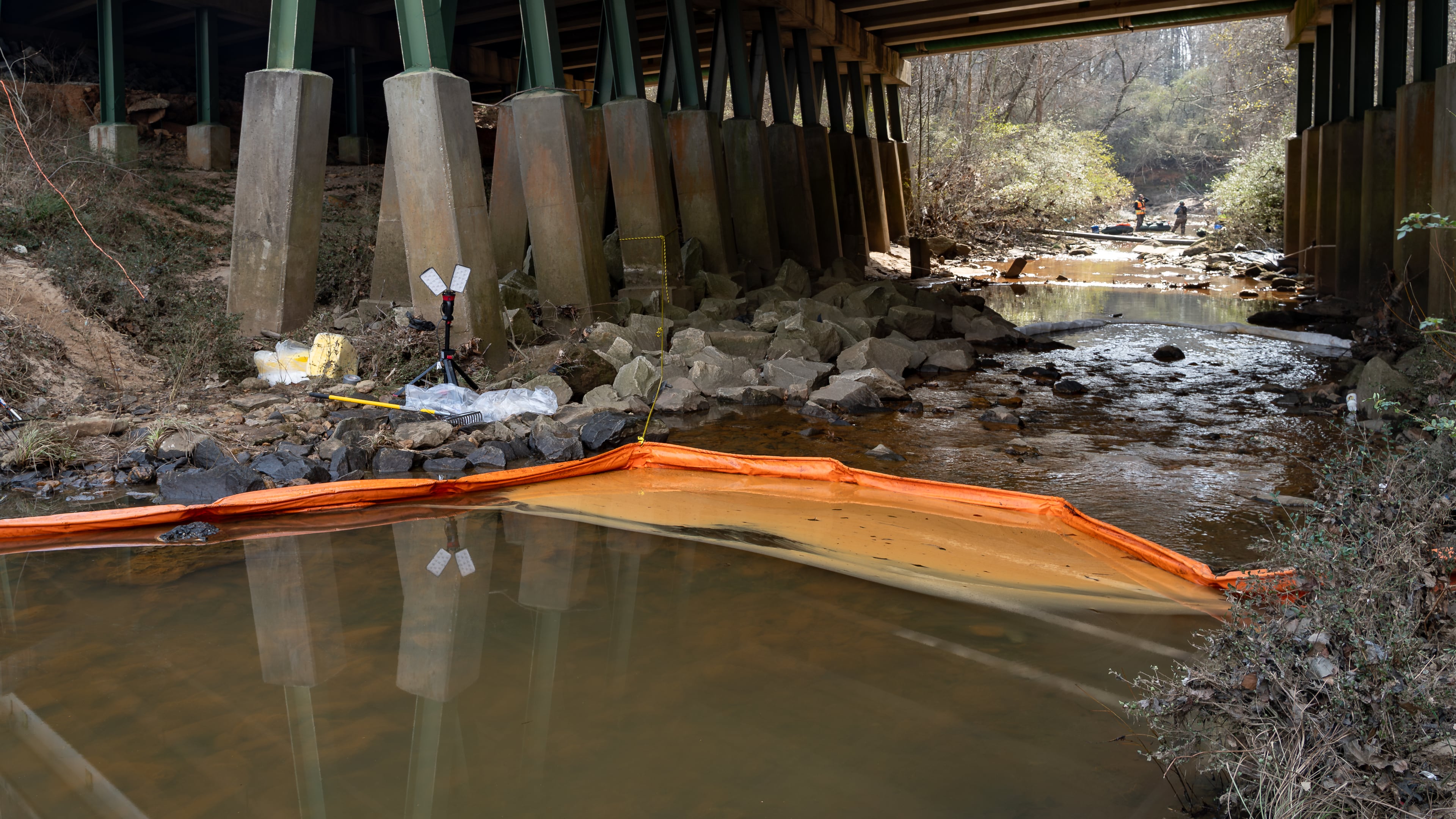
Friday’s jet fuel spill at the Atlanta airport released an estimated 10,000 gallons from a fuel pipeline into the stormwater system and the Flint River, the U.S. Environmental Protection Agency said Tuesday.
That figure is nearly eight times larger than the airport’s last major reported jet fuel spill, in 2021, when the airport faced a $40,000 fine.
The Flint provides drinking water for more than 400,000 people in south metro Atlanta and central Georgia, according to the University of Georgia. Its headwaters begin near and run beneath Hartsfield-Jackson Atlanta International Airport.
Even though the Georgia Environmental Protection Division says all water sources have been tested and deemed safe, some south metro residents continue to complain their drinking water smells like fuel and appears to have oil residue in it.
A fuel pit hydrant valve attached to a fuel system pipeline at the airport was the culprit of this spill, the EPA told The Atlanta Journal-Constitution. These valves are commonly used for airplane refueling.
Most of the fuel has been contained within the first downstream half-mile of the river, the agency said, and a round-the-clock remediation effort has removed a total of 8,300 gallons of fuel, 28,000 gallons of contaminated water and 5 cubic yards of oil-contaminated debris from the river and the airport as of Tuesday.
The city of Griffin water supply and that of water service customers in Spalding County were temporarily deemed unsafe to drink on Friday, and Gov. Brian Kemp issued a state of emergency, but the advisory was lifted hours later.
The EPA is in “the emergency response phase, identifying oil in the Flint River and ensuring removal,” a spokesperson said in a statement.
The agency “has been on site since the incident occurred and will remain until most of the oil has been removed from the river, a process that has been delayed by inclement weather.”
The state’s investigation and remediation work remains ongoing without an estimated completion date, state Environmental Protection Division spokesperson Sara Lips said.
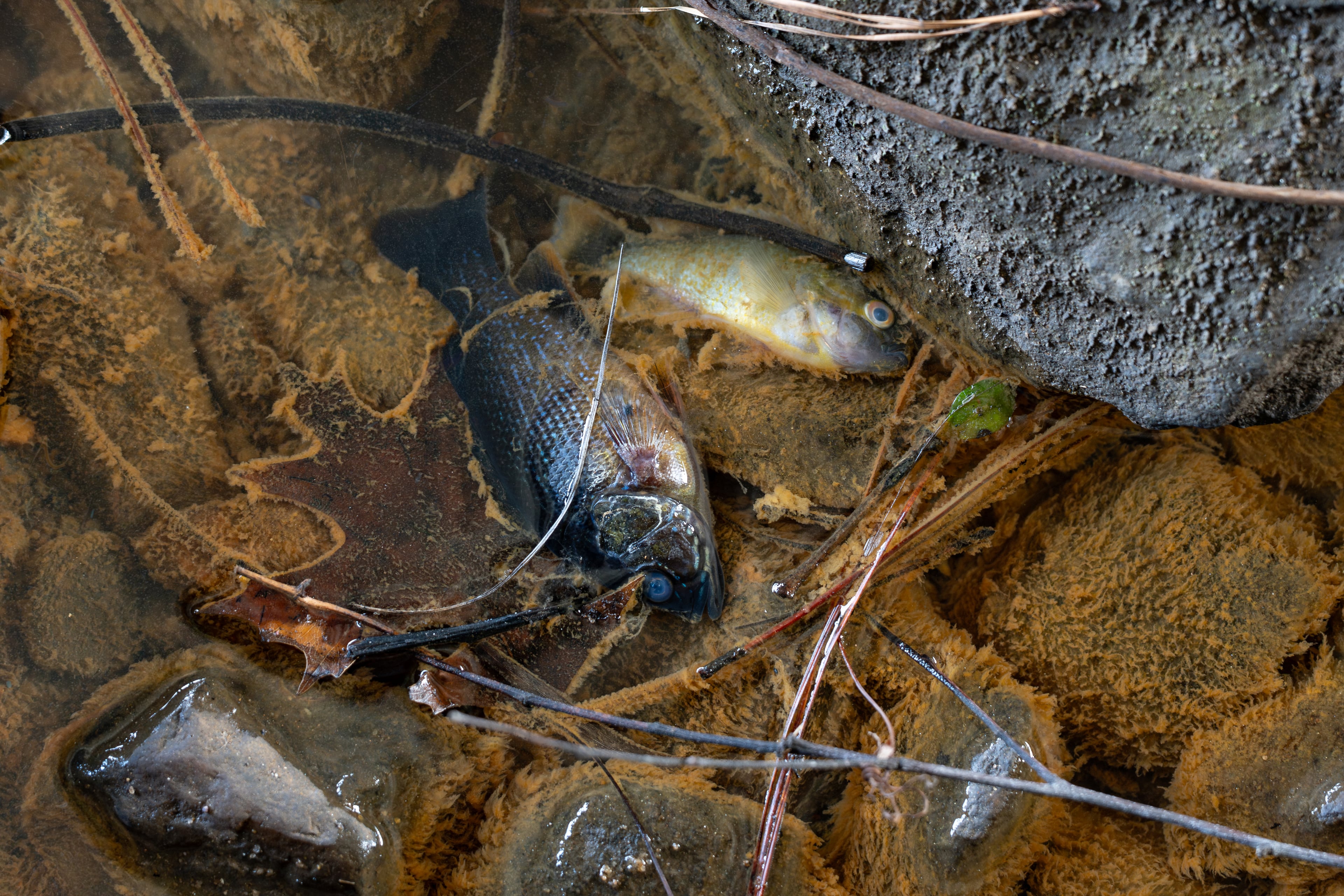
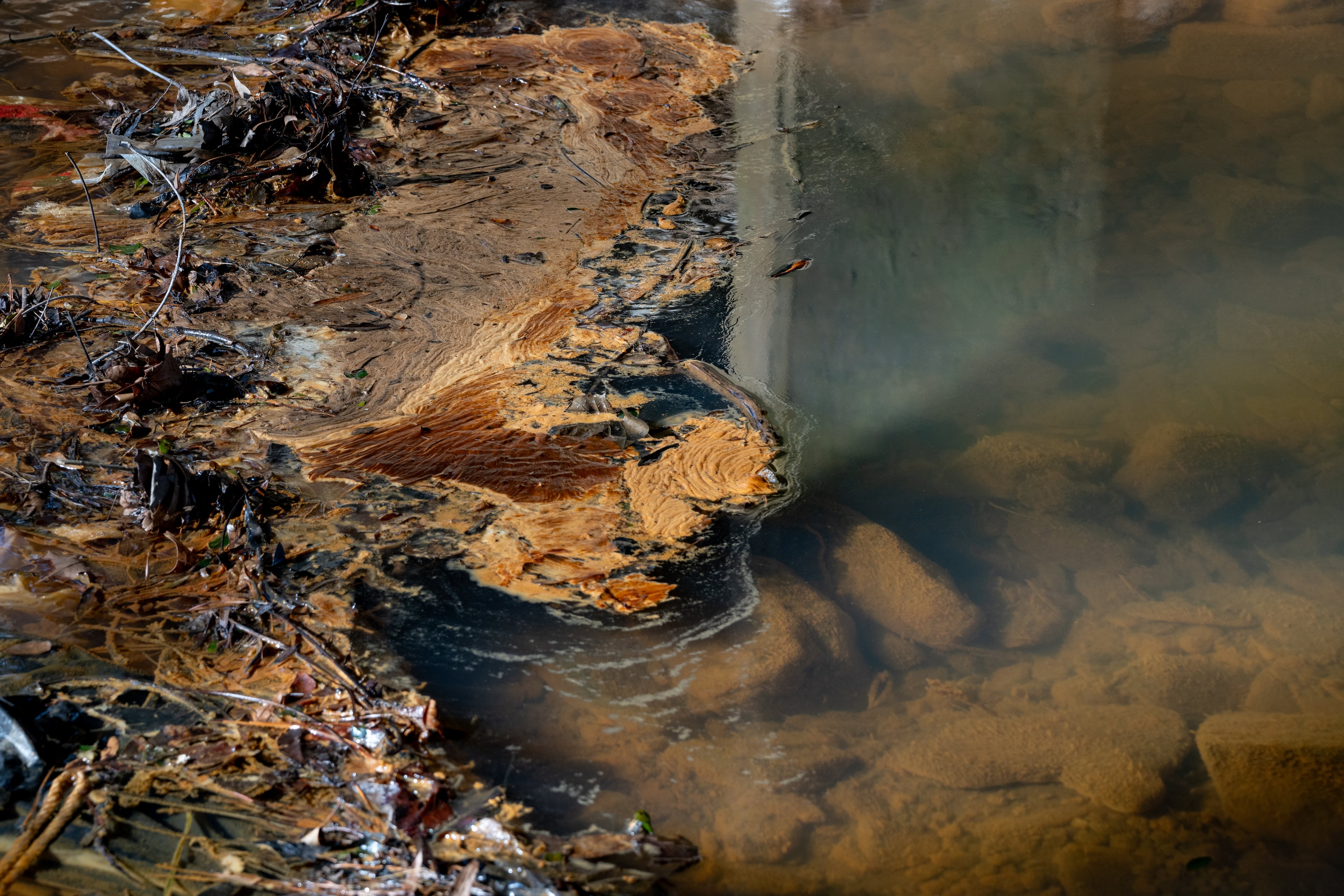
On Tuesday afternoon, the AJC observed a strong smell of gasoline around the river where it crosses under Forest Parkway just south of airport grounds, as well as about a dozen dead fish in a roughly 100-yard area.
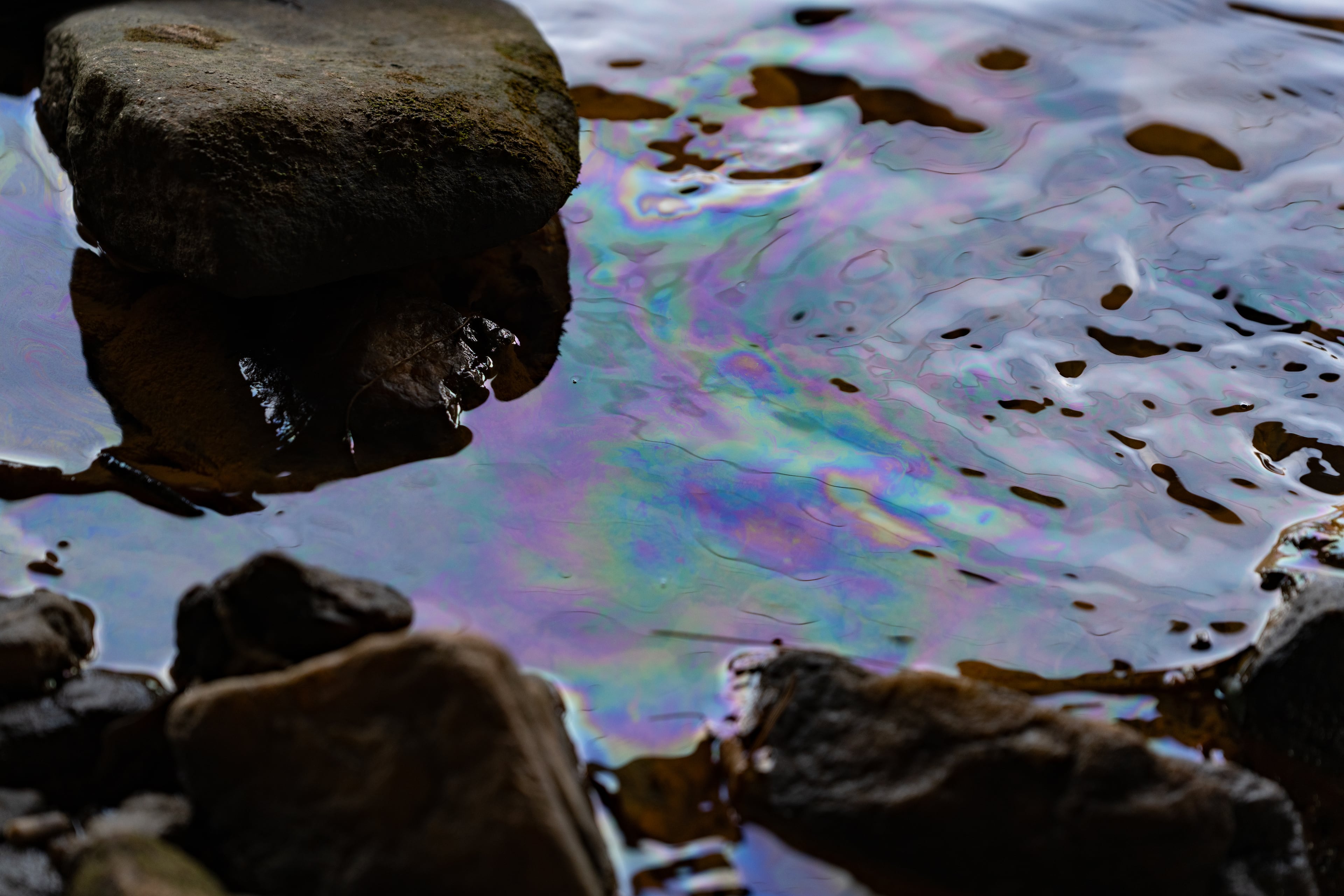
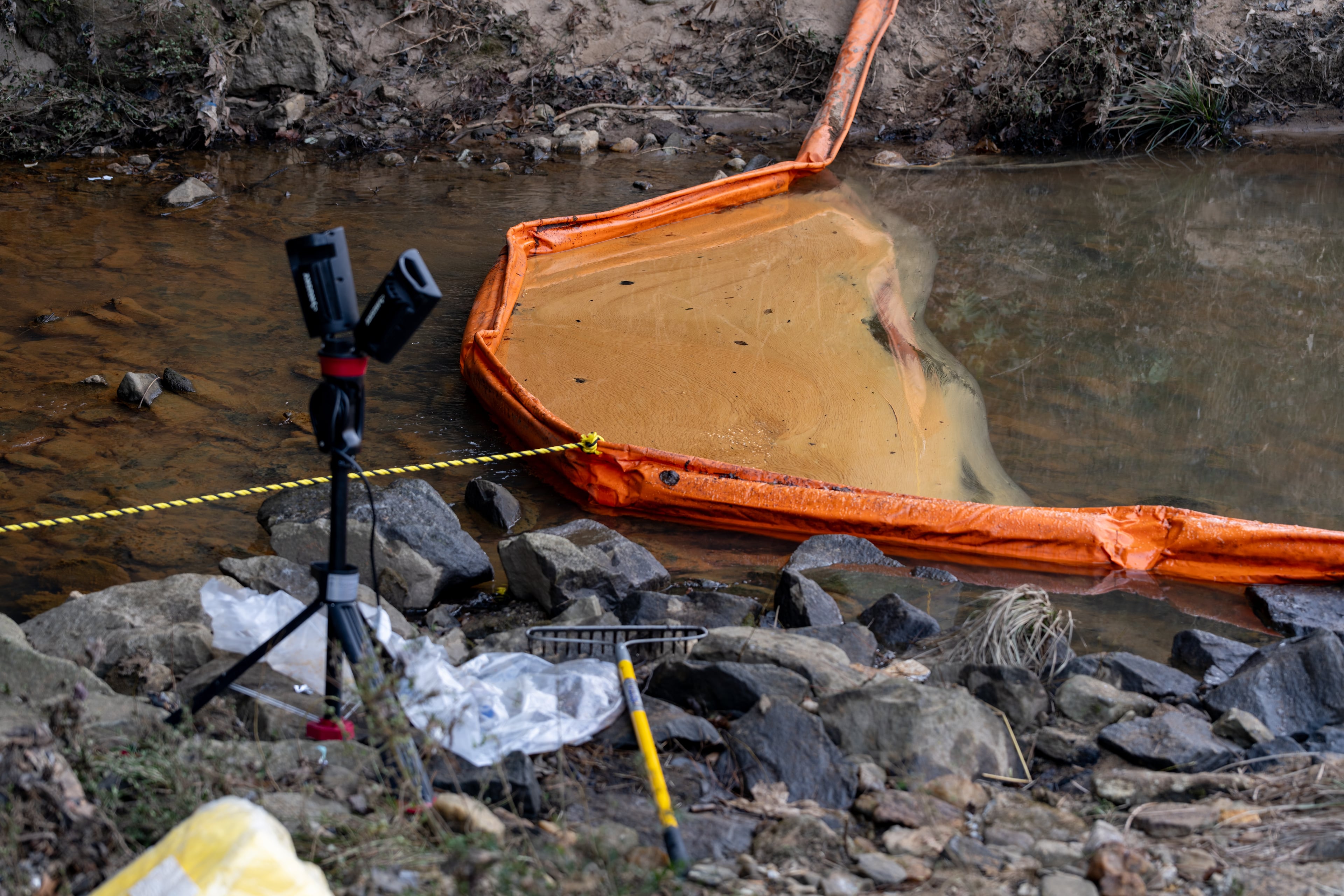
Oil sheen was visible atop the water and oil appeared to be pooling along the riverbanks upstream and downstream of a containment boom set up in the water.
State staff has been on site and booms have remained in place since Friday, but some remediation equipment was forced to pause over the weekend because of freezing temperatures, Lips said.
Any impact to fish and wildlife will also be made public when the investigation is complete, she said.
In a statement Wednesday an airport spokesperson confirmed a “fuel spill on the airfield” occurred Jan. 30 and said “from the outset of this incident, the airport has prioritized rapid containment, environmental protection, and full regulatory compliance.”
The airport said “specialized environmental response contractors remain actively engaged on site” in compliance with state and federal guidelines.
“Monitoring and remediation will continue for an extended period as teams thoroughly address impacted areas.”
Hartsfield-Jackson “remains committed to transparency, environmental stewardship, and the safety of our employees, partners, and the surrounding community, and will provide additional updates as new information becomes available,” the statement said.
‘Run out of patience’
The Flint Riverkeeper, a nonprofit that works to maintain the river, also observed a visible oil sheen and “kerosene smell” about 10 miles south of the airport while collecting its own water samples, director Gordon Rogers said.
A staff member collected samples up to 65 miles downstream and is awaiting results, he said.
Rogers is frustrated and considering his legal options after this spill.
“This shouldn’t be happening and it’s been going on for years‚” he told the AJC. “We’ve just run out of patience.”
Since 2016, Hartsfield-Jackson has seen at least nine other reported jet fuel spills, according to a prior AJC analysis.
“There should be no way for this to happen, unless a tanker truck ruptures or God forbid a fuel tank in an airplane ruptures out on a tarmac,” Rogers said.
“There should be no way to get to the river,” he said. “But yet it keeps happening.”
Some Spalding County residents say their water still isn’t right and are relying on purchased bottled water.
Jayme Aldridge and his fiancee had just returned home in Spalding with a newborn baby on Wednesday when he noticed his drinking water tasted unusual on Friday.
They live 44 miles from the airport and rely on city of Griffin water.
When the city lifted the water advisory, Aldridge went to take a shower and noticed it felt “super oily. When I was trying to rinse off it felt like a residue on my skin. Ended up itching a little when I got done,” he said.
He told his fiancee to avoid the shower, but she tried anyway. When she called him in because something seemed off, “you could smell (jet fuel) when you opened the door,” he said.
They’ve chosen to turn their water off since and have been using bottled water.
“I don’t even want to wash the (formula) bottles in it,” Aldridge said. They’re going to go to his fiancée’s sister’s house in the next county to take showers and wash clothes, he said.
He’s seen “hundreds” of similar complaints on social media and was very frustrated by a lack of communication from the airport and the city of Griffin over the weekend.
“I get it, PR nightmare, but you’ve got to say something.”
The Environmental Protection Division’s remediation efforts began as soon as the agency received a report from a member of the public of the strong smell of gasoline, Lips told the AJC.
The federal EPA said the unified command includes the state, city Department of Aviation and an engineering contractor.
“The investigation is still going on,” EPD Director Jeff Cown told state lawmakers in a committee meeting Monday.
The airport has a system of holding tanks designed to prevent runoff from leaving airport grounds.
When asked if the airport was at fault, Cown said: “I’m not sure there was a compliance issue there. I don’t believe so.”
“I think it was just something that, you know, you have to watch these things every day to make sure, and we’ll probably talk to them about some better secondary containment in the future.”
‘This is ridiculous’
Keegan Prescott also relies on Griffin water as a Spalding County resident.
He noticed his water seemed a bit oily Thursday night, but said a “horrendous” smell of gas developed Friday. He’s not using his water either and is showering at his mother’s house.
He said he kept calling the city to complain over the weekend, even after the advisory was lifted.
On Sunday, he said a water department employee came and took samples of his water, and personally advised him not to drink or use it in the meantime.
He’s heard from others nearby who are also noticing their water not seeming right, despite assurances from authorities.
“Who the hell is going to keep drinking water that smells like fuel and is oily?” he said.
Prescott is still awaiting the sampling results and said he’s had a headache and digestive issues.
“I’m to the point of wanting to get a lawyer,” he said. “ … This is ridiculous.”
Griffin City Manager Jessica O’Connor said Tuesday afternoon on social media that the city was the lone municipality to issue an advisory because they had also received complaints about odor in the water.
After tests came back clear, the advisory was lifted, she said.
But the city is continuing to flush systems and monitor based on ongoing resident complaints, she said.
About the Authors

As a business reporter, Emma Hurt leads coverage of the Atlanta airport, Delta Air Lines, UPS, Norfolk Southern and other travel and logistics companies. Prior to the Atlanta Journal-Constitution she worked as an editor and Atlanta reporter for Axios, a politics reporter for WABE News and a business reporter for the Arkansas Democrat-Gazette.
