‘Stranger Things’ doc goes behind the scenes of the hit show filmed in Georgia

Martina Radwan’s first time in Atlanta wasn’t for the Olympics, nor for any the other seismic events that have drawn people to the city over the last several decades.
The New York-based cinematographer and documentarian was stationed in the city for more than a year to follow the final season of a landmark production, one that marked a defining era in television in metro Atlanta and the industry at large: Netflix’s “Stranger Things.”
Radwan captured hundreds of hours of footage and condensed it into a two-hour behind-the-scenes documentary that debuted on Netflix in January. It followed the release of the show’s finale Dec. 31.
Titled “One Last Adventure,” the film follows the cast and crew of the show, spending time with the art department as they built massive, practical sets; the writers as they contemplated how to end the final episode and the young actors as they discussed how the show book-ended their childhood.
The documentary is the show creators’ way of bringing back the behind-the-scenes features of yesteryear, where filmmakers would walk viewers through the process of piecing together large, technically ambitious scenes.
These features, which were typically included as extras on DVDs, peel back the curtain on an industry that isn’t exactly open to sharing its trade secrets. They’ve now become somewhat of a dying art, especially for television shows and films native to streaming services.
“I love filmmaking so much,” Radwan said. “I want the world to see how amazing it is, what we do.”

“Stranger Things” was — and will likely forever be — a big deal for metro Atlanta. It was the first Netflix series to shoot in Atlanta, with principal photography beginning in 2015, a nascent time for the streaming industry at large. From its initial release, the show was a hit. By season three, it shattered a record for the most-watched original Netflix series ever.
Ending after five seasons, “Stranger Things” is the costliest production in Georgia’s history, pumping more than $650 million into the state economy over the course of its decade-long run, according to an estimate from Netflix. After initial online publication of this story, the Georgia Film Office said its estimate was $800 million.
The show employed about 7,700 Georgians, including 3,737 during the fifth season, according to Lee Thomas, the director of the Georgia Film Office. It also tapped more than 2,000 local vendors while shooting.
It has already drummed up its own secondary tourism market, much like other genre shows that have shot in Georgia in the past.
The show’s supernatural goings-on and 1980s setting offered its Atlanta-based crews an ability to show off their craft in ways that aren’t usually found in more minimalist productions.
Radwan shows how sculptors, plasterers and painters poured hours into building intricate sculptures of organic shapes and matter in the show’s otherworldly realms. Makeup effects artists were overlapping full-body prosthetics of tentaclelike vines onto the actor portraying the show’s chief villain Vecna and creating an 8-foot-tall practical demogorgon out of silicone.
The ending of “Stranger Things” represents a major shift in the entertainment industry.
It became a cultural touchstone of the streaming era, and likely marks the end of streamers investing this heavily in original intellectual property, at least for now.
Plus, advancements in technology are proving sets can be realistically replicated by computer-generated platforms on faster timelines for half the cost. Toward the end of the documentary, a production designer says he feels like it’s “the end of an era.”
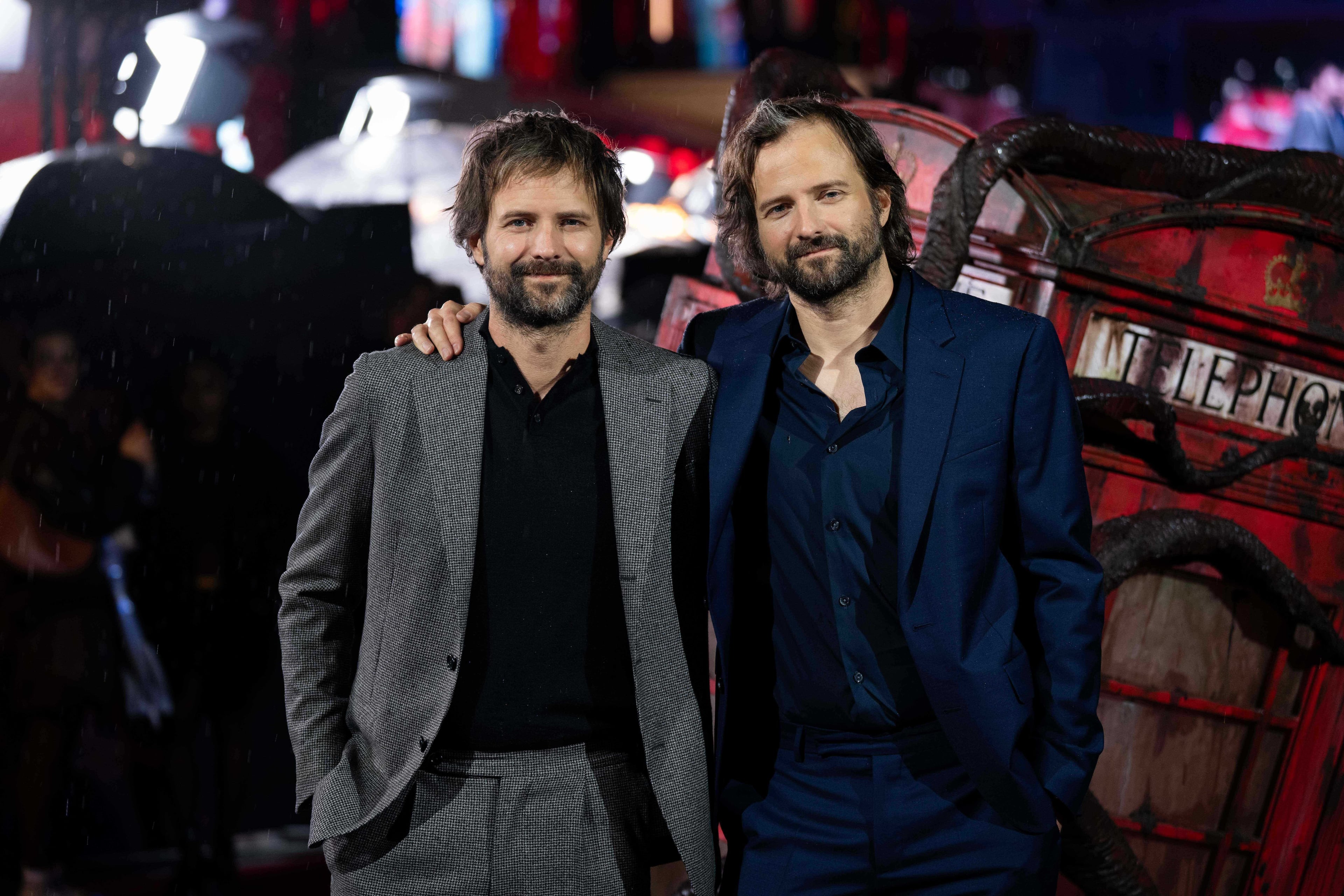
The show’s creators Matt and Ross Duffer tapped California-based production company MakeMake Entertainment for the documentary, who in turn hired Radwan.
Nothing was off limits for Radwan to shoot, she said. The Duffers let her into their writers room in Los Angeles, which would become the starting point of a major source of tension in the documentary: the fact that shooting had already begun before the Duffers finished writing the finale.
Radwan had themes she wanted to follow. One was the coming-of-age angle, for both the young actors on the show and the Duffers. She also wanted to capture the pressure felt on set of delivering the final season of a cultural phenomenon.
“You have to have an idea when you go in, but then you also have to be inspired by what’s happening,” Radwan said. “You have to be curious what else is out there other than your idea.”
As a source of inspiration, Radwan looked to the 1991 documentary “Hearts of Darkness,” which chronicled the production of Francis Ford Coppola’s “Apocalypse Now.” She also took note of the 2025 documentary “Megadoc,” a behind-the-scenes look at another Coppola film, this time the Atlanta-shot “Megalopolis.”
Most behind-the-scenes films, including those two, are about the catastrophes that arise and how the production responds to them. But trying to find the catastrophe isn’t what Radwan intended to do. Instead, she wanted to capture the craft of filmmaking and how it inspires and challenges the people working on the production.
There really were no catastrophes, Radwan said, aside from the fickleness of Atlanta weather. One segment of the film shows a particularly gnarly storm interrupting a shooting day.
And Radwan, who lived right off the Beltline, was struck by Atlanta’s greenery during her time in the city.
“It’s so lush,” Radwan said. “I went to parks where I’m like, ‘Oh, this doesn’t even feel like a park.’ I feel like I’m in the middle of the woods, but I’m in Atlanta.”
Editor’s note: This story has been updated since initial publication to include an economic impact estimate from the Georgia Film Office.
About the Author

Savannah Sicurella is an entertainment business reporter with The Atlanta Journal-Constitution.


